This site is supported by our readers. We may earn a commission, at no cost to you, if you purchase through links.
A healthy-looking plant can harbor hundreds of spider mites before a single web appears—populations double every seven days in warm indoor air, so what seems like a dust speck today becomes a full-scale infestation by next week.
Indoor gardens create ideal conditions for pests: stable temperatures, no natural predators, and the close quarters that let aphids, mealybugs, and fungus gnats spread unchecked from pot to pot.
Effective pest control starts before you ever spot a bug—with the right identification skills, monitoring habits, and targeted treatments ready to go.
Table Of Contents
- Key Takeaways
- Identify Common Indoor Plant Pests
- Monitor and Prevent Infestations
- Remove Pests Without Chemicals
- Apply Sprays and Treatments Safely
- Top 10 Indoor Plant Pest Products
- 1. Eaton Natural Coop Freshener
- 2. Arber Organic Insecticide and Fungicide Spray
- 3. Grandpa Gus Plant Based Bug Spray
- 4. Natria Neem Oil Plant Spray
- 5. Bonide Captain Jack Neem Oil Spray
- 6. Garden Safe Insecticidal Soap Spray
- 7. Bonide Houseplant Insect Control Granules
- 8. Earths Ally Organic Plant Spray
- 9. Mighty Mint Peppermint Insect Repellent Spray
- 10. Peppermint Oil Spider Repellent
- Frequently Asked Questions (FAQs)
- What can I spray on my indoor plants to keep bugs away?
- How do I get rid of pests on indoor plants?
- What is the hardest pest to get rid of in houseplants?
- How to bring plants inside without bringing in bugs?
- Can pests spread between indoor and outdoor plants?
- How do I dispose of heavily infested plants?
- Are pesticides safe for homes with pets?
- What causes sudden pest outbreaks in winter months?
- Can I reuse soil from pest-infested plants?
- How often should I inspect my plants for pests?
- Conclusion
Key Takeaways
- Spider mites and other indoor pests can double their populations every seven days, so catching them early — before webbing or visible damage appears — is the difference between a quick fix and a lost plant.
- Your best defense is a weekly routine: flip every leaf, check stem joints, and use yellow sticky traps to catch flying pests between inspections.
- Each pest leaves its own calling card — cottony clusters for mealybugs, armored bumps for scale, stippled leaves for mites — so correct identification drives every treatment decision you make.
- Rotate neem oil, insecticidal soap, and mechanical removal rather than relying on a single method, and always quarantine new plants for two weeks before they join your collection.
Identify Common Indoor Plant Pests
Before you can fight a pest problem, you need to know what you’re dealing with. Indoor plants face a surprisingly short list of usual suspects, and each one leaves its own calling card.
Knowing your enemy gets easier once you understand the full environment—check out this guide on growing vegetables indoors during winter to see how seasonal conditions shape which pests show up and why.
Here are the five most common culprits to watch for.
Aphids on New Growth
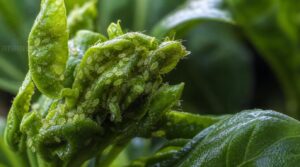
Aphids are deceptively fast workers, clustering on new growth and using hormonal manipulation to curl and distort tender leaves before detection. Their rapid reproduction allows small colonies to escalate into full infestations within days. Winged dispersal enables them to spread to neighboring plants, while ant mutualism protects established colonies.
Avoid nitrogen overfertilization, as it accelerates aphid activity. Implementing reflective mulches can also deter infestations by disrupting their habitat.
Control methods include manual removal, soap sprays, neem oil, or introducing beneficial insects. These approaches effectively manage populations when applied consistently. reflective mulches deter aphids
Spider Mites and Webbing
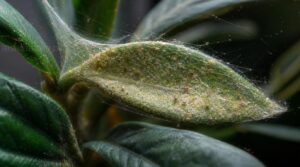
Spider mites are harder to spot than aphids — by the time you notice the webbing, populations may have already doubled twice over. That webbing barrier effect isn’t just cosmetic; it shields eggs from contact sprays. Warm, dry indoor air accelerates the rapid mite cycle — sometimes just seven days per generation.
Increase humidity to 50–60%, wipe leaves with insecticidal soap, and apply neem oil weekly.
Mealybugs and Cottony Clusters
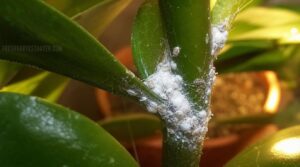
Unlike spider mites, mealybugs announce themselves clearly — cottony oviposition sites tucked into leaf axils and stem joints are hard to miss. Those wax filament clusters protect eggs from contact sprays, so timing your mealybug control to target the crawler stage matters most.
Warm, stable indoor conditions accelerate their generations, making humidity a critical factor.
Manual removal with alcohol swabs stops active feeding, while ant-mealybug interactions near pots signal the presence of hidden populations worth investigating.
Scale Insects on Stems
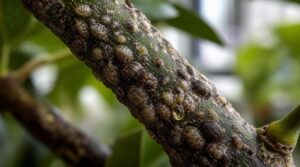
Scale insects pull the same disappearing act as mealybugs — except they don’t look like bugs at all. Their armored shells mimic stem texture closely, making camouflage, detection genuinely tricky.
Watch for bumpy, pale-to-dark-brown specks from 1/16 to 1/4 inch wide. Crawler emergence in spring is your best window for scale insect control.
Use neem oil, horticultural oils, or integrated pest management approaches with alcohol-tipped scale removal tools.
Fungus Gnats in Soil
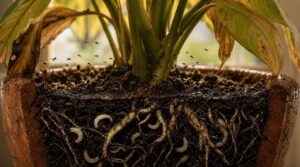
Fungus gnats are sneaky—their gnats’ life cycle runs continuously in warm, moist soil, with eggs hatching in as little as four days. Egg-laying sites cluster wherever overwatering keeps the surface damp. Larvae cause root damage, especially to seedlings.
Break the cycle through soil moisture cycling, soil sterilization when repotting, hydrogen peroxide soil drenches, and biological control with beneficial nematodes.
Monitor and Prevent Infestations
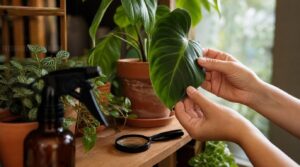
Catching a pest problem early is the difference between a quick fix and losing a plant you’ve had for years.
The good news is that prevention doesn’t require much — just a few consistent habits built into your routine. Here’s what to focus on.
Weekly Leaf and Stem Checks
Think of your weekly check as a standing appointment you can’t afford to miss. Flip every leaf, run your fingers along each stem to test firmness, and use a magnifying lens to catch what your eye skips. Regular monitoring turns guesswork into certainty.
- Log each session in an observation log with date, plant name, and any symptoms
- Use a 10× magnifier to spot mite eggs or early sticky residues during inspection timing
- Place yellow sticky traps nearby for passive, continuous sticky trap monitoring between checks
Two-week Plant Quarantine
Every new plant is a potential Trojan horse — beautiful on the outside, hiding trouble within. Quarantine new plants in an isolation area setup at least 3 meters from your main collection for 14 days.
Every new plant is a potential Trojan horse — quarantine it for 14 days before it joins your collection
Sterilize tools between sessions, manage ventilation to prevent mold, and document observations in a quarantine log.
Before reintroducing any plant, run a reintroduction checklist: check quarantine soil condition, root firmness, and new growth for clean, pest-free results.
Yellow Sticky Trap Monitoring
Yellow sticky traps are your early-warning system — silent sentinels that catch flying pests before populations explode.
For effective pest monitoring, place traps at roughly 1 meter above soil level, spacing them 2–4 meters apart.
Inspect your plants regularly along with trap counts, then map catches using simple data visualization techniques to spot hotspots fast.
Remember, traps may collect non-target insects, so accurate pest identification always matters.
Sterile, Well-draining Potting Mix
Your potting mix is either a pest’s paradise or its worst enemy — choose wisely. A sterile, well-draining blend blocks soilborne pests before they establish. Focus on three essentials:
- Mix Composition — Combine a sterile base with aeration boosters like perlite for proper drainage.
- Moisture Management — Allow surface soil drying between waterings to discourage larvae.
- pH Optimization — Maintain a near-neutral pH for vigorous, pest-resistant roots.
Always repot with new potting soil in clean containers.
Proper Watering and Airflow
Overwatering is one of the fastest ways to roll out the welcome mat for fungus gnats and root rot.
Water in the morning so foliage dries during the day, improving air circulation naturally. Check soil moisture with a finger or moisture meter before each session. Ensure drainage hole placement allows full runoff, and consider a small fan to maintain steady airflow between plants.
Remove Pests Without Chemicals
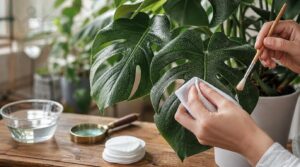
You don’t always need a spray bottle to win this fight.
Many common pests can be handled with simple hands-on methods that protect your plants without introducing chemicals into your home.
Here’s what works.
Wash Leaves Gently
Washing leaves is one of the simplest nonchemical methods in your pest control toolkit—and it’s more effective than most people expect.
Use the Soft Sponge Technique: dampen a sponge with lukewarm water and wipe each leaf surface gently. Follow with Microfiber Drying to prevent moisture buildup.
For stubborn residue, mild soap use works well; rinse thoroughly to avoid over-wetting prevention issues.
Wipe Pests With Alcohol
Once the leaves are clean, it’s time to target pests directly. Dip a cotton swab in a rubbing alcohol solution—typically 70% isopropyl—and spot-treat infestations of mealybugs or scale on contact. This manual method acts quickly.
Handpick larger pests first, then wipe affected areas. Prioritize cleanliness: change swabs frequently. For waxy, hard-to-reach clusters, alcohol outperforms soap.
Prune Infested Growth
When alcohol alone can’t reach a heavily infested stem, prune if a pest issue is isolated to that section. Use sharp shears and focus your pruning techniques on cutting just above healthy tissue.
Tool sterilization between cuts—a quick wipe with isopropyl alcohol—stops spread cold. Collect and discard trimmings immediately.
Over the next two to four weeks, monitoring regrowth will confirm recovery.
Repot With Fresh Soil
Sometimes pruning isn’t enough—if pests have colonized the roots, it’s time to repot plants entirely. The benefits of fresh soil go deep: improved aeration, elimination of accumulated salts, and a clean start. Cleanliness is key throughout the process.
- Root Inspection Techniques: Gently loosen the root ball, prune dead or circling roots, and check for larvae.
- Choosing Pot Size: Select a container 1–2 inches wider with drainage holes.
- Soil Mix Ratios: Use a perlite-rich potting mix to balance drainage and moisture retention.
After repotting, care begins immediately—water thoroughly, then monitor soil moisture daily.
Add Sand or Grit
Once repotting is done, a thin topdressing of horticultural grit—roughly ¼ to ½ inch deep—serves as one of the most reliable preventative measures against fungus gnats. Grit particle size matters: aim for 1–4 mm.
The benefits of sand drainage include faster surface drying and stronger soil aeration. This layer helps combat moisture-related issues that attract pests.
Mix the grit at 20–30% into the soil for balanced moisture management, ensuring optimal conditions without waterlogging.
For plants preferring alkaline environments, pH adjusting grit (e.g., limestone) provides a perfect, long-term solution.
Apply Sprays and Treatments Safely
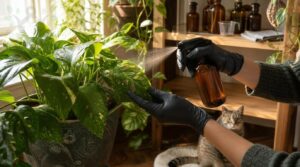
When mechanical removal isn’t enough, targeted sprays and treatments can close the gap — but how you apply them matters just as much as what you use. Getting this right means protecting your plants without putting your pets, edible herbs, or indoor air quality at risk.
Here’s what you need to know before you reach for any bottle.
Neem Oil for Soft Pests
Neem oil is one of the most reliable organic pest control methods for indoor plants. Its active compound, azadirachtin, disrupts insect molting and feeding, effectively controlling aphids and spider mites alike.
- Follow dilution guidelines: 0.5% concentration per litre
- Achieve full leaf coverage, including undersides
- Stick to a 7–10 day treatment schedule
- Confirm organic certification on the label
Insecticidal Soap Directions
Mix insecticidal soap at 1–2 teaspoons per quart of water for light infestations, scaling to 1 tablespoon for heavier pressure. Always test spray on a few leaves first and wait 24 hours before full application. Maintain temperatures below 85°F during application, with frequency cycles of every 5–7 days for light cases and every 3–4 days for heavy infestations.
| Factor | Light Infestation | Heavy Infestation |
|---|---|---|
| Mixing Ratios | 1–2 tsp per quart | 1 tbsp per quart |
| Application Timing | Every 5–7 days | Every 3–4 days |
| Leaf Coverage | Full upper/lower | Multiple light passes |
| Temperature Guidelines | Below 85°F | Below 85°F, early morning |
| Solution Storage | Discard same day | Prepare fresh each session |
Nonchemical methods work best with DIY spray recipes using soft or distilled water—minerals reduce efficacy. Prioritize leaf coverage on undersides where pests hide.
Beneficial Insects Indoors
Nature already built the pest control team — you just have to recruit it. Biological pest control puts live allies to work without residues or chemical risk.
- Lacewing Larvae Introduction and Lady Beetle Release target aphids, mealybugs, and scale — one larva can consume 50–60 pests daily.
- Predatory Mite Deployment suppresses spider mite eggs and juveniles on foliage.
- Beneficial Nematode Use and Minute Pirate Bugs eliminate fungus gnats and thrips in soil and on leaves.
These natural predatory insects handle multiple pests simultaneously.
Systemic Granule Precautions
Systemic insecticides work from the inside out — granules are absorbed by roots within 24 to 72 hours after watering, and the plant handles the rest. Root uptake timing matters, so water immediately after application.
Follow correct dosage measurements for your pot size to avoid root burn.
For child and pet safety, keep the area off-limits for 24 hours.
Adhere to granule storage guidelines and all pesticide safety guidelines carefully.
Pet and Herb Safety
If you share your home with pets or grow edible herbs, treatment choices carry real stakes. Many essential oils carry serious essential oil toxicity risks — even diluted, they can harm cats and dogs through inhalation or skin contact.
For edible herb risks, never apply systemic products to basil, parsley, or similar crops.
Stick to Pet-Safe Treatments and nontoxic spray options, apply only within safe application zones away from resting areas, and you’ll keep everyone — plants included — genuinely safe.
Top 10 Indoor Plant Pest Products
Not every pest problem calls for a homemade spray or a trip to the garden center guessing game. There are some solid ready-to-use products that actually work — tested by growers, safe for indoor use, and specific enough to target the pests you’re dealing with.
Here are ten worth knowing about.
1. Eaton Natural Coop Freshener
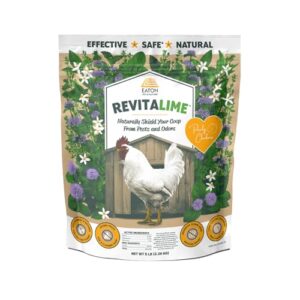
Eaton Natural Coop Freshener isn’t the first product you’d expect on a houseplant pest list, but its calcite, citric acid, thyme, and peppermint blend makes it surprisingly useful for soil-level pest deterrence.
Sprinkle it directly onto potting media to discourage fungus gnats and mites before they establish. The blend absorbs excess moisture, cutting off the damp conditions pests thrive in.
At $25.99 for a 5 lb bag, it’s a chemical-free option for preventive maintenance, offering practical, long-term protection.
| Best For | Chicken keepers who want a natural, low-effort way to keep their coop smelling fresh and pests at bay without reaching for harsh chemicals. |
|---|---|
| Form Factor | Granular powder |
| Natural Formula | Yes – calcite, citric acid, thyme, peppermint |
| Indoor Use | Yes |
| Pet Safety | Not specified |
| Target Pests | Mites, fleas, lice |
| Edible Plant Safe | Not specified |
| Additional Features |
|
- Tackles ammonia odor and moisture at the same time, so your coop stays fresher between cleanings.
- The thyme and peppermint naturally discourage mites and fleas — no chemicals needed.
- A little goes a long way; users report a half-bag lasting around four months.
- The scent is subtle, so if you’re expecting a strong minty punch, it might underwhelm.
- The zip-lock on the bag doesn’t always reseal well, which can be annoying for storage.
- It’s not a shortcut — you still need to clean the coop regularly for it to actually work.
2. Arber Organic Insecticide and Fungicide Spray
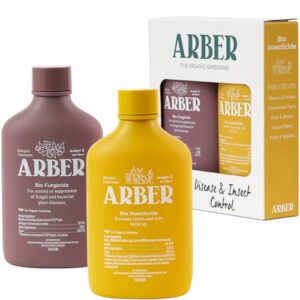
Arber Organic Insecticide and Fungicide Spray offers a comprehensive solution by addressing both pests and fungal diseases in a single product. This neem-based concentrate effectively controls aphids, spider mites, whiteflies, and powdery mildew, eliminating the need for multiple products.
To use, dilute the concentrate, load your pump sprayer, and thoroughly coat both leaf surfaces every seven to fourteen days.
It is OMRI-listed, safe around pets and kids once dry, and works on edibles too, providing solid coverage in one practical product.
| Best For | Home gardeners who want one product that handles both bugs and fungal issues — especially helpful if you’re growing edibles, houseplants, or dealing with a mix of problems at once. |
|---|---|
| Form Factor | Liquid concentrate |
| Natural Formula | Yes – bio-based organic concentrate |
| Indoor Use | Yes |
| Pet Safety | Safe when used as directed |
| Target Pests | Mites, aphids, whiteflies, thrips, fungus gnats |
| Edible Plant Safe | Yes |
| Additional Features |
|
- Tackles common pests and fungal diseases in one spray, so you’re not juggling multiple products
- Safe to use around kids, pets, and pollinators when you follow the label — and it works on vegetables too
- A single 16 oz bottle goes a long way, covering weeks of routine or spot treatments
- Stubborn pests like fungus gnats or mealybugs usually need several rounds — don’t expect one application to do it all
- You have to be precise with dilution and coverage; skimp on either and you’ll get underwhelming results
- The insecticide side can wear out before the fungicide does, which throws off the mix ratio over time
3. Grandpa Gus Plant Based Bug Spray
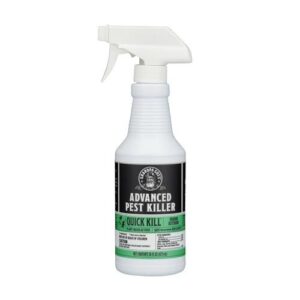
Grandpa Gus Plant Based Bug Spray offers a ready-to-use solution straight from the bottle, ideal for those seeking simplicity. Its active ingredients—clove oil and cottonseed oil—disrupt insect nervous systems on contact, effectively targeting common indoor pests like aphids, gnats, and spider mites.
The spray holds an EPA minimum-risk classification, ensuring no synthetic residue or harsh odors. This makes it a practical choice for households prioritizing safety and ease of use.
To apply, spray directly onto pests and infested areas, then ventilate the room. Allow surfaces to dry before reentry, following a straightforward, low-fuss process.
| Best For | Households with kids or pets that want a simple, no-fuss way to knock out common bugs without reaching for harsh chemicals. |
|---|---|
| Form Factor | Ready-to-use spray |
| Natural Formula | Yes – clove oil, cottonseed oil |
| Indoor Use | Yes |
| Pet Safety | Safe when used as directed |
| Target Pests | Ants, roaches, spiders, fleas, gnats, aphids |
| Edible Plant Safe | Not specified |
| Additional Features |
|
- Made with clove oil and cottonseed oil — no synthetic stuff, no strong chemical smell, and EPA-classified minimum risk
- Works straight out of the bottle on a long list of pests, from roaches and ants to wasps and bedbugs
- Safe to use indoors without needing to evacuate, and won’t stain or leave a greasy mess behind
- It’s a contact killer, so it won’t stop pests from coming back — you’ll still need to seal cracks and tackle the root cause
- Mixed results on ant colonies, since it doesn’t reach the nest or queen
- Can’t be used near food prep surfaces, and it’s not meant for skin or pets, so you have to be a bit careful where you spray
4. Natria Neem Oil Plant Spray
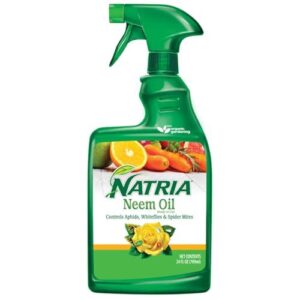
If you prefer something with a bit more staying power than a botanical oil blend, Natria Neem Oil Plant Spray is worth keeping on your shelf. Its clarified hydrophobic neem oil formula — 0.9% active ingredient — works as both an insecticide and fungicide.
The spray targets aphids, spider mites, whiteflies, and scale while also tackling powdery mildew and black spot.
The ready-to-use 24 oz bottle requires zero mixing. Apply early morning or evening, coat leaf undersides thoroughly, and repeat every 7–14 days for consistent control.
| Best For | Gardeners who want a simple, no-fuss spray that handles both bugs and fungal issues without reaching for harsh chemicals. |
|---|---|
| Form Factor | Ready-to-use spray |
| Natural Formula | Yes – neem oil extract |
| Indoor Use | Yes |
| Pet Safety | Safe when used as directed |
| Target Pests | Aphids, whiteflies, spider mites, Japanese beetles, scale |
| Edible Plant Safe | Yes – up to harvest day |
| Additional Features |
|
- Kills common pests and fights diseases like powdery mildew and black spot — two jobs, one bottle
- Ready to spray right out of the box, no mixing required
- Safe to use all the way up to harvest day on fruits and veggies
- Results can be hit or miss, especially on heavy mite or aphid infestations
- Timing matters — spray in full sun and you risk burning your leaves
- The nozzle has a reputation for being finicky, so you might end up needing a separate sprayer
5. Bonide Captain Jack Neem Oil Spray
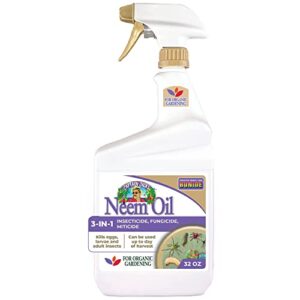
Bonide Captain Jack Neem Max is a true four-in-one solution — insecticide, fungicide, miticide, and nematicide in a single 32 oz bottle. It’s built around 70 percent cold-pressed neem oil, which means broader coverage than standard neem formulations.
Use it as a foliar spray or soil drench to target pests at every life stage, from eggs to adults.
It’s organic-certified, safe on edibles up to harvest day, and works indoors on houseplants, herbs, and ornamentals without synthetic chemicals.
| Best For | Home gardeners and organic growers who want one spray that handles bugs, mites, and fungal issues across vegetables, herbs, houseplants, and ornamentals without reaching for synthetic chemicals. |
|---|---|
| Form Factor | Ready-to-use spray |
| Natural Formula | Yes – neem seed derived |
| Indoor Use | Yes |
| Pet Safety | Safe when used as directed |
| Target Pests | Aphids, mites, mealybugs, scale, whiteflies |
| Edible Plant Safe | Yes – up to harvest day |
| Additional Features |
|
- Covers a lot of ground — fights aphids, mites, mealybugs, whiteflies, and fungal problems like powdery mildew all in one bottle
- Organic-certified and safe to use right up to harvest day, so you’re not stressing about chemical residue on your food
- Works across a huge range of plants, from roses and turf to tomatoes and indoor houseplants
- The spray nozzle can be a pain — it clogs, it’s awkward to use one-handed, and some people just end up transferring it to a different sprayer
- The smell is pretty strong and lingers, which a lot of users find unpleasant during and after application
- It’s not a quick fix — whiteflies and stubborn infestations often need multiple treatments spread out over several weeks before you see real results
6. Garden Safe Insecticidal Soap Spray
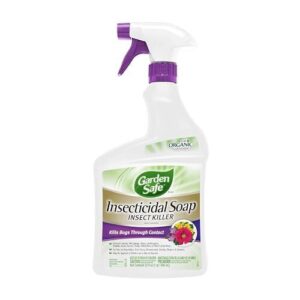
Garden Safe Insecticidal Soap Spray keeps things simple — no mixing, no measuring, just point and spray. It works by dissolving the cell membranes of soft-bodied pests like aphids, mealybugs, spider mites, and scale crawlers on direct contact.
The 32 oz ready-to-use bottle runs about $10.85 and is approved for edibles right up to harvest day.
Cover both leaf surfaces thoroughly, reapply every five to seven days for persistent infestations, and ventilate the room well during indoor use.
| Best For | Home gardeners who want a no-fuss, ready-to-use spray for tackling common soft-bodied pests on vegetables, herbs, and ornamentals — indoors or out. |
|---|---|
| Form Factor | Ready-to-use spray |
| Natural Formula | Yes – fatty acid salts |
| Indoor Use | Yes |
| Pet Safety | Safe for children and pets |
| Target Pests | Aphids, mealybugs, mites, thrips, whiteflies |
| Edible Plant Safe | Yes – up to harvest day |
| Additional Features |
|
- No mixing needed — just shake and spray, which makes it great for quick spot treatments
- Safe around kids and pets, and you can use it right up to harvest day on edibles
- Works on a wide range of pests and plant types, from indoor pots to backyard gardens
- You have to hit the bugs directly — it won’t protect plants from future infestations
- Heavy or repeat infestations may need multiple applications, and pests like spider mites can build resistance over time
- The smell after spraying is noticeable, so indoor use calls for good ventilation
7. Bonide Houseplant Insect Control Granules
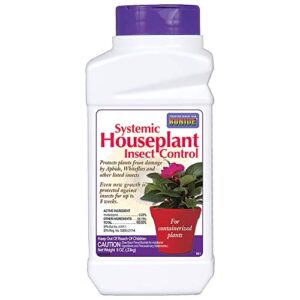
Bonide Houseplant Insect Control (model 951) uses 0.22% imidacloprid, a systemic active ingredient that roots absorb and distribute throughout the plant.
To apply, sprinkle it over the top inch or two of soil, mix it in lightly, then water thoroughly.
One application protects for up to eight weeks against aphids, mealybugs, scale, whiteflies, and fungus gnats.
Do not use it on herbs or edibles, and ensure it is kept away from pets and children.
| Best For | Anyone dealing with pest problems on indoor or outdoor container plants who wants a low-odor, hands-off solution that keeps working for weeks. |
|---|---|
| Form Factor | Granules |
| Natural Formula | No – synthetic systemic |
| Indoor Use | Yes |
| Pet Safety | Toxic – keep away from pets |
| Target Pests | Aphids, mealybugs, scale, whiteflies, thrips, fungus gnats |
| Edible Plant Safe | No |
| Additional Features |
|
- Systemic protection means the plant absorbs it through the roots, so rain or watering won’t wash it away
- One application handles up to eight weeks of coverage — no need to keep retreating every week
- Low odor and easy to use indoors, which is a big plus for home or office plants
- Can’t use it on herbs, veggies, or anything you plan to eat — strictly ornamentals only
- Dosage has to be just right; too much can hurt the plant, too little might not do the job
- The packaging can be misleading — the container often holds less product than the 8 oz label suggests
8. Earths Ally Organic Plant Spray
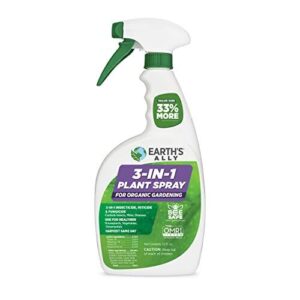
Earth’s Ally 3-in-1 is a botanical blend of thyme, rosemary, clove, and peppermint oils designed to address both pests and fungal issues without synthetic chemicals. It effectively targets aphids, spider mites, mealybugs, whiteflies, and scale, while also suppressing powdery mildew and leaf spot.
The ready-to-use 32 oz bottle simplifies application: shake thoroughly, spray both leaf surfaces, and reapply every 7–14 days. This routine ensures ongoing protection for plants.
Safety is a priority, as the product is OMRI-listed, bee-safe, and approved for use on edible plants right up to harvest day. This makes it a reliable choice for organic gardening and sustainable pest management.
| Best For | Home gardeners who want an easy, organic solution that handles bugs and fungal issues in one bottle — especially if you’re growing edibles or have kids and pets around. |
|---|---|
| Form Factor | Ready-to-use spray |
| Natural Formula | Yes – thyme, rosemary, clove, peppermint oils |
| Indoor Use | Yes |
| Pet Safety | Safe around pets |
| Target Pests | Spider mites, aphids, whiteflies, mealybugs, scale |
| Edible Plant Safe | Yes |
| Additional Features |
|
- True 3-in-1 formula — fights insects, mites, and fungal disease so you’re not juggling multiple products
- OMRI-listed and bee-safe, with no waiting period before harvest on edible crops
- Ready to use straight out of the box, no mixing required
- Strong essential oil smell can be a real issue if you or your pets are sensitive to scents
- Stubborn pests like thrips and mealybugs may need several rounds of treatment before you see results
- The spray bottle loses suction near the bottom, which makes getting full coverage a little frustrating
9. Mighty Mint Peppermint Insect Repellent Spray

Mighty Mint offers a simple approach: extra-concentrated peppermint oil in a ready-to-use 16 oz spray bottle, priced at $17.50. It effectively repels spiders, ants, fungus gnats, and roaches by creating a scent barrier at baseboards, windowsills, and entryways.
While it won’t eliminate established infestations, it serves as a strong preventive layer. For consistent deterrence, reapply every one to three weeks.
Marketed as pet-safe, it requires caution for dogs with sensitive airways—consult your vet first.
| Best For | Households with kids or pets looking for a natural, chemical-free way to keep common bugs at bay before an infestation takes hold. |
|---|---|
| Form Factor | Ready-to-use spray |
| Natural Formula | Yes – peppermint oil |
| Indoor Use | Yes |
| Pet Safety | Generally safe; caution with dogs |
| Target Pests | Spiders, ants, roaches, flies, gnats, mosquitoes |
| Edible Plant Safe | Not specified |
| Additional Features |
|
- Plant-based formula with a pleasant mint scent — no harsh chemical smell
- Works across a wide range of pests, from spiders and ants to gnats and roaches
- Ready-to-use spray makes application quick and targeted
- Won’t do much against an existing infestation — it’s a deterrent, not a killer
- Needs regular reapplication every one to three weeks to stay effective
- The strong peppermint scent can irritate sensitive noses, and some dogs may have respiratory reactions
10. Peppermint Oil Spider Repellent

This 4-pack of botanical repellent tins uses a peppermint essential-oil formula to deter spiders, ants, and cockroaches. Simply place them at entry points, corners, and baseboards—no spraying or mess required. Each tin is waterproof and marketed as safe around children and pets.
Keep expectations realistic, though: some users report effectiveness fading within two to three weeks rather than the advertised 60–90 days. To maintain results, monitor and rotate placements regularly.
| Best For | Homeowners who want a chemical-free way to keep spiders out of their living spaces, especially those with kids or pets. |
|---|---|
| Form Factor | Solid tins |
| Natural Formula | Yes – botanical essential oils |
| Indoor Use | Yes |
| Pet Safety | Safe for pets |
| Target Pests | Spiders, ants, cockroaches |
| Edible Plant Safe | Not specified |
| Additional Features |
|
- Plant-based formula is safe around children, pets, and the environment
- No spraying or mess—just set the tins and walk away
- Waterproof build works indoors and out, from basements to boats
- Effectiveness often fades in 2–3 weeks, well short of the 60–90 day claim
- Some users have spotted spiders crawling on or near the tins themselves
- Results against ants and cockroaches tend to be hit or miss
Frequently Asked Questions (FAQs)
What can I spray on my indoor plants to keep bugs away?
A few targeted sprays do the job well. Neem oil, insecticidal soap, and peppermint oil are your best options.
Rotating them prevents pests from building resistance, as each disrupts pests in different ways.
How do I get rid of pests on indoor plants?
Start by identifying the pest, then act fast. Wash leaves, wipe with alcohol, prune infested growth, and apply neem oil or insecticidal soap. Consistency beats any single treatment.
What is the hardest pest to get rid of in houseplants?
Scale insects take the crown — their shell-like armor laughs at most sprays. You’ll need repeated alcohol swabs, persistent pruning, and serious patience before these clingy hitchhikers finally surrender your stems.
How to bring plants inside without bringing in bugs?
Before bringing any plant inside, inspect every leaf, stem, and pot rim carefully.
Rinse foliage with water, let it dry, then quarantine the plant for two weeks away from your other plants.
Can pests spread between indoor and outdoor plants?
Pests spread easily between indoor and outdoor plants. They hitchhike on your hands, tools, and clothing, or drift in on air currents.
Always quarantine outdoor plants before moving them inside.
How do I dispose of heavily infested plants?
Seal the plant in a sturdy bag immediately, then discard it in the trash — don’t compost it. Wash your hands and disinfect any tools that made contact afterward.
Are pesticides safe for homes with pets?
Some pesticides are safe for pet-friendly homes, and some are not. Products containing organophosphates or pyrethroids pose real risks.
Neem oil and insecticidal soaps, once dry, are generally lower-risk options when used as directed.
What causes sudden pest outbreaks in winter months?
Winter heating dries indoor air fast, stressing plants and creating ideal conditions for mites and aphids.
Combined with reduced light and stagnant air, weakened plants can’t fight back — outbreaks follow quickly.
Can I reuse soil from pest-infested plants?
Reusing soil from pest-infested plants is risky. Eggs and larvae can survive and reinfect your next plant. When in doubt, replace it with fresh sterile potting mix.
How often should I inspect my plants for pests?
Think of it as a weekly "bug check-in". Inspect every plant once a week.
Increase that to every three or four days for dense, humid specimens.
Daily checks are essential for any new arrivals during their first two weeks at home.
Conclusion
Pests thrive on neglect; your plants flourish with attention—that tension is exactly where effective pest control begins and ends.
You now possess the identification skills to catch trouble early, the prevention habits to stop spread, and the treatments to act decisively when something slips through.
Stay consistent with your weekly checks, and most infestations won’t survive past the first sign.
Your indoor garden is worth protecting—and now you know exactly how.
- https://agsci.colostate.edu/agbio/ipm-pests/houseplant-pests
- https://thegoodearthgarden.com/houseplant-pest-control
- https://extension.umn.edu/news/houseplant-pests
- https://spokaneplantfarm.com/blogs/news/common-houseplant-pests-and-what-you-can-do-to-get-rid-of-them
- https://extension.missouri.edu/publications/g7273