This site is supported by our readers. We may earn a commission, at no cost to you, if you purchase through links.
Sunday meal prep used to eat up half my clients’ afternoons—and most of them were only cooking three or four things. few small shifts changed everything.
fastest part of the equation when you know which ones to reach for and how to handle them.
Carrots stay crisp for nearly a month. Cabbage barely needs attention. Bell peppers hold their color and crunch for two full weeks.
Easy vegetable meal prep isn’t about spending hours in the kitchen—it’s about working smarter with what you already buy.
steps ahead will make your whole week feel lighter.
Table Of Contents
- Key Takeaways
- Best Vegetables for Meal Prep
- Tools That Speed Vegetable Prep
- Simple Weekly Prep Workflow
- Easy Meals to Assemble Fast
- Keep Prepped Vegetables Fresh
- Frequently Asked Questions (FAQs)
- What are the easiest vegetables to meal prep?
- What vegetables keep well for meal prep?
- Should I meal prep for postpartum?
- Can you meal prep veggies for a week?
- What’s a good vegetable to meal prep?
- Can I meal prep veggies for the week?
- What vegetables can be prepped in advance?
- How long do meal prepped veggies last in the fridge?
- How can I add more flavor to prepped veggies?
- What are safe reheating methods for vegetables?
- Conclusion
Key Takeaways
- Carrots, cabbage, and bell peppers are your best starting points — they stay fresh for weeks with almost no effort.
- Matching your cuts to your meals (dice for bowls, julienne for wraps) saves real time when it’s Monday and you’re already tired.
- Cooling veggies before packing and storing dressings separately are the two habits that keep your prep tasting good by Thursday.
- You don’t need a full kitchen overhaul — a sheet pan, airtight glass containers, and clear labels are all it takes to make the system work.
Best Vegetables for Meal Prep
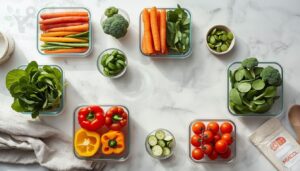
Not every vegetable holds up well after a few days in the fridge — and that matters more than most people realize. Picking the right ones from the start saves you time, reduces waste, and keeps your meals tasting fresh all week.
If you want to stretch that freshness even further, brushing up on proper vegetable harvesting techniques makes a real difference before anything even hits the fridge.
Here’s what actually works.
Long-lasting Fridge Staples
Stocking your fridge with the right vegetables is half the battle.
Carrots are a meal-prep MVP — carrot crispness tips always point to the crisper drawer with a loose bag, keeping them firm for up to four weeks. Bell peppers hold their pepper color retention for two weeks. Cabbage storage methods like a perforated bag stretch its shelf life to a month — serious bang for your buck.
Remember that opened chocolate syrup stays safe for up to six months in the fridge.
Quick-cooking Vegetables
Not every vegetable needs a long roast. Some are practically done before you finish washing your hands.
Spinach wilts in under a minute.
Snow peas and bell peppers hit tender-crisp in 3–5 minutes — perfect stir-fry timing for quick and easy weeknight dinner ideas.
Blanching benefits green beans too, locking in that bright color fast. Pair these with tofu or eggs for easy protein pairings.
Raw Options for Salads
Not all veggies need heat. Raw leafy greens like kale and cabbage are your best friends for vegetarian salads — they stay crisp for days without cooking.
Here’s what holds up best:
- Crunchy Greens — Kale and romaine stay firm 4–5 days in vegetarian meal prep containers or mason jars
- Colorful Veg Mix — Bell peppers and carrot matchsticks add crunch and color
- Nutty Toppings with Citrus Dressings — Pumpkin seeds plus a squeeze of lemon brighten everything
Store precut vegetables with Herb Infusions on the side to keep leafy greens fresh longer.
Seasonal Produce Picks
Beyond raw salads, seasonal produce selection for meal prep makes everything easier. Spring asparagus roasts beautifully in early May.
Summer tomatoes and cucumbers shine raw in bowls. Autumn pumpkins are perfect for seasonal vegetable roasting for meal prep.
Winter kale holds firm for days. Harvest herbs like dill and parsley finish each dish fresh.
Choosing the best vegetables for weekly meal prep starts at the market.
Tools That Speed Vegetable Prep
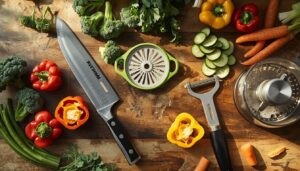
The right tools make vegetable prep faster and a lot less frustrating. You don’t need a fully stocked kitchen — just a few key pieces that do the heavy lifting for you.
Once you’ve prepped your vegetables, try some of these fresh garden vegetable pasta recipes to put them to good use right away.
Here’s what’s worth having on hand.
Sheet Pans for Batch Roasting
A good sheet pan is honestly the workhorse of batch cooking. Get the right one and Sunday prep becomes surprisingly fast.
Here’s what to look for:
- Pan Size — A half sheet pan (18×13 inches) fits most ovens and holds enough for 3–4 meals
- Material Choice — Heavy aluminum distributes heat evenly without warping
- Rimmed Edges — Contain oils and juices so your oven stays clean
- Perforated Airflow — Helps vegetables crisp instead of steam
- Cleaning Care — Hand wash and dry promptly to prevent rust
Roast your vegetable variety at 425–450°F for real caramelization. That’s your balanced meal prep foundation right there.
Spiralizers and Mandolines
Two tools that quietly transform your batch cooking game: a spiralizer and a mandoline.
A spiralizer performs batch spiralizing beautifully — think cold sesame noodles with spiralized vegetables ready by Monday.
A mandoline gives you precise slice thickness for salads and gratins.
Both tools include safety guards and removable blades.
Follow basic cleaning tips — hand dry blades immediately — and they’ll last for years.
Airtight Glass Containers
Once your vegetables are prepped, the right container keeps them fresh all week. Glass containers are the real MVP of food storage — and here’s why they work:
- Seal Technology locks out air and odor, acting as a true Odor Barrier
- Thermal Shock Resistance means safe freezer-to-microwave transitions
- Stackable Design saves fridge space
- Measurement Markings simplify portioning
Using glass containers for food storage is genuinely sustainable packaging for meal prep.
Labels and Portion Cups
Small details make a big difference in meal prep. Clear portion cups — usually made from PET or BPA-free materials — let you see exactly what’s inside without guessing.
Follow basic label placement rules: write the prep date and contents on every container. This helps portion size accuracy and cuts food waste.
Reusable containers, including glass containers and 2 compartment meal prep containers, stretch your budget further while keeping labeling standards consistent all week.
Simple Weekly Prep Workflow
Once you have the right tools ready, the actual prep work moves pretty fast. The key is following a simple order that keeps things from feeling scattered or overwhelming.
Here’s the step-by-step flow that makes Sunday prep feel less like a chore and more like a system that actually works.
Wash, Dry, and Trim
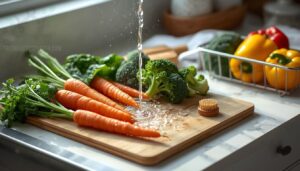
Think of this step as setting your week up for success.
Start with smart vegetable selection for meal prepping — pull any wilted leaves first. Keep detergent use minimal; cool running water works fine for most produce.
Use brush scrubbing on root vegetables with stubborn soil. Air drying techniques on a clean rack handle moisture control beautifully.
Finish with root trimming before storing your prep ingredients.
Chop by Meal Type
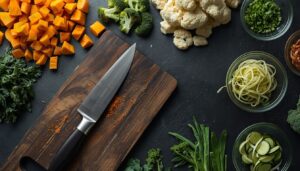
How you cut each vegetable actually decides how well your week goes. Match your cuts to your meals, and everything comes together faster.
- Uniform Dice firm veggies like sweet potatoes for grain bowls; Coarse Chops work best for batch cooking on sheet pans.
- Julienne Strips zucchini and cucumber for wraps and cold salads.
- Slice leafy greens into Leafy Ribbons; Mince Herbs right before storing.
Roast, Steam, or Sauté
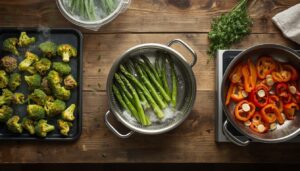
Once your cuts are done, cooking is where the week really takes shape.
Roast broccoli at 425 °F for 10–15 minutes — great nutrient retention and natural caramelization. Steam asparagus in under 10 minutes with zero oil usage. Sauté peppers over medium-high heat for quick flavor pairings with garlic. Matching cooking times to each method keeps textures right and batch cooking efficient.
Cool Vegetables Before Packing
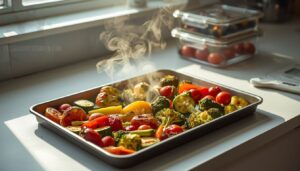
Once your vegetables come out of the oven or steamer, don’t rush them into containers. Hot food raises fridge temps and invites bacterial growth. Spread them on a shallow tray and let them cool first — that’s basic food safety.
For faster results, blast chiller use works well. Rapid hydro cooling and vacuum cooling benefits apply at scale. Temperature monitoring tools keep refrigerator storage safe and reliable.
Easy Meals to Assemble Fast
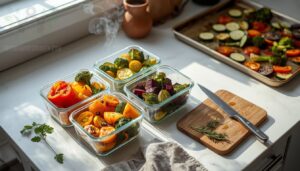
All that chopping and roasting you did on Sunday? It’s about to pay off.
Here are four easy ways to turn your prepped vegetables into real meals without much effort at all.
Grain Bowls and Salads
Once your vegetables are prepped, grain bowls practically build themselves. Start with a grain variety like farro (7g protein per half cup) or quinoa for texture balance.
Layer in protein pairings — roasted tofu, lentils, or chickpeas work great for vegetarian meal prep lunch and dinner recipes. Finish with seasonal toppings and flavor dressings like tahini lemon.
Store in mealprep containers for easy batch cooking with real vegetable variety.
Wraps and Lunchboxes
Wraps are basically grain bowls you can hold in one hand. Smart Tortilla Selection starts with whole wheat — 4g fiber per wrap keeps you full longer.
Here are five ways to nail your vegetarian lunchbox ideas for work and school:
- Spread hummus for moisture and flavor
- Add grilled tofu or chickpeas for Protein Pairings
- Use meal prep containers with dividers for Portion Control
- Pack ice packs for Temperature Management
- Choose reusable silicone bags for Eco-friendly Packaging
These vegetarian meal prep lunch recipes make assembling your vegetarian meal prep ideas genuinely fast.
Breakfast Veggie Options
Mornings move fast — that’s exactly why prepping breakfast veggies ahead pays off.
Spinach wilts in under a minute for Protein Veggie Omelets, while bell peppers and zucchini roast in 15 minutes for Breakfast Burritos or Veggie Toast.
A Sweet Potato Breakfast Bowl or balanced vegetarian breakfast ideas like overnight oats and chia pudding variations make these make‑ahead vegetarian recipes for the week genuinely stress‑free.
Dinner Sides and Soups
Pulling dinner together after a long day doesn’t have to mean starting from scratch. Your prepped vegetables make these five vegetarian meal prep dinner recipes almost easy:
- Roasted Root Medley – toss with olive oil and roast at 425°F
- Creamy Tomato Bisque – blend roasted tomatoes with Herb‑Infused Broth
- Cheesy Veggie Casserole – layer prepped vegetables and bake
- Spiced Lentil Soup – ideal for vegetarian soup and stew batch cooking
- Simple vegetarian side dishes – stored in vegetarian meal prep containers and organization systems for grab-and-go ease
Keep Prepped Vegetables Fresh
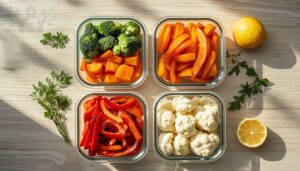
All that prep work deserves a solid finish line.
How you store your vegetables makes the difference between a fresh lunch on Thursday and a sad, soggy container you toss out.
Here’s what actually keeps everything tasting good through the week.
Refrigeration and Shelf Life
Your fridge is either your best ally or your biggest source of food waste — it all comes down to how you use it. Keep your produce drawer between 1–4°C for solid temperature control. Humidity management matters too — leafy greens need breathable bags while cut vegetables need sealed food storage containers.
Your fridge is either your greatest ally or your biggest source of food waste — it all comes down to how you use it
| Vegetable | Shelf Life | Storage Tip |
|---|---|---|
| Carrots & beets | 3–4 weeks | Airtight container |
| Broccoli & green beans | 3–5 days | Breathable bag |
| Cooked vegetables | 3–5 days | Sealed glass container |
Watch for shelf life indicators like wilting or off smells. Practice ethylene sensitivity awareness — keep apples away from your greens. Smart container sealing and these storage and shelf life tips for prep vegetables make batch cooking and freezer storage simple while supporting real food waste reduction through proper storage.
Avoid Soggy Vegetables
Soggy vegetables can ruin a week’s worth of prep fast.
Pat them dry before roasting, then preheat oven — around 425°F — and use single layer spacing on a parchment mat. A light oil coating helps crisp edges form. Flip midway through cooking.
For storage, keeping ingredients separate to prevent sogginess is key — dressings go on at serving time only.
Freeze Extras for Later
Batch cooking more than you need isn’t a mistake — it’s a strategy. Freezer-friendly lunch meal prep recipes start with solid Blanching Techniques: briefly boil peas, corn, or green beans, then ice-bath them fast.
- Freeze in 1–2‑cup portions for easy Portion Size Planning
- Use flat Freezer Bag Organization to stack and save space
- Apply clear Labeling Systems with prep dates
- Explore make-ahead vegetarian recipes using frozen batches
- Try fridge-overnight Thawing Methods to keep texture intact
Reheat Without Overcooking
Reheating is where most meal prep falls apart. Low-Heat Reheat is your best defense — think 250–300°F in the oven or 50–70% microwave power.
Moisture Retention matters too: mist veggies lightly before warming, then Cover and Rest for 2–5 minutes.
| Method | Best For |
|---|---|
| Steam Reheat | Delicate greens, broccoli |
| Oven low-heat | Roasted root vegetables |
| Stirred Timing | Soups and grain bowls |
Frequently Asked Questions (FAQs)
What are the easiest vegetables to meal prep?
Picture your fridge stocked and ready — Carrot Sticks, Snap Peas, Cucumber Rounds, and Baby Spinach waiting. Choosing the best vegetables for weekly meal prep starts with what actually lasts.
What vegetables keep well for meal prep?
Carrots, cabbage, and bell peppers are your best bets — they stay crisp for days to weeks.
Broccoli and kale hold strong too, making root veg storage and leafy green longevity your meal prep secret weapons.
Should I meal prep for postpartum?
Yes, absolutely.
The postpartum weeks are exhausting, but having ready-made, nutrient-dense meals helps your Postpartum Recovery Nutrition and keeps your Energy Boosting Meals on hand — no thinking required when you’re running on two hours of sleep.
Can you meal prep veggies for a week?
Absolutely — with the right meal prep schedule and a little ingredient prep, you can have fresh veggies ready all week.
Most hold up beautifully for four to five days when stored properly.
What’s a good vegetable to meal prep?
Broccoli, carrots, and bell peppers are your best bets.
They offer prep-friendly textures, solid vegetable shelf life, and colorful variety — hitting all the marks for smart, budget-friendly vegetable selection for balanced meal prep.
Can I meal prep veggies for the week?
You can — and it’s one of the smartest moves you’ll make all week. A little batch cooking on Sunday sets you up with fresh, ready-to-go vegetables every single day.
What vegetables can be prepped in advance?
Almost every vegetable in your fridge is quietly waiting to pull double duty all week.
Root Veggies like carrots, Leafy Greens like kale, and Cruciferous Picks like broccoli are your best vegetables for meal prep.
How long do meal prepped veggies last in the fridge?
meal prepped veggies last 3 to 7 days in the fridge. storage temperature range — at or below 40°F — is your best defense.
Airflow circulation and humidity levels matter more than most people realize.
How can I add more flavor to prepped veggies?
Flat veggies don’t have to stay boring. Seasoning blends, acidic finishes, and umami boosters transform bland into craveable. A little lemon, garlic, or tahini goes a long way.
What are safe reheating methods for vegetables?
Think of reheating like a second chance — don’t blow it. Use medium microwave power with a damp cover, steam 2–5 minutes, or oven-recrisp at 350°F. Follow the single reheat rule always.
Conclusion
Like a well-stocked pantry that makes weeknight cooking feel easy, easy vegetable meal prep turns chaos into calm. You’ve got the tools, the workflow, and the knowledge to make it work.
Crisp carrots, ready greens, roasted peppers—your fridge becomes a place where good meals actually start.
The hardest part is just beginning. Pick two or three vegetables this Sunday and build from there.
Your future self will thank you every single day.