This site is supported by our readers. We may earn a commission, at no cost to you, if you purchase through links.
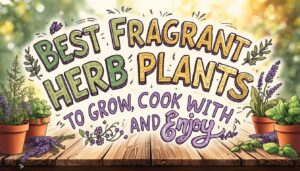
Rub a sprig of rosemary between your fingers and something almost chemical happens—your senses sharpen, your mood shifts, and suddenly the garden feels like a completely different place. That’s no accident.
Fragrant herb plants produce volatile essential oils as a survival mechanism, yet humans have been exploiting that chemistry for cooking, healing, and sheer sensory pleasure for thousands of years.
Lavender calms, basil brightens a sauce, thyme keeps pests at bay—these plants pull serious weight beyond their size.
Whether you’re designing a scented border, stocking a kitchen garden, or growing a few pots on a sunny windowsill, knowing which herbs deliver the most aromatic payoff changes everything.
Table Of Contents
- Key Takeaways
- Best Fragrant Herb Plants
- Fragrant Herbs for Cooking
- Designing a Scented Herb Garden
- Growing Fragrant Herbs Successfully
- Benefits of Aromatic Herb Plants
- Frequently Asked Questions (FAQs)
- What is the most fragrant herb plant?
- What herb is good for your pituitary gland?
- What are the most fragrant herbs?
- What are the aromatic herbs?
- What herb smells like perfume?
- What is a fragrant herb garden?
- What is a good fragrance plant?
- What shrubs are good for fragrance?
- Are herbs good for a garden?
- What flowers smell good?
- Conclusion
Key Takeaways
- Fragrant herbs like lavender, rosemary, and thyme produce volatile essential oils that do double duty — delivering real sensory and culinary value while naturally deterring garden pests.
- Scent intensity peaks just before flowering, so timing your harvest around that window makes a noticeable difference in both fragrance and flavor.
- Designing with layered aromas — rosemary as the base, lavender in the middle, mint up top — creates a garden that unfolds like a well-built perfume throughout the day.
- Most aromatic herbs thrive in the same conditions: full sun, well-drained soil, and light pruning every few weeks to keep essential oil production strong.
Best Fragrant Herb Plants
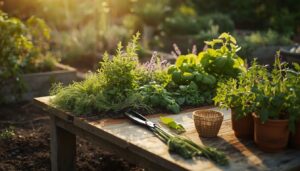
Some herbs earn their place in the garden twice over — once for how they taste and again for how they smell. Whether you’re planning a kitchen garden or just want something that makes your yard feel alive, fragrant herbs are hard to beat.
From calming lavender to bold rosemary, this guide to herb planting for fragrance helps you pair scents that actually complement each other in the garden.
Here are ten of the best to grow, cook with, and enjoy.
Lavender
Lavender (Lavandula angustifolia) is one of the most rewarding aromatic herbs you can grow. Its essential oils — primarily linalool and linalyl acetate — form the backbone of essential oil distillation worldwide.
A varietal comparison quickly reveals that Munstead and Hidcote offer the strongest garden fragrance. Harvest timing matters: cut stems just before full bloom for peak potency.
Culinary uses include teas, sauces, and marmalades. It prefers well‑drained soil preference for ideal growth.
Rosemary
Where lavender leans floral, rosemary hits you with something bolder — that piney, resinous aroma profile rooted in camphor and 1,8-cineole. Its historical culinary use spans Mediterranean kitchens for centuries, pairing naturally with roasted meats and garlic.
In herb gardening, it doubles as a pest deterrent plant along walkways. Propagation techniques via semi-hardwood cuttings keep your supply growing, and its essential oils peak just before flowering.
Basil
After rosemary’s bold resin, basil brings something warmer — a sweet, peppery fragrance underpinned by linalool and eugenol in its fragrant oils. It’s a cornerstone of Mediterranean herb varieties and uses, prized for both culinary uses and its basil essential oil profile.
- Basil growth cycle peaks in summer; pinch flowers to extend harvest
- Genovese, Thai, and lemon basil each carry distinct aromatic signatures
- Basil pest resistance improves with companion planting near tomatoes
- Basil historical uses stretch from Roman kitchens to Ayurvedic practice
- Basil seed saving is simple — let one stem flower and dry fully
Mint
Where basil leans warm and sweet, mint cuts through with cool clarity. That menthol-rich character comes straight from its fragrant oils — and it’s why mint essential oil is one of the most adaptable in herb gardening.
Spearmint vs peppermint is worth knowing: spearmint stays mild and culinary, peppermint hits harder. Control mint runner spread with containers, and prune regularly for peak mint seasonal growth.
Lemon Balm
Few herbs reward you quite as generously as lemon balm (Melissa officinalis). Its citrus aroma — driven by citral and rosmarinic acid — deepens on warm mornings or after rain.
Pair it with cucumber or honey for invigorating culinary uses, or steep fresh leaves for calming teas.
Its medicinal qualities shine too, with antifungal and antioxidant properties. Mind harvest timing to keep growth bushy and fragrant all season.
Thyme
Small but mighty, thyme punches well above its weight in both garden and kitchen. Its thyme chemotype determines aroma strength — common Thymus vulgaris carries the highest thymol levels, giving that sharp, earthy warmth. Its drought tolerance makes it ideal for rock borders, and thyme pollinator attraction brings bees consistently to bloom.
- Tuck it into slightly alkaline soil; thyme soil pH around 7 keeps fragrance strong
- Use thyme harvest techniques like snipping stems before flowering to increase essential oil concentration
- Its medicinal properties of aromatic herbs include antimicrobial support, and it works brilliantly in companion planting with fragrant herbs to deter aphids — making it one of the best pest deterrent plants for gardens
Oregano
Oregano earns its reputation as a workhorse perennial herb — and the carvacrol chemistry behind that punchy aroma is why dried oregano hits harder than fresh.
Oregano thrives even in poor soil, which is why understanding companion planting strategies for culinary herbs can help you build a garden where it — and everything around it — genuinely flourishes.
Ancient Greek uses ranged from wound care to pain relief, long before kitchens claimed it.
As a companion planting ally, it deters pests naturally, making it invaluable in herb gardening and landscape design where culinary uses and garden function overlap beautifully.
Sage
Few herbs pull double duty quite like sage. This Mediterranean herb variety grows to about 60 cm tall, with silvery, fuzzy leaves packed with cineole and camphor — the aromatic compounds behind its earthy, eucalyptus‑edged scent.
Common sage thrives in soil pH of 6.0–7.5, rewards light mulching in warmer climates, and shines in sage companion planting arrangements that naturally deter pests.
Marjoram
Sweet marjoram quietly earns its place among the most rewarding fragrant herbs for culinary use. Its molecular aroma — warm, honeyed, and faintly citrusy — releases beautifully in infused oil uses or stirred into butter.
Three reasons it belongs in your garden:
- Culinary timing matters — add it last to protect its volatile oils.
- Garden microclimate friendly — thrives in sandy, well-drained borders.
- Perennial herb resilience — move pots indoors when frost threatens.
Historical uses span Mediterranean kitchens for centuries.
Bee Balm and Catmint
Pairing Bee Balm and Catmint is one of the smartest moves in herb companion planting — together, they create garden aesthetic contrast while pulling in pollinators all season. Bee Balm’s citrusy-mint essential oil extraction potential makes it useful in fragrant herbs for culinary use, while Catmint’s drought tolerance comparison wins in drier beds.
Both spread through division, a simple propagation technique worth knowing.
Fragrant Herbs for Cooking
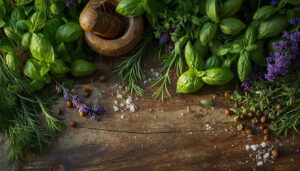
Fresh herbs do more than make a dish smell good — they build the whole flavor from the ground up.
Whether you’re simmering a pasta sauce, steeping a tea, or finishing a dessert, the right herb makes all the difference.
Here’s a look at the best ways to bring fragrant herbs into your everyday cooking.
Herbs for Sauces and Pasta
Getting your sauce to sing comes down to flavor layering with the right herbs. Italian herb classics like basil, oregano, and rosemary form the backbone of any great pasta aroma boost.
Here’s what earns a permanent spot in your pot:
- Basil – bright and sweet in tomato sauces
- Oregano – bold, earthy depth for meat ragùs
- Rosemary – piney warmth in garlic butter pasta
- Common Sage – rich, savory edge in cream sauce herbs
- Sweet Marjoram – gentle floral note for seasonal herb usage
Herbs for Teas and Drinks
From pasta pot to teacup, fragrant herbs shift gears beautifully. Lemon balm, chamomile, mint, and lavender each bring something distinct to herbal tea — but flavor layering depends on your blend ratios and steeping temperature.
Keep delicate flowers like chamomile and lavender around 85–90°C.
Try cold brew infusions with mint for a cooling finish, and let your tea vessel choice shape the final sip.
Herbs for Desserts and Syrups
From your teacup to your dessert plate, herbs like lavender and lemon balm carry that floral sweetness right into confections. Lavender syrup drizzled over panna cotta; mint folded into chocolate ganache — these herb‑infused drizzles work beautifully.
Citrus herb syrups using lemon balm brighten fruit herb glazes, while sweet marjoram rounds out rich sauces. Chocolate herb fusion with mint offers bold contrast without overpowering.
Herbs for Infused Oils and Butters
From syrup drizzles to something richer — infused oils and herb butters let fragrant herbs shine in a whole new way.
Lavender pairs beautifully with olive oil for baked goods, while rosemary’s piney depth suits bread dipping.
Basil, mint, and lemon balm each bring distinct aroma balance.
Master your infusion techniques, mind the oil butter ratio, and adjust for seasonal variations to extend shelf life naturally.
Best Herb Pairings in Recipes
When you understand how herbs talk to each other, your cooking transforms. Basil and tomato are the classic starting point — that bright anise note lifts acidity naturally.
Rosemary and garlic release piney Savory Herb Infusions in roasted dishes, while Citrus Herb Fusion combos like mint and lemon zest sharpen dressings beautifully.
Sage with brown butter, thyme in stews — these Herb Marinade Techniques and culinary herb flavor profiles never disappoint.
Designing a Scented Herb Garden
Designing a scented herb garden is less about following strict rules and more about putting the right plants in the right spots. Where you place fragrant herbs makes a real difference — both for how the garden looks and how much scent you actually enjoy.
Here are some practical ways to make every corner of your outdoor space work harder for you.
Fragrant Borders and Walkways
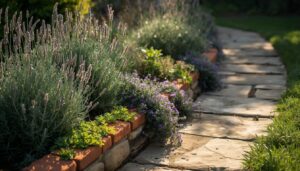
Layering fragrant herbs along borders and walkways turns every stroll into a sensory experience. Plant drought-tolerant borders with lavender and rosemary for reliable garden fragrance, then tuck creeping thyme as a low-growth groundcover along stone edges — its foot-traffic-activated aroma rises with each step.
Seasonal scent timing shifts from lavender’s spring peak to catmint’s summer notes.
Edge mulching strategies keep borders tidy and weed-free.
Container and Patio Planting
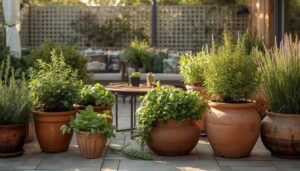
Container planting lets you bring fragrant herbs right onto your patio, where they’re both beautiful and useful.
Follow pot size guidelines — aim for 6 to 18 inches in diameter — and prioritize drainage system design with at least two holes per pot.
Microclimate positioning and windbreak placement protect tender growth, while seasonal repotting keeps your perennial herb care on track for culinary uses all season.
Window and Doorway Placement
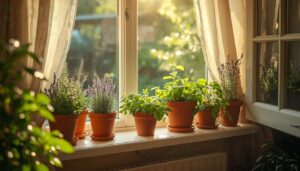
Where you place herbs near windows and doors can turn your home into a naturally scented space. Sill height optimization matters — sills at 14 to 18 inches align with easy harvesting and comfortable pruning postures.
South-facing windows increase orientation fragrance flow throughout the day, while a cross ventilation path between doorways and open windows pulls scented foliage aromas deep indoors. Balance window size light with privacy scent balance by positioning taller plantings above 60 inches.
Mixing Herbs for Layered Scent
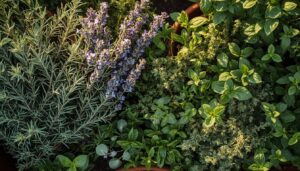
Think of your herb garden as a living perfume — built in notes that unfold over time. Fragrance layering follows a Base-Middle-Top Harmony: rosemary anchors with lasting depth, lavender smooths the middle, and mint delivers a bright first impression.
A layered herb garden opens like perfume: mint’s brightness fades into lavender, anchored by rosemary’s lasting depth
Contrastive Aroma Blends, try these Seasonal Scent Stacking combinations:
- Lemon balm + rosemary — citrus brightness over woody warmth
- Lavender + sage — floral calm with earthy staying power
- Thyme + mint — crisp, garden-fresh Scent Evolution Timing that holds for hours
- Basil + oregano — green-spice warmth with wholesome depth
Resinous Accent Pairings like juniper sharpen any blend. Companion planting with fragrant herbs lets each note breathe without competing.
Pollinator-friendly Herb Groupings
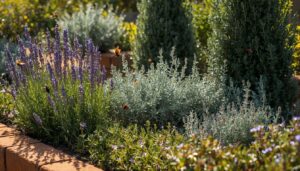
Your herb garden can double as a pollinator haven when you plan with intention.
Group lavender, oregano, and thyme in Nectar-Rich Plant Clusters along Edge Habitat Corridors to create continuous foraging lanes. Use Height Tiered Planting — rosemary behind sage, thyme as Groundcover Bee Pathways — to enhance Staggered Bloom Timing.
This pollinator-friendly herb garden design blends companion planting with herbs and fragrant culinary uses seamlessly.
Growing Fragrant Herbs Successfully
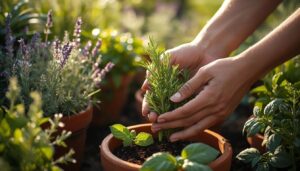
Growing fragrant herbs well comes down to understanding what each plant actually needs — and giving it that without overthinking things. The good news is that most aromatic herbs share similar preferences, so once you get the basics right, the rest follows naturally.
Here’s what you need to know to keep your herbs healthy, fragrant, and thriving.
Sunlight and Shade Needs
Light is the single biggest lever you can pull for fragrant herbs. Most want full sun — 6 to 8 hours daily — to push essential oil production to its peak.
- Sun Exposure Mapping guides smarter bed placement using orientation effects.
- Microclimate strategies help you exploit reflective walls or sheltered corners.
- Seasonal light adjustments keep shade-tolerant pairings like mint and lemon balm performing through shifting hardiness zones and full sun to partial shade conditions.
Soil and Drainage Basics
Once you’ve sorted out light, soil becomes your next make-or-break factor.
Most fragrant herbs demand well-drained soil — poor drainage suffocates roots and strips away the very scents you’re growing for.
Soil texture shapes your drainage class directly: sandy mixes drain fast, while clay holds water too long.
Improve either with a soil amendment using compost, which builds a healthy macro pore network, raises organic matter, and keeps soil moisture balanced.
Raised bed drainage fixes the trickiest spots effortlessly.
Watering Without Overwatering
Drainage sets the stage, but your watering habits seal the deal.
Stick to a Morning Watering Routine — leaves dry faster, and fragrance compounds build steadily through the day.
Practice Deep Zone Saturation: water slowly until the root zone is fully saturated, then stop.
A Mulch Moisture Buffer regulates evaporation between sessions, while Drip Emitters Timing keeps moisture consistent without waterlogging.
For containers, Pot Drainage Monitoring prevents soggy roots from silencing your herbs’ best scents.
Pruning for Stronger Fragrance
Once your watering rhythm is dialed in, pruning becomes your next lever for stronger scent. Timing pruning right — light cuts every three to four weeks — keeps oils concentrated in fresh growth.
Pinch growth tips on basil and mint at the leaf node, and practice deadheading techniques on lavender to redirect energy toward new blooms. Always prioritize tool sanitization; clean blades prevent disease that dulls fragrance fast.
Harvesting Leaves and Flowers
Knowing when to harvest is everything — that’s Peak Oil Timing in practice.
Collect mint using Morning Dew Harvest principles, snipping after dew dries for maximum essential oil extraction.
Use the Angled Cutting Technique, cutting stems at 45 degrees just above a node.
- Harvest basil just before flowering
- Store using Cold‑Storage Packaging in damp paper towels
- Air‑Dry Method works best away from direct sun
Indoor and Container Care Tips
Growing fragrant herbs indoors comes down to smart Pot Selection and consistent care.
Choose lightweight containers with drainage holes, group them for Air Circulation, and position them where they’ll catch 6–8 hours of light.
Stick to a Fertilizer Scheduling routine every 4–6 weeks during the growing season, practice regular Pest Monitoring, and your indoor herb cultivation techniques will keep flavors and fragrance at their peak.
Benefits of Aromatic Herb Plants
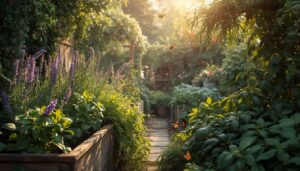
Fragrant herbs do a lot more than smell good — they pull real weight in the garden and beyond. From easing stress to drawing in pollinators, the benefits stack up fast once you start paying attention.
Here’s a closer look at what aromatic herbs can do for you.
Aromatherapy and Stress Relief
Fragrant herbs do more than please the senses — they deliver real therapeutic benefits. Lavender and bergamot contain calming compounds like linalool that ease nervous tension through direct inhalation or diffuser usage.
In clinical settings, aromatherapy and essential oils from herbs support stress and sleep management as non‑pharmacological comfort measures.
Always practice proper oil dilution before topical use, since these are concentrated substances.
Attracting Bees and Butterflies
Your herb garden can double as a pollinator paradise.
Nectar-rich blooms like lavender and Bee Balm draw bees and butterflies throughout the season, especially when you cluster them together. Colorful flower clusters and flat open blossoms give pollinators easy landing spots between cooking harvests.
Weaving native pollinator plants through your design adds shelter and nesting support, making the whole space genuinely pollinator-friendly.
Natural Pest Deterrent Plants
Some herbs pull double duty — seasoning your meals and quietly defending your garden. Volatile oil chemistry is the secret: thymol in thyme and oregano, menthol in mint, and camphor in rosemary create a scent wall pests simply won’t cross.
Smart companion plant strategies — like pairing basil with tomatoes or lavender near peppers — use seasonal pest timing to your advantage, turning your fragrant herb garden into a natural insect repellent that also attracts beneficial insects.
Traditional Medicinal Uses
Long before pharmacies existed, your garden was the medicine cabinet.
Lavender sachets doubled as Sleep Aid Sachets, lemon balm brewed into calming Digestive Comfort Teas, and rosemary served as one of the original Headache Relief Herbs through simple inhalation.
Mint and basil worked as Respiratory Soothing Infusions, while diluted lavender and basil compresses became trusted Skin Irritation Soothers — proof that Medicinal properties of aromatic herbs run surprisingly deep.
Year-round Garden Fragrance
Your garden doesn’t have to go quiet in winter. Rosemary and thyme deliver Evergreen Foliage Aroma through cold months, while Seasonal Bloom Staggering — pairing early lavender with late‑blooming mint — keeps scent moving across seasons.
Shelter tender plants in microclimates for Microclimate Scent Management, and try Mulch Enhanced Fragrance by layering aromatic trimmings at the base.
Year-round garden scent planning turns every season into something worth stepping outside for.
Frequently Asked Questions (FAQs)
What is the most fragrant herb plant?
English lavender wins on scent intensity metrics. Its essential oil concentration peaks on warm, sunny afternoons — peak aroma timing matters.
Climate impact, harvesting techniques, and variety all shape whether rosemary, mint, lemon balm, or basil rival it.
What herb is good for your pituitary gland?
Vitex chaste berry, Ginkgo circulation support, Kelp iodine, Bladderwrack thyroid balance, and Ho Shou Wu are commonly used herbs for pituitary health, alongside familiar garden staples like Lavender, Basil, Rosemary, Chamomile, and Sage.
What are the most fragrant herbs?
What makes a herb truly unforgettable? Sensory Perception begins with scent.
Lavender, Rosemary, Mint, Basil, and Lemon Balm top the list — their Fragrance Longevity, Culinary Aroma Uses, and Historical Aroma Legends make them timeless Essential Oil Extraction favorites.
What are the aromatic herbs?
Aromatic herbs carry essential oils in their leaves and stems, giving each plant its signature scent and flavor profile.
Basil, rosemary, mint, thyme, and oregano are the most common culinary uses go-tos.
What herb smells like perfume?
Lavender is nature’s perfume bottle. Its essential oil profiles blend floral and balsamic notes that rival commercial fragrances.
Rosemary, mint, lemon balm, and basil each add perfume-like notes with distinct floral scent synergy.
What is a fragrant herb garden?
A fragrant herb garden is a curated space where scent is the focal point. Through aroma zoning and scent layering, it creates sensory corridors that shift beautifully with each season.
What is a good fragrance plant?
A good fragrance plant balances aroma longevity, fragrance intensity, climate suitability, and culinary uses.
Lavender, rosemary, mint, and basil each offer distinct herb aroma profiling, companion planting value, and reliable scent across seasons.
What shrubs are good for fragrance?
Some shrubs practically fill an entire neighborhood with scent.
Lavender, Rosemary, Gardenia, Jasmine, and Osmanthus top the list — combining Evergreen Fragrant Shrubs, Low-Maintenance Scented Shrubs, Pollinator-Attracting Shrubs, Seasonal Fragrance Peaks, and smart Shrub Selection Criteria effortlessly.
Are herbs good for a garden?
Yes, herbs are excellent for any garden. They improve soil health, boost biodiversity, support companion planting, and attract beneficial wildlife — making your garden more productive, balanced, and alive with purpose.
What flowers smell good?
Some blooms hold their scent until dusk — release it all at once.
Lavender, jasmine, gardenia, and chamomile offer citrus floral notes, herbal flower aromas, and pollinator attracting scents across spring fragrant blooms and night bloom scents.
Conclusion
What happens next in your garden depends entirely on which fragrant herb plants you choose to grow. That single decision quietly shapes everything—what your kitchen smells like on a Tuesday evening, which pollinators find your borders, how your outdoor space feels at dusk.
These plants don’t just occupy soil; they change the atmosphere around them.
Start with one. Let it settle in.
Then watch how quickly one herb becomes the reason you plant ten more.
- https://en.wikipedia.org/wiki/Clethra_alnifolia
- https://www.semanticscholar.org/paper/e4938bea25004b177816338f071d81fc8d66e249
- https://aromaticmedicineschool.com/aromatherapy-for-stress-relief/
- https://health.clevelandclinic.org/stressed-out-aromatherapy-can-help-you-to-feel-calmer
- https://www.a-t-c.org.uk/blogs/homepage-articles/the-role-of-aromatherapy-in-managing-stress