This site is supported by our readers. We may earn a commission, at no cost to you, if you purchase through links.
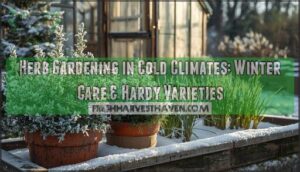
Most gardeners assume their herb collection must hibernate once temperatures drop, but that’s only half the story. Thyme keeps its leaves through snowstorms, sage laughs at -20°C, and chives return from frozen ground like clockwork every spring.
The real challenge with herb gardening in cold climates isn’t whether your plants can survive winter—many handle frost better than summer heat—it’s knowing which varieties thrive in harsh conditions and how to give them the protection they need.
Your climate zone determines which herbs will flourish year after year versus which ones need extra shelter or indoor relocation. Success comes down to matching the right species to your microclimate, preparing soil for proper drainage, and applying strategic protection methods that keep roots alive when temperatures plummet.
Table Of Contents
Key Takeaways
- Cold-hardy herbs like thyme, sage, and chives survive harsh winters down to -20°C with proper mulching and site selection, outperforming many gardeners’ expectations for year-round harvests.
- Strategic placement in south-facing microclimates and use of windbreaks can boost herb survival rates by 25-55%, turning site selection into your most powerful winter protection tool.
- Simple season-extension structures like cold frames and row covers raise nighttime temperatures by 3-7°C and cut frost damage by up to 60%, making them essential for protecting borderline-hardy varieties.
- Matching herb varieties to your USDA hardiness zone and specific garden microclimates—rather than relying solely on blanket protection methods—determines which plants will thrive versus merely survive through winter.
Essential Cold-Hardy Herbs for Winter Gardens
You don’t need to abandon fresh herbs just because winter is closing in. Several hardy varieties can handle frost, freezing nights, and unpredictable cold snaps without missing a beat.
Let’s look at the toughest performers that’ll keep your garden productive when temperatures drop.
Thyme – Versatile and Frost-Tolerant
Thyme cultivation stands as your most reliable choice for cold climate herb gardening, delivering outstanding frost tolerance down to -10°C with minimal shoot loss. This cold-hardy herb variety thrives when you follow these winter herb care essentials:
- Apply 5 cm mulch depth for 20–35% higher survival rates
- Practice strategic herb pruning to boost cold hardiness by 10–15%
- Choose creeping cultivars for excellent ground coverage
- Select south-facing locations to reduce frost damage by 15%
- Plan winter harvest knowing essential oils remain stable through cold snaps.
For optimal website performance, check the error log analysis to verify smooth access to herb gardening resources.
Sage – Resilient Mediterranean Favorite
Building on your thyme success, you’ll find sage (Salvia officinalis) equally dependable for cold climate herb gardening. This Mediterranean herb survives down to -20°C when protected from harsh winds and provided with proper drainage. Sage propagation from cuttings achieves a 70–85% success rate with bottom heat, while cold-hardy varieties demonstrate 15–40% better winter survival than standard cultivars.
| Winter Protection Method | Survival Benefit | Best Application |
|---|---|---|
| 5–8 cm mulch layer | 2–4°C temperature buffer | Late fall, after first freeze |
| South-facing sheltered beds | 25–40% higher survival | Initial planting site selection |
| Snow cover maintenance | 30–50% less desiccation | Natural or assisted accumulation |
| Windbreak barriers | 1.5–2.5× faster spring growth | Hedgerows or structural shields |
| Container mulching | 10–25% better foliage retention | Potted sage overwintering |
Your sage cultivation improves dramatically when planted against south-facing walls in well-drained soil. Trim established plants by one-third in late summer to increase next-season biomass by 20–35%. Cold-hardy varieties maintain usable foliage for 5–7 years under proper winter protection, making sage a cornerstone of sustainable winter gardening in zones 4–6.
Rosemary – Hardy Evergreen for Cold Climates
While sage brings resilience to your winter garden, rosemary (Rosmarinus officinalis) offers year-round evergreen care with proper frost protection. Select cold-hardy cultivars that survive -5 to -10°C in sheltered microclimates. Your rosemary pruning timing matters—trim in late summer to prevent vulnerable new growth before winter.
- Plant against south-facing walls for 2–4 hours extra winter sun
- Apply 5–10 cm mulch to buffer soil temperature fluctuations
- Use windbreaks to reduce desiccation in exposed sites
To guarantee the best results, consider conducting a literature review process to inform your gardening decisions.
Chives – Perennial Survivors
After securing your rosemary, you’ll find chives (Allium schoenoprasum) even more forgiving—these perennial herbs tolerate -20°C and bounce back reliably each spring. Frost tolerance lets established clumps survive zone 3 winters with 85–90% winter survival rates.
Microclimate effects matter: south-facing slopes extend longevity by 12–18 months. Divide every 2–3 years for vigorous chive propagation and excellent yields in your cold hardy herbs collection.
Parsley, Dill, and Fennel – Biennial and Perennial Options
Parsley, dill, and fennel offer adaptable biennial and perennial growth for cold-hardy herbs. Proper biennial care and perennial growth strategies optimize fresh harvests year-round.
Parsley varieties overwinter at 60–70% leaf yield in zones 5–6 with 5–7 cm mulch, delaying bolting by 2–6 weeks after frost. Dill harvesting peaks before flowering, while fennel cultivation in zone 7 achieves 55–70% survival under shelter.
Caraway and Comfrey – Unique Cold-Tolerant Choices
Caraway benefits extend beyond flavor—this biennial withstands -15°C with proper herb mulching, achieving peak volatile oil content during frosty nights. You’ll find seed germination reaches 40–70% in cold soil when started indoors.
Comfrey roots establish deep systems within two seasons, surviving -20°C and yielding 2–3 kg per plant. Both cold hardy herb varieties exemplify resilient winter harvesting options for herb gardening in cold climates.
Planning and Designing a Cold Climate Herb Garden
A successful cold climate herb garden starts long before you plant the first seedling. Your planning decisions—from choosing the right spot to matching herbs with your yard’s unique conditions—directly determine which plants will thrive and which will struggle through winter.
Your planning decisions—from site selection to microclimate matching—directly determine which herbs thrive and which struggle through winter
Let’s walk through the essential steps to design a resilient herb garden that works with your climate, not against it.
Assessing Your USDA Hardiness Zone

Your first step is understanding where you stand—literally. Zone mapping through the USDA hardiness system divides regions by average minimum winter temperatures, guiding your herb selections for cold climate gardening. Here’s how to leverage this climate analysis:
- Check the latest USDA zones map for updated regional data
- Note your zone’s typical frost dates and winter temperatures
- Research hardiness levels for frost-resistant plants in zones 4–6
- Identify microclimate effects like sheltered walls or slopes
- Consult zone-specific catalogs for cultivar cold hardiness ratings
Selecting The Best Garden Location
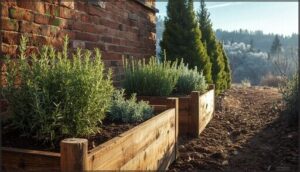
Your site selection can make or break winter herb success. Data shows that gardens near south-facing walls gain 1–2°C warmer microclimates, boosting herb activity by 40%. Raised beds cut root saturation risk by 60% during freeze-thaw cycles, while natural windbreaks improve survival rates by 55%.
Avoid frost pockets in low-lying areas—they experience 1–2°C colder temperatures than elevated sites, compromising cold hardiness across USDA zones.
Designing Layout for Maximum Sun and Shelter

Think of your winter herb garden as a solar collection system—layout optimization starts with mapping sun exposure. South-facing slopes capture 15–25% more winter light than flat plots, while microclimate mapping reveals 2–4°C hotspots across your site.
Position your coldest-tolerant herbs in exposed zones, reserving sheltered spots near walls for tender varieties. Effective climate zoning cuts frost losses by 40%, turning garden planning into a precision craft that respects USDA zones and cold hardiness realities.
Matching Herb Varieties to Microclimates
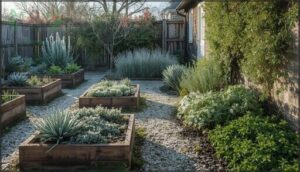
Match your herb selections to garden microclimates—elevated beds with 1–2°C warmer soil temperature boost overwinter survival by 60% in USDA zones 5–7. Sheltered sites with windbreaks push sage survival from 68% to 82%, while south-facing microclimates increase thyme and oregano yield by 25%.
Your microclimate analysis transforms frost protection from guesswork into strategic placement of winterhardy herbs and frost-resistant plants.
Calculating Plant Quantities and Spacing

Proper plant density is crucial for achieving cold hardiness success in your herb garden. Strategic spacing techniques are essential to balance the layout with soil depth requirements. Here are some key spacing guidelines for various herbs:
- Thyme and oregano: 4–6 perennial herbs per square meter for vigorous ground cover
- Rosemary: 60–90 cm spacing ensures airflow and mature growth
- Parsley clusters: 20–30 cm between plants maximizes crop yield
- Sage: 60–90 cm accommodates woody spread
- Mixed borders: 50–70 cm between herb groups prevents crowding
These herb gardening tips not only enhance plant care but also help reduce frost stress, contributing to a healthier and more productive garden.
Winter Care and Protection Strategies for Herbs
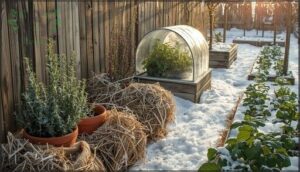
Once you’ve chosen your hardy herbs and planned your garden, the real work begins—protecting them through winter’s worst. The right strategies can mean the difference between thriving plants and a disappointing spring.
Let’s walk through five proven approaches that’ll keep your herbs healthy when temperatures drop.
Soil Preparation and Drainage Improvement
Healthy roots need oxygen, even in winter. To improve soil aeration, work in coarse organic matter and grit throughout the top 15 cm. This enhances drainage by 25–35% and prevents surface crusting.
If your soil stays soggy, consider raised beds 15–20 cm high or install perforated drainage tubes at 30–45 cm depth to cut waterlogging by up to 60%.
Effective Mulching Techniques for Insulation
Once drainage is sorted, you’ll want a solid winter blanket over your herbs. Organic materials like straw, shredded leaves, or pine bark work wonders for soil insulation and frost prevention.
Aim for a mulch depth of 4–6 inches around hardy plants—just leave a 2–3 inch gap near stems to prevent crown rot. This simple layer stabilizes temperature swings and keeps roots cozy through freeze-thaw cycles.
Using Row Covers, Tunnels, and Cold Frames
Row Cover Materials and tunnel construction give you flexible season extension techniques beyond mulch. Low mini hoop tunnels raise nighttime air temps by 3–7°C, cutting frost damage by up to 60%. Cold frame designs with clear tops can boost daytime warmth by 5–15°C on sunny winter days.
These garden cover options—including portable cloche setups—create powerful microclimate management zones for your tender herbs.
Best Practices for Pruning and Maintenance
Sharp, sanitized pruning shears are your first line of defense—sterilization cuts disease transmission by up to 90% between plants. Time your cuts for late winter when temps exceed -2°C to reduce tissue damage risk by ~60%.
Light tip-pinching on thyme boosts dense regrowth by 14%, while sage crown pruning lowers winter lodging 20–25%.
These pruning techniques and tool sanitation practices protect your cold-tolerant herb varieties and support vigorous regrowth strategies.
Container Growing and Indoor Placement Tips
Container selection matters—ceramic or plastic air-drier pots improve indoor humidity control, while self-watering designs boost survival by 28% in low-light environments. For winter herb gardening, frost-resistant plants like cold-tolerant herb varieties thrive with specific container growing strategies:
- Position containers in south-facing windows for 5.5 hours of daily direct sun
- Maintain 15–20°C root-zone temperature control for ideal essential oil synthesis
- Use supplemental LED grow lights at 300–400 μmol m⁻² s⁻¹, extending growing days by 28%
- Select 15 cm pots for stable soil management when temps drop below 5°C
Proper indoor lighting and humidity levels guarantee herb gardening for beginners succeeds year-round.
Top 5 Tools and Products for Cold Climate Herb Gardening
The right tools can make the difference between herbs that merely survive winter and those that truly thrive through the cold months. From protective structures that shield plants from harsh winds to seed varieties bred specifically for cooler conditions, strategic investments pay off in healthier growth and better yields.
Here are five essential products that will help you extend your growing season and protect your cold-climate herb garden.
1. The Year Round Vegetable Gardener
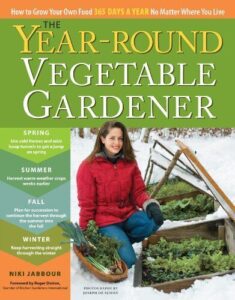
You’ll find everything you need for cold climate herb gardening in Niki Jabbour’s 256-page guide, published by Storey Publishing in 2011. This book walks you through season extension using cold frames, low tunnels, and unheated structures that protect frost-resistant plants down to -10°F.
Her proven vegetable planning and winter harvesting techniques from a Nova Scotia garden demonstrate how cool season crops and herbs like parsley thrive under protective covers.
The detailed gardening techniques and winter gardening tips make this an essential resource for mastering winter herb gardening in challenging climates.
Best For: Gardeners in cold climates (USDA Zone 5 and colder) who want to harvest fresh vegetables and herbs year-round using simple protective structures.
- Proven techniques from a real Halifax garden show how to harvest greens and herbs even when temperatures drop to -10°F, with clear timelines based on your local frost dates
- Practical DIY instructions for building affordable cold frames and low tunnels that extend your season by 4–8 weeks on each end without needing heated greenhouses
- Detailed crop lists identify 30 cold-hardy vegetables and herbs, plus succession planting schedules that keep your beds producing continuously through winter
- The northern climate focus means gardeners in hot, dry regions will need to adapt most techniques since the book targets areas with regular hard freezes
- You’ll need basic gardening knowledge going in—the book assumes you understand fundamentals like soil preparation and aren’t starting from scratch
- The intensive planting approach and multiple structure-building projects require significant time and effort that might feel overwhelming for casual gardeners
2. Portable Wooden Garden Greenhouse Frame
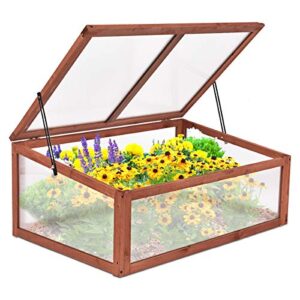
Think of a portable wooden cold frame as your herbs’ winter coat—providing shelter when temperatures plunge. This 39.5″x25″x15″ Chinese fir structure features a foldable polycarbonate lid that captures sunlight while shielding frost-resistant plants from harsh winds.
You’ll reduce soil temperature swings by up to 4°C with proper placement against south-facing walls, extending your harvest window by 2–6 weeks.
The adjustable hinged top allows ventilation control, making it perfect for winter herb gardening with thyme, sage, and parsley thriving underneath.
Best For: Gardeners in cold climates who want to extend their growing season for herbs and seedlings without committing to a full-sized greenhouse.
- Foldable lid lets you control ventilation and protect plants from rain while maximizing sunlight exposure
- Lightweight at 9.7 lbs and easy to move around your patio or garden as sun patterns shift
- Chinese fir construction provides natural insulation that can reduce heat loss by up to 15% compared to metal frames
- Not sturdy enough for heavy snow or strong winds—you’ll need to bring it inside or anchor it during storms
- Wood isn’t pre-treated, so you’ll need to waterproof it yourself and reseal joints annually to prevent rot
- Lacks insulation, meaning you’ll still need to cover or heat plants during hard freezes below critical frost thresholds
3. Protective Plant Growth Cloches Set
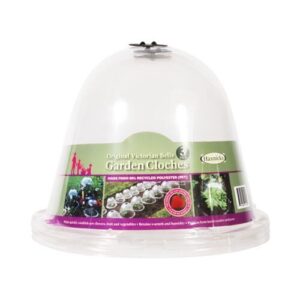
When unexpected frosts threaten your tender herbs, these vacuum-formed APET cloches act as personal bodyguards for each plant. Research shows protective cloches boost winter herb survival by 22–38% during cold snaps—vital frost prevention for your rosemary and sage.
The patented 13″ dome design maximizes light penetration while creating stable microclimate management through adjustable vents. You’ll control temperature, humidity, and airflow with precision, building mini cold frames over individual plants.
Though the thin plastic won’t withstand extreme weather year-round, these reusable domes excel at garden insulation during transitional seasons when frost-resistant plants need extra protection.
Best For: Gardeners in mild-to-moderate climates who want affordable frost protection for individual herbs and young plants during spring and fall transitions.
- Patented dome shape with adjustable vents lets you fine-tune humidity and airflow while maximizing light penetration for healthy growth
- Research-backed results show 22–38% better survival rates during unexpected frosts compared to leaving plants exposed
- Reusable design comes in a 3-pack, making it cost-effective for protecting multiple herb varieties at once
- Thin APET plastic isn’t durable enough for extreme weather—expect cracking under heavy rain, strong winds, or deep freezes
- Vent caps are flimsy and prone to breaking, which limits your ability to regulate temperature over time
- Not suitable for summer use or year-round protection, so you’ll need to swap them out seasonally
4. Portable Mini Greenhouse Tunnel Dome
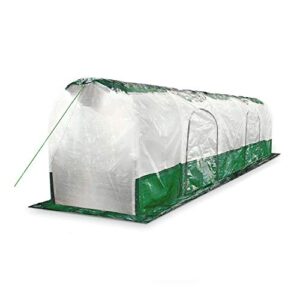
For year-round herb garden protection across larger beds, this 118″ stainless steel tunnel dome transforms winter gardening strategies. Studies confirm that mini hoop tunnel designs increase soil temperatures by 2–6°C on cold nights—critical winter insulation for thyme and chives—while extending your growing season by three full weeks.
The transparent polyethylene cover creates an efficient mini greenhouse, with tunnel venting options that prevent overheating during sunny days. Setup takes just 15–45 minutes, and this cold frame alternative costs $50–$150 depending on frame durability—practical greenhouse gardening without the premium price tag.
Best For: Gardeners with raised beds or small plots who want affordable frost protection and season extension without investing in a full greenhouse.
- Raises soil temps 2–6°C on cold nights and adds up to 21 extra growing days per season, keeping herbs like thyme and rosemary alive through winter
- Quick 15–45 minute setup with good portability, so you can move it around to catch sun or shelter different beds as seasons change
- Budget-friendly at $50–$150 for entry models—way cheaper than building a permanent greenhouse structure
- Durability is hit-or-miss with zippers and seams wearing out, and the standard plastic cover typically needs replacing after 2–3 seasons
- Size might feel cramped for larger gardens, and some users complain the door openings are too small for easy access
- Not built for high winds or extreme weather—you’ll need to anchor it well and maybe bring it in during storms
5. Greek Oregano Herb Seeds Packet
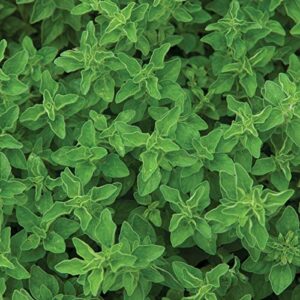
To establish your own cold climate herb gardening source, Greek oregano seed packets deliver reliable germination with cold stratification practices—a 10–15% boost when seeds undergo cold-moist treatment before spring sowing.
This frost-resistant variety thrives in zones 1–11, producing 200–400 plants per 10 square feet with proper herb sowing techniques. Greek cultivation methods emphasize shallow sowing depth (1–2 mm) for 75% average germination over 14–21 days.
Winter gardening success hinges on oregano varieties bred for exceptional cold tolerance, sustaining growth down to 23°F with mulch protection.
Best For: Gardeners in cold climates who want a reliable, frost-tolerant herb that survives harsh winters and delivers strong flavor year after year.
- Cold stratification boosts germination by 10–15%, and the variety handles temperatures down to 23°F with basic mulch protection.
- Each packet produces 200–400 plants per 10 square feet, giving you plenty of oregano for cooking or sharing.
- Perennial growth means it comes back every spring without replanting, and overwintered plants actually develop stronger flavor.
- Germination takes 14–21 days and needs consistent moisture during the first few weeks, so it’s not a quick-start herb.
- Seeds lose viability fast if stored above 68°F, meaning you need cool, dry storage to keep them fresh.
- Some customers report misleading packaging or poor-quality seeds that don’t sprout, so seed quality can be hit or miss.
Frequently Asked Questions (FAQs)
Can I harvest herbs during winter months?
Yes, you can harvest winter herbs like thyme and rosemary, which show 60%+ survival rates in zone
Parsley persists through milder winters under protective covers, delivering fresh flavor when you need it most.
How do I transition outdoor herbs indoors?
Sure, bring your tropical basil inside—it’ll probably sulk anyway.
For real success with indoor lighting and temperature control, gradually acclimate hardy herbs like rosemary over two weeks, adjusting potting mix and humidity management for winter herb cultivation.
What pests affect herbs in cold weather?
Aphids, slugs, and fungus gnats target winter herbs, reducing essential oils and causing foliar damage. Spider mites thrive indoors under low humidity, while cold frames with poor drainage invite root rot and pest pressure.
Do herbs need fertilizer during winter dormancy?
Most cold-tolerant herb varieties don’t require fertilizer timing during winter dormancy—excess nitrogen disrupts dormancy care and hardening. Instead, apply soil amendments like compost before frost.
Resume winter nutrition with balanced feeding once frost-resistant plants show spring growth.
How often should I water herbs in winter?
Check your herb’s soil moisture by feeling the top inch—if it’s dry, water lightly.
Winter herbs in containers usually need watering every 7-14 days, while outdoor beds require even less frequent irrigation.
Conclusion
Think of your winter herb garden as a well-insulated home: the right foundation and protection transform survival into success. With proper drainage, strategic mulching, and cold-hardy varieties matched to your zone, herb gardening in cold climates becomes remarkably straightforward.
Your thyme will endure snowfall, your sage will outlast harsh winds, and your chives will emerge each spring without fanfare. The plants have the hardiness—your job is simply providing the shelter they need to express it.