This site is supported by our readers. We may earn a commission, at no cost to you, if you purchase through links.
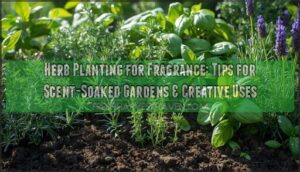
A single pinch of thyme between your fingers can conjure memories of sun-warmed hillsides and wild fields. There’s undeniable magic in the way one handful of rosemary or a stand of basil transforms not just your garden, but the air you breathe at home.
Herb planting for fragrance isn’t reserved for perfumers or botanical experts—it’s for anyone seeking a daily dose of pleasure with every breeze. With each thoughtfully chosen plant, you’ll craft a living palette of scents, ready to enrich your senses and inspire a thousand uses, indoors and out.
Table Of Contents
Key Takeaways
- Choosing and pairing fragrant herbs like lavender, rosemary, mint, and basil lets you create a sensory-rich garden with both bold and soothing scents.
- Layering aromatic plants along walkways or borders, and grouping them for synergy, enhances fragrance and attracts pollinators for a lively, scented space.
- Maximizing essential oil yield depends on smart soil, sunlight, and harvest timing, while gentle drying and careful storage lock in herbal aroma for months.
- Fragrant herbs aren’t just garden décor—they offer culinary delights, natural pest control, and easy DIY uses like sachets and teas for daily enjoyment.
Best Fragrant Herbs to Plant
If you’re after a garden that wraps you in fresh, layered scents, it all comes down to the herbs you choose. Each plant brings a distinct note to the mix, from lush and citrusy to deep and earthy.
Here’s a look at some of the best fragrant herbs that can turn your space into a living, breathing perfume.
Top Aromatic Herbs for Gardens
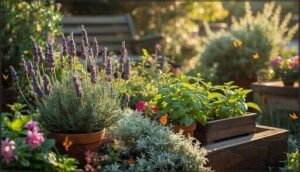
Fragrant Herb Selection is a joyful act of self-indulgence—think lavender’s calming sway, rosemary’s piney flare, and mint’s sharp call rising from crushed leaves. These aromatic plants transform ordinary plots into scented gardens, with thyme carpeting pathways and basil soaking up the sun.
Fragrant herbs like lavender, rosemary, and mint turn any garden into a scented sanctuary alive with lush, aromatic charm
Smart Herb Garden choices set the stage for bold Aroma Enhancement Techniques and lush, Perfume Plant displays.
Herb Fragrance Profiles and Characteristics
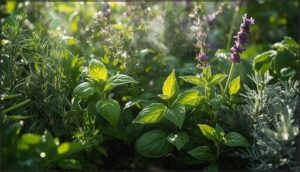
Every Scented Leaf has a secret—a complex cocktail of essential oils and volatile compounds that shape each herb’s personality. From the piney aroma intensity of rosemary to the sharp menthol rush in mint, fragrance chemistry ensures aromatic plants like basil or lavender are never one-note.
Scent variation in fragrant herbs turns the garden into your personal perfumery.
Selecting Herbs for Your Scent Preferences
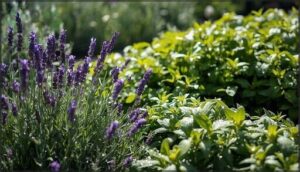
So, once you’ve discovered the heady world of herb fragrance profiles, you get to play matchmaker: bold rosemary for punchy borders, lemon balm for a citrus lift, or lavender for lasting calm.
Think of your herb garden as a living palette—herb pairing and scent classification help you build custom blends for perfume plants, teas, or pure aromatherapy.
Designing a Fragrant Herb Garden
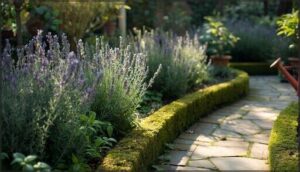
Every fragrant garden feels like a work of art shaped by your senses. Whether you crave bold scents or subtle whispers, there’s a way to plant for the mood you want.
Let’s explore a few inviting ways to shape your own aromatic oasis.
Sensory Garden Layout Ideas
Let’s turn your garden stroll into a daily escape—Fragrance Mapping, Scent Trails, and Aroma Layers hold the secret. Winding pathways edged with aromatic foliage plants spark a true Sensory Garden Experience.
Use bold Garden Zoning and thoughtful Pathway Design to create pockets of scent. This Scented Garden Design invites longer linger, stirring lasting Fragrance Garden Inspiration.
Companion Planting for Enhanced Aromas
Once you’ve felt the lift of true Aroma Synergy, you’ll never go back to planting in isolation. Herb Clustering with aromatic plants like rosemary, thyme, or basil boosts Scent Enhancement throughout your Fragrance Garden.
Smart Fragrance Pairings also intensify the bouquet but encourage Pollinator Dynamics—turning your Scented Garden Design into a sensory magnet for bees and butterflies.
Using Herbs as Ground Covers and Borders
Ground Cover Options like creeping thyme or mint turn Fragrant Pathways into living carpets—release a cloud of scent with every step. Along garden edges, Border Plantings of lavender or marjoram create Scented Edgings that double as natural weed barriers.
Aromatic Herb Plants aren’t only for seasoned gardeners; they’re easy gateways for Herb Gardening for Beginners craving striking, scent-soaked landscapes.
Planting and Growing Tips for Fragrance
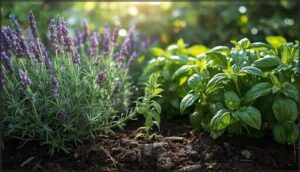
Planting a truly fragrant herb garden starts with a few simple, intentional choices. Every scent in your garden is shaped by how you nurture the soil, sunlight, and plants themselves.
Here’s what to keep in mind if you want every breeze to carry a burst of natural aroma.
Soil, Sunlight, and Watering Requirements
Craving a lush, fragrant garden that’s truly intoxicating? Dial in your soil pH levels near 6.5, and choose sandy loam over dense clay for better drainage systems and fragrance.
Most aromatic herb care begins with six-plus sunlight hours, steady watering schedules (don’t drown them!), and—if you’re just starting out—selecting gentle fertilizer types. Smart choices, bold fragrance. Gardening tips worth their weight!
Maximizing Essential Oil Production
Want richer scents in every sprig? Time your harvest just as fragrance peaks—like basil before flowering or lavender at first bloom—to boost essential oil yield. Quick, gentle distillation preserves the heart of your herbs.
Whether you dream of natural perfume, home aromatherapy, or culinary magic, each step in essential oil production shapes the depth and joy of your garden’s fragrance.
Indoor Vs. Outdoor Fragrant Herb Gardening
Ever wondered whether your basil prefers basking beside a sunny kitchen window or thriving wild outdoors?
Indoor herb gardening offers stable warmth and higher essential oil concentration—especially with strong indoor lighting—while outdoor gardens reward you with lush growth and deep floral scent, thanks to shifting climate and soil conditions.
Each approach invites its own rhythm and richness into your scented gardens.
Harvesting and Maintaining Aromatic Herbs

Tending to your aromatic herbs is where the magic really happens. Knowing when and how to harvest, prune, and store these plants makes all the difference in fragrance and flavor.
Here are the essential steps for keeping your scented garden thriving.
Optimal Harvest Times for Peak Scent
There’s a secret art to Harvest Scheduling—timing your harvest by the rhythm of peak scent. Lavender and lemon balm hit their fragrance peaks at full bloom, while thyme and basil release maximum oil yield just before flowers open.
Use evening or cool-morning harvests for richer aroma in aromatic plants for gardens, preserving every priceless note for herbal scent uses.
Pruning and Propagation for Fragrance
Catch the fragrance at its boldest—snip or pinch your herbs right after their first flowering cycle. Pruning Techniques aren’t just for looks; they nudge your plants to intensify scent, especially in rosemary and lavender.
For longer-lasting garden fragrance, lean into these tricks:
- Take morning cuttings for stronger aroma.
- Layer mint for better Fragrance Retention.
- Propagate thyme by cuttings for Scent Enhancement.
Preserving and Storing Fragrant Herbs
Once you’ve trimmed those fragrant stems, the clock starts ticking on volatile compounds. Freeze drying locks in up to 90% of herbal fragrance—way ahead of air-drying’s 60–80% aroma retention.
Store your harvest in opaque, airtight containers to slow fragrance loss, keeping that essential oil punch alive for aromatherapy benefits or natural perfume options down the road.
Creative Uses for Fragrant Herbs
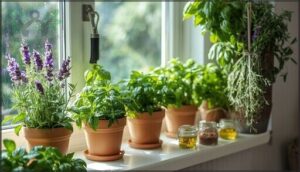
Fragrant herbs offer a world of possibilities beyond the garden bed. Their scents and flavors can infuse countless aspects of your daily life.
Here’s how you can make the most of your aromatic harvest.
Culinary Applications for Aromatic Herbs
Let’s be bold: a handful of freshly clipped rosemary or basil can utterly transform your kitchen. Using Culinary Herbs from your own fragrant herb gardening is the secret to real flavor enhancement and unmistakable herbal fragrance in cooking.
Whether you’re whisking up a herby vinaigrette, layering Aromatic Marinades over grilled meats, or stirring minced thyme into Scented Desserts, incorporating herbs with high antioxidant properties can also boost the nutritional value of your dishes.
DIY Herbal Sachets, Teas, and Crafts
You know that lift you get from a sprig of basil in a summer salad? That same spark brings pleasure to Sachet Making and Aroma Therapy.
Get bold with Herb Blending—combine lavender, rosemary, and mint for Herbal Crafts that refresh closets or soothe minds.
Herbal Crafting Ideas range from DIY Fragrance Crafting to teas, turning your harvest into everyday perfumery and gentle Herbal Remedies.
Natural Pest Control and Aromatherapy Benefits
Freedom from garden woes comes easy when you lean into essential oils. Your fragrant herb garden doubles as a haven for natural pest control and your own mini aromatherapy retreat. Mint and rosemary act as potent pest deterrents, while lavender’s essential oil brings fragrance therapy and scented remedies together, offering both gentle herbal remedies and teas to soothe body and mind.
Frequently Asked Questions (FAQs)
How do you prevent herbs from losing their scent?
Seal in scent with swift harvest timing, gentle drying methods, and proper storage—think cool, airtight, and low light.
Aromatic herb plant care, especially for essential oil-rich herbs, is your secret for lasting garden fragrance and vibrant essential oil uses.
Which fragrant herbs are pet-safe for gardens?
If you’re looking for pet safe herbs that scent your garden, reach for lavender, lemon balm, thyme, basil, and rosemary. Each brings lovely aromas yet maintains low toxicity levels—making your fragrant ground truly pet friendly.
What herbs keep their fragrance through winter months?
As they say, “The scent of memory lingers longest in winter’s breath”—Lavender, Rosemary, Thyme, Sage, and Lemon Balm shine as Cold Hardy Herbs, mastering Seasonal Scent Retention and Winter Herb Care as true Fragrant Evergreens.
Can fragrant herbs grow well in small containers?
Fragrant herbs like basil, mint, and thyme thrive in small containers with proper soil quality and water management. Root restriction doesn’t hurt fragrance retention, making container gardening ideal for weaving scented leaf herbs into any herb garden design.
Conclusion
Like a secret door left slightly ajar, a garden alive with scent invites you to linger. Herb planting for fragrance isn’t just about pretty leaves—it’s about moments: brushing your hand over mint, catching basil on a summer wind, or sharing rosemary’s resinous memory with someone you love.
In a world desperate for small magic, your scent-soaked sanctuary stands ready. Step outside, breathe deeply, and let the old routines dissolve in an air perfumed by your own hands.