
This site is supported by our readers. We may earn a commission, at no cost to you, if you purchase through links.
Clay soil has a reputation for being the gardener’s nemesis—sticky when wet, rock-hard when dry, and seemingly determined to suffocate anything you plant. But here’s what most frustrated gardeners miss: that same dense, heavy soil holds more nutrients than almost any other type. It’s structure that’s the problem, not what clay lacks. Once you understand how to work with clay’s natural chemistry rather than against it, you can transform even the most stubborn, waterlogged bed into genuinely productive growing ground.
These steps will show you exactly how.
Table Of Contents
- Key Takeaways
- Identify Clay Soil in Your Garden
- Test Soil Before You Amend
- Add Organic Matter The Right Way
- Improve Drainage and Soil Structure
- Use Gypsum and Sand Carefully
- Plant Cover Crops and Mulch
- Maintain Healthy Clay Soil Year-Round
- Frequently Asked Questions (FAQs)
- How to turn clay soil into good garden soil?
- Can you improve clay soil over time?
- How to make clay soil better for gardening?
- What is the best additive to improve clay soil?
- What breaks up clay soil in the garden?
- Do coffee grounds improve clay soil?
- How to break up heavy clay soil naturally?
- How to turn clay back into dirt?
- Do coffee grounds help break up clay soil?
- What is the best soil improver for clay soil?
- Conclusion
Key Takeaways
- Clay soil’s real problem is poor structure, not lack of nutrients — fix the structure with organic matter like compost or leaf mold, and the soil’s natural fertility does the rest.
- Testing your soil before adding anything isn’t optional — knowing your pH, organic matter level, and nutrient balance stops you from wasting time and money on the wrong amendments.
- Sand makes clay worse, not better — gypsum, compost, and cover crops like daikon radish are the amendments that actually break up compaction and improve drainage.
- Improving clay soil is a long game, not a one-time fix — consistent seasonal habits like mulching, cover cropping, and avoiding foot traffic on wet beds compound into genuinely productive growing ground over time.
Identify Clay Soil in Your Garden
Before you need to know for certain that you’re actually dealing with clay soil, you need to know for certain it’s clay.
A quick look at simple clay soil tests can save you a lot of guesswork before you start amending anything.
The good news is that clay gives itself away pretty easily if you know what to look for. Key signs to check in your own garden will help confirm its presence.
Key Characteristics of Heavy Clay Soil
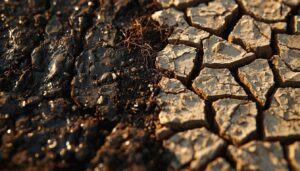
Heavy clay soil is basically a dense particle matrix — particles smaller than 0.002 mm packed tightly together, creating serious drainage problems.
That sticky wet texture clings to your boots like glue, while the hard dry crust in summer could double as pottery clay.
Its thermal mass delay keeps your beds cold longer in spring, though the high cation exchange capacity does hold nutrients well.
Its high water holding capacity can retain moisture for weeks, reducing the need for frequent irrigation.
Simple Ribbon, Squeeze, and Feel Tests
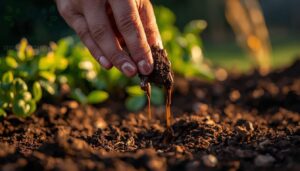
Grab a small handful, moisten it just enough to feel cool and cohesive — that’s your moisture calibration sweet spot. Roll it between your thumb and forefinger. Clay soils form a ribbon exceeding 2.5 cm before breaking — your ribbon length threshold for quick field recording.
Sandy soils crumble instantly.
The squeeze pressure guide is simple: clay resists, holds shape, and feels plastic. Surface feel cues — smooth, sticky, slightly slippery — confirm it.
Signs of Poor Drainage and Crusting
Beyond the ribbon test, your garden will give you even louder signals.
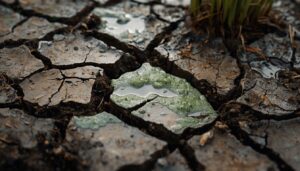
Surface water pooling for hours after rain, hard soil crusts that crack into polygonal plates, a sour stagnant soil odor from waterlogged pores, gray soil color just below the surface, and algal film growth on persistently wet patches — these are drainage problems your clay is broadcasting.
Don’t ignore them.
How Compaction Affects Roots and Growth
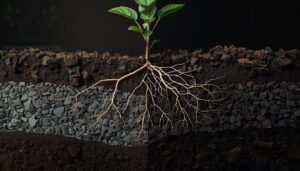
All those drainage problems point to the same culprit underneath: soil compaction. When clay packs tight, aeration deficits starve roots of oxygen, triggering hormonal stress—your plant pumps out ethylene and closes its stomata just to cope.
Fine root loss follows fast, cutting nutrient uptake by up to 30%. Root impedance can slow root development by half, and the recovery timeline stretches to weeks.
When Clay Soil is Workable Versus Too Wet
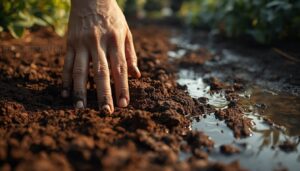
Timing is everything with clay. Your workability window is narrow — ideally when soil crumbles under light pressure but holds together without sticking to your hands.
Use the footprint moisture test: clear indentations without water pooling mean you’re good to go. Watch for the surface sheen cue — that glossy wet look signals compacted clay isn’t ready.
Cold temperatures slow drying too, raising the risk of hardpan formation.
Test Soil Before You Amend

Before you dump a bag of compost or gypsum into your beds, it pays to know exactly what you’re working with. Clay soil can hide a surprising mix of problems — low pH, locked-up nutrients, poor structure.
A quick test will reveal these issues. Here’s what to check before you start amending.
When to Use a Lab Soil Test
A soil test isn’t optional — it’s your roadmap. Before you dump compost or gypsum into your clay beds, a baseline pre-plant test tells you exactly what you’re working with.
- Before any amendments — establish your starting point
- When plants show yellowing — nutrient deficiency detection saves guesswork
- After adding lime or sulfur — post-amendment verification confirms progress
- Each spring — a seasonal pH audit prevents nutrient lockout
- Year over year — health trend tracking shows whether your efforts are actually working
Checking PH, Nutrients, and Organic Matter
What exactly should your soil test report tell you? Focus on three numbers: soil pH (aim for 6.0–7.0), organic matter levels (higher means better nutrient retention), and your NPK nutrient balance. These are your deficiency indicators.
| What to Check | Why It Matters |
|---|---|
| Soil pH | Controls soil fertility and availability |
| Organic matter | Drives nutrient retention and structure |
Build an adjustment schedule around your results. Retest every season.
Why Cation Exchange Capacity Matters
Think of cation exchange capacity as your soil’s nutrient bank. Clay’s high CEC means it holds onto calcium, magnesium, and potassium instead of losing them to rain.
That’s excellent for soil nutrient retention and fertilizer efficiency — you’re not constantly reapplying.
Boosting organic matter raises CEC further, strengthening soil buffering, base saturation, and microbial activity.
Better CEC means steadier soil fertility all season.
How Extension Recommendations Guide Amendment Rates
Your cooperative extension office is basically a free consultant — one backed by university research. They translate your soil test interpretation into real action, making soil amendment selection straightforward rather than guesswork.
Regional amendment tables show exactly how much compost, gypsum, or lime your clay needs, while rate calculators break this into manageable amounts. Incremental amendment scheduling ensures you avoid overapplication.
By following their nutrient balance guidelines, the process becomes systematic. This eliminates uncertainty, transforming soil amendment from a complex task into a clear, actionable plan.
Creating a Clay Soil Improvement Plan
Think of your improvement plan as a living document, not a one-time checklist. Pull your lab results. Then map out an Implementation Timeline across two to three seasons. Budget Planning keeps Resource Sourcing realistic — compost, gypsum, cover crop seed.
Build in Risk Management checkpoints:
- Retest pH and organic matter after each season
- Track drainage speed as your Monitoring Metrics
- Adjust soil amendment selection for clay soils based on results
- Rotate cover cropping strategies for soil health annually
Add Organic Matter The Right Way
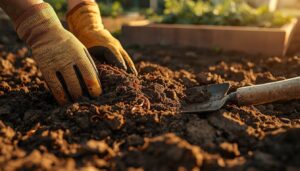
Organic matter is the single best thing for clay soil — but how you add it matters just as much as what you add.
Pile on the wrong stuff at the wrong time, and you can actually set your plants back.
Here’s what to use, how much to apply, and how to do it right.
Best Materials: Compost, Leaf Mold, and Aged Manure
Three organic amendments do most of the heavy lifting in clay: compost, leaf mold, and aged manure. Each brings something different to the table.
| Amendment | Key Benefit |
|---|---|
| Compost | Soil Microbial Boost, pH Buffering, Nutrient Release |
| Leaf Mold | Moisture Retention, slow Carbon Nitrogen Balance |
| Aged Manure | Gentle Nutrient Release, improved soil structure |
Choose fully decomposed organic matter — dark, earthy-smelling materials only.
How Much Organic Matter to Apply
Now that you’ve got your materials sorted, the next question is: how much? Start with 2–4 inches of organic matter spread evenly across your beds.
- Apply compost using the Layering Method — never dump it all at once
- Follow Test Benchmarks: aim for 3%+ organic matter in lab results
- Respect Maturity Standards — fully decomposed only
- Time your Application Rate to Seasonal Timing: spring and fall work best
- Repeat annually; adding organic matter to clay soils is a long game
How Deep to Incorporate Amendments
Depth matters as much as quantity. For most beds, work amendments into the top 6–8 inches using a digging fork or broadfork. A plug coring aerator helps without overworking the soil.
Focus on root-zone amendment depth — that’s where roots actually live. Biochar placement depth works best around 6 inches.
Keep subsoil amendment bands shallow your first season to avoid hardpan formation.
Why Fresh Materials Can Slow Plant Growth
Fresh, uncomposted material is the sneaky culprit behind mysterious slow growth. When you add raw organic matter — think fresh grass clippings or livestock manure straight from the barn — soil microbes rush in and cause nitrogen immobilization, effectively stealing nitrogen your plants need. Oxygen depletion, moisture excess, pH fluctuations, and even allelopathic inhibition can follow.
Raw organic matter doesn’t feed your plants — it feeds the microbes that steal their nitrogen
Always use well-rotted compost as your go-to soil amendment.
Annual Top-dressing to Keep Improving Structure
Think of top-dressing as your soil’s annual tune-up. Each spring application adds a thin layer technique — just 1–2 cm of finished compost — without disturbing roots below. Use light spreading tools like a drop spreader for even coverage, then rely on after-dressing irrigation to work the organic matter down.
- Spread compost or leaf mold in spring or fall
- Keep layers under 2 cm to prevent crusting
- Rake clumps for uniform soil amendment contact
- Water thoroughly after application
- Track progress each season to adjust your mulching and cover crops routine
Improve Drainage and Soil Structure
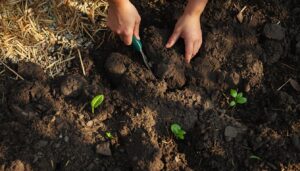
Clay soil holds water like a sponge that never quite wrings out — and that’s where most root problems begin. The good news is you have real options for fixing both drainage and structure without starting from scratch.
Here are the most effective methods to get your soil working with your plants instead of against them.
Building Raised Beds Over Heavy Clay
Raised beds are your best shortcut around stubborn clay. Build yours 6–8 inches deep using rot-resistant frame materials like cedar or galvanized steel, and lay a base gravel layer to jump-start soil drainage.
Fill the interior with a quality amended mix for strong root development, and add edge reinforcement to hold shape long-term. Maintain clear access pathways so you never compact your progress.
Planting on Mounds for Faster Drainage
If raised beds are not an option, mounds work just as well — sometimes better. Follow mound height guidelines of 6–12 inches, shaping each one with gently sloping sides to contour the land for better drainage.
Center seeds or transplants at the peak for optimal soil drainage.
Apply mound mulch strategies like shredded bark to retain moisture without pooling.
Water deeply but infrequently on a consistent mound watering schedule.
Broadforking and Plug Aeration Methods
Two essential tools for clay gardeners are the broadfork and plug aerator. Driving broadfork tines 12–14 inches deep provides serious soil aeration and reduces compaction without disrupting layers. Depth control is crucial, so only work with moist soil.
Key techniques include:
- Broadforking: Space passes 6–8 inches apart for overlapping root zones.
- Plug aeration: Pull cores every 4–6 inches for even soil structure improvement.
- Seasonal scheduling: Perform both in spring and fall to aerate compacted clay soil year-round.
Clean and sharpen tines after each use—proper tool maintenance ensures safe and effective performance.
Shallow Cultivation Without Creating Hardpan
Cultivate only when the top 5–7 cm feels moist but not soggy — that’s your moisture window. Use light harrowing with short, shallow passes to keep the surface loose without driving hardpan deeper down. Watch your pass depth carefully.
Crust monitoring after rain reveals critical insights. Stick to controlled traffic lanes to protect soil aeration and preserve your broadforking efforts.
Contouring Beds, Swales, and Runoff Control
Think of your garden beds as tiny rivers — contour the land so water slows down instead of rushing off.
Align beds along slope contours using permaculture swales: shallow trenches that capture runoff and push it into the soil.
Build downhill berms for stabilization, keep inlet clearance practices consistent after storms,
and you’ve got a simple runoff capture system that genuinely transforms drainage improvement in clay.
Use Gypsum and Sand Carefully
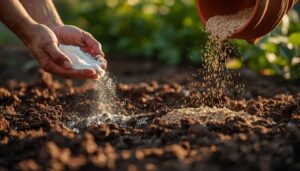
Not all fixes are created equal — some work wonders, and some quietly backfire. Gypsum and sand both sound like solid solutions for heavy clay, but how you use them makes all the difference.
Here’s what you need to know before reaching for either one.
When Gypsum Works Best in Clay Soil
Gypsum shines brightest when your heavy clay soil tests above a 6% exchangeable sodium saturation threshold — that’s when sodium is literally gluing clay particles flat. Non-calcareous conditions are key too; gypsum won’t throw your pH off balance.
Time your application with seasonal rainfall coordination, applying in spring or autumn at recommended application rate guidelines (roughly 0.5–2 kg per square meter) for real drainage improvement.
How Calcium Helps Clay Particles Flocculate
So why does gypsum actually work? It all comes down to calcium bridging. When calcium ions enter your soil, they link negatively charged clay particles together — floc formation, fundamentally — creating clumps with real aggregate porosity instead of a dense, airless slab. This ion exchange process transforms your soil structure through:
- Stronger particle-to-particle bonding
- More stable soil aggregation over time
- Better water movement through improved pore space
Situations Where Gypsum Will Not Help
Calcium magic has real limits, though. In metal‑polluted soils, gypsum can actually mobilize heavy metals, pushing them closer to plant roots — not ideal. It won’t address waterlogging in sodic clay layers with poor subsoil drainage, and high salinity conditions or nutrient‑balanced soils simply don’t respond.
If your soil lacks organic matter, systems dependent on organic matter require that foundation first.
Why Adding Sand Can Make Soil Worse
Sand feels like a logical fix — clay is dense, sand is gritty, so mix them together and problem solved, right? Not quite.
Sand addition to clay soil is one of gardening’s most common mistakes, and here’s why:
- Porosity Reduction: Sand fills clay’s natural pores, creating compaction increase rather than relief.
- Nutrient Leaching: Fast drainage flushes nutrients away, leaving roots starved.
- Thermal Instability: The mixed matrix heats and cools wildly, stressing plants.
- Microbial Decline: Beneficial organisms struggle in the unstable, nutrient-poor environment.
Skip the sand — risks of adding sand to clay soils far outweigh any short-term gains.
Safe Ways to Combine Mineral and Organic Amendments
Think of it as layering flavors in a recipe — organics go in first, minerals follow one to two weeks later. This staggered application keeps salt stress off young roots.
Maintain pH balanced between 6.0 and 7.0, mix amendments evenly into the top six to eight inches, and incorporate microbial inoculation via compost tea to activate the soil ecosystem.
Skip fresh manure alongside mineral amendments — that combination backfires fast.
Plant Cover Crops and Mulch
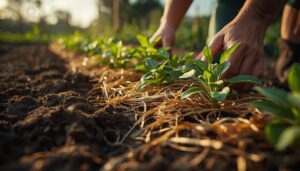
Cover crops and mulch are two of the most underrated tools for breaking up stubborn clay — and they do a lot of the hard work for you. The right plants and materials can loosen compacted layers, feed your soil, and keep moisture where it belongs.
Here’s what actually works.
Clay-busting Cover Crops Like Daikon and Rye
Cover crops are clay’s worst nightmare — in the best possible way. Daikon radish and cereal rye are your go-to clay-busting plants for improving soil structure without tillage.
Here’s why they work so well together:
- Root channeling – Daikon radish drills several feet down, cracking compacted clay layers and leaving hollow pathways for water and air.
- Biomass turnover – Cereal rye builds a dense, fibrous root network near the surface; chop-and-drop converts this mass into organic matter rapidly.
- Weed suppression – Their combined canopy shades out weed seedlings, shrinking the weed seed bank before the next season.
Seasonal timing is critical. Sow both crops six to ten weeks before frost, allowing roots to establish while soil temperatures remain workable. By spring, you’ll have naturally fractured, nutrient-rich soil — no back-breaking digging required.
Nitrogen-fixing Cover Crops for Added Fertility
Pairing legumes with your clay-busting crew adds real fertility. Hairy Vetch, Crimson Clover, and Austrian Pea each fix 40–120 pounds of nitrogen per acre through root nodules — basically free fertilizer.
Think of it as managing a nitrogen release curve: clover and alfalfa break down steadily, while fava beans release quickly. Incorporating them as green manure optimizes legume biomass yield before spring planting.
Chop-and-drop Methods for No-till Improvement
Once your legumes have done their nitrogen work, don’t till them under — chop and drop instead. Cut stems into 2–6-inch pieces and leave them where they fall. This no-till gardening technique for clay soils builds organic matter without disrupting your hard-won soil structure.
- Active accumulators like comfrey release minerals directly into your surface layer
- Weed suppression kicks in fast as the mulch shades out germinating seeds
- Microbial activation surges beneath the decomposing layer, binding clay particles into aggregates
Do a seasonal mulch refresh after each chop to keep your no-till garden humming.
Choosing The Right Mulch for Clay Beds
Not all mulch is created equal — especially in clay-dominated gardens. Coarse options like wood chips and shredded bark improve drainage as they break down, without smothering your soil.
| Mulch Type | Clay Bed Benefit |
|---|---|
| Wood chips | Boosts porosity and drainage |
| Shredded bark | Resists compaction, enhances airflow |
| Leaf mold | Loosens dense clay, feeds microbes |
| Living mulch | Suppresses weeds, adds organic matter |
| Composted yard waste | Feeds soil while improving structure |
Seasonal mulch rotation keeps things fresh and effective year-round.
Mulch Thickness for Moisture Control and Crust Prevention
Aim for 2 to 4 inches — which is the ideal depth for moisture control and crust prevention in clay beds. Wood chips and bark retain this depth longer, while fine organic mulch settles faster and needs seasonal top-ups.
Spread evenly across the entire bed to prevent thin patches that let clay crust form quickly.
Check soil moisture regularly and mulch appropriately as conditions shift to maintain optimal coverage.
Maintain Healthy Clay Soil Year-Round
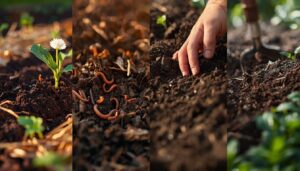
Getting your clay soil in shape is one thing — keeping it that way is another. The good news is that a few simple habits practiced consistently through the seasons make all the difference.
Here’s what to focus on to keep your soil healthy and working for you all year long.
Avoiding Foot Traffic and Repeated Compaction
Clay soil has a long memory — every footstep compacts it a little more. That’s why avoiding compaction in garden beds starts with smart habits before problems appear.
- Create designated walkways with stepping stone paths to keep weight off planting areas
- Use pathway barriers like edging to separate beds clearly
- Practice traffic timing — stay off wet soil completely
- Install compaction monitoring checkpoints quarterly
- Avoid walking in the beds, ever
Seasonal Compost, Mulch, and Cover Crop Routines
Keeping foot traffic off your beds is just the start. What really transforms clay over time is a seasonal rhythm.
In spring, work finished compost into the top six inches to enrich the soil. Summer requires two to three inches of wood chips—your best mulch for moisture control.
Come fall, chop cover crops before they flower to maximize nutrient retention. Winter demands layering mulch as insulation to protect the soil.
Stick to this seasonal amendment calendar, and your clay won’t recognize itself.
Encouraging Worms and Beneficial Soil Life
Your seasonal rhythm sets the stage — now let the underground crew take over. Earthworms thrive when you nail soil moisture balance and layer organic residue diversity like compost, leaf litter, and kitchen scraps. Their worm castings loosen clay naturally.
Time your mycorrhizal inoculation at planting to build the microbial food web fast.
Healthy soil microorganisms and beneficial microbes do the heavy lifting you can’t.
Watering Practices That Prevent Waterlogging
Your underground crew works best when the soil isn’t waterlogged. Clay holds water like a sponge that forgot how to let go—so smart soil moisture management matters more here than anywhere else.
- Early‑Morning Watering (4–9 am) gives leaves time to dry
- Drip Irrigation Zones deliver water right to roots
- Split‑Cycle Watering improves water infiltration without pooling
- Moisture‑Sensor Activation and Post-Rain Watering Pause prevent oversaturation
Choosing Clay-tolerant Plants While Soil Improves
While your soil is still a work in progress, choose plants that pull their own weight. Rudbeckia and coneflower attract pollinators while their robust root systems strengthen heavy ground. Kale and leeks offer reliable edible perennial options.
Sweet woodruff excels at shade-tolerant duty, thriving in low-light conditions.
Incorporate clay-busting plants like daikon radish or bell beans as cover crops and green manure between companions, improving soil structure over time.
Frequently Asked Questions (FAQs)
How to turn clay soil into good garden soil?
Turn clay soil into good garden soil by weaving in organic matter, practicing crop rotation, adding biochar, and mulching regularly.
Root aeration and smart soil amendments transform dense clay into something your plants will actually love.
Can you improve clay soil over time?
Yes, absolutely. With consistent organic amendments, smart aeration, and cover crops, clay transforms into rich, workable earth — better microbial activity, deeper root penetration, and stable pH stabilization — season by season.
How to make clay soil better for gardening?
Fix it layer by layer — add compost, aerate regularly, mulch well, and plant cover crops. Consistent organic amendments transform sticky clay into rich, workable ground your plants will thrive in.
What is the best additive to improve clay soil?
Compost is the single best additive — think of it as clay’s best friend. Work in 2–3 inches of organic matter annually, and layer in aged manure, leaf mold, or gypsum for faster results.
What breaks up clay soil in the garden?
Organic matter, gypsum, and biochar amendment work together to break up clay soil.
Earthworm introduction and mycorrhizal inoculation loosen particles naturally, while aerating compacted clay soil and incorporating clay-busting plants finish the job.
Do coffee grounds improve clay soil?
Every little helps — and coffee grounds are no exception. They add organic matter, act as a carbon source for microbial enrichment, and support moisture regulation.
Use a modest application rate alongside compost for real results.
How to break up heavy clay soil naturally?
Break it up naturally with cover crops like daikon radish — their deep root channeling creates cracks in dense layers.
Add biochar amendment and worm castings to spark microbial activity and granulation.
Natural freeze-thaw cycles complete the process.
How to turn clay back into dirt?
You can’t undo geology, but you can work with it. Add compost, biochar integration, and microbial inoculants to shift clay into rich, workable soil that actually grows things.
Do coffee grounds help break up clay soil?
Coffee grounds are a bit like a helpful neighbor — useful in moderation, problematic if they overstay their welcome. Their nitrogen enrichment, microbial boost, and soil crumb formation support organic matter, but grounds’ acidity and crust reduction depends on composting them first.
What is the best soil improver for clay soil?
Compost is your best all-around soil conditioner for clay. It improves drainage, feeds soil life, and loosens structure over time. Add 2–4 inches annually and watch your clay transform.
Conclusion
Clay soil rewards patience, consistency, and a willingness to work with what you’ve got. Every handful of compost you add, every cover crop you grow, every season you skip the rototiller moves you closer to soil that actually works.
Learning how to improve clay soil for gardening isn’t a single fix—it’s a rhythm you build over time. Stay with it, and that stubborn, heavy ground will quietly become your garden’s greatest asset.
- https://books.tenthacrefarm.com/the-permaculture-inspired-vegetable-garden/?utm_source=taf&utm_campaign=TPIVG2&utm_medium=banner1-link
- https://learningandyearning.com/fall-leaves-a-valuable-soil-builder
- https://pickyourown.org/countyextensionagentoffices.htm
- https://www.flickr.com/photos/macleaygrassman/6919359435/
- https://www.youtube.com/watch?v=AUhOBxVFcFk