This site is supported by our readers. We may earn a commission, at no cost to you, if you purchase through links.
Fungi cause 85 percent of all plant diseases, which means that powdery white film on your tomato leaves or those mysterious brown spots on your roses aren’t random bad luck. They’re part of a massive category of plant health problems that share common patterns, predictable triggers, and fortunately, effective treatments.
The challenge isn’t just recognizing these diseases when they appear; it’s understanding why they showed up in the first place. Most fungal infections thrive in specific conditions—high humidity, poor air circulation, or soil that stays too wet for too long.
Once you learn to read these environmental clues and match them to symptoms, you gain real control over plant fungus treatment. You’ll know when to reach for a simple baking soda spray, when a stronger fungicide makes sense, and most importantly, how to adjust your growing conditions so the problem doesn’t return next season.
Table Of Contents
- Key Takeaways
- Identifying Common Plant Fungal Diseases
- Causes and Risk Factors for Plant Fungus
- Natural Treatments for Plant Fungus
- Chemical Fungicide Solutions and Safety
- Prevention Strategies for Fungal Diseases
- Frequently Asked Questions (FAQs)
- How long does fungal treatment take to work?
- Can indoor plants get the same fungal diseases?
- Is plant fungus contagious to other garden plants?
- What temperature kills fungal spores in soil?
- Should infected plant parts be composted or discarded?
- Can fungal diseases spread to nearby gardens?
- How long does fungicide treatment take to work?
- Are plant fungal infections harmful to humans?
- Can infected plants ever fully recover from fungus?
- Do indoor plants need different fungal treatments?
- Conclusion
Key Takeaways
- Fungi cause 85% of all plant diseases, and most thrive in specific conditions like high humidity, poor air circulation, and waterlogged soil that you can control through better gardening practices.
- You can identify fungal infections by their distinct signatures—powdery mildew looks like white dust on leaves, black spot creates dark circular lesions, rust forms raised orange pustules, and root rot causes wilting with blackened, mushy roots below ground.
- Natural treatments like baking soda sprays (1 teaspoon per quart of water) and neem oil (at 2% concentration) work effectively against many fungal diseases, while chemical fungicides should be reserved for severe cases and always rotated to prevent resistance.
- Prevention beats treatment every time—spacing plants properly for airflow, watering at soil level in the morning, sterilizing tools between cuts, and choosing disease-resistant varieties eliminates the conditions fungi need before infections start.
Identifying Common Plant Fungal Diseases
Fungi are behind 85 percent of all plant diseases, and they show up in ways you can actually see if you know what to look for. Each type leaves its own calling card, from dusty coatings to dark spots to wilted leaves that won’t perk up.
Fungi cause 85 percent of all plant diseases, each leaving visible signs from dusty coatings to dark spots
Here’s how to spot the most common fungal problems before they take over your garden.
Powdery Mildew Symptoms and Appearance
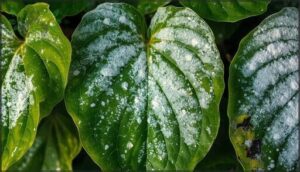
Powdery mildew appears as white or gray dusty patches on your plant’s leaves, making them look like they’ve been dusted with flour. Early signs include small star-shaped spots that show up within a week of infection. You’ll notice:
- Leaf discoloration with yellowing or purplish areas before the white coating spreads
- Mycelium features that create a talc-like surface layer you can see and feel
- Spore dispersal happening quickly, often within 72 hours of infection
- Plant distribution affecting leaves, stems, and even young fruits across your garden
This fungal disease progresses fast under the right conditions; high relative humidity favors its development.
Spotting Black Spot and Rust on Leaves
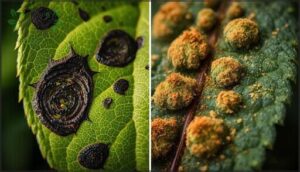
Black spot appears as dark circular lesions with irregular edges, usually 2–12 mm across on leaf surfaces. Rust pustules look different—they’re raised, blister-like bumps that rupture and release powdery orange, yellow, or reddish-brown spores. You can tell them apart easily: black spot stays flat and embedded in tissue, while rust forms dusty, eruptive masses.
Both diseases reduce photosynthesis and can cause significant yield impacts if left untreated. These diseases are caused by different fungal genera.
Recognizing Blight, Leaf Spot, and Mold
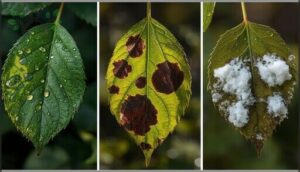
While black spot and rust are distinctive, blight, leaf spot, and mold can overlap in appearance. Blight lesions generally develop water-soaked centers with concentric rings, expanding rapidly to kill entire leaves.
Leaf spot shows defined necrotic areas—brown or black with darker margins—that stay smaller and more circular.
Mold produces visible fungal growth: white cottony masses on stems, dark sclerotia resembling droppings, or fuzzy patches on flowers and foliage.
Root Rot and Below-Ground Fungal Issues

Below the soil line, root rot hides until wilting begins. You’ll see sudden collapse, yellowed lower leaves, and blackened, mushy roots when you inspect the base. Stem Crown and Root Rot affects where stem meets soil, causing dark cankers.
Root health depends on drainage and soil pathogens like Pythium and Fusarium, which thrive in waterlogged conditions.
Soil management, crop rotation, biological controls, and emerging tech like hyperspectral imaging help catch infections early and protect soil health.
Signs of Fungal Infection in Houseplants
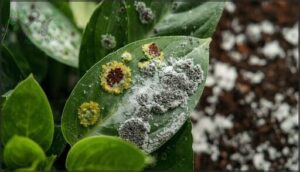
When identifying houseplant fungi, you’ll notice distinct leaf spot patterns, discoloration causes like yellowing halos, and surface mold appearing as white powder or gray fuzz. Soil indicators include musty odors and visible mold on potting mix.
Over time, systemic decline shows as stunted growth and thinning foliage.
Treating fungal infections early matters—improving air circulation and houseplant fungus prevention through proper watering stop the cycle before severe damage occurs.
Causes and Risk Factors for Plant Fungus

Plant fungi don’t just appear out of nowhere—they need the right conditions to take hold and spread. Understanding what invites these pathogens into your garden gives you the power to stop them before they start.
Let’s look at the key factors that turn your plants into fungal targets.
Environmental Conditions That Promote Fungi
Fungi thrive when your plant environment hits a perfect storm of conditions. Temperature effects matter—most fungal diseases flourish between 68°F and 86°F. Humidity levels above 95% fuel powdery mildew, while poor air circulation traps moisture around leaves.
Light intensity plays a role too; shaded spots promote spore germination.
Even soil pH influences fungal growth, with many preferring slightly acidic conditions between 5.5 and 6.5.
Overwatering, Drainage, and Humidity Issues
When you water too often, you’re practically rolling out the welcome mat for soil-borne fungi. Overwatering risks suffocate roots and create the saturated conditions pathogens love—nurseries report root rot in up to 70% of facilities with poor drainage solutions. Your plant environment needs balance:
- Soil saturation starves roots of oxygen, inviting Pythium and Phytophthora
- Humidity control becomes critical above 70% relative humidity
- Proper drainage solutions prevent standing water that triggers fungus prevention failures
Plant Overcrowding and Air Circulation Problems
Ever notice how crowded plants seem to catch fungus faster? Tight spacing traps humidity, raising spore concentration and creating a microclimate ripe for infection. Poor air circulation means leaves stay damp and roots lack aeration.
Pruning for airflow, improving ventilation, and smart spacing are simple steps that boost plant health and make fungal disease prevention far more effective.
How Fungi Spread Among Plants
Fungal spores travel through your garden in ways you mightn’t expect. Airborne spores ride wind currents for miles, while water dispersal moves pathogens between leaves during rain or overhead watering. Soil transmission occurs when infected roots contact healthy ones, and human spread happens through contaminated tools or shoes.
Host density matters too—tightly packed plants create highways for fungal pathogens, turning small infections into widespread plant disease.
Natural Treatments for Plant Fungus
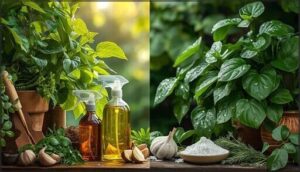
Natural remedies can tackle many fungal problems without harsh chemicals, and they’re often safer for you, your plants, and the environment. These treatments work by disrupting fungal growth or changing the leaf surface to make it less hospitable to pathogens.
Let’s look at some proven options you can mix up at home or find at your local garden center.
Using Baking Soda Sprays Effectively
You can create an effective baking soda spray by mixing one teaspoon per quart of water, adding a drop of liquid soap for better leaf coverage. Best concentrations range from 0.5-2%, though exceeding this risks phytotoxicity.
Application frequency matters—spray every 7-10 days during active fungal season, reapplying after rain. Combination enhancements with horticultural oil boost effectiveness evidence against powdery mildew and black spot.
Homemade Fungicide Recipes (Garlic, Vinegar, Cornmeal)
Garlic spray works best—blending 100g fresh cloves per liter, strained and sprayed weekly, can inhibit powdery mildew spores by over 95%. You’ll need frequent reapplication for sustained control.
Vinegar’s acetic acid acts more as a herbicide than fungicide, risking plant damage at effective concentrations.
Cornmeal stimulates beneficial Trichoderma in soil over 5-10 days, supporting long-term soil health rather than quick foliar fixes.
Applying Neem Oil, Cinnamon, and Other Botanicals
Neem oil and cinnamon offer proven botanical fungicide integration beyond simple homemade fungicides. You’ll find neem oil efficacy peaks at 2% concentration, reducing powdery mildew severity by over 80% when sprayed every seven days. Cinnamon antifungal properties stem from cinnamaldehyde, which completely inhibits Aspergillus and Fusarium growth in vitro.
Essential oil application requires careful timing:
- Apply neem oil below 32°C to avoid phytotoxicity
- Test cinnamon sprays on small leaf areas first
- Combine thyme or rosemary oils for late blight control
- Reapply after rain for sustained fungus treatment
Safe Use of Natural Treatments on Edible Crops
When treating edible crops, residue safety matters most. Natural approvals like EPA-exempted EVOCA confirm you won’t harm your harvest.
Application timing determines crop efficacy—garlic-vinegar sprays achieved over 50% Fusarium control in field trials, while baking soda controlled powdery mildew on tomatoes and cucumbers.
These homemade fungicides support organic gardening and natural plant care without compromising environmental safety or fungal disease control.
Chemical Fungicide Solutions and Safety
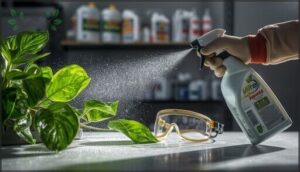
Sometimes natural treatments won’t cut it, and you’ll need to reach for chemical fungicides to save your plants. These products work faster and hit harder than homemade sprays, but they come with their own set of rules you need to follow.
Let’s look at when to use them, how to apply them safely, and what you should know about keeping them effective over time.
When to Use Copper and Sulfur Sprays
Copper and sulfur fungicide sprays work best when you apply them before disease symptoms appear.
Use copper every 7 to 10 days on vegetables and fruit trees, targeting bacterial leaf spots and blights.
Sulfur fungicide treatment prevents powdery mildew and rust when applied every 10 to 14 days starting in late winter.
Avoid these preventative fungicide sprays above 85°F to prevent leaf burn.
Choosing and Applying Commercial Fungicides
When selecting commercial fungicide sprays, you’ll find two main types: contact fungicides that remain on leaf surfaces and systemic varieties that move inside plant tissues. Look at active ingredients on the label and match them to your plant disease, rotating between different FRAC codes to manage resistance.
Time your fungicide application before symptoms appear and follow label instructions for rates and intervals.
Safety Precautions and Protective Gear
Before you mix or apply fungicide sprays, proper PPE isn’t optional—it’s your shield against chemical exposure. Exposure reduction through protective gear works:
- Wear chemical-resistant gloves during all fungicide treatments and mixing to reduce exposure by 98%
- Use goggles or face shields to protect your eyes
- Cover skin with long sleeves, pants, and rubber boots
- Add a respirator with N95 or P95 filters when handling Daconil fungicide or similar products
Wash hands thoroughly after each fungicide application session.
Managing Fungicide Resistance in The Garden
Over repeated fungicide treatments, pathogens can develop disease resistance—rendering sprays useless. You’ll slow resistance by rotating fungicide application across different chemical groups, mixing products with multiple modes of action, and limiting application frequency each season.
Integrated pest management works best: combine fungicides with resistant varieties, sanitation, and nonchemical methods.
Home guidelines stress using fungicides only when disease pressure justifies it.
Prevention Strategies for Fungal Diseases
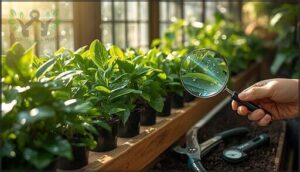
Stopping fungal diseases before they start is far easier than fighting an active infection. The key is to create an environment where fungi struggle to gain a foothold in the first place.
Here are four proven strategies you can use to keep your plants healthy and fungus-free.
Improving Air Circulation and Pruning Techniques
Good airflow optimization acts like a shield, preventing fungal disease before it starts. Space tomato plants 24 inches apart to cut infections by 30%, and give cucumbers 30 inches to reduce downy mildew by 40%.
Pruning techniques matter too—minimal cuts in grapevines reduce disease by up to 73%. Apply Trichoderma to pruning wounds for 88% protection, and always sanitize tools between cuts.
Watering Practices to Minimize Fungal Spread
Water your plants at soil level in the morning to slash fungal risk—overhead watering increases disease by 170% and boosts leaf wetness by 36%. Adjusting watering habits protects both outdoor and indoor plants: drip irrigation improves bulb size by 9% while cutting rot. Avoid underwatering, but don’t create stagnant humidity either.
Morning timing lets foliage dry quickly, and proper drainage design stops spores from splashing between plants.
Cleaning Tools and Preventing Cross-Contamination
Dirty tools spread pathogens to 100% of healthy plants when you don’t disinfect between cuts. Sterilize pruners and shovels with 10% bleach or 70% alcohol for at least one minute, targeting sap and soil buildup.
This simple step in plant disease prevention stops Fusarium and viruses from hitchhiking across your garden. Rinse tools after disinfectant contact time, dry completely, and store them away from moisture to prevent recontamination.
Selecting Disease-Resistant Plant Varieties
Beyond clean tools, your smartest defense is choosing disease-resistant plants from the start. Genetic resistance slashes fungal disease pressure before it starts, and adoption rates prove it works—over 90% of major crops in the U.S. now use resistant varieties.
Here are proven examples for your garden care:
- Tomatoes bred to resist powdery mildew and botrytis
- Blackberries that shrug off anthracnose and rust
- Blueberries like Aurora with built-in root rot protection
- Wheat cultivars stacking multiple resistance genes
- Roses engineered against black spot
Breeding strategies using marker-assisted selection let scientists stack resistance to several plant disease threats at once. The economic benefits add up fast—you’ll spend less on fungicides, harvest more, and watch your garden thrive with far less chemical intervention.
Frequently Asked Questions (FAQs)
How long does fungal treatment take to work?
Most fungicide treatments show visible improvement within 7 to 14 days, though systemic fungicides begin working within 24 to 72 hours after absorption. Root rot recovery generally requires 30 days of systemic efficacy.
Can indoor plants get the same fungal diseases?
Yes, indoor plants face many of the same fungal infections as outdoor ones, including powdery mildew and leaf spot. Shared fungal strains spread indoors through airborne spores, thriving when humidity climbs and air circulation drops.
Is plant fungus contagious to other garden plants?
Most fungal diseases spread readily through spore dispersal by wind, rain, and insects. Infection pathways depend on environmental factors and host susceptibility, making garden management and disease prevention essential to protect neighboring plants from plant fungus.
What temperature kills fungal spores in soil?
Most fungal pathogens and mycelium fungus in soil die when exposed to 140°F (60°C) for thirty minutes in moist conditions.
Composting temperatures of 130–150°F sustained over several days guarantee thermal inactivation of spores.
Should infected plant parts be composted or discarded?
Most home compost piles don’t reach temperatures high enough to kill fungal pathogens and spores.
You should bag and discard diseased plant parts to prevent spreading fungal disease to healthy plants.
Can fungal diseases spread to nearby gardens?
Wind carries spores across property lines, sometimes traveling several kilometers. Water splash from rain or irrigation moves fungus between nearby plants.
Your garden management practices directly affect your neighbors’ plant disease risk.
How long does fungicide treatment take to work?
Before smartphones could refresh your feed in seconds, patience ruled—fungicide treatment mirrors that. Visible symptom reduction usually appears within three to seven days, though protection duration varies.
Systemic formulations penetrate plant tissues, offering longer-lasting fungal disease control than contact sprays washed away by environmental factors like rain.
Are plant fungal infections harmful to humans?
Most plant fungi don’t infect humans directly, but allergic spore reactions and respiratory fungal illness can occur.
Gardeners face occupational fungal exposure risks, especially from mold in damp conditions or compost.
Can infected plants ever fully recover from fungus?
It depends on the fungal disease and how fast you act. Treating plant diseases with fungicide can restore up to 90% yield after infection, but tissue damage rarely reverses completely, and re-infection risk remains.
Do indoor plants need different fungal treatments?
Like bringing a fire extinguisher inside versus outside, indoor plant care requires stricter low-toxicity treatments and ventilation importance.
Houseplants need formulation distinctions and cultural control emphasis because fungicide safety indoors differs dramatically from outdoor fungal disease treatment.
Conclusion
Think of plant fungus treatment like debugging old software—you trace the error back to its source, patch the vulnerability, then monitor the system. You’ve identified the symptoms, understood what triggers them, and learned both immediate fixes and long-term prevention.
The real victory isn’t just saving this season’s plants; it’s building conditions where fungal diseases struggle to establish themselves. Your garden becomes resilient, not because problems never arise, but because you’ve eliminated the conditions they need to thrive.
- https://www.sciencedirect.com/science/article/pii/S2405844023010174
- https://straitsresearch.com/report/fungicides-market
- https://www.custommarketinsights.com/report/fungicides-market/
- https://extension.psu.edu/updated-2025-fungicide-efficacy-tables/
- https://academic.oup.com/jac/article/80/Supplement_1/i2/8078713