This site is supported by our readers. We may earn a commission, at no cost to you, if you purchase through links.
Your garden shifts its defenses four times each year, and pests know exactly when those vulnerabilities appear. Spring aphids multiply by the thousands on tender seedlings before you’ve finished your morning coffee, while summer brings armored beetles that shred leaves faster than plants can replace them. Fall’s cool nights send pests underground to plot their winter survival, and even dormant months hide threats waiting to emerge.
Most gardeners react to infestations after the damage is done, spraying chemicals that kill beneficial insects along with the invaders. The smarter approach recognizes that seasonal gardening pest solutions work with nature’s rhythms rather than against them, using strategic timing and ecological balance to keep your plants healthy without turning your yard into a chemical zone.
Table Of Contents
Key Takeaways
- Gardens face predictable pest vulnerabilities four times yearly as temperature thresholds trigger spring aphid explosions, summer beetle infestations, fall underground migrations, and winter survival strategies that escalate without proactive seasonal defense systems.
- Integrated pest management achieves 20-95% pest reduction by layering weekly monitoring, crop rotation, physical barriers like row covers, and biological controls before resorting to targeted chemical applications only when thresholds exceed acceptable damage levels.
- Strategic timing transforms pest control from reactive spraying into preventive ecology—degree-day tracking predicts emergence windows, companion planting masks host plants, and fall sanitation eliminates overwintering sites that otherwise multiply spring populations exponentially.
- Market trends show 37% of gardeners now pay premiums for eco-friendly solutions as biopesticide adoption accelerates toward $29 billion by 2032, driven by IoT monitoring tools and biological controls that deliver measurable results without environmental compromise.
Seasonal Pest Challenges in Gardens
Every season brings its own set of pest challenges that can threaten your garden’s health and productivity. Understanding what you’re up against helps you prepare effective defenses before problems escalate into full-blown infestations.
Here’s what you need to watch for throughout the year.
Common Spring Pests and Issues
Spring pests strike when your garden is most vulnerable. You’ll face aphid control challenges as colonies explode on tender seedlings, cutworms cutting stems at soil level, and soil pests like wireworms tunneling through roots.
Seedling protection demands early warning systems—inspect transplants weekly and practice garden sanitation by removing debris.
These spring pest management steps form your first line of defense in seasonal pest control strategies. Effective aphid management techniques are essential for maintaining healthy gardens.
Summer Pest Threats to Watch For
As temperatures climb, summer pests multiply at alarming speeds. You’ll contend with Japanese beetles stripping ornamentals, hornworm control challenges on tomatoes and peppers, and squash borers collapsing vines overnight.
Spider mites thrive in hot, dry conditions, doubling populations in days.
Effective summer pest management combines pest forecasting with natural pest control methods—introducing beneficial insects and maintaining adequate irrigation reduces chemical dependency while protecting your harvest through garden pest control strategies. Understanding spider mite biology is vital for effective control and protection of plants.
Fall and Winter Pest Concerns
As foliage drops and growth slows, Fall Garden Cleanup becomes your frontline defense. Colorado potato beetles burrow deep—five to ten inches—while slugs nestle eggs in mulch layers for spring emergence. These Overwintering Pest Control challenges demand action:
- Remove crop residue harboring pathogens and insect eggs
- Disturb topsoil to expose hibernating pests to cold
- Seal home entry points before rodents invade (21 million U.S. homes affected annually)
- Compost debris at 110-160°F to kill pathogens
- Apply targeted Winter Pest Management in protected zones
Your Seasonal Sanitation Methods now prevent exponential Spring populations.
Year-Round Pest Monitoring Strategies
Cleaning up leaves won’t protect your garden if you’re not watching what’s already there. Consistent Pest Surveillance transforms reactive gardening into Pest Prevention. The University of Florida Extension recommends weekly Seasonal Scouting during warm months and biweekly checks in cooler periods. Food crops demand weekly inspections—young seedlings require multiple visits per week, as rapid damage can destroy plants within days. This disciplined Monitoring Tools approach anchors effective Integrated Pest Management year-round.
| Plant Type | Warm Season | Cool Season |
|---|---|---|
| Food crops | Weekly minimum | Every 7-10 days |
| Young seedlings | 2-3 times weekly | Twice weekly |
| Mature trees | Monthly | Every 6 weeks |
| Bedding plants | 2-3 times weekly | Weekly |
| General landscape | Weekly | Every 2-3 weeks |
Your IPM Planning depends on these intervals—warmer temperatures accelerate insect development, collapsing your response window. Smart pheromone traps now transmit real-time data to smartphones, achieving 98.91% accuracy in pest detection. These innovations support Pest Forecasting and transform traditional Pest Management Strategies into precision systems. Record each observation: pest species, host plant, damage severity, and date. This Seasonal Guide builds predictive power for future plantings, allowing you to adjust dates and cultivar choices before pressure peaks.
Identifying Garden Pests by Season
Knowing which pests to expect when helps you catch problems before they spiral out of control. Each season brings its own cast of characters, and the clues they leave behind tell you exactly what you’re dealing with.
Here’s how to read those signs, match pests to your plants, and understand what triggers their arrival throughout the year.
Recognizing Pest Damage Patterns

You can’t fight what you can’t identify—that’s why recognizing pest damage signs is your first line of defense in garden pest control. Look for distinct patterns: chewing insects leave skeletonized leaves or ragged edges, while piercing pests cause stippling and bronzing.
Plant distortion with curled foliage often signals aphids, and frass identification near damage confirms active feeding.
Effective pest management and pest prevention start with seasonal guide observation.
Matching Pests to Affected Plants
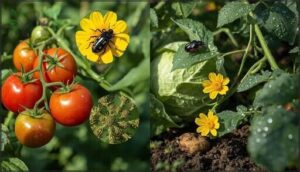
Understanding pest plant associations transforms your garden ecology management from a guessing game into a strategic defense. You’ll find that pests are remarkably picky eaters, and knowing their favorite hosts sharpens your seasonal pest control methods and garden pest control strategies.
- Aphids target tomatoes, peppers, cucumbers, melons, and crucifers, transmitting viruses while feeding on sap across multiple crop vulnerability zones
- Flea beetles concentrate on cole crops and solanaceous plants, causing severe shot-holing on young seedlings through their persistent feeding
- Cucumber beetles and squash bugs exclusively attack cucurbits, spreading bacterial wilt while damaging cucumbers, melons, and squash
Recognizing these host plant resistance patterns and pest life cycles helps you anticipate infestations and deploy pest prevention techniques before damage escalates.
Seasonal Pest Emergence and Triggers

Temperature drives pest emergence more predictably than calendar dates, allowing you to anticipate spring pests and summer pests with precision. Degree days accumulate above species-specific thresholds—squash vine borers appear after 900–1,000 degree days, while photoperiod influence triggers diapause in fall.
Climate shifts have hastened pest migration timing by weeks, extending damage seasons. Your seasonal approach must now track temperature effects alongside traditional scheduling for effective pest emergence forecasting.
Natural and Organic Pest Control Methods

Natural pest control methods protect your garden without relying on synthetic chemicals, and they work with nature rather than against it. These strategies range from choosing the right plant combinations to creating habitats that attract helpful predators.
You’ll find that building a pest-resistant garden starts with four fundamental approaches that address prevention from multiple angles.
Companion Planting for Pest Prevention
Companion planting transforms your garden into a natural fortress against pests. Marigolds suppress root-knot nematodes and lesion nematodes with nematicidal compounds, protecting vulnerable crops.
Aromatic herbs like basil and garlic mask host plants from pests, while trap crops concentrate threats at field borders.
Field trials show polyculture systems reduce pest damage by 20–52%, creating crop diversity that fosters beneficial insects and strengthens garden ecology through organic gardening methods.
Encouraging Beneficial Insects and Predators
A single ladybug can devour 5,000 aphids in its lifetime—that’s biological pest control at work. You’ll strengthen natural pest allies by installing bat boxes and bird houses, which invite predator conservation into your garden.
A single ladybug devours 5,000 aphids in its lifetime, turning your garden into a natural fortress when you invite predators in
Maintain beneficial insect habitats through reduced disturbance and year-round shelter. These ecofriendly gardening practices deliver organic pest control worth billions annually, proving that pest prevention starts with nature’s own workforce.
Using Row Covers and Physical Barriers
You’ll cut pest pressure by up to 95% when you deploy row covers and physical barriers correctly. Insect exclusion methods using spunbonded fabrics on crops like zucchini and brassicas prevent whiteflies and flea beetles while boosting yields 14–17%.
Garden netting systems work best with edges secured tightly—small gaps allow infiltration.
These crop protection strategies deliver season-long pest prevention without chemicals, though you must remove covers at flowering for pollinator access.
Soil Health and Composting for Pest Resistance
Beyond barriers lies deeper protection—your soil itself becomes a pest-fighting ally. Compost benefits extend to disease suppression, with trials showing 89% of tested composts reducing soil-borne diseases when conditions align. Organic matter builds sturdy soil microbes that trigger natural pest resistance in plants, cutting damage without sprays.
Five sustainable gardening practices that strengthen soil health:
- Apply 10–12 tons of finished compost per acre for ideal disease suppression and yield gains
- Maintain high organic matter levels to support antagonistic microbes that outcompete pathogens
- Use disease-suppressive composts to reduce nematode populations for up to three years
- Combine compost with resistant cultivars to cut wilt severity by over 50%
- Build microbial diversity that induces systemic resistance, lowering pest preference naturally
Integrated Pest Management Strategies
You don’t need to choose between effective pest control and environmental responsibility when you adopt integrated pest management strategies. This approach layers multiple techniques—from adjusting how you water and fertilize to physically removing pests and enlisting natural predators—to keep pest populations in check without relying on chemicals first.
Here’s how you can build a pest management system that works with nature rather than against it.
Cultural Practices for Pest Reduction
Your garden’s foundation lies in cultural practices—techniques that shape the growing environment to prevent pest problems before they start. Crop diversity disrupts pest cycles; rotating vegetables reduced nematode populations by up to 90% in trials.
Garden sanitation removes disease reservoirs, while proper soil management through composting strengthens plants naturally.
Adjusting planting dates and spacing lowers infestations measurably, forming sustainable gardening practices that reduce your reliance on chemical interventions.
Physical and Mechanical Controls
You can deploy physical barriers and hands-on pest control methods that slash chemical use dramatically. Row covers reduced cucumber beetles by 70% in trials, while hand removal and mechanical weeding eliminate pests without toxins.
Trap cropping concentrates invaders on sacrificial plants—cutting insecticide applications by 89% on commercial farms.
These natural pest control methods give you direct, measurable results through simple garden maintenance tips and practical pest management techniques.
Biological Controls and Natural Enemies
While barriers block pests, releasing beneficial insects turns your garden into a biological warfare zone where natural pest control replaces chemicals. These ecofriendly solutions deliver measurable results:
- Predatory beetles consume 20–50 aphids daily, demonstrating powerful predator ecology in organic pest control systems
- Parasitoid wasps suppress populations by matching pest reproduction rates through strategic parasite management
- Natural enemy communities reduce pest densities by 43% while increasing plant biomass 57%
Biological control transforms pest ecology into your advantage.
Responsible Chemical Use as a Last Resort
When cultural, physical, and biological tactics fail to suppress pests below acceptable thresholds, you may consider chemical intervention—but only after exhausting nonchemical options. Integrated Pest Management frameworks position pesticides as contingency tools, not routine treatments, to protect your garden’s ecosystem and your family’s health.
| Selection Criterion | Safer Choice | Why It Matters |
|---|---|---|
| Active ingredient toxicity | Reduced-risk formulations | Toxicity Reduction minimizes health hazards |
| Application spectrum | Narrow-target products | Protects beneficial insects and pollinators |
| Environmental persistence | Low-residue options | Limits long-term Environmental Impact on soil |
Choose the least disruptive product. Read labels carefully—label-compliance studies reveal 55% of users skip directions, risking ineffective control and unnecessary exposure. Mix only what you need for spot treatments, never broadcast spraying, to reduce drift and off-target contamination.
Sustainable Practices demand strict thresholds. Apply Chemical Pest Control only when monitoring confirms densities exceed damage levels that prevention and Pesticide Alternatives can’t manage. IPM evaluations show 30% of crop–pest scenarios reach zero pesticide use when nonchemical tactics are fully deployed, proving Chemical Safety hinges on strategic restraint.
Store products securely away from children and pets. Calibrate equipment to avoid over-application, and respect pre-harvest intervals on edibles. By reserving chemicals for genuine emergencies, you safeguard EcoFriendly Pest Control principles while maintaining effective Pest Management across seasons.
Preventive Actions for Every Season
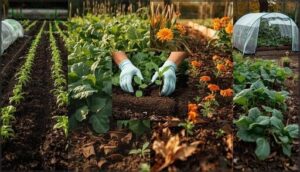
Prevention is the cornerstone of effective seasonal pest management, saving you time, money, and frustration throughout the year. By establishing consistent practices that address pests before they become problems, you’ll maintain a healthier garden with minimal intervention.
The following strategies form your foundation for year-round pest prevention success.
Early Detection and Regular Inspections
Think of early detection as your garden’s security system—weekly pest scouting during growing season can cut crop losses by up to 40%. You’ll need simple inspection tools like a hand lens and yellow sticky cards to spot pests before they spiral out of control.
Monitoring systems that track pest populations weekly let you make smart, threshold-based decisions, often slashing pesticide use by half while protecting garden health year-round.
Crop Rotation and Garden Hygiene
Rotating your crops between seasons disrupts pest and disease cycles, reducing yield losses by 14% to 90% in challenging years. You’ll see pest suppression improve when you alternate plant families—diversified rotations can slash insect damage and cut nematode populations by over half.
Pair this with garden sanitation: removing diseased residues and weeds each fall eliminates overwintering sites, lowering next season’s pest pressure before it starts.
Home Maintenance to Reduce Pest Entry
Your home’s exterior acts as the first line of defense in pest prevention and treatment. Seal cracks and utility penetrations with sealant applications, and install door sweeps on thresholds to block crawling insects.
Regular gutter cleaning and moisture control keep water away from foundations, while vegetation management—trimming branches and maintaining clearance—eliminates pest highways into your home.
Market Trends in Seasonal Pest Solutions

The market for seasonal pest solutions is shifting rapidly as more gardeners rethink how they protect their plants. You’ll find a growing divide between traditional chemical approaches and newer eco-friendly alternatives that reflect changing priorities.
Understanding these trends helps you make informed choices about the products and methods that align with your garden’s needs.
Growth of Non-Chemical Pest Control Practices
You’re witnessing a major shift: biopesticide adoption is accelerating, with global markets projected to grow from roughly USD 8.6 billion in 2024 to nearly USD 29 billion by 2032. This expansion reflects your growing demand for sustainable practices and organic farming methods.
Integrated management now dominates in many regions, with organic farmland rising 64% in under a decade in some countries—proving eco-friendly solutions aren’t just trends, they’re the future.
Consumer Preferences for Eco-Friendly Methods
Your purchasing choices reveal clear priorities: 37% of you are willing to pay more for environmentally friendly pest control options, while 56% will accept a 10% premium for products free of synthetic pesticides.
You’re drawn to eco-labeling and green certifications that signal safety for children and pets.
This consumer awareness drives demand for organic pest control and natural pest control methods, reinforcing sustainable practices that minimize environmental impact in your gardens.
Emerging Products and Tools for Gardeners
Your eco-friendly preferences are now matched by innovative tools that make seasonal pest control smarter and more precise. Smart traps with IoT sensors deliver real-time alerts to your phone, while AI monitoring systems predict infestations days before visible damage appears.
Robotic weeders reduce chemical use by 95%, and biological controls arrive ready for preventive releases.
These gardening tips transform organic pest control from reactive guesswork into proactive management.
Frequently Asked Questions (FAQs)
How do weather patterns influence pest migration timing?
Like ancient mariners reading winds and tides, garden pests time their migrations by temperature, precipitation patterns, and wind direction.
Climate shifts alter seasonal phenology, pushing fall pests earlier and extending winter pest activity windows dramatically.
Can indoor plants attract outdoor garden pests?
Yes, indoor plants can attract outdoor garden pests. Aphids, spider mites, whiteflies, and fungus gnats move between environments when you relocate containers, creating cross-infestation risks that require plant quarantine and careful pest management practices.
What role does mulch play in pest control?
Think of mulch as your garden’s armor—it blocks pests physically, cools soil to slow their development, and cuts weeds that harbor insects, all while boosting beneficial predators in organic layers.
How do you safely dispose of pest-infested plants?
You’ll need to bag infested plant disposal carefully in sealed plastic and send it to landfill.
Don’t compost diseased plants, as pathogens survive typical backyard pile temperatures and spread through your garden again.
Are homemade pest sprays effective and safe?
Homemade pest sprays show lower, more variable efficacy than registered products and carry risks including leaf damage, non-target impacts, and unknown safety profiles.
Registered low-toxicity alternatives offer proven performance with minimal environmental concerns.
Conclusion
Think of your garden as a living fortress that rebuilds its walls with each season’s turn. Mastering seasonal gardening pest solutions transforms you from a reactive defender into a strategic architect of ecological balance.
Your vigilance through spring’s emergence, summer’s intensity, fall’s shift, and winter’s dormancy creates layered defenses that pests can’t penetrate. When you align your actions with nature’s calendar, you don’t just protect plants—you cultivate resilience that strengthens with every passing year.
- https://journals.ashs.org/view/journals/horttech/30/1/article-p64.xml
- https://www.nature.com/articles/s41598-019-45041-1
- https://www.canada.ca/en/environment-climate-change/services/environmental-indicators/household-use-chemical-pesticides-fertilizers.html
- https://pmc.ncbi.nlm.nih.gov/articles/PMC3569677/
- https://lgpress.clemson.edu/publication/biological-control-strategies-in-integrated-pest-management-ipm-programs/