This site is supported by our readers. We may earn a commission, at no cost to you, if you purchase through links.
Most gardeners lose a third of their potential harvest before a single seed hits the ground. Not from bad soil or bad luck—from bad timing.
tomato planted two weeks too late scrambles to fruit before frost. Spinach sown in July bolts before you pick a leaf.
Timing isn’t a minor detail; it’s the whole game.
A solid seasonal planting guide turns your growing zone, frost dates, and daylight hours into a clear schedule—one that works with your local climate instead of against it.
Follow the calendar, and your garden stops being a gamble.
Table Of Contents
- Key Takeaways
- Why Seasonal Planting Timing Matters
- Key Factors in Seasonal Planting
- Creating a Personalized Planting Calendar
- Month-by-Month Planting Guide for 2026
- Strategies for Maximizing Seasonal Harvests
- Frequently Asked Questions (FAQs)
- What to plant in October in Tampa, Florida?
- How do I rotate crops to prevent soil depletion?
- What natural fertilizers work best for each season?
- Which companion plants improve growth and pest control?
- How do I extend growing seasons with greenhouses?
- What watering schedules suit different seasonal crops?
- How do I extend my growing season naturally?
- What vegetables grow best in containers year-round?
- Can I save seeds from this seasons harvest?
- How do rainfall patterns affect planting schedules?
- Conclusion
Key Takeaways
- Planting at the right time—based on your frost dates, soil temperature, and daylight hours—can boost your harvest by up to 50% compared to guessing.
- A planting calendar built around your USDA hardiness zone and ZIP code turns vague timing into a clear, crop-by-crop schedule that works for your specific yard.
- Succession planting every 7–14 days and matching crop varieties to your local growing window keeps produce coming all season instead of all at once.
- Small details like south-facing walls, raised beds, and row covers can shift your planting window by weeks—your microclimate matters as much as your zone.
Why Seasonal Planting Timing Matters
Timing your planting isn’t just a suggestion — it’s the difference between a thriving garden and a disappointing one.
A solid seasonal planting guide for beginners takes the guesswork out of knowing exactly what to sow and when.
Get it right, and your crops have every advantage they need to grow strong and produce well.
Here’s why the calendar on your wall might be the most important tool in your garden shed.
Impact on Crop Quality and Yield
Timing your planting right is one of the simplest yield boost strategies you can use. Plant within the ideal seasonal window and you can see 10–20% more from your harvest.
- Proper harvest timing improves quality metrics like flavor, texture, and nutrition
- Climate-specific planting helps crop maturity and yield before frost arrives
- Seasonal crop planning reduces pest pressure and helps natural nutrient management
Understanding photoperiodism influences growth helps schedule planting for best yields.
Risks of Early or Late Planting
Planting too early or too late costs you more than just a bad season. Frost damage can wipe out seedlings overnight — soybean seedlings die at 28°F, and soil temperature below 60°F stunts beans and cucumbers. Keeping an eye on the optimal soil temperature range ensures better germination.
| Timing Mistake | Risk | Crop Impact |
|---|---|---|
| Too early in spring | Frost damage, cold soils | Poor germination, seedling death |
| Too late in spring | Heat stress at pollination | Kernel abortion, yield penalties |
| Too early in fall | Pest pressure surge | Aphid and beetle damage |
| Too late in fall | Frost cuts maturity short | Underdeveloped harvest |
| Ignoring planting zones | Climate mismatch | Stunted growth, crop failure |
Seasonal crop planning and knowing your frost dates keeps these problems off your plate.
Benefits of Following Planting Calendars
A good seasonal planting calendar takes the guesswork out of your garden. Custom planting schedules tied to your frost dates can boost yields by up to 50 percent and raise germination success rates by 40 percent.
A planting calendar tied to your frost dates can boost yields by 50 percent and germination success by 40 percent
- Yield Boost: Harvest timing aligned to your zone maximizes output
- Germination Success: Soil health improves with proper crop rotation planning
- Resource Efficiency: Less waste, fewer failed starts, smarter seed use
- Succession Harvest: Staggered planting keeps produce coming all season long
Key Factors in Seasonal Planting
Getting your timing right comes down to a few things working together.
Knowing when to plant seeds for a spring harvest can make the difference between a thriving garden and one that never quite catches up.
Your local climate, your soil, and even the hours of sunlight in a day all play a role in whether your garden thrives or struggles. Here’s what you need to pay attention to before you put anything in the ground.
Frost Dates and Local Climate Zones
Your frost dates are the foundation of every planting decision you’ll make. These dates come from historical frost data spanning 30 years, giving you real probability — not guesswork. Climate zone mapping through the USDA 1–13 zone subzone system shows your region’s minimum winter temperatures.
Zone-specific frost windows vary considerably:
| USDA Zone | Avg. First Frost |
|---|---|
| Zone 5 | Oct 13–21 |
| Zone 6 | Oct 21–Nov 1 |
| Zone 7 | Oct 29–Nov 15 |
| Zone 8 | Nov 7–28 |
| Zone 9 | Dec or later |
Frost risk modeling and microclimate variability mean your neighbor’s yard may behave differently than yours. Regional gardening advice always starts with knowing your zone.
Soil Temperature and Moisture Levels
soil temperature and moisture work together — get one wrong and the other can’t save you. Check soil temps at 2–4 inches deep each morning for consistent readings.
- Tomatoes need 55°F minimum before transplanting
- Beans won’t sprout below 60°F soil temps
- Sandy soils need 80–90% moisture for proper moisture absorption
- Effective irrigation timing prevents root oxygen loss
Daylight Hours and Growing Windows
Daylight hours quietly drive your entire harvest. Your Seasonal Planting Calendar works because it accounts for Photoperiod Effects — how light triggers growth, flowering, and dormancy.
Pair photoperiod timing with staggered sowing strategies for continuous harvests so your garden stays productive from the first long days of spring through autumn’s fading light.
Long-Day Crops like onions need 14–16 hours to bulb. Short-Day Crops like beets thrive under 12 hours. Day-Neutral Plants simply grow once mature. Latitude Light Variation shifts these windows depending on where you live.
| Season | Daylight Hours |
|---|---|
| Spring | 12–15 hours |
| Fall | 9–12 hours |
Use this when checking Best Vegetable Planting Times in your Month-by-Month Planting Guide to protect your frost-free growing season.
Creating a Personalized Planting Calendar
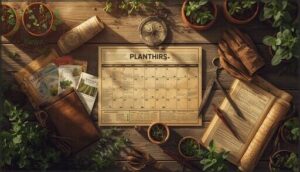
A good planting calendar isn’t one-size-fits-all — it’s built around where you actually live. Your ZIP code, hardiness zone, and local growing quirks all shape when and what you plant.
Here’s what you need to know to make your calendar work for your specific patch of ground.
Using ZIP Codes for Local Planting Dates
Ever notice how a ZIP Code can access a planting calendar as precise as a weather vane?
With GIS Mapping Accuracy and Regional Climate Integration, you get custom planting schedules, frost dates, and harvest alerts.
Extension Service Links connect you to local expertise.
This ZIP Code data weaves USDA 113 zone subzone info into your calendar, tailoring every sowing window to your backyard.
Understanding USDA Hardiness Zones
The national hardiness map has come a long way since 1960. Today’s official hardiness map uses 30 years of temperature data — 1991 to 2020 — making hardiness zone identification sharper than ever. USDA 113 zone subzone classifications cover everything from brutal Zone 1 lows below –50°F to tropical Zone 13 highs above 60°F.
- Zone history spans nearly a century of refinements
- Temperature ranges split into precise 5°F half-zone increments
- Mapping methods now resolve detail down to half‑mile squares
- Zone limitations mean averages don’t capture rare cold snaps
- Microclimate effects like urban heat can shift your zone entirely
Adjusting Schedules for Microclimates
Your yard isn’t one climate — it’s several. A south-facing wall offers real Wall Heat Advantage, warming soil 3–5°F for earlier planting.
Meanwhile, Frost Pocket Delays in low spots can push schedules back 1–3 weeks.
Use Soil Temperature Triggers to confirm readiness, try Mobile Container Shifts between warm and cool zones, and apply Succession Microzone Timing for Microclimate optimization across your whole seasonal planting calendar.
Month-by-Month Planting Guide for 2026
Every month in 2026 brings a different job in the garden, and knowing what to do when makes all the difference.
Your planting calendar breaks the year into four clear seasons, each with its own tasks and timing.
Here’s what to expect throughout the year.
Winter – Planning and Indoor Seed Starting
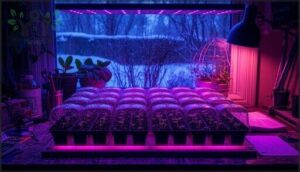
Winter is your seed’s first chapter. While frost still grips the ground, set up seed trays with drainage, fit a humidity dome over each cell, and choose full-spectrum LEDs for 12–16 hours daily.
Place heat mats under warm-season crops. Label every tray with variety and date. Your seasonal planting calendar tells you exactly when to start — don’t guess.
Spring – Outdoor Sowing and Transplanting
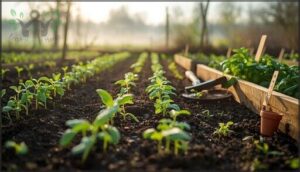
Once your seedlings are sturdy, spring planting dates open the door to real momentum. Start with cool‑season crops — peas and spinach tolerate frost and go in 4–6 weeks before your last frost date. Hardier brassica transplants follow shortly after.
Watch soil moisture management carefully; soggy spring beds rot seeds fast.
- Use raised bed warming to sow 2–3 weeks earlier
- Check spring planting dates by your local frost calendar
- Practice seedling hardening over 7–10 days before transplanting
- Follow direct sow spacing guidelines on seed packets
- Minimize transplant shock mitigation by watering in deeply at planting
Summer – Warm-Season Crop Planting
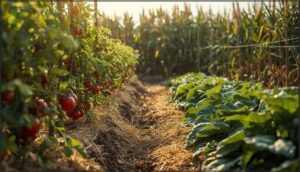
Summer is when warm-season crops finally get their moment. Once soil temperature hits 18–21°C, it’s time to plant tomatoes, peppers, squash, and corn.
Your planting calendar pinpoints these summer planting dates by location.
Use mulch moisture retention to cut watering needs in half, deploy pest-specific row covers early, and stick to a consistent irrigation scheduling routine.
Heat-tolerant varieties handle the rest.
Fall – Second Plantings and Frost Prep
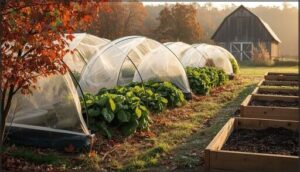
Fall shifts the garden’s rhythm. Count back 6–12 weeks from your first frost date to set fall planting dates for a second round of cool-season crops.
- Use Row Cover Types like lightweight fabric to add 2–4°C of warmth on cold nights
- Follow Mulch Depth Guidelines of 5–8 cm to protect roots
- Apply Frost Forecast Tools to time succession planting and harvest management
Strategies for Maximizing Seasonal Harvests
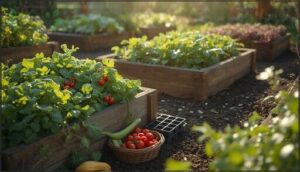
Getting the most from your garden isn’t just about what you plant — it’s about how you manage the whole season.
A few smart habits can stretch your harvests well beyond a single flush of crops. Here’s what actually moves the needle.
Succession Planting for Continuous Yields
Think of your garden as a relay race — one crop finishes, another takes off. That’s succession planting in action.
Staggered sowing every 7–14 days keeps harvests flowing without gaps. Use your planting calendar for pull‑replace rotation, space optimization, and weather adaptation. Timed intervals also help with pest disruption by breaking life cycles naturally.
| Crop | Sow Interval | Method |
|---|---|---|
| Lettuce | Every 7–14 days | Staggered sowing |
| Radishes | Every 10 days | Pull‑replace rotation |
| Beans | Every 14–21 days | Space optimization |
Crop Selection and Days to Maturity
Picking the right crop starts with one number: Days to Harvest. Short‑season varieties like radishes (22–40 days) and bush beans (46–65 days) fit tight harvest windows easily.
Maturity charts make varietal timing clear, so your crop planning stays aligned with your local climate. Match maturity dates to your seasonal planting window, and vegetable cultivation becomes far less guesswork — and far more garden.
Soil Prep, Mulching, and Frost Protection
Before you plant a single seed, your soil needs attention. Soil testing reveals pH gaps and nutrient deficiencies early.
Work in 2–3 inches of compost and consider gypsum application to break up clay. Lay straw mulch 2–3 inches deep for moisture and weed control.
When frost dates approach, row cover types like Agribon floating covers buy you several extra degrees of protection.
Frequently Asked Questions (FAQs)
What to plant in October in Tampa, Florida?
October in Tampa is gardening’s sweet spot.
Cool-season greens, root vegetables, herbs and kitchen greens, and warm-season holdovers all thrive now.
Use a planting calendar matched to your frost dates and climate zones.
How do I rotate crops to prevent soil depletion?
Rotate crops by moving heavy feeders like corn, then legumes, then light feeders across beds yearly.
This nutrient balancing approach breaks pest cycles, rebuilds soil health, and reduces fertilizer needs naturally.
What natural fertilizers work best for each season?
Each season calls for something different.
Use blood meal or fish emulsion for a Spring Nitrogen Boost, seaweed for a Summer Potassium Feed, Fall Cover Crops to build soil, and Winter Soil Mulch to protect it.
Which companion plants improve growth and pest control?
Marigold benefits go beyond beauty — they’re practically a force field.
Nasturtium traps and lures aphids away.
Allium defenses, herb enhancers, and legume nitrogen round out companion planting’s organic gardening toolkit for natural pest control.
How do I extend growing seasons with greenhouses?
A greenhouse stays 5–10°F warmer than outside. Add row covers inside for extra heat retention.
Good ventilation strategies prevent overheating. This layered insulation approach extends your growing season by weeks on both ends.
What watering schedules suit different seasonal crops?
daily watering keeps shallow roots moist.
deep soaking twice weekly suits tomatoes.
moisture monitoring reduces frequency as temps drop.
reduced irrigation protects roots from rot.
Container crop watering increases to three times weekly in heat.
How do I extend my growing season naturally?
Use Row Covers, Cold Frames, and Raised Beds to push past frost dates. Add Hardy Varieties and Interplanting to stretch harvests.
Small microclimates and smart heat management make seasonal planting and climate adaptation work in your favor.
What vegetables grow best in containers year-round?
Leafy greens like kale, spinach, and lettuce thrive in containers year-round.
Perennial herbs such as chives and parsley keep producing through winter.
Succession lettuce every two weeks ensures you’re never without a harvest.
Can I save seeds from this seasons harvest?
Yes — but choose wisely. Heirloom and open-pollinated varieties grow true from saved seeds.
Avoid cross-pollination, harvest correctly, and dry thoroughly before storing. Skip hybrids; their seeds won’t reliably match the parent plant.
How do rainfall patterns affect planting schedules?
Rainfall timing shapes everything. Too much rain saturates soil past moisture thresholds, delaying sowing.
Too little stalls germination. Adaptive planting windows help you respond to microclimate shifts and regional gardening differences across climate zones.
Conclusion
Funny how "just winging it" in the garden always ends with the same story—half a harvest, a lot of shrugging, and tomatoes that never got the memo.
Your seasonal planting guide exists precisely because plants don’t negotiate. They follow cues you either work with or lose to. Know your frost dates. Trust your soil temps. Plant on time, every time. That’s not gardening advice—that’s just how growing works.
- https://eatlikeafarmer.substack.com/p/spring-vegetable-garden-guide
- https://www.deep-roots-project.org/grow-your-own-food-all/spring-planting-step-by-step
- https://vermiorganics.co/blogs/plants/best-practices-for-seasonal-planting
- https://growingourgarden.com/seasonal-guide-to-companion-planting/
- https://www.growitalian.com/blogs/news/succession-planting-in-the-home-garden-what-and-when-to-plant