This site is supported by our readers. We may earn a commission, at no cost to you, if you purchase through links.
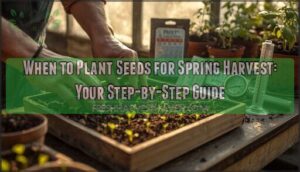
Most gardeners lose weeks of growing time not from bad luck but from bad timing. Plant too early and a late frost wipes out your seedlings overnight. Wait too long and your harvest window shrinks before summer heat takes over.
Knowing when to plant seeds for spring harvest isn’t guesswork—it’s a short list of factors: your last frost date, your soil temperature, and what each crop actually needs to grow. Get those three things right and spring planting stops being stressful.
Table Of Contents
- Key Takeaways
- Key Factors for Spring Seed Planting
- Choosing Seeds for a Spring Harvest
- When to Start Seeds Indoors
- Direct Sowing Seeds Outdoors
- Succession and Staggered Planting Strategies
- Hardening Off and Transplanting Seedlings
- Common Mistakes in Spring Seed Planting
- Frequently Asked Questions (FAQs)
- When should I start planting seeds for spring?
- When should you plant seeds in a Spring Garden?
- When should you plant a vegetable garden?
- When should I start lettuce seeds?
- When should I start harvesting vegetables?
- When is early spring planting?
- When to start seeds indoors?
- . Why Should You Start Seeds indoors?
- . Which Seeds Should You Start indoors?
- . When Should You Start Seeds indoors?
- Conclusion
Key Takeaways
- Your last frost date is the anchor for everything — get that number first, then build your planting schedule around it.
- Soil temperature matters more than the calendar; don’t sow warm-season crops until the ground hits at least 60°F.
- Starting seeds indoors 6–10 weeks before your frost date gives transplants a real edge over direct-sown seeds.
- Staggering sow dates every 7–21 days keeps harvests coming steadily instead of all at once.
Key Factors for Spring Seed Planting
Getting your spring planting right comes down to a few non-negotiable factors. Miss one, and your seeds either rot in the ground or never really take off.
Nail those timing windows and you’ll avoid most rookie mistakes — this vegetable seed starting guide breaks down exactly when and how to get each crop going.
Here’s what you need to pay attention to before you put a single seed in the soil.
Understanding Last Frost Dates
Before anything goes in the ground, you need to know your last spring frost date. It’s the backbone of every planting calendar and seed starting chart. In Ashburn, for example, that average frost date lands around April 23.
Use it to plan around climate zone differences and local microclimates.
Here’s what frost date basics come down to:
- Last spring frost marks when spring freeze risk drops to roughly 50%
- Average frost dates shift earlier in warmer climate zones
- Local microclimates — low spots, shade — can push frost tolerance limits further
You can get more details about your location’s timing and gardening zone by using a hardiness zone look-up tool.
Importance of Soil Temperature
Frost dates set your timeline — but soil temperature controls what actually happens underground.
Cold soil slows seed germination, weakens seedlings, and invites seed rot.
Most warm-season crops need soil at 70°F or above for reliable germination rates.
Cool-season seeds tolerate lower ranges, but still sprout faster in warmer soil.
Soil microbes also wake up with warmth, supporting healthy seed starting through better nutrient availability.
For further details on, check out this detailed resource.
Daylight and Weather Considerations
Soil temperature gets seeds moving — but daylight and weather decide how fast they’ll go. Spring daylength climbs from roughly 10 hours in late winter to 13–14 hours by May, directly triggering vegetative growth through photoperiod effects on crops.
- Daylight patterns shift quickly — don’t sow warm-season seeds too soon
- Weather forecasting helps you dodge late cold snaps
- Soil moisture drops fast during temperature fluctuations
- Spring planting dates shift yearly — stay flexible
Choosing Seeds for a Spring Harvest

Picking the right seeds is where your spring garden actually begins. Not every seed works in every place, and knowing what to look for saves you a lot of wasted effort.
Here’s what to think about before you buy.
Cool-Season Vs. Warm-Season Crops
Not all seeds play by the same rules. Cool-season crops like peas, spinach, and broccoli thrive between 55–75°F and can handle a light frost — your garden planning should get these in early.
Warm-season crops like tomatoes and peppers need soil above 60°F to germinate. Your planting calendar and seasonal gardening tips depend on knowing which crop wants which conditions.
Starting seeds indoors early is a smart move, and a solid fall garden flower planting guide can help you map out timing before the ground ever warms up.
Selecting Regionally Adapted Varieties
Your zip code isn’t just an address — it’s a gardening blueprint. Climate Adaptation matters more than most realize, and Regional Breeding has quietly given gardeners an edge for generations. When Seed Selection aligns with Regional Adaptation, your odds of a strong harvest jump considerably.
Your zip code is a gardening blueprint — match your seeds to your region and your harvest odds soar
- Match Maturity Timing to your frost-free window
- Prioritize Disease Resistance for your region’s known pressures
- Use a Planting Calendar built for your USDA zone
- Apply Seasonal Gardening Tips from local Vegetable Gardening guides
- Choose varieties refined through Gardening by Region practices
Sourcing Quality Seeds Locally
Local Nurseries and Seed Libraries are your secret weapons for smart Seed Selection and Sourcing. You’ll find fresh, regionally tested Organic and Heirloom varieties — plus honest Supplier Reviews from neighbors who’ve grown them.
| Where to Source | What to Check |
|---|---|
| Local Seed Company | Packed-for date |
| Nursery seed rack | Germination percentage |
| Seed Libraries | Community-tested varieties |
| Extension office lists | Quality Control records |
| Master Gardener groups | Regional Seed Starting Techniques |
When to Start Seeds Indoors
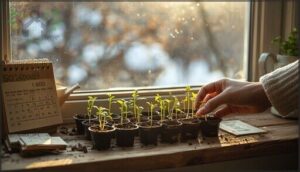
Starting seeds indoors gives you a real head start on the growing season.
Knowing exactly when to start each crop makes the difference between a thriving garden and a frustrating one. Here’s what you need to know to get the timing right.
Calculating Indoor Start Dates by Crop
Every crop runs on its own clock. Count backward from your area’s last frost date to set your indoor sowing schedule.
Tomatoes and peppers need 6–8 weeks; broccoli, just 3–4. Slow growers like celery demand 10–12 weeks.
Matching crop timing to frost dates is the backbone of solid planting schedules — get this right, and transplanting seedlings becomes straightforward.
Using Planting Calendars and Tools
Don’t guess your planting dates — use the right tools and get it right the first time.
- Frost Date Tools like the Old Farmer’s Almanac generate a customized Planting Calendar by ZIP code.
- Seed Calculators show exact indoor start dates per crop.
- Garden Planners map your full Spring Gardening Planning timeline visually.
- Succession Schedulers and Printable Charts keep your Planting Schedule on track all season.
Benefits of Early Indoor Seed Starting
Starting seeds indoors puts you in control before the season even begins. Better seed germination rates, stronger stems, and cleaner soil quality give your plants a real head start.
Here’s what early indoor gardening delivers:
| Benefit | What It Means for You |
|---|---|
| Earlier harvests | Transplants beat direct sowing by 2–8 weeks |
| Wider seed selection | Grow heirlooms nurseries don’t stock |
Smart garden planning starts inside.
Direct Sowing Seeds Outdoors
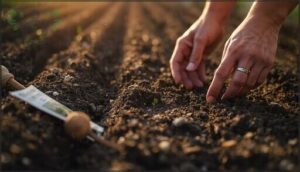
Direct sowing skips the indoor setup entirely — you put seeds straight into the ground where they’ll grow. But timing and soil prep make or break it.
Here’s what you need to know before you scatter a single seed.
Timing Based on Frost-Free Dates
Your frost-free date is your anchor for spring planting. Most published dates reflect a 50% frost risk — so don’t treat them as a guarantee.
Use frost date calculation tools by ZIP code to find yours, then add a 7–14 day buffer before transplanting warm-season crops. Watch weather forecasting closely, and check soil temperature — it often lags behind air temps.
Crops Best Suited for Direct Sowing
Some crops just do better when you skip the seed tray entirely. Direct sowing works best for:
- Root Crops like carrots, beets, and radishes — transplanting deforms their taproots.
- Legume Seeds such as peas and beans — they hate root disturbance.
- Leafy Greens like spinach and arugula — direct seeding in cool soil wins every time.
- Vining Crops like cucumbers and squash — warm soil gets them going fast.
Soil Preparation for Outdoor Planting
Good soil preparation starts before a single seed touches the ground. Test your soil’s pH level — most vegetables thrive between 5.8 and 6.3.
Work in 3 to 4 inches of compost for organic matter and better drainage. Loosen compacted soil 8 to 12 inches deep for proper aeration.
Don’t work wet soil — it clumps and drains poorly. Wait until soil temperature hits at least 60°F before sowing.
Succession and Staggered Planting Strategies
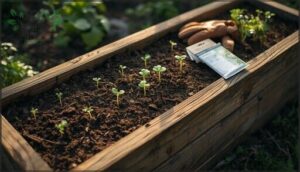
Planting everything at once is a trap — you get a flood, then nothing.
Spreading your sowing dates out gives you a steady stream of food instead of one big scramble. Here’s how to make that work for your garden.
Planning Multiple Sowing Intervals
Think of interval planning like a relay race — one bed hands off to the next. For spring gardening preparation, sow fast crops like lettuce every 7–10 days, beets every 14, and carrots every 21.
Smart bed management and succession planting keep harvests rolling instead of crashing all at once. Match your seed spacing and harvest scheduling to how much your household actually eats each week.
Extending The Spring Harvest Window
Staggered variety maturity is your best tool for harvest prolongation. Pair fast and slow cultivars — snap peas at 50 days alongside ones at 70 — and you stretch picking across weeks.
Season extension covers like row covers and cloches push early spring harvests even further. Intercropping and smart crop rotation keep beds full:
- Mix spinach with peas for back-to-back picks
- Use a seed starting date calculator to time gaps
- Build soil fertility with compost between successions
- Layer intercropping into your spring gardening preparation plan
Reducing Pest and Disease Pressure
Timing is everything in pest management. Small, staggered sowings break the cycle before pests can settle in.
| Strategy | Benefit |
|---|---|
| Crop Rotation | Disrupts soil-borne disease buildup |
| Companion Planting | Promotes biological balance naturally |
| Soil Sanitation | Removes overwintering pathogens |
| Soil Amendment | Strengthens plant disease resistance |
| Organic Farming Practices | Reduces chemical pest control needs |
Sow every 10–14 days. You’ll stay ahead.
Hardening Off and Transplanting Seedlings
Your seedlings have been thriving indoors, but the outside world is a whole different story.
Before you transplant them, there are a few steps that’ll make the difference between plants that survive and plants that thrive.
Here’s what you need to know.
Steps to Harden Off Indoor-Grown Plants
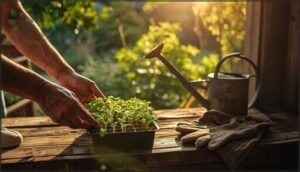
Your seedlings have been living a sheltered life indoors — now it’s time to toughen them up. To harden off properly, follow this gradual exposure plan over 7 to 10 days:
- Start with 1 to 2 hours in shade for light adjustment and wind protection
- Add 1 to 2 hours daily, monitoring seedling stress signs like wilting or scorched leaves
- Build toward full temperature acclimation before leaving them out overnight
Don’t rush it.
Timing Outdoor Transplant for Spring Success
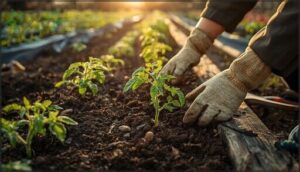
Once your seedlings are hardened off, your transplant date becomes everything. For frost risk management, wait one to two weeks past your local last frost before moving tender crops like tomatoes outdoors.
Cool-season plants go out earlier. Check weather forecasting tools for overnight lows — soil warming techniques like black plastic mulch help. Smart spring planting schedules and proper seedling care prevent transplant shock and keep your spring garden thriving.
Protecting Young Seedlings From Late Frost
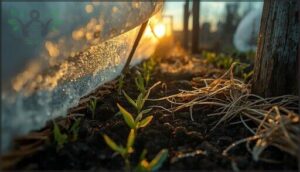
Late frost can wipe out weeks of work overnight. Protect your seedlings with these frost protection methods before your frost-free date arrives.
- Cover up: Lay floating row covers or cold frames over beds to boost seedling insulation by up to 8°F.
- Mulch smart: Pull mulch strategies into play — straw around stems holds soil heat.
- Block the wind: Simple windbreak techniques near beds reduce damaging wind chill fast.
Common Mistakes in Spring Seed Planting
Even experienced gardeners make the same spring planting mistakes year after year.
A few missteps at the wrong time can cost you weeks of progress.
Here’s what to watch out for before you put a single seed in the ground.
Starting Seeds Too Early or Late
Getting seed timing wrong is one of the fastest ways to tank your spring harvest before it starts.
| Mistake | What Happens | Fix |
|---|---|---|
| Starting seeds indoors too early | Leggy plants, transplant shock, yield reduction | Use a seed starting date calculator |
| Missing your frost-free date | Germination failure, crop loss | Check your transplant date against frost risk |
| Sowing warm crops in cold soil | Poor seed germination, rot | Wait for 60°F+ soil temps |
| Starting too late indoors | Undersized transplants, shortened season | Count back 6–8 weeks from last frost |
| Ignoring indoor light needs | Weak, spindly seedlings | Run grow lights 12–16 hours daily |
Ignoring Local Climate Variations
Your zip code isn’t your whole story. Regional variations in microclimate effects, urban heat islands, elevation factors, and coastal conditions can shift your frost-free date by weeks — even within the same town.
- Urban heat islands often push spring planting dates earlier
- Elevation factors cool hilltop gardens faster than valley floors
- Coastal conditions delay warm-season crops by 4–6 weeks
- Use a Seed Starting Date Calculator to adjust for your exact spot
Overlooking Soil and Water Needs
Climate isn’t the only thing people overlook. Soil and water matter just as much.
Compacted soil blocks roots. Poor drainage systems keep seeds waterlogged and rotting. Moisture management means keeping soil evenly damp — not soaked, not bone dry.
Mix in finished compost for better soil fertility and structure. Check soil temperature before sowing. Good soil science and preparation sets everything else up to work.
Frequently Asked Questions (FAQs)
When should I start planting seeds for spring?
Start with your last frost date — that’s your anchor for seed timing. Count backward from there. Most spring planting begins 4 to 12 weeks before frost clears your garden.
When should you plant seeds in a Spring Garden?
Your spring planting dates depend on last frost timing and soil readiness.
Use a Seed Starting Date Calculator and planting calendar to align seed germination with stable spring weather for a successful garden.
When should you plant a vegetable garden?
Your spring garden timing hinges on your last frost date, soil temperature, and crop type.
In Ashburn, that window opens around April 23 — your anchor for all frost date planning, seed selection, and planting calendar decisions.
When should I start lettuce seeds?
Wait too long and lettuce bolts before you blink. Start seeds indoors 4–5 weeks before your transplant date. Aim for soil warming to 60–68°F for best lettuce germination.
When should I start harvesting vegetables?
Check your seed packets for days to maturity — that number tells you when harvest begins.
For the best vegetable yield, pick crops early and often. Frequent harvest frequency keeps your spring garden producing longer.
When is early spring planting?
Early spring planting usually begins 2 to 4 weeks before your last frost date. Once soil hits 40°F to 45°F, cool-season crops like peas and spinach are ready to go in.
When to start seeds indoors?
Most crops need six to eight weeks indoors before your last frost date. Use a Seed Starting Date Calculator to nail your schedule.
Good indoor lighting keeps seedlings strong until transplant time.
. Why Should You Start Seeds indoors?
Starting seeds indoors gives you full control. You protect seedlings from pests, cold, and heavy rain.
Grow lights and heat mats boost germination. The result? Stronger plants and earlier harvests — every time.
. Which Seeds Should You Start indoors?
Not every seed belongs indoors. Warm weather lovers like tomatoes and peppers need indoor sowing.
Cool season crops like broccoli and kale do too. Direct sow those like beans, carrots, and peas outdoors.
. When Should You Start Seeds indoors?
Count back from your last frost date. Most seeds need 4–10 weeks indoors.
Use a Seed Starting Date Calculator to nail your germination timing and take the guesswork out of crop planning.
Conclusion
The less you fight your garden’s timeline, the more control you have. Knowing when to plant seeds for spring harvest means working with frost dates, soil temps, and crop needs—not against them.
Start indoors on schedule. Direct sow when conditions say go. Stagger your plantings. Harden off carefully. These aren’t complicated steps. They’re just the right ones, done in the right order. Follow the sequence, and spring delivers exactly what you planted for.
- https://www.pubs.ext.vt.edu/426/426-331/426-331.html
- https://garden.org/apps/calendar/?q=20148
- https://monroecountymga.org/2020/04/22/what-seeds-can-germinate-in-cool-garden-soil/
- https://www.ufseeds.com/zone-6-planting-calendar.html
- https://www.gardenary.com/blog/plants-you-can-grow-before-your-last-frost-date