This site is supported by our readers. We may earn a commission, at no cost to you, if you purchase through links.
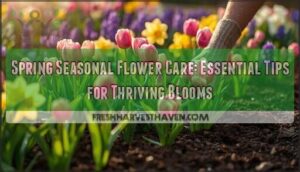
Most gardeners lose about 40% of their spring blooms to easily preventable mistakes—overwatering new plantings, skipping soil prep, or choosing flowers that won’t survive the last frost. Spring seasonal flower care isn’t complicated, but timing matters more than most people realize.
The difference between a garden that peaks for two weeks and one that delivers color from March through June often comes down to a handful of strategic choices made before you ever put a shovel in the ground. Smart flower selection, proper soil amendments, and a simple watering routine can transform your spring beds from underwhelming to unstoppable, giving you months of vibrant blooms instead of a brief show followed by disappointment.
Table Of Contents
Key Takeaways
- Most spring garden failures come from overwatering new plants, skipping soil preparation, or choosing flowers that can’t survive late frosts, but proper timing and plant selection can extend your bloom season from a few weeks to several months.
- Layering early, mid, and late spring bloomers with overlapping schedules creates 10–14 weeks of continuous color, while native perennials use 20–50% less water once established and support essential pollinator partnerships.
- Healthy soil needs 1–2 inches of compost worked into the top 6–8 inches before planting, paired with balanced fertilizers and 2–4 inches of mulch to retain moisture and reduce water loss by up to 50%.
- Weekly pest checks, organic treatments like neem oil, proper plant spacing for airflow, and early-season pruning prevent most common problems while supporting beneficial insects that naturally control garden pests.
Choosing Spring Flowers for Your Garden
Choosing the right flowers for your spring garden sets the stage for months of color and beauty. You’ll want to think about how long each plant blooms, whether it comes back every year, and how well it fits your local climate.
Let’s look at a few smart strategies to help you create a garden that thrives from early spring through summer.
Selecting Perennials and Annuals
When you’re planting spring flowers, the perennials-versus-annuals choice shapes your garden’s future. Perennials live three to five years or more, cutting replacement costs by 30–50% over time, while annuals deliver quick color but need yearly replanting. Consider climate hardiness and pollinator support as you decide:
- Hardy perennials survive harsh winters and develop deep roots
- Annuals fill gaps fast with six-to-ten-week bloom density
- Native perennials need less water once established
Many gardeners choose perennials like Black-eyed Susans for their longevity.
Overlapping Bloom Times for Continuous Color
A well-planned bed delivers color from late February through early June by layering early, mid, and late spring flowers. Bulb sequencing with crocus, daffodils, and parrot tulips creates 10–14 weeks of overlapping bloom times. Perennial pairing adds another layer—hellebores with hyacinths, iris with alliums—extending your display by about one-third. Succession planting fast annuals every two weeks fills gaps and keeps bloom production steady through summer. To extend bloom times and prevent a “feast or famine” situation, consider succession planting methods.
| Bloom Period | Plant Examples |
|---|---|
| Early Spring (Feb–Mar) | Crocus, snowdrops, dwarf tulips |
| Mid-Spring (Apr–May) | Daffodils, mid-season tulips |
| Late Spring (May–Jun) | Parrot tulips, alliums, double tulips |
| Early Perennials | Hellebores, pulmonaria |
| Late Perennials | Bearded iris, shrub roses |
Native and Seasonal Flower Choices
Beyond your bloom schedule, origin matters. Native flowers like Aquilegia, Trillium, and Lupinus thrive on 20–50% less water once established and support early-emerging pollinators when they need nectar most. About 75% of flowering plants depend on these partnerships. Native benefits extend to your wallet too—fewer fertilizers, pesticides, and mowing runs.
Native flowers like Aquilegia and Lupinus use half the water, feed pollinators when they need it most, and save you money on chemicals
Smart Native and Seasonal Flower Choices:
- Match bloom timing to pollinator emergence for maximum ecological impact
- Layer native perennials with seasonal annuals to bridge gaps
- Choose species adapted to your climate zone for water conservation
- Educate neighbors about native benefits to shift public perception
Preparing Soil for Spring Flower Success
Before your spring flowers can dazzle you with color, they need a strong foundation beneath them. Healthy soil acts like a pantry, storing the nutrients your plants will draw on throughout the growing season.
Let’s look at two key ways to set your soil up for success.
Adding Compost and Organic Matter
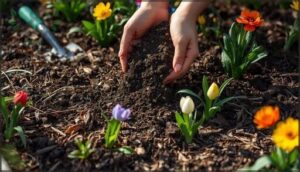
Think of compost as your soil’s spring breakfast—it wakes everything up. Adding about 1 to 2 inches of organic compost into the top 6 to 8 inches of your flower bed improves soil structure, boosts water dynamics, and provides a steady nutrient supply throughout the season.
These soil amendments even help with disease suppression by supporting beneficial microbes. A simple mulch layer on top keeps moisture in.
Choosing The Right Fertilizer for Flowers

Your flowers need the right fuel, so understanding NPK ratios matters. For spring blooms, look for balanced fertilizer like 10-10-10 or formulas where phosphorus matches nitrogen to encourage flowering over leafy growth.
Slow-release organic fertilizers feed plants gently over weeks, while synthetic options work faster. Don’t forget micronutrients—magnesium especially aids healthy blooms.
Application rates generally cap at 4–6 pounds of nitrogen per 1,000 square feet seasonally.
Watering and Irrigation Tips for Spring Blooms
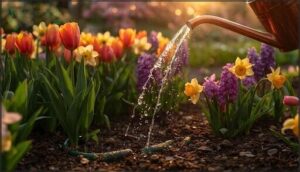
Watering your spring flowers correctly can make the difference between healthy, vibrant blooms and disappointing results. Too much water drowns roots, while too little leaves plants stressed and struggling.
Let’s look at three straightforward ways to keep your spring garden properly hydrated without guesswork or waste.
Establishing Proper Watering Schedules
Your spring watering routine hinges on several factors working together. New plantings need moisture every one to two days for the first couple weeks, then shift to deep watering every two to three days. Established flowers generally thrive with one to two weekly sessions.
Adjust your watering frequency based on soil type—sandy soils drain faster—and microclimate effects like sun exposure and wind.
Efficient Irrigation Methods
When you’re weighing irrigation options, drip systems and soaker hoses cut water use by 30–50% compared with overhead sprinklers. Smart controllers adjust schedules based on weather, saving around 15% for typical users and over 40% for heavy waterers.
Subsurface irrigation reduces evaporation even further, while rainwater harvesting can supply multiple watering cycles—shrinking your bill and supporting healthier blooms.
Using Mulch to Retain Moisture
Mulch acts like a blanket over your flower beds, keeping soil moist while weeds struggle to break through. You’ll see the best moisture retention when you apply it after soils warm in spring—locking in winter moisture before the heat arrives.
Key mulching benefits for spring flowers:
- Apply 2–4 inches of organic mulch to cut water loss by 25–50%
- Choose coarse materials like bark or wood chips for better airflow
- Time application when soil is already moist for maximum retention
- Maintain 90% coverage to reliably reduce evaporation throughout the season
- Keep mulch away from plant crowns to prevent stem rot and disease
Organic options lower soil temperatures by up to 7 °C in summer, creating stable conditions that support continuous root growth. Weed suppression benefits mean less competition for water—studies show roughly 45% fewer weeds under mulched conditions.
Top up your mulch layer by 0.5–1 inch yearly as it breaks down, and lightly rake fine materials if they mat together and block water infiltration.
Pruning, Training, and Supporting New Growth
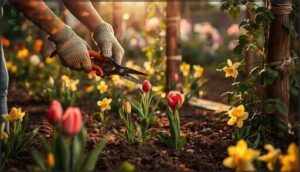
Spring is a time of rapid growth, and your flowers need a little help staying strong and focused. Pruning away old growth, guiding stems in the right direction, and giving crowded plants more breathing room all make a big difference.
Here’s how to support your garden as it comes back to life.
Early-Season Cleanup and Deadheading
Once new shoots peek through in April and nighttime lows hold above 10 °C for a week, you can begin your spring seasonal garden care.
Cut back old stems carefully to avoid damaging emerging growth, then practice deadheading throughout the season—snipping spent blooms just below the seed pod—to boost flower production and improve disease reduction. This safe technique balances cleanup timing with pollinator habitat protection.
Training Stems and Supporting Tall Plants
Tall perennials like delphiniums and lupins will flop without proper support, so plan early intervention before stems reach full height. Staking techniques with soft ties in a figure-eight pattern prevent stem damage while aiding new growth during spring.
Three steps for preventing lodging:
- Position stakes at two-thirds the plant’s mature height
- Use bolstering materials like ring cages or grow-through grids
- Place bolstering behind plants for aesthetic integration as foliage grows
Dividing Overcrowded Perennials
Beyond staking, spring is prime time for dividing overcrowded perennials. When clumps show dead centers or reduced blooms, root entanglement is stealing nutrients. Lift plants before flowering begins, slice into 3–5 shoot divisions using a sharp spade, and discard weak central portions.
Species like chrysanthemums need dividing every 1–2 years, while others wait 3–5. Proper division timing and clump size directly impact post-division care success and bloom potential.
Managing Pests and Diseases in Spring Flowers
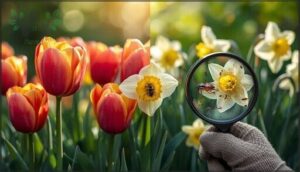
Spring’s warmth doesn’t just wake up your flowers—it also brings out pests and diseases that can quickly damage your blooms if left unchecked. Catching problems early and knowing how to respond makes all the difference in keeping your garden healthy.
Let’s look at how to spot trouble, treat it safely, and prevent issues before they start.
Identifying Common Spring Pests
Spring pests can sneak up fast, turning blooming flower beds into an all-you-can-eat buffet. Recognizing trouble early helps you stop damage before it spreads. Watch for these common invaders:
- Aphid identification starts with clusters of tiny green, black, or pink insects on tender new growth and buds—they multiply quickly and leave sticky honeydew behind.
- Thrips damage appears as silvery streaks, blotched petals, or buds that won’t open, caused by nearly invisible insects hiding inside flowers.
- Spider mites thrive in warm, dry conditions, creating fine webbing and stippled, bronzed leaves on plants like roses and perennials.
Sucking pests—including whiteflies and mealybugs—drain sap and weaken your plants, while leaf-eating pests like slugs chew ragged holes in foliage and petals overnight.
Check your flower beds weekly so you can catch these troublemakers before they settle in for good.
Organic and Eco-Friendly Treatment Options
Once you’ve spotted pests, reach for organic treatments that won’t harm beneficial insects. Neem oil, a botanical insecticide effective against soft-bodied pests, breaks down quickly in sunlight, so reapply every few days.
Biological control agents like parasitic wasps and predatory flies work wonders when you plant flower strips nearby to attract natural predators. These eco-friendly practices support sustainable gardening while keeping your blooms healthy and your conscience clear.
Preventive Practices for Healthy Flower Beds
Prevention beats reaction every time. Keep mulch 2–3 inches deep and pulled back from plant crowns to stop rot and pests from settling in. Remove dead leaves and debris early—cutting down disease before it starts.
Space your plants well for airflow, water in the morning to let foliage dry, and yank weeds that shelter trouble.
Healthy soil, smart fertilizing methods, and early pest detection build flower beds that thrive season after season.
Frequently Asked Questions (FAQs)
How do I protect flowers from late spring frosts?
Cover your tender blooms with frost cloths or row covers when temperatures drop toward 32°F, and water the soil beforehand—moist ground holds heat better than dry, offering your plants a few extra degrees of protection.
When should I transplant spring-blooming bulbs?
You’d think spring is when bulbs want to move—but timing is everything.
Wait until foliage yellows naturally, usually four to six weeks after bloom, before dividing or planting for best flowering impact.
Can I grow spring flowers in containers indoors?
Yes, you can grow spring blooms indoors through bulb forcing. Hyacinths, daffodils, and tulips need a 10–16 week chilling period, then bright, cool light around 60°F for best flower garden performance.
How do I extend the vase life of cut spring flowers?
A bouquet is like a small garden you’re nurturing in your home.
Recut stems under water, use flower food to balance water quality and nutrients, and keep vases cool away from ethylene sources like ripening fruit.
What causes yellowing leaves on spring flowering plants?
Yellowing leaves often signal nutrient deficiencies, overwatering effects, or soil pH issues. Underwatering stress, temperature impact, pest infestations, and salinity damage also contribute.
Proper watering and addressing plant diseases help restore healthy foliage.
Conclusion
Sure, you could skip spring seasonal flower care entirely—wing it with whatever’s on sale, dump some seeds in compacted dirt, and hope for the best. Or you could invest thirty minutes in soil prep, choose flowers that actually match your frost dates, and water with intention.
One approach gives you a few sad weeks of color. The other? A garden that earns compliments from March straight through June. Your shovel, your choice.
- https://crossriverdesign.com/best-time-fertilize-daffodils-tulips-spring-flowering-bulbs/
- https://extension.umd.edu/resource/care-annuals-and-perennials
- https://extension.umn.edu/news/caring-spring-blooming-plants
- https://fieldreport.caes.uga.edu/publications/B1065/care-of-ornamental-plants-in-the-landscape/
- https://yardandgarden.extension.iastate.edu/how-to/using-mulch-garden