This site is supported by our readers. We may earn a commission, at no cost to you, if you purchase through links.
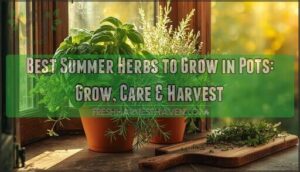
A single pot of basil on a sunny windowsill can produce enough leaves to keep a home cook supplied all summer—and that’s before you’ve even considered what thyme, mint, or rosemary can add to the mix.
Container herb gardening rewards you in ways a grocery store never will: fresher flavor, zero food miles, and the quiet satisfaction of snipping exactly what you need, when you need it.
The summer herbs to grow in pots aren’t limited to a timid shortlist either. From sprawling mint to compact chives and sun-loving oregano, your patio, balcony, or doorstep holds more growing potential than you might expect.
Table Of Contents
- Key Takeaways
- Best Summer Herbs for Pots
- Choosing The Right Containers
- Essential Potting Mix and Soil Tips
- Sunlight and Watering Needs
- Harvesting and Maintaining Summer Herbs
- Frequently Asked Questions (FAQs)
- Which herbs grow best in pots?
- What herbs can grow in pots full sun?
- What herbs grow well in the summer?
- Is September too late to plant herbs?
- Can herbs grow in containers?
- What kind of pots do herbs grow best in?
- Which herbs are best for container gardening?
- What are the best herbs to plant in the summer?
- What is the best herb to grow in a garden?
- Are herbs easy to grow?
- Conclusion
Key Takeaways
- Matching your herb to the right container size and material — terracotta for dry herbs, plastic for thirsty ones — is the difference between thriving plants and struggling ones.
- Morning is the best time to both water and harvest, since essential oils peak early and roots absorb moisture more efficiently before the heat climbs.
- Mint, thyme, oregano, rosemary, and basil are your most reliable summer performers, each handling heat well and rewarding consistent pruning with stronger, bushier growth.
- Regular pinching and harvesting every one to two weeks isn’t just maintenance — it’s what keeps your herbs producing all season instead of bolting or fading out by July.
Best Summer Herbs for Pots
Not every herb belongs in a pot, but the ones that do will genuinely surprise you.
Compact growers like thyme, chives, and mint actually do best in containers — check out small-space herb gardening tips to see which ones are worth trying first.
Summer brings out the best in a handful of varieties that thrive in containers, rewarding you with fresh flavor just steps from your kitchen.
Here’s a look at the best herbs worth growing in pots this season.
Basil Varieties for Containers
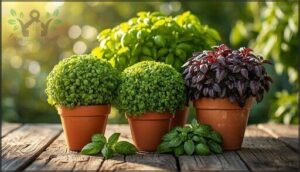
Basil is the crown jewel of any container herb garden, and the variety you choose makes a real difference.
Dwarf Greek types like Spicy Globe stay under 12 inches, fitting neatly into small pots without fuss. Their compact growth, dense leaf texture, and concentrated fragrance options make them ideal culinary herbs.
Growing herbs in containers has never been this rewarding. Discover even more about the range of basil varieties for flavor that can enhance your summer herb garden.
Compact Chives and Parsley
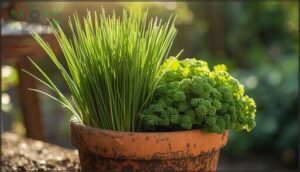
Chives and parsley are quiet workhorses in any container herb garden. Both stay compact, grow happily together in a medium pot, and reward consistent harvesting.
- Chive care is simple — cut at soil level once leaves hit 3–4 inches
- Parsley growth stays bushy when you harvest outer stems first
- Container size matters: aim for 6–8 inches deep minimum
- Both herbs make ideal herb companions, sharing water and light needs
- Harvest timing is best in the morning for peak flavor
For more on successful chive growing, explore these tips for growing chives in containers.
Mint Types for Potted Growth
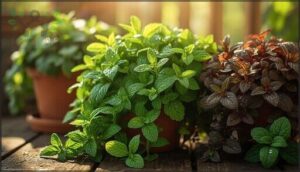
Mint varieties are where container gardening gets genuinely fun. Peppermint care is straightforward — keep soil moist, give it morning sun, and trim it often.
Spearmint growth stays manageable in an 8-inch pot with regular harvesting. Chocolate mint and other fruity mints spill beautifully over pot edges. For herb gardening beginners, growing herbs in pots means mint never escapes into your garden beds.
Thyme, Oregano, and Rosemary Choices
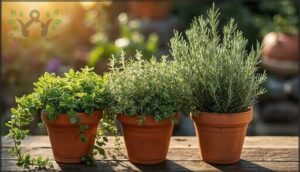
If mint is the playful one, thyme, oregano, and rosemary are the workhorses of container gardening. Thyme varieties like common or lemon thyme stay compact, rarely topping 12 inches. Oregano care is simple — full sun, lean soil, minimal fuss.
Rosemary rounds out the trio beautifully — and if you’re just starting out, this guide to best herbs to grow in pots covers exactly which containers and soil mixes help all three thrive.
Rosemary pruning keeps growth tidy and bushy. These herb pairings share similar water needs, making them perfect pot companions, and their fragrance uses extend well beyond the kitchen.
Other Summer-Friendly Herbs (Tarragon, Sage)
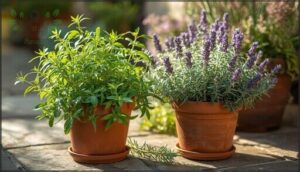
Two underrated stars of summer container gardening — tarragon and sage — deserve a spot on your patio. French tarragon care is straightforward: a 20 cm pot, gritty potting mix, and six hours of sun. Sage varieties like ‘Tricolor’ or ‘Purpurascens’ add color alongside flavor.
- French tarragon: peppery, anise-forward, compact
- Decorative sage varieties: beautiful and edible
- Both reward summer pruning with fresh, bushy growth
- Herb pairing with rosemary creates a fragrant Mediterranean corner
Choosing The Right Containers
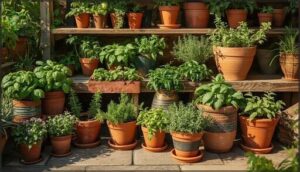
The container you pick matters more than most people realize — it can mean the difference between herbs that thrive and ones that barely survive.
Getting this right comes down to a few key decisions around size, material, and how you arrange your plants. Here’s what to keep in mind before you start potting.
Ideal Pot Sizes and Materials
The right container garden design starts with size. Most leafy herbs like basil and parsley do best in 6 to 8 inch pots, roughly 1 to 2 gallons. Compact Mediterranean herbs need shallower herb planters.
Material options matter too — unglazed clay breathes well, while plastic retains moisture longer.
| Herb | Container Sizes | Material Options |
|---|---|---|
| Basil | 1–1.5 gallon | Plastic or clay |
| Thyme | 4–6 inch | Terracotta |
| Parsley | 6–8 inch | Ceramic or plastic |
Drainage Requirements for Herbs
Without proper drainage holes, even the best potting mix can’t save your herbs. Aim for at least one hole that’s half an inch to an inch wide — ideally several across the base.
This single detail drives root health, prevents water logging, and keeps soil structure open and airy. Good container gardening really does begin from the bottom up.
Single Vs. Mixed Herb Plantings
Single pots give you real care flexibility — you can water thirsty basil without drowning drought-loving rosemary.
Mixed containers, at least 12 inches wide, work beautifully when you match water balance and growth habits from the start.
Aggressive herbs like mint will crowd quieter neighbors if left unchecked, so thoughtful herb selection and care keeps your container garden thriving all summer.
Essential Potting Mix and Soil Tips
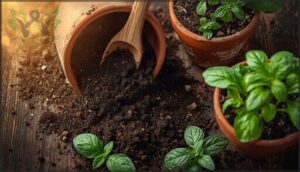
What’s inside your potting mix matters just as much as what’s growing in it.
The right potting mix can mean the difference between herbs that struggle and ones that practically take care of themselves.
Here’s what you need to know to get the soil side of things right.
Benefits of Soilless Potting Mixes
Soilless potting mixes are honestly one of the best tools in container gardening. Their mix composition — peat moss, perlite, coco coir — gives you real nutrient control and fosters strong root development from day one. For herb gardening for beginners especially, that clean start matters.
- No weed seeds competing with your herbs
- Sterile soil structure means fewer pests and diseases
- Water retention stays balanced, never waterlogged
- Lighter pots, easier soil management all season
Soil Aeration and Moisture Control
Think of your potting mix as your herbs’ lungs — it needs to breathe. Mixing 20 to 30 percent perlite mix into your soil keeps air pockets open and water moving.
Good mulch benefits moisture balance on hot days, while self-watering pots deliver steady hydration without drowning roots. Smart watering techniques and well-drained soil are the foundation of strong soil quality all season.
Fertilizing Potted Herbs in Summer
Good soil quality sets the stage, but fertilizer keeps the performance going. Most potted herbs do well with a light feeding every three to four weeks in summer.
For leafy herbs like basil and parsley, organic fertilizers such as fish emulsion support strong growth. Woody Mediterranean herbs need far less. Knowing your herb care requirements makes liquid vs slow-release choices straightforward — and your container gardening far more rewarding.
Sunlight and Watering Needs
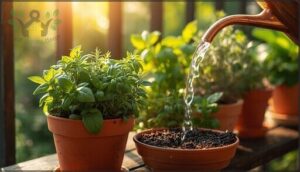
Getting sunlight and watering right is honestly where most container herb gardens succeed or fail.
Summer heat moves fast, and your pots will tell you quickly if you’re off balance.
Here’s what you need to know across three key areas.
Herbs That Require Full Sun
Most full sun herbs need 6 to 8 hours of direct light daily, and that sunlight requirement isn’t just about survival — it’s what drives intense flavor. Strong light pushes rosemary, thyme, oregano, and sage to build richer essential oils.
For smart herb placement in container herb gardening, focus on these full sun herbs in pots:
- Rosemary tolerates heat beautifully, thriving even on reflective, sun-baked balconies
- Thyme grows more aromatic under full sun, especially during midsummer harvests
- Oregano cascades over pot edges and peaks in flavor with bright, direct exposure
- Sage uses its fuzzy leaves to manage heat, staying strong in the hottest spots
Managing Watering in Hot Weather
Once the sun climbs high, watering becomes your most active job in container herb cultivation. Soil moisture drops fast in full sun, especially when heat tolerance is being tested above 90°F. Early morning watering — between 5 and 9 AM — gives roots a real head start.
| Timing | Benefit |
|---|---|
| Early morning | Reduces water stress, lowers evaporation |
| Evening (light) | Refreshes heat-exhausted herbs gently |
| Drip irrigation | Delivers steady moisture to well-drained soil |
| Mulch benefits | Slows drying, cools roots noticeably |
These herb gardening techniques keep your pots thriving all summer.
Preventing Overwatering and Drying Out
Too much water is just as damaging as too little, and container herbs feel that imbalance fast. Watch for yellowing lower leaves or limp stems on moist soil — both are warning signs.
Good drainage systems and smart watering management keep roots healthy all season.
- Check soil moisture an inch deep before watering
- Empty saucers after rain to protect root health
- Group pots together for natural humidity control
- Use well-drained soil with perlite for proper aeration
Harvesting and Maintaining Summer Herbs
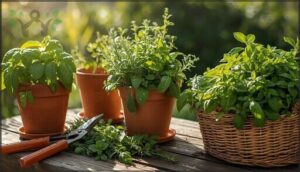
Getting the harvest right makes all the difference between a thriving pot of herbs and one that fizzles out by July.
A few simple habits — knowing when to cut, how much to take, and how to keep plants producing — will keep your containers lush all season. Here’s what you need to know to stay ahead of your herbs.
Pruning and Pinching for Growth
Think of pruning as a conversation with your plants — and pinching is how you start it. For basil, pinch timing matters: once stems hit 6 to 8 inches, remove the top growth just above a leaf pair.
This stem management triggers bushy formation by activating dormant side buds. Regular pruning every one to two weeks keeps your herb garden producing fresh leaf regrowth all summer.
Optimal Times for Harvesting
Morning harvest is your secret weapon for peak flavor. Essential oil concentration in leafy herbs like basil peaks early, before heat steals their aroma.
Harvest herbs in the morning, when essential oils peak before summer heat steals their flavor
Harvest timing shapes everything about culinary herb usage — cut after dew dries but before midday sun. Seasonal readiness matters too: harvest foliage before flowering begins for the strongest taste your growing herbs in pots can deliver.
Encouraging Continuous Herb Production
Keeping your herb garden productive all summer really comes down to consistency. Apply these container gardening techniques regularly:
- Pinch basil stems every 2–3 weeks for steady leaf regeneration.
- Use balanced liquid fertilizer monthly — herb fertilization prevents decline.
- Refresh root care tips by repotting crowded mint or parsley midseason.
- Apply pruning techniques and plant rejuvenation cuts to trigger fresh growth.
Stay consistent, and your culinary herb usage never skips a beat.
Frequently Asked Questions (FAQs)
Which herbs grow best in pots?
Basil, mint, parsley, thyme, oregano, and rosemary are the most rewarding culinary herbs for container gardening.
Their growth habits and compact root systems adapt naturally to pot life, making herb cultivation straightforward and satisfying.
What herbs can grow in pots full sun?
Rosemary, thyme, oregano, and mint are standout full sun varieties that thrive in containers.
These heat tolerant herbs handle intense sunlight well, needing at least six hours daily for peak flavor and growth.
What herbs grow well in the summer?
Think of summer as nature’s open invitation. For your herb garden, heat tolerant plants like basil, thyme, oregano, rosemary, and mint thrive beautifully, making warm weather care and seasonal planting tips genuinely rewarding.
Is September too late to plant herbs?
Not at all. Cool weather herbs like parsley, cilantro, and chives are perfect for September.
With container gardening, fall planting tips work in your favor — just move pots indoors before frost hits.
Can herbs grow in containers?
Absolutely — herbs thrive in containers. With the right pot, potting mix, and placement, even a small balcony becomes a productive herb garden.
Container gardening tips and smart herb selection make all the difference.
What kind of pots do herbs grow best in?
Herbs grow best in pots that balance container size, soil depth, drainage systems, and aeration methods. Terracotta suits dry herbs beautifully, while plastic works well for thirsty ones like mint.
Which herbs are best for container gardening?
Basil, mint, chives, thyme, oregano, rosemary, and parsley are the best herbs for containers. Their compact growth, shallow roots, and drought-tolerant nature make them ideal for any container garden.
What are the best herbs to plant in the summer?
The best summer herbs to plant are basil, mint, chives, thyme, oregano, rosemary, parsley, and tarragon.
Each brings strong heat tolerance, culinary value, and vibrant growth to your container garden all season long.
What is the best herb to grow in a garden?
If you’re new to herb gardening, basil is your best starting point. It grows fast, tolerates containers, and rewards consistent harvesting — a beginner-friendly win for any garden space or climate.
Are herbs easy to grow?
Most of them? Surprisingly forgiving. With good drainage, decent light, and a little attention, herbs in pots reward even total beginners with fast, satisfying growth — no green thumb required.
Conclusion
It’s almost funny—people drive to the store for a wilting bunch of basil when the freshest herbs they’ll ever taste could be growing three feet from their back door.
Growing summer herbs to grow in pots doesn’t demand a sprawling garden or expert credentials, just a container, decent light, and a little attention. Keep harvesting, keep pruning, and your pots will keep delivering.
The windowsill was always the garden you needed.
- https://savvygardening.com/best-herbs-for-container-gardening/
- https://www.crescentgarden.com/blog/container-gardening-with-herbs/
- https://www.jekkas.com/blogs/jekkas-blog/jekkas-advice-on-growing-herbs-in-containers
- https://www.gardentech.com/blog/how-to-guides/easy-herbs-for-indoors-and-out
- https://www.milorganite.com/blog/fruits-vegetables/growing-herbs-indoors-and-out