
This site is supported by our readers. We may earn a commission, at no cost to you, if you purchase through links.

Most gardeners treat fall like a finish line. They pull the last tomatoes, toss the spent annuals, and call it a year. But the gardeners who show up in spring with thriving beds and loose, workable soil? They treated fall like a starting gun.
Clearing perennials now cuts your spring hoeing time by nearly 40 percent—and that’s before you factor in what amended soil does over winter. Organic matter added in autumn breaks down slowly, quietly improving your soil’s structure and moisture retention while the ground sleeps. Knowing how to prepare your garden for fall means less scrambling in April and stronger plants all season long.
Table Of Contents
- Key Takeaways
- Why Fall Garden Prep Sets You Up for Spring Success
- Assess Your Garden Before Doing Anything Else
- Clean Up, Cut Back, and Divide Perennials
- Plant, Mulch, and Amend Your Soil Now
- Winterize Tools, Irrigation, and Lawn Areas
- Frequently Asked Questions (FAQs)
- How do I prepare my garden for fall?
- What should I do if my garden won’t grow in the fall?
- How do I prepare my garden for the new season?
- How do you care for a fall garden?
- What are some fall gardening tips?
- What is fall garden prep?
- What is the best time to plant a fall garden?
- Should you turn soil in autumn?
- What plants are good for the garden in the fall?
- How do you prepare a garden for winter?
- Conclusion
Key Takeaways
- Clearing perennials and spent annuals in fall cuts your spring hoeing time by up to 40%, giving you a real head start before April even arrives.
- Adding compost and organic matter in autumn lets it break down slowly over winter, so your soil is loose, rich, and root-ready by spring.
- Fall planting—whether bulbs, cool-season vegetables, or divided perennials—builds strong root systems during the cooler months, which means better drought resistance and bigger blooms come summer.
- Winterizing your tools, draining irrigation lines, and mulching perennial beds in fall protects your investments and prevents the kind of damage that costs you time and money next season.
Why Fall Garden Prep Sets You Up for Spring Success

Fall is when the real gardening work happens — even if it doesn’t look like it. What you do now quietly shapes how easy spring feels. Here’s why getting outside this season is worth every minute.
A seasonal fall gardening checklist can help you stay on top of the soil, bulbs, and cleanup tasks that make all the difference come spring.
How Fall Work Reduces Spring Workload
Spending a few hours on fall garden prep now can quietly cut your spring workload in half. When you clean up garden beds in autumn, you stop mold, disease, and weeds before they ever get started.
Clearing perennials alone can reduce spring hoeing time by up to 40 percent — that’s real time back in your hands come April. You can also improve soil quality by adding organic matter to boost moisture retention.
Benefits of Amending Soil in Autumn
Amending soil in autumn is one of the smartest moves you can make. Organic matter breaks down slowly over winter, improving soil structure so it becomes loose and crumbly by spring. That means roots push through more easily.
Microbial activity stays active during mild autumn days too, building a healthy soil food web before the ground freezes.
Why Fall Planting Works Better Than Spring
Fall planting gives your plants a real head start. When you plant in autumn, cooler soil encourages steady root system development without summer heat stress. Roots quietly build carbohydrate storage all winter, fueling stronger spring blooms. That early root work also builds drought resilience before summer arrives.
Fall planting builds roots all winter, so your garden arrives at spring already strong
Soil microbes stay active too, supporting nutrient uptake right when your transplants need it most.
Assess Your Garden Before Doing Anything Else

Before you pull a single weed or grab your pruners, take a slow walk through your garden. You’ll want to look at it with fresh eyes — not as a to-do list, but as a picture that tells you what actually needs attention. Here’s what to focus on.
Identifying Plants for Pruning or Division
Before you grab a single tool, take a walk through your garden with fresh eyes. Look at each perennial clump honestly — if it’s crowded with no center growth, it’s ready to divide.
Those hollow centers are your garden’s way of asking for help — and fall garden maintenance and perennial dividing tips can walk you through exactly what to do next.
Hostas and daylilies need division every three to five years. Strong plants with firm shoots are safe to split; weak or scorched foliage means wait.
Checking for Lingering Pests and Disease
While you’re walking the garden, slow down and look closely — this is your best chance to catch problems before they go underground for winter.
Inspect leaf symptoms on every plant. Yellowing spots, mottled undersides, or powdery coatings signal disease that won’t disappear on its own.
Watch for these warning signs:
- Sticky traps near problem beds catch flying pests you’d otherwise miss
- Wilting despite moist soil often points to root-level disease
- Tiny mites or scale insects hide on leaf undersides
- Record weekly observations so you can spot trends, not just single incidents
What to Remove Vs. What to Leave
Not everything in your garden deserves the same fate come fall. Annual plant removal clears bed space and cuts disease risk, but healthy perennial stems are worth keeping. Use this quick guide to make smarter decisions:
| Plant Type | Remove | Leave |
|---|---|---|
| Spent annuals | Always | Never |
| Diseased foliage | Immediately | Never |
| Perennial seed heads | If diseased | For birds and wildlife |
| Ornamental grass stems | Rarely | For winter interest |
Clean Up, Cut Back, and Divide Perennials
This is where the real work begins — and honestly, it’s more satisfying than it sounds. A little cutting, clearing, and dividing now will pay off in a big way come spring. Here’s what to tackle first.
Removing Diseased Foliage and Spent Annuals
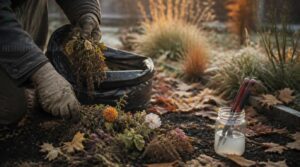
Start with diseased foliage — it’s the highest priority. Bag diseased material and put it straight in the trash. Never compost it; pathogens survive and come back stronger next year.
- Remove all spotted, moldy, or discolored leaves first
- Pull spent annuals completely, roots and all
- Disinfect tools with a 10% bleach solution between plants
Clear spent plants before frost to cut down overwintering pest sites.
When and What to Cut Back
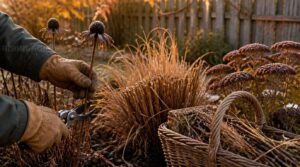
Not everything in the garden needs to come down in fall — timing and plant type matter more than you’d think.
Herbaceous perennials like coneflowers and black-eyed Susans can be cut back to 6–12 inches after frost. Ornamental grasses wait until after the first frost too, then get trimmed to 4–6 inches. Leave sedums alone until spring — they earn their keep as winter interest.
Dividing and Transplanting Overcrowded Perennials
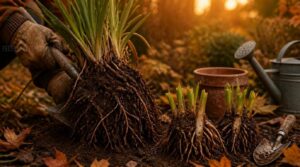
Crowded perennials are quietly running out of room — and fall is your best window to fix that. Divide overgrown perennials at least four weeks before the ground freezes.
Dig wide enough to keep multiple shoots intact. Then cut cleanly through the root crown, giving each division 2–3 shoots and healthy roots. Replant at the same depth and water well.
Leaving Healthy Stalks for Overwintering Wildlife
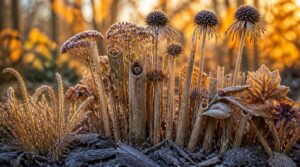
Not every stalk in your garden deserves to come down. Hollow perennial stalks act as ready-made shelters for mason bees and lady beetles through winter.
Leave a mix of stalk height layers — short, medium, and tall — to create shelter zones for different insects and birds. Cutting everything to the ground removes that habitat entirely.
Plant, Mulch, and Amend Your Soil Now
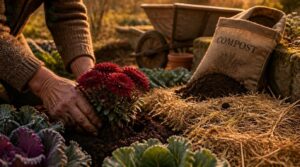
Now comes the part where your garden really starts to take shape for the months ahead. Fall is the right time to plant, feed your soil, and tuck everything in before winter sets in. Here’s what to focus on.
Planting Cool-Season Vegetables and Spring Bulbs
Fall is the perfect time to sneak in one more harvest. Sow cool-season vegetables like kale, spinach, and radishes now — they thrive in soil temperatures between 40 and 75°F.
Meanwhile, get your spring bulbs in the ground. Plant tulips and daffodils at a depth three times their height in well-draining soil before it freezes.
How to Take and Use a Soil Sample
Now that your bulbs are in the ground, it’s time to find out what your soil actually needs. A soil sample tells you exactly where your garden stands before you pour money into amendments.
Here’s what to keep in mind:
- Dig 6–8 inches deep and collect from 10–12 spots across the bed
- Use clean tools and wear gloves to avoid contaminating your sample
- Mix subsamples together in one clean container for a composite reading
- Label bags with the date, location, and depth before sending them off
When your results come back, check soil pH first — it controls how well plants absorb nutrients. Use lime or sulfur to adjust based on what the report recommends. Keep a simple log of all soil amendments you apply, and plan follow-up testing every one to three years to track real progress.
Applying Compost and Cover Crops
Once your soil results are back, you can start feeding the ground itself. Spread 1–2 inches of finished compost across your beds and rake it lightly into the top few centimeters. This adds slow-release nutrients, boosts microbial activity, and improves water retention.
Follow up by sowing a cover crop like winter rye or crimson clover to protect bare soil and fix nitrogen through winter.
Mulching Perennial Beds for Winter Protection
Once the compost is in, mulch is your next move.
Spread 2–4 inches of organic mulch — shredded leaves, straw, or bark chips — around your perennials to insulate roots through freeze-thaw cycles. Keep it 1–2 inches clear of the crown to prevent rot.
Wait for hard frosts before applying, and check depth after heavy snowfall.
Winterize Tools, Irrigation, and Lawn Areas
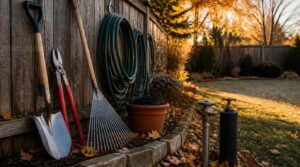
Once the beds are tucked in, it’s time to shift your attention to the gear and grass. Your tools, irrigation lines, and lawn all need a little end-of-season care to come back strong next year. Here’s what to take care of before the cold settles in.
Cleaning and Storing Garden Tools Properly
Your tools work hard all season — they deserve a proper send-off before winter.
Start by washing blades and tines with mild soap and water. Dry everything thoroughly, then apply a light coat of oil to all metal surfaces. This simple step stops rust before it starts. Wipe wooden grips with linseed oil to prevent cracking. Sharpen dull edges now so your tools are ready come spring. Finally, hang tools on wall hooks to keep them dry and airflow moving around them.
Draining Hoses and Irrigation Lines
Leaving hoses connected through a freeze is one of the fastest ways to crack a fitting. Detach every hose from spigots and sprinklers first. Hold one end up and let gravity pull the water out the other.
For irrigation lines, blow out lines with compressed air and use a drain valve to release trapped water. Store hoses on a reel indoors.
Final Lawn Mowing, Aeration, and Overseeding
Mow your lawn one last time before winter sets in. Keep cool-season grasses at 2 to 3 inches — short enough to resist snow mold but tall enough to protect roots.
Then aerate the lawn to break up compaction and improve drainage. Follow that with overseeding at 5 to 10 pounds per 1,000 square feet. Water new seed consistently until germination takes hold.
Frequently Asked Questions (FAQs)
How do I prepare my garden for fall?
As the old saying goes, well begun is half done. Start in fall: clean beds, test soil pH, plant bulbs, mulch perennials, and winterize irrigation so spring greets you with a head start.
What should I do if my garden won’t grow in the fall?
If your fall garden won’t grow, soil temperature is usually the culprit. When it drops below 60°F, germination slows by up to 40%. Use row covers to trap warmth and buy more time.
How do I prepare my garden for the new season?
Getting your garden ready for a new season starts with a simple walkthrough. Note what’s struggling, what’s thriving, and what needs to go. That honest look shapes everything you do next.
How do you care for a fall garden?
Care for a fall garden by cleaning up diseased growth, dividing overcrowded perennials, planting spring bulbs, and mulching beds. Test your soil and store tools properly before winter sets in.
What are some fall gardening tips?
Assess first, then clean, plant, and protect. Test soil pH, mulch beds, store tools, and drain irrigation lines. A little fall effort now means a thriving, ready garden come spring.
What is fall garden prep?
Fall garden prep is the work you do in autumn to protect your soil, plants, and tools before winter hits — so your garden bounces back stronger come spring.
What is the best time to plant a fall garden?
Ironically, the best time to plant a fall garden isn’t in fall at all. Aim for 6–8 weeks before your first frost date, when soil temperatures still hover between 50–65°F.
Should you turn soil in autumn?
It depends on your soil. Wet or clay-heavy ground shouldn’t be turned — you’ll cause compaction. Dry soil needs mulch right after. When conditions are right, light turning helps incorporate compost effectively.
What plants are good for the garden in the fall?
Think of fall as your garden’s second act. Hardy mums, asters, and Japanese anemones bloom beautifully now. Tuck in spring bulbs and cool-season greens like kale and spinach for harvests ahead.
How do you prepare a garden for winter?
Start with a soil pH test, then clean up debris, amend beds with compost, mulch perennials, drain irrigation lines, store tools oiled and dry, and protect tender plants before the first hard frost.
Conclusion
Think of fall prep the way ancient farmers once read smoke signals—every clue tells you something about what lies ahead. Knowing how to prepare your garden for fall gives you that same edge.
Clear the spent plants. Amend the soil. Tuck in your bulbs.
The quiet work you put in now is a message sent forward in time. When spring answers back, you’ll be ready—and every inch of your garden will prove it.
- https://phsonline.org/for-gardeners/gardeners-blog/prepare-garden-soil-fall-for-spring-planting
- https://www.faddegons.com/plant_advice/buttoning-up-the-perennial-garden
- https://yardandgarden.extension.iastate.edu/how-to/fall-garden-tasks
- https://www.almanac.com/fall-vegetable-garden-cleanup-11-things-do-now
- https://melissaknorris.com/podcast/podcast-38-fall-gardening-prep-10-tips-improve-soil