This site is supported by our readers. We may earn a commission, at no cost to you, if you purchase through links.
Your tomatoes should be flowering by June, but they’re still seeds in a packet on your shelf. The difference between gardeners who enjoy months of homegrown produce and those who scramble to buy overpriced seedlings in May comes down to one thing: knowing when to start seeds indoors.
Most vegetables need 6 to 10 weeks of indoor growth before they’re ready for your garden, which means the clock starts ticking long before spring arrives. Getting the timing right isn’t complicated, but it does require working backward from your last frost date and matching each crop to its ideal indoor growing window.
Table Of Contents
- Key Takeaways
- Why Start Seeds Indoors
- Determining Your Indoor Seed Start Date
- Best Seeds to Start Indoors
- Timing Guidelines for Indoor Seed Starting
- Step-by-Step Indoor Seed Starting Process
- Top 7 Tools for Indoor Seed Starting
- Frequently Asked Questions (FAQs)
- How to plant seeds indoors?
- What are different ways to start seeds indoors?
- When should I start seeds indoors for cool weather crops?
- What herbs can you grow indoors?
- What month should you start seeds indoors?
- What happens if you start seeds indoors too early?
- Is March too early to start seeds?
- Is April too late to start seeds indoors?
- What supplies do I need for starting seeds?
- How do I prevent seedlings from getting leggy?
- Conclusion
Key Takeaways
- You need to start most vegetables 6–10 weeks before your last frost date, counting backward from transplant day to avoid buying expensive nursery seedlings or missing your planting window entirely.
- Tomatoes and peppers require 6–10 weeks indoors with controlled temperature (65–75°F) and 12–16 hours of daily light, while fast growers like lettuce only need 4–6 weeks before they’re transplant-ready.
- Indoor seed starting saves you money (pennies per plant versus retail seedling prices), unlocks access to hundreds of heirloom varieties garden centers don’t stock, and extends your harvest window by 4–8 weeks compared to direct sowing.
- Your success depends on three environmental factors working together: consistent soil moisture without waterlogging, proper lighting positioned 2–4 inches above seedlings, and humidity levels starting at 60–80% during germination then dropping to 40–60% as seedlings mature.
Why Start Seeds Indoors
Starting seeds indoors gives you a major advantage over direct sowing in the garden. You’ll gain weeks of growing time, access varieties you won’t find at nurseries, and grow stronger plants while spending less money.
Here’s why indoor seed starting is worth the effort.
Extending The Growing Season
By starting seeds indoors before the last frost date, you can add weeks or even months to your harvest window. Indoor seed starting gives you climate control for seed germination, letting you prepare transplanting schedules that maximize growth achievement.
Consider these season extension benefits:
- Earlier harvests by 4–8 weeks compared to direct-sown crops
- Stronger transplants through controlled soil preparation and temperature
- Multiple succession plantings for continuous crop selection
- Better protection from early-season pests and diseases.
This approach requires careful planning and attention to methodological rigor to guarantee excellent results.
Greater Variety Selection
Beyond season extension, starting seeds indoors unlocks access to heirloom varieties and specialty cultivars that garden centers rarely stock. Seed catalogs from plant breeding specialists offer hundreds of options versus the limited selections at retail outlets. You’ll discover genetic diversity through open-pollinated seeds and can trial multiple cultivars in one season using a seed starting date calculator. Indoor seeds give you control over which varieties reach your garden.
| Source Type | Typical Variety Count | Genetic Diversity |
|---|---|---|
| Garden Centers | 10–20 varieties | Low (commercial hybrids) |
| Seed Catalogs | 200+ varieties | High (heirlooms, open-pollinated) |
| Specialty Breeders | 50–150 varieties | Very High (regional, rare cultivars) |
Cost Savings Vs. Buying Seedlings
Seed cost and germination rates make starting seeds indoors budget-friendly. You’ll pay pennies per plant compared to retail seedlings, and space efficiency in trays lets you grow multiple crops with minimal investment.
Budget planning improves when you control transplanting timing—reducing transplant shock means fewer replacements. Your savings grow with each season as you reuse equipment and resow seeds from reliable suppliers.
Healthier, Controlled Seedling Growth
Beyond costs, indoor seed starting tips center on environment. You control seedling lighting with 16–18 hours daily, humidity around 50–70%, and soil sterilization that cuts disease by 50%. Air circulation strengthens stems while proper root development fills containers before transplant.
These seed starting techniques reduce transplant shock—your seedlings grow compact, dark green, and ready for outdoor success.
Determining Your Indoor Seed Start Date
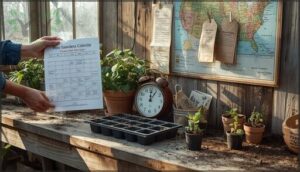
Getting the timing right starts with knowing your last frost date—the backbone of your entire seed starting schedule.
From there, you’ll use planting calendars, zone maps, and simple calculations to count backward and pinpoint your start dates. These tools work together to take the guesswork out of when to sow indoors.
Understanding The Last Frost Date
Your last frost date isn’t a guarantee—it’s an average based on decades of weather data, not a crystal ball. That frost-free date marks when spring’s final freeze usually happens in your climate zone, but year-to-year Frost Date Variance means late cold snaps can still surprise you.
Microclimate Effects around your home, Weather Forecasting updates, and proper Seedling Hardening all help you work confidently within this window.
Using Planting Calendars and Zone Maps
Once you know your last frost date, pair it with zone map guidance and regional planting schedules to pinpoint your seed starting window.
Climate zones—especially USDA hardiness zones—translate national frost date planning into local climate considerations, accounting for microclimates and elevation shifts.
Extension services publish seed starting schedules customized to your gardening zone, so you can cross-check multiple calendars for consistent, reliable regional gardening advice.
Calculating Weeks Before Transplant
To nail your transplant timing, count backward from your last frost date using a simple formula: add days to germination (usually 4–14 days), plus days to transplantable size (generally 4–8 weeks), then include a 5–14 day buffer for slower seedlings.
Heat-loving crops like tomatoes need 6–8 weeks indoors, while peppers require 8–10 weeks due to slower growth rates.
Seed Starting Charts and Calculators
You don’t have to guess when gardening calendars and seed starting date calculators remove the mystery. These tools cross-reference your last frost date with ideal soil temperature and germination rates, generating a crop planning timeline:
- Input your zone to receive tailored seed planting chart dates
- Compare seed depth requirements across multiple varieties
- Track germination rates to adjust sowing volumes
- Export printable schedules for season-long reference
Best Seeds to Start Indoors
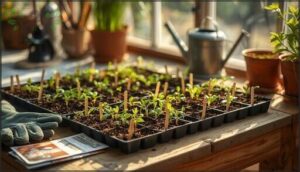
Not all seeds benefit from an indoor start. Some crops thrive when you give them a head start indoors, while others prefer to be sown directly in the garden.
Understanding which plants fall into each category helps you make the most of your growing season and avoid wasting time on seeds that won’t transplant well.
Vegetables Suitable for Indoor Starting
You’ll get earlier harvests and stronger plants when you focus on vegetables that thrive under indoor lighting. Tomatoes need 6–8 weeks before your last frost date, while peppers require 8–10 weeks since they’re slower to mature. Lettuce and leafy greens only need 4–6 weeks, making them perfect for beginners.
Use a seed starting date calculator to nail your transplant timing, factoring in soil temperature and proper seedling care for healthy vegetable gardening success.
Herbs Commonly Started Indoors
Basil, parsley, cilantro, chives, and thyme are your go-to herbs for indoor gardening success. Basil thrives with 12–16 hours of indoor lighting and reaches transplant size in 3–4 weeks. Parsley takes longer—14–21 days for herb germination—but rewards your patience.
Use a seed starting date calculator to time transplants 6–10 weeks before frost. Quality soil and careful water management guarantee sturdy seedlings ready for your garden.
Flowers for Indoor Seed Sowing
Pansies, snapdragons, and calendula flourish under 12–16 hours of indoor lighting.
Start nasturtiums 4–6 weeks before the last frost at 65–75°F for reliable flower germination.
Cosmos and zinnias need bright light—use a seed starting date calculator to time your indoor seed starting.
Soil quality matters: choose sterile seed starting mix in shallow trays.
These flower care basics give you transplant-ready blooms for vibrant flower gardening success.
Seeds Better Sown Directly Outdoors
Not every seed thrives indoors. Carrots, radishes, and beans skip transplanting entirely—their seed viability peaks with direct sow benefits straight into garden soil. Wait until your frost-free date passes, check soil temperature (45–60°F for most), and plant where they’ll grow. Outdoor sowing respects seed dormancy cycles and avoids transplant shock. Your outdoor planting success starts with choosing seeds that prefer open ground from day one.
Timing Guidelines for Indoor Seed Starting
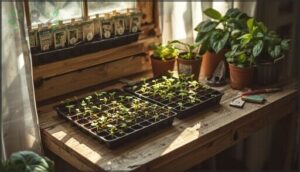
Timing is everything when you start seeds indoors. Different crops need different lead times before your last frost date to develop strong roots and healthy growth.
Here’s how to match your seed starting schedule to what you’re growing.
8–10 Weeks Before Last Frost
You’ll start tomatoes, peppers, and eggplants 8–10 weeks before your last frost date for proper seedling preparation. These warm-season crops need extended indoor sowing time to develop strong roots before outdoor transplant.
Use a seed starting date calculator to pinpoint your climate considerations and germination timing. Set up indoor lighting and maintain 65–75°F for reliable seed germination.
This window ensures transplant-ready seedlings without overgrown roots.
6–8 Weeks Before Last Frost
Moving from your longest-lead crops, you’ll find many reliable starters fit the 6–8 week window before your last frost date. A seed starting date calculator helps nail transplant timing for vegetables like broccoli, cabbage, and lettuce, plus basil and other herbs. Indoor sowing at this interval balances seed germination rates with seedling hardening needs. Strong indoor lighting keeps stems compact, and frost date calculation guides your outdoor move once conditions stabilize.
- Start broccoli and cabbage 6–8 weeks out for cool-season transplants
- Begin basil indoors 6 weeks before frost-free conditions arrive
- Use grow lights 12–16 hours daily to prevent leggy seedlings
4–6 Weeks Before Last Frost
Most warm-season vegetables and many flowers hit transplant size in 4–6 weeks, making this your go-to window for indoor seed starting. Use a seed starting date calculator to count back from your frost-free date, then sow when conditions suit your setting-out date.
Indoor lighting, proper germination tips, and attention to seed viability keep seedlings sturdy.
Start transplant prep by hardening off 7–14 days before your garden move.
Crop-Specific Examples (Vegetables, Herbs, Flowers)
Tomatoes and peppers need 6–8 weeks indoors, while cucumbers thrive with just 3–4 weeks of prep time. Basil transplants beautifully after 4–6 weeks, and parsley demands 6–8 weeks to establish strong roots. Zinnias and marigolds shine with 4–8 weeks of indoor growth before your frost-free date.
Use a seed starting date calculator to align crop selection with your planting calendar and local growing conditions.
Step-by-Step Indoor Seed Starting Process
Starting seeds indoors doesn’t require guesswork when you follow a clear process. You’ll need the right materials, proper technique, and attention to a few key growing conditions.
Here’s how to set up your seeds for strong, healthy growth from day one.
Selecting Seeds and Starting Mix
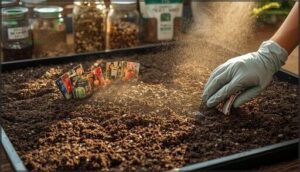
You can’t grow what you don’t choose wisely. Pick seeds with strong germination rates and documented viability from trusted suppliers.
Your seed starting mix should contain peat or coir, perlite for drainage, and maintain a pH around 5.5 to 6.5. Sterilized, soilless blends prevent disease while supporting healthy seed cultivation.
Pre-moisten your mix before sowing to avoid desiccation during those critical first days.
Choosing Trays, Containers, and Markers
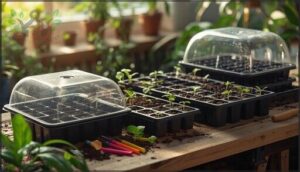
Your seed tray options directly influence germination success and transplant ease. Look for 10 to 72 cell configurations in BPA-free recycled plastic or biodegradable container materials with drainage holes in every cell.
- Pair trays with clear humidity domes to maintain moisture and create a stable microclimate for indoor seed starting
- Choose waterproof, fade-resistant marker types for tracking varieties and sow dates without smudging
- Select label designs that resist moisture during routine handling of seedlings
- Opt for 1 to 2 inch cell depth to support root development in your gardening tools setup
Sowing Seeds: Depth, Spacing, and Labeling
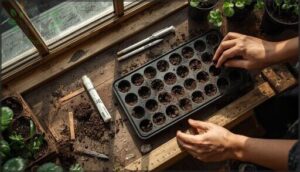
You’ll boost germination rates when you sow at the right seed depth—usually two to three times the seed diameter. Press your seed starting mix lightly after placement to guarantee good contact.
Space seeds one to two inches apart in trays to prevent crowding.
Label each variety with sowing techniques notes and your starting seeds indoors date using waterproof markers for reliable tracking.
Managing Light, Temperature, and Humidity
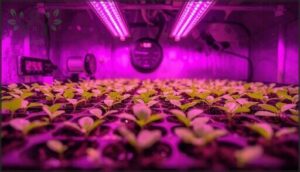
Your seedlings won’t thrive without dialing in three environmental factors that work together like a finely tuned engine. Follow these Indoor Seed Starting essentials for ideal Seed Germination and Growth:
- Provide 12–16 hours of Light Management daily using grow lights positioned 2–4 inches above trays
- Maintain Temperature Control at 65–75°F during germination, then 65–72°F for Seedling Growth
- Keep Humidity Levels at 60–80% initially, reducing to 40–60% after germination
- Use Environmental Monitoring sensors at canopy height for accurate readings
- Adjust your SeedStarting Date Calculator inputs based on these gardening tips
Watering and Early Care for Seedlings
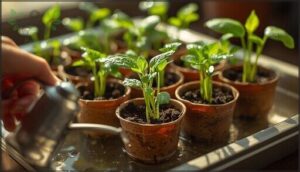
Once your light and temperature are dialed in, Seedling Hydration becomes your next priority. Water seedlings from the bottom when possible to prevent damping off and encourage strong Root Development.
Keep Soil Moisture consistent but not soggy—let the top inch dry slightly between waterings. Use room-temperature, chlorine-free water to support Water Quality.
Start diluted fertilizer once true leaves appear for ideal Seedling Care.
Top 7 Tools for Indoor Seed Starting
The right tools make seed starting more efficient and improve germination rates. You don’t need expensive equipment to grow healthy seedlings, but a few key items will simplify the process and reduce common problems.
Here are seven essential tools that support successful indoor seed starting from sowing through transplant preparation.
1. Bootstrap Farmer Seed Growing Trays
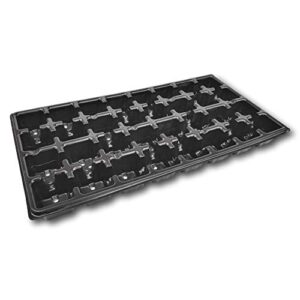
Timing your indoor sowing perfectly means nothing if your growing mediums can’t support healthy seed germination. Bootstrap Farmer’s 32-cell seed trays deliver exactly what you need: BPA-free plastic construction with 2-inch square cells that fit standard seed starting mix.
The reinforced design resists bending during tray maintenance, while drainage holes prevent waterlogging that kills seedlings.
These trays accommodate various growing mediums from soil to rockwool, making cell size optimization simple. You’ll transplant stronger seedlings season after season, since these trays last multiple growing cycles.
| Best For | Home gardeners and small growers who need reliable, reusable trays for starting seeds across multiple seasons in soil or hydroponic setups. |
|---|---|
| Material | Plastic |
| Weight | 2.89 pounds |
| Use Case | Seed starting |
| Durability | Multi-season use |
| Color | Black |
| Dimensions | 21.25″ x 11.25″ x 2″ |
| Additional Features |
|
- Durable BPA-free construction withstands multiple growing seasons and resists bending during regular use
- 2-inch deep cells with proper drainage holes support healthy root development and prevent waterlogging
- Compatible with standard 1020 trays and humidity domes for flexible germination setups
- Some users report the trays are heavier than expected, making handling less convenient
- Mixed feedback on bending resistance suggests quality may vary between batches
- May not fit all growing conditions or plant types depending on your specific setup
2. Bootstrap Farmer Seedling Trays
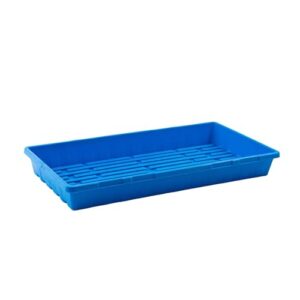
Bootstrap Farmer’s 32- to 72-cell seedling trays match seed starting mix requirements with precision cell depth for root pruning tips every grower needs. The 2.25-inch cells prevent root circling during indoor sowing, giving you healthier transplants.
Clear, rigid plastic lets you monitor root development without disturbing seedlings—a breakthrough for seedling transplantation timing.
These propagation trays nest for compact storage and resist bending through repeated tray cleaning methods. Compatible with standard humidity domes, they’re built from food-grade materials that protect your seed tray materials investment season after season.
| Best For | Growers who need flexible, high-density seed starting with clear visibility into root development and prefer trays that stack neatly when not in use. |
|---|---|
| Material | Plastic |
| Weight | 9.13 pounds |
| Use Case | Growing microgreens |
| Durability | Heavy-duty construction |
| Color | Blue |
| Dimensions | 21.25″ x 11.25″ x 2.5″ |
| Additional Features |
|
- Clear plastic construction lets you check root progress without pulling seedlings, so you transplant at the perfect time
- Deep cells with root pruning design prevent circling and give you stronger, healthier transplants
- Rigid build with reinforced corners holds up through repeated cleaning and handling, season after season
- Higher price compared to basic disposable trays might not fit hobby growers on a tight budget
- Some users report trays arriving damaged during shipping, which can be frustrating
- Limited color and size options may not work for every greenhouse setup or bench layout
3. Bootstrap Farmer Humidity Dome
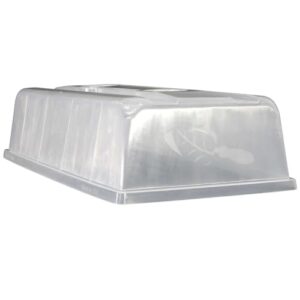
Once your trays are ready, cover them with Bootstrap Farmer’s Humidity Dome to lock in moisture for seed germination. The adjustable vent gives you precise humidity control—open it slightly as seedlings emerge to prevent mold while maintaining greenhouse effects that accelerate seedling growth.
Its 6-inch height accommodates taller transplants without crowding. The clear, rigid construction won’t warp when stacked, and it fits standard 10×20 trays perfectly.
You’ll use this dome season after season for indoor sowing success, from initial germination through early development.
| Best For | Home gardeners and small-scale growers who need a reusable, durable dome for starting seeds indoors and want adjustable humidity control throughout the germination process. |
|---|---|
| Material | Plastic |
| Weight | 1.1 pounds |
| Use Case | Germination humidity |
| Durability | Heavy-duty construction |
| Color | Clear |
| Dimensions | 21.25″ x 11″ x 6″ |
| Additional Features |
|
- Adjustable vents let you fine-tune humidity levels as seedlings grow, preventing mold while keeping moisture levels high for germination
- Heavy-duty construction won’t buckle under weight, making it easy to stack multiple trays without worrying about damage
- Fits standard 10×20 trays perfectly and provides 6 inches of headroom for taller seedlings
- More translucent than fully transparent, which can reduce light transmission to your seedlings if you’re working with limited light sources
- Pricier than basic humidity dome options on the market
- Some quality control issues reported, with occasional units arriving warped or not fitting certain non-standard trays perfectly
4. Kinglake Plastic Garden Plant Labels
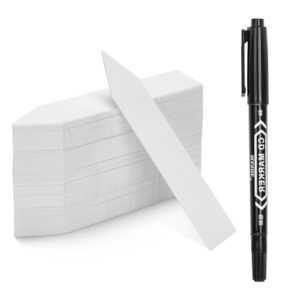
Track every variety with Kinglake Plastic Garden Plant Labels—4-inch white markers that withstand weather and maintain plant identification throughout your entire growing cycle. Their pointed ends slide effortlessly into seed trays without disturbing roots, while smooth edges protect delicate seedlings during indoor sowing.
Label durability comes from premium PVC construction that resists fading when exposed to moisture and temperature fluctuations. Use these plant markers for complete garden organization, writing cultivar names, sowing dates, and transplant timing directly on both sides to support your gardening planning from seed starting through harvest.
| Best For | Gardeners who need reliable plant markers that can handle outdoor conditions and stay readable through multiple growing seasons. |
|---|---|
| Material | Plastic |
| Weight | 2.89 ounces |
| Use Case | Plant labeling |
| Durability | Sturdy premium PVC |
| Color | White |
| Dimensions | 4″ x 0.8″ |
| Additional Features |
|
- Premium PVC construction resists fading and holds up against rain, sun, and temperature changes
- Pointed design makes them easy to push into soil without damaging roots or disturbing seedlings
- Writable on both sides, giving you plenty of space for plant names, dates, and growing notes
- Plastic material isn’t the most eco-friendly option for gardeners trying to reduce waste
- Included marker pen may not be waterproof or fine-tipped enough for detailed writing
- Written information can fade over time, especially in direct sunlight, requiring occasional relabeling
5. Staedtler Garden Marker Pen
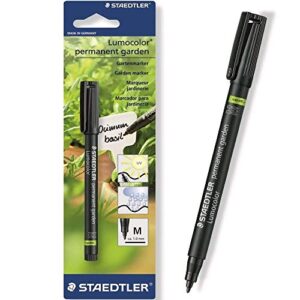
Precision in garden labeling starts with the Staedtler Garden Marker Pen, a waterproof 1mm permanent marker that delivers writing quality built for outdoor conditions.
Your plant markers stay legible through rain and sun exposure thanks to fade-resistant ink that dries instantly on plastic, glass, and wood surfaces. Pen durability stems from lightfast ink formulation that maintains clarity throughout your seed starting timeline and beyond.
Mark sowing dates, variety names, and transplant schedules directly on labels without smearing—essential for mastering gardening techniques that depend on accurate timing and organization during critical growing phases.
| Best For | Gardeners who need durable outdoor labels that won’t fade in sun or wash away in rain, especially if you’re tracking varieties and planting dates over multiple seasons. |
|---|---|
| Material | Plastic |
| Weight | 1.44 ounces |
| Use Case | Marking labels |
| Durability | Permanent ink |
| Color | Black |
| Dimensions | 9.25″ x 3.94″ x 0.47″ |
| Additional Features |
|
- Waterproof and lightfast ink stays readable through weather exposure, making it reliable for long-term outdoor use
- 1mm medium point gives you precise, clean writing on plant labels, pots, and seed trays
- Dries instantly so you won’t smudge your labels while handling them in the garden
- Strong odor that some users compare to rancid tomatoes can be unpleasant during use
- Higher price point compared to standard permanent markers you might already have
- Takes slightly longer to dry than competing markers, and may leave faint ghosting if you try to remove it later
6. Neptune’s Harvest Fish Seaweed Fertilizer

Strong seedlings require balanced nutrition from the moment their true leaves emerge. Neptune’s Harvest Fish Seaweed Fertilizer combines fish hydrolysate with seaweed extract at a gentle 2-3-1 NPK ratio—ideal for tender indoor gardening starts that can’t handle aggressive feeding.
You’ll dilute this organic gardening solution before applying it as a soil drench, delivering readily available nitrogen for vigorous leaf development while seaweed benefits support stress tolerance during transplanting.
Apply light, frequent doses to maintain steady seedling nutrition without risking salt burn during critical seed germination phases.
| Best For | Organic gardeners starting seeds indoors who want a gentle, complete fertilizer that won’t burn delicate seedlings while supporting strong root development and stress tolerance. |
|---|---|
| Material | Liquid |
| Weight | 1.13 pounds |
| Use Case | Plant fertilization |
| Durability | Concentrated formula |
| Color | N/A |
| Dimensions | 18 fl oz |
| Additional Features |
|
- Gentle 2-3-1 NPK ratio provides balanced nutrition for tender seedlings without risking salt burn or nutrient overload during critical early growth stages.
- Seaweed extract adds natural biostimulants that improve stress tolerance and help seedlings bounce back stronger after transplanting.
- Supplies readily available nitrogen and micronutrients that promote vigorous leaf growth and sturdier stems in young plants.
- Strong fishy odor makes it unpleasant to use indoors and the smell lingers in your growing area during application.
- More expensive per application than synthetic starter fertilizers, and requires more frequent feeding to maintain consistent nutrient levels.
- Needs vigorous shaking before each use and careful storage to maintain effectiveness, adding extra prep steps to your routine.
7. Neptunes Harvest Seaweed Plant Food
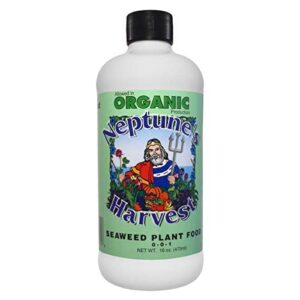
Once your seedlings develop true leaves, micronutrients become essential for vigorous transplanting success. Neptune’s Harvest Seaweed Plant Food delivers trace minerals and organic matter from Atlantic seaweed extracts—supporting stress tolerance without the nitrogen overload that weakens indoor gardening starts.
You’ll apply this sustainable gardening solution as a gentle foliar spray or root drench, providing plant nutrition that strengthens cell walls and root systems. Dilute according to label directions and feed every two weeks during the seed starting phase for maximum seaweed benefits before outdoor transplanting.
| Best For | Gardeners who want to give their seedlings and transplants a natural micronutrient boost without risking nitrogen burn during the critical early growth stages. |
|---|---|
| Material | Liquid |
| Weight | 1 pound |
| Use Case | Plant supplementation |
| Durability | Concentrated formula |
| Color | N/A |
| Dimensions | 18 oz |
| Additional Features |
|
- Delivers essential trace minerals and growth hormones from seaweed that strengthen plant cell walls and root development, helping seedlings handle transplant shock better.
- Works as both a foliar spray and soil drench, giving you flexibility in how you apply it depending on your plants’ needs and your growing setup.
- Fits into organic gardening programs and won’t cause salt buildup like synthetic fertilizers, making it safe for regular use throughout the seed starting phase.
- Not a complete fertilizer on its own—you’ll still need quality soil and a base feeding program to cover major nutrients like nitrogen and phosphorus.
- Costs more per ounce than basic plant foods, though many growers find the results justify the premium for micronutrient supplementation.
- Some bottles have been reported to leak during shipping, and the product can have a mild ocean smell that bothers certain users.
Frequently Asked Questions (FAQs)
How to plant seeds indoors?
Fill seed trays with sterile starting mix, sow at 2–3 times seed diameter, cover lightly, and water gently. Provide 12–16 hours of light daily and maintain 65–75°F for ideal germination.
What are different ways to start seeds indoors?
You can start seeds indoors using seed trays with humidity domes, peat pellets, soil blocks, hydroponic systems, or flat trays with seed starting mix.
Each method offers different advantages for indoor gardening success.
When should I start seeds indoors for cool weather crops?
Planning your cool crop timing around frost dates?
You should start broccoli, cabbage, and cauliflower seedlings six to eight weeks before your last spring frost for ideal seed germination and healthy indoor lighting conditions.
What herbs can you grow indoors?
You can grow basil, parsley, mint, cilantro, and thyme indoors year-round.
These herbs thrive under proper lighting, well-drained indoor soil mix, and consistent watering—creating productive indoor herb gardens without outdoor transplanting.
What month should you start seeds indoors?
Your last frost date determines everything. Most gardeners begin indoor seed starting between late January and early April, following Climate Zones and Frost Dates to calculate proper Seed Timing for healthy seedlings.
What happens if you start seeds indoors too early?
Seedlings can develop leggy growth with weak roots when exposed to insufficient light for too long indoors. Disease risk increases in overcrowded trays, and seedling stress from prolonged indoor conditions often causes transplant shock outdoors.
Is March too early to start seeds?
March works well for starting seeds indoors in most zones. Cool-season crops like broccoli thrive when started 4-6 weeks before your frost-free date. Indoor lighting and seed starting mix promote strong seed germination despite lingering frost risk outdoors.
Is April too late to start seeds indoors?
April isn’t too late for many crops if your frost-free date aligns with transplant timing. Cool-season vegetables and late-season starts thrive, but check regional timing and seedling readiness for best results.
What supplies do I need for starting seeds?
You’ll need seed trays, a sterile seed starting mix, plant markers, a propagation tray with humidity dome, and watering tools like a mister.
These basics give your seeds the right environment to germinate successfully.
How do I prevent seedlings from getting leggy?
Wondering why your seedlings stretch and flop? You need 12–16 hours of bright light daily, gentle air circulation, and balanced watering to keep stems sturdy during indoor seed starting.
Conclusion
Seeds demand patience yet reward speed—wait too long and you’ll miss your window, start too early and seedlings outgrow their space. Your success hinges on one calculated decision: knowing when to start seeds indoors based on your last frost date.
Count backward from transplant day, match each crop to its indoor timeline, and you’ll sidestep the scramble entirely. The calendar won’t adjust to your schedule, but your planting strategy can align perfectly with it.
- https://www.youtube.com/playlist?list=PLq7hmpP9i05QoJeccZYdnC0axOkKGVptY
- https://youtu.be/SO_KKbGYTEM
- https://gardenplanner.almanac.com/
- https://academichelpexpress.blog/2024/08/please-use-the-bulleted-points-and-the-rubric-below-to-guide-your-work-your-pa/
- https://x.com/godofprompt/status/1990526288063324577