
This site is supported by our readers. We may earn a commission, at no cost to you, if you purchase through links.

Most gardeners pack away their tools when the first frost hits—but that’s exactly when the most devoted ones are just getting started.
Winter doesn’t have to mean a bare, colorless yard.
Snowdrops push through frozen ground in January, hellebores bloom in deep shade when almost nothing else dares, and the sweet scent of daphne can stop you mid-path on a cold February morning.
The trick is knowing which plants thrive when temperatures drop and how to set them up for success before winter arrives.
From cold-hardy bulbs planted in fall to frost-resistant shrubs that anchor your garden’s structure, there’s more color available in winter than most people realize.
Table Of Contents
- Key Takeaways
- Best Bulbs for Winter Color
- Hardy Flowers for Cold Beds
- Winter-Blooming Shrubs for Structure
- Winter Containers and Layout Ideas
- Protecting Winter Flowers From Frost
- Frequently Asked Questions (FAQs)
- What are the top 5 winter special flowering plants?
- What flowers can I plant in October?
- Do flowers make a good winter garden?
- What makes a beautiful winter garden?
- Are these winter flowering plants winter hardy?
- Can a Winter Garden be a summer garden?
- Is winter gardening a good idea?
- What flowers go well with winter flowers?
- What is the best flower to grow in winter?
- How to make flower beds look good in winter?
- Conclusion
Key Takeaways
- cold-hardy bulbs like snowdrops, crocuses, and winter aconite in the fall gives you reliable color from January onward — they’ll even push through frozen ground and light snow.
- Shrubs like witch hazel, daphne, and winter jasmine do double duty in winter, adding structure, scent, and color when most plants are completely dormant.
- Layering plants by height — backbone shrubs, mid-level hellebores, and low-growing bulbs at their feet — turns a sparse winter bed into something that actually looks intentional and full.
- Protecting your winter garden comes down to three simple habits: mulch your roots after the first hard frost, water deeply 24–48 hours before a freeze, and make sure your soil drains well so roots do not rot.
Best Bulbs for Winter Color
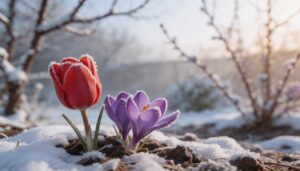
Bulbs are some of the most reliable winter bloomers you can grow — plant them once and they’ll keep showing up year after year. The right ones can push through frozen ground and light snow before most plants even think about waking up.
Pairing them with the best fall bulb planting timing makes all the difference in how well they establish before the ground freezes.
Here are the best bulbs to add color to your cold-weather garden.
Snowdrops, Crocuses, and Winter Aconite
When winter empties your garden, three cold-hardy plants quietly steal the show.
Snowdrops push through frozen ground as early as January, crocuses follow with their cheerful cup-shaped blooms, and winter aconite adds bright yellow for pollinator attraction even on cold days.
Plant bulbs 5–8 cm deep in fall with good moisture management, and you’ll have a stunning winter garden color palette without much fuss.
Glory of The Snow and Reticulated Iris
cold-hardy plants worth knowing: Glory of the Snow and Reticulated Iris.
Glory of the Snow loves moisture-loving soil and partial shade, forming a compact clump design that returns each year. Reticulated Iris adds vertical color contrast behind shorter bloomers. Together, they extend your winter garden color palette into early spring — and early spring pollinators absolutely love them.
rhizome health in check by ensuring good drainage:
- Plant Glory of the Snow 2–3 inches deep in humus-rich soil
- Give Reticulated Iris a sunny, well-ventilated spot
- Pair both with snowdrops for a layered, cohesive look
- Use bulb planting strategies that group them in natural drifts
- Inspect clumps each spring for rot or fungal spots
Planting Bulbs in Fall for Late-winter Blooms
Fall is the secret to late winter color. Plant your cold-hardy bulbs when soil temperatures dip below 60°F — that’s when roots really take hold.
Follow these bulb planting strategies to set your winter garden color palette up for success:
| Step | What To Do |
|---|---|
| Soil Amendment Mix | Blend compost into your bed for drainage |
| Bulb Depth Guidelines | Plant 2–4 inches deep, pointy end up |
| Mulch Insulation Timing | Apply frost-resistant mulch after planting |
| Labeling Planting Beds | Mark spots so you don’t disturb winter bulbs |
| Timing | Six to eight weeks before first hard frost |
Naturalizing Bulbs in Lawns and Borders
Once your bulbs are in the ground, let nature do the heavy lifting. Naturalizing bulbs means skipping the rigid rows — instead, scatter groups of 7 to 15 bulbs per square meter in irregular drifts.
Cold-hardy plants like crocus and snowdrops thrive with smart microclimate placement in sunny patches.
Good soil texture optimization, bulb density planning, and seasonal mulch timing keep your winter garden color coming back stronger every year.
Pairing White, Yellow, and Purple Flowers
Think of white, yellow, and purple as winter’s best trio. Snowdrops open first, then winter jasmine steps in with yellow, and hellebores close out with moody purple — that’s staggered blooming doing its job.
Snowdrops, winter jasmine, and hellebores bloom in sequence — white, yellow, and purple doing exactly what a winter garden needs
- Use texture pairing: ruffled white blooms next to smooth purple hellebores
- Balance site light: purple east, white and yellow west
- Stay on top of seasonal maintenance: deadhead weekly for a longer show
Hardy Flowers for Cold Beds
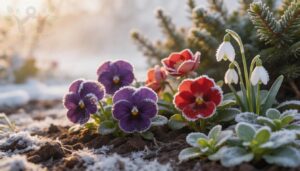
Cold beds don’t have to mean empty beds. Plenty of tough, beautiful plants will bloom right through the chill without much fuss.
Just make sure your soil drains well — waterlogged roots are a silent killer for cold-hardy plants that would otherwise sail through the frost.
Here’s a look at the best ones to fill your cold-season garden.
Hellebores for Reliable Late-winter Blooms
Hellebores are one of those cold-hardy plants that quietly steal the show every late winter. They start blooming in January or February — sometimes pushing through frost — and keep going for four to eight weeks.
Tuck them into shade placement under deciduous trees, where soil acidity suits them best. Their nectar-rich flowers even attract early bees.
Dividing clumps every few years keeps your winter garden design looking its best.
Pansies and Violas for Long-lasting Color
If you want reliable cold-hardy color all winter, pansies and violas are your best friends. Both thrive in cool seasons, blooming for 8–14 weeks when given morning sun, light mulch protection, and staggered row spacing of 6–8 inches.
Deadheading longevity is real — snip spent flowers regularly, and they just keep going. A cool season fertilizer every few weeks locks in that early spring color.
Heather and Winter Heath for Evergreen Flowers
Heather mounds and Winter Heath might just be the hardest-working plants in your cold-hardy lineup. Both form compact mounds of needle-like evergreen foliage, thriving in acidic soil with good drainage.
Their pale pink to white blooms add steady winter garden color from January through March. Mulch strategies using pine needles keep roots happy and soils acidic — a simple win for your seasonal palette.
Ornamental Cabbage and Kale for Texture
Ornamental cabbage and kale bring something flowers simply can’t — bold, sculptural leaf form that holds its own all winter long. Their variegated leaf color shifts from deep purple to creamy white as temperatures drop, growing more vivid with each cold snap.
Ruffled edge details catch winter light beautifully.
For crisp leaf maintenance, keep soil moist and well-drained.
These cold-hardy plants deliver serious seasonal texture contrast in any winter garden.
Matching Plants to Sun, Shade, and Zone
Getting the right plant in the right spot is basically the whole game. Think of it as your personal Sun‑Zone Mapping guide — match sun exposure requirements and hardiness zones before anything else.
- Hellebores and pansies love shade, thriving in zones 4–9
- Crocuses and snowdrops need full sun, zones 3–8
- Camellias prefer sheltered spots, zones 7–9
- Heather tolerates sun to light shade, zones 5–8
Winter-Blooming Shrubs for Structure
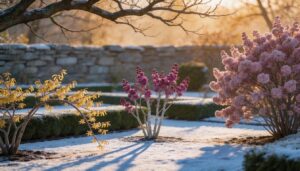
Shrubs do something that smaller plants can’t — they hold the garden together when everything else goes quiet. The right ones don’t just survive winter; they bloom through it, adding height, scent, and color right when you need it most.
Here are some of the best winter-blooming shrubs to anchor your cold-season garden.
Camellias for Bold Winter Flowers
Few plants make a winter garden feel as alive as a camellia. These evergreen shrubs bloom from December through March, delivering bold flowers in white, pink, and deep red.
Plant them in partial shade with acidic soil around pH 5.5 to 6.5.
Dwarf varieties work beautifully in containers.
Fragrant cultivars add scent, too — a real bonus during cold-resistant perennial planting season.
Winter Jasmine for Bright Early Color
After camellias, Winter Jasmine steps up with bright yellow blooms that pop against bare branches.
It’s a cold‑hardy plant, thriving from zone 6 to 9, and works wonders in Vertical Trellis Design or sprawling borders.
Keep soil moisture steady, mulch young roots, and prune after flowering.
Early Color Pairings, try:
- White crocus
- Purple pansy
- Evergreen boxwood
- Glory of the snow
- Ornamental kale
Daphne and Sweet Box for Fragrance
If scent is your winter love language, Daphne and Sweet Box are your go-to winter shrubs with fragrance.
Daphne odora releases a creamy, citrus-sweet perfume that drifts nearly three meters in calm air. Sarcococca leans into nighttime aroma — its vanilla-spiced scent peaks after dark.
| Feature | Details |
|---|---|
| Scented Underplanting | Both thrive under taller shrubs in the shade |
| Microclimate Placement | Plant near entrances for maximum fragrance pairing |
| Pollinator Attraction | Sweet Box draws winter pollinators at dusk |
| Soil Needs | Slightly acidic, well-drained, mulched regularly |
Witch Hazel and Mahonia for Seasonal Interest
Witch hazel and mahonia are two winter shrubs with fragrance and structure that earn their place in any winter garden design.
Witch hazel blooms December through March, its spidery yellow flowers perfuming freezing air — a real surprise when little else stirs. Mahonia, a shade tolerant evergreen, offers yellow flower contrast against dark holly-like leaves.
- Both serve as winter nectar plants for early bees
- Extended bloom period bridges the gap before spring bulbs appear
- Pruning after flowering keeps both shrubs tidy and productive
- Seasonal interest comes from foliage, flowers, and berries across months
Using Evergreen Shrubs as Garden Focal Points
Evergreen shrubs do the heavy lifting in a winter garden — they hold the scene together when everything else goes bare. Place a holly or camellia at your entryway as a Vertical Structure Marker, visible from 20 feet away.
Their Foliage Color Contrast — dark glossy green against pale winter skies — keeps things sharp.
| Feature | Why It Matters |
|---|---|
| Berries as Accents | Adds color when flowers are scarce |
| Evergreen Hedge Framing | Creates cozy, structured garden nooks |
| Low‑maintenance Pruning | One trim preserves shape all season |
Layering Shrubs With Low Winter Bloomers
Think of your winter garden like a stage — backbone shrubs set the scene, and low bloomers steal the show. Smart Layered Planting Design brings both together beautifully:
- Choose Backbone Shrub Selection, like boxwood or holly, for year-round structure
- Tuck snowdrops or crocus at their feet for early Seasonal Color Harmony
- Space shrubs 1–1.5 meters apart for Spacing and Airflow
- Pair cold-hardy plants like hellebores to bridge winter and spring
- Time Maintenance Timing: pruning after flowering to protect next season’s buds
Winter Containers and Layout Ideas
How you arrange your winter garden makes just as much difference as what you plant.
From containers on the doorstep to raised beds along the fence, smart layouts turn a few cold-hardy plants into something that actually stops people in their tracks.
Here are some practical ways to put it all together.
Mixed Pots With Pansies, Ivy, and Evergreens
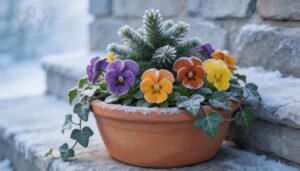
A mixed winter container garden is one of the easiest ways to keep your doorstep looking alive when everything else has gone quiet. Start with an evergreen backbone — a small conifer or dwarf yew — then layer in cold-hardy pansies for bold color.
Let trailing ivy edges soften the pot’s rim.
Regular pansy deadheading keeps blooms coming.
For best results, use microclimate placement near walls for wind protection.
Raised Beds for Better Winter Drainage

Raised beds are a quiet asset for winter flower gardening. When soil stays waterlogged, cold-hardy plants rot fast. cedar frame durability advantage is real — it holds shape through freeze‑thaw cycles for years.
Here’s how to get your bed draining right:
- Add a gravel base layer to lift roots above standing water
- Blend in coarse sand amendment — about 20–30% — for loose, breathable soil
- Use perforated drain pipes along the perimeter to move moisture away
- Build in a gentle bed slope design so water runs off naturally
- Try raised stone planters for extra heat retention in winter landscape design
Planting in Drifts for Bigger Visual Impact
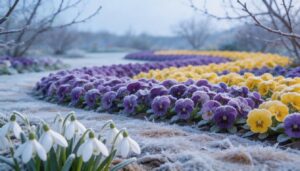
Planting in sweeping drifts turns scattered cold‑hardy plants into something that actually stops you in your tracks.
Group three to nine of the same variety together, keeping drift width guidelines between two and four feet wide.
Use staggered bloom timing — snowdrop drifts first, then bold pansy and viola color blocks — to build a seasonal color rhythm that carries your winter color palette from January through March.
Framing Paths, Patios, and Entryways

Your entryway sets the tone for everything beyond it. Line paths with low primrose or snowdrops as garden border plants, then let brick edging slow grass creep along the edges.
Gravel drainage keeps soggy winter soil in check underfoot.
- Flagstone borders with winter bulbs tucked between gaps
- Paver patterns flanked by evergreen hedges for year-round structure
- Lighting accents that make ground cover glow after dark
Adding Texture With Grasses, Moss, and Stone

Texture is the secret to a garden that feels alive, even in winter.
Try a Grass Clump Arrangement for gentle movement, or lay a Moss Carpet between stepping stones for softness underfoot.
Stone Edge Framing adds crisp lines, while frosty garden beds with moss and lichen brighten gray days. Layered Texture Design with ornamental grasses and stone planters keeps things interesting all season.
Creating Color-blocked Winter Flower Displays
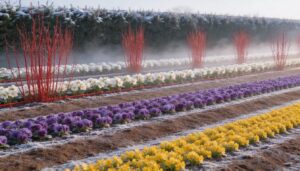
Color-blocking turns a winter bed into something that actually stops people in their tracks. Think of it as painting with plants — grouping white, yellow, and purple in bold, repeating bands.
Here’s how to do it well:
- Plan your Palette Planning around three colors max
- Use Anchor Blooms like hellebores to anchor each block
- Build Vertical Rhythm with red-twig dogwood stems
- Try Contrast Pairings — bright yellows against dark evergreens
- Practice Seasonal Repetition by rotating cold-hardy plants yearly
Protecting Winter Flowers From Frost

Winter flowers are tougher than most people think, but they still need a little backup when temperatures drop hard. The good news is that few simple habits can make a real difference in keeping your blooms alive and healthy.
Here’s what actually works.
Mulching Roots to Insulate Against Freezes
Think of mulch as a cozy blanket for your plant roots.
A 2–4 inch layer of organic mulch — pine straw or shredded bark works great — acts as a root temperature buffer, keeping soil up to 3°C warmer on cold nights.
Apply it after the first hard frost for best results, and keep it 2 inches from stems to prevent rot.
Watering Before The Ground Freezes
Just like that mulch layer guards your roots overnight, pre-freeze watering sets up your plants for the cold months ahead.
Aim to water 24–48 hours before a hard freeze, moistening the root zone down 6–8 inches without puddling.
Sandy soils need a bit more; clay soils, a little less.
Good soil moisture management now means healthier roots all winter.
Preventing Waterlogged Soil in Winter
Even the toughest winter flowers won’t survive soggy roots for long. Waterlogged soil cuts off oxygen and invites rot, so your soil drainage for winter plants matters as much as cold protection does.
A few simple fixes make a real difference:
- Raise your beds — raised bed drainage improves dramatically with loose, sandy loam, shedding excess water at roughly 2–4 cm per hour.
- Add soil amendments — mixing in 5–15 % organic matter boosts infiltration by up to 25 %, keeping roots breathing.
- Check your slope grading — even a 1–2 % grade directs water away from plant crowns toward proper drainage channels.
Mulch depth of 5–7 cm using coarse bark also prevents surface crusting. For seriously compacted beds, perforated pipes buried 60–90 cm deep move excess moisture out fast. Ground covers like creeping thyme help too, breaking rainfall impact while supporting smart winter garden soil preparation and ongoing soil moisture management.
Shielding Containers With Walls and Frost Cloth
winter winds bite, garden insulation makes all the difference.
Walls built with polyiso foam board and reflective foil bubble wrap boost thermal performance, while frost cloth installation keeps cold‑hardy plants a few degrees warmer.
wind barrier design shields containers, and moisture management prevents soggy roots.
Here’s a quick breakdown:
| Insulation Materials | Wind Barrier Design | Frost Cloth Installation |
|---|---|---|
| Polyiso foam board | Sealed corners | UV-stabilized fabric |
| Reflective foil wrap | Base skirts | Clip systems |
| Foam tape seals | Interlocking joints | Claud zip edges |
| Moisture panels | Height matches pot | 2–4°C warmth boost |
Overwintering Tender Flowers and Tropicals Indoors
When frost threatens your tender blooms, it’s time to bring the garden indoors. Overwintering perennials thrive with bright indirect light near a south-facing window and a consistent temperature between 18–24°C.
Humidity management matters too — group your winter containers together to naturally raise moisture levels.
Keep up with soil drainage checks and regular pest inspections to keep your indoor plant care on track.
Simple Winter Maintenance for Healthy Blooms
A little consistency goes a long way in winter garden maintenance. Check in on your cold-hardy plants weekly — it doesn’t take long.
- Pull back frost cloth on warm days so plants can breathe and dry out.
- Use drainage improvement techniques in waterlogged beds before rot sets in.
- Quick pest and disease checks catch problems before they spread.
Soil temperature monitoring and light winter pruning practices keep frost resistant plants thriving all season.
Frequently Asked Questions (FAQs)
What are the top 5 winter special flowering plants?
Snowdrops, Winter Aconite, Hellebore, Camellia japonica, and Winter Jasmine top the list.
Each brings seasonal color schemes, garden focal points, and pollinator support while thriving with good soil drainage strategies and cold frame use.
What flowers can I plant in October?
Like tucking in seeds for a long winter’s nap, October planting sets up spring’s first show. Plant tulip, crocus, and snowdrop bulbs now for reliable late-winter color.
Do flowers make a good winter garden?
Yes, flowers absolutely make a stunning winter garden.
Cold-hardy plants and winter-blooming plants bring Design Cohesion, Climate Adaptability, and Maintenance Simplicity — plus real winter garden color even when snow blankets everything outside.
What makes a beautiful winter garden?
A beautiful winter garden layers a seasonal color palette with texture contrast, uses an evergreen backdrop for structure, adds winter garden fragrance, sustains winter garden wildlife, and uses microclimate zones and garden lighting strategically.
Are these winter flowering plants winter hardy?
Most of these plants are surprisingly tough. Many, like snowdrops and crocuses, handle zone 3 cold with ease.
Matching frost tolerance levels and hardiness zone selection to your site makes all the difference.
Can a Winter Garden be a summer garden?
Absolutely.
With smart seasonal shift planning and summer companion planting, your winter garden evolves naturally.
Heat-tolerant perennials fill gaps as cold-hardy plants fade, keeping beds alive with year-round soil management and color.
Is winter gardening a good idea?
Winter gardening is absolutely worth it.
Cold-hardy plants like snowdrops and hellebores offer real mental wellbeing boosts, biodiversity support, and cost savings — proof that a quiet, frost-kissed garden still has plenty to give.
What flowers go well with winter flowers?
Hellebores, pansies, and violas are cold-hardy perennials that pair beautifully with early blooming bulbs like snowdrops and crocuses. Add low-growth groundcovers and textural foliage accents for a layered, frost-tolerant display.
What is the best flower to grow in winter?
Like a quiet miracle, snowdrops push through frozen ground first.
For reliable winter color, hellebores win — cold hardiness rating is excellent, they tolerate low light, and pollinators love their nectar-rich blooms.
How to make flower beds look good in winter?
Layer evergreen shrubs, hellebores, and ornamental grasses for structure.
Add pansies for winter garden color, use seasonal bark accents for texture, and frame beds with winter path lighting to highlight garden focal points.
Conclusion
As the seasons unfold like a canvas of frost and snow, your winter garden becomes a masterpiece of resilience and beauty. By embracing the chill and planting with purpose, you’ll discover a world of vibrant colors and enticing scents.
With these winter flower gardening ideas, you’ll be well on your way to creating a bold, beautiful cold garden that showcases your creativity.
Winter flower gardening ideas like these bring joy to your doorstep, season after season, with winter flower gardening ideas.
- https://fieldreport.caes.uga.edu/news/snapdragons-add-fall-color-and-can-withstand-winter-temperatures/
- http://depts.washington.edu/uwbg/docs/WinterGardenMap2018.pdf
- https://sites.tufts.edu/pollinators/2019/11/why-you-should-leave-the-leaves-and-give-yourself-a-break-from-yard-work/
- https://extension.unh.edu/blog/2020/11/can-you-compost-winter