This site is supported by our readers. We may earn a commission, at no cost to you, if you purchase through links.
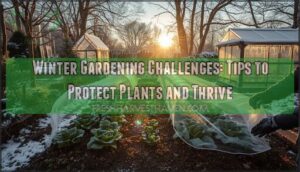
Your tomato plants survived spring frost and thrived through summer heat, but winter presents a different beast entirely. Cold temperatures, shorter days, and persistent moisture create conditions that test even experienced gardeners.
The challenges multiply when you’re protecting perennials, keeping containers alive, or trying to grow fresh greens through freezing months. Success doesn’t require luck—it demands understanding how plants respond to cold stress and which proven strategies actually work.
You can maintain a productive garden through winter by focusing on soil protection, strategic plant selection, and smart use of barriers against frost and wind.
Table Of Contents
Key Takeaways
- Winter garden success depends on understanding your USDA hardiness zone and selecting cold-hardy plants like kale, spinach, and root vegetables that can handle your specific frost dates and temperature ranges.
- Protecting plants requires layered strategies including 2-4 inches of mulch for soil insulation, frost cloths that raise temperatures by several degrees, and deep watering before freezes to help moist soil retain heat better than dry ground.
- Soil management through winter means aerating compacted areas, improving drainage with organic matter or French drains, and using raised beds that warm 10-15°F faster than ground level for extended growing seasons.
- Winter pest control starts now by inspecting for overwintering insects in bark and debris, applying dormant oils between 40-70°F to smother eggs, and removing fallen leaves that shelter aphids and fungal spores until spring.
Preparing Your Garden for Winter
Before winter hits, you need to set up your garden for success. The right preparation protects your plants and sets the stage for a strong spring comeback.
Here’s how to get your garden winter-ready, starting with understanding your climate zone and choosing plants that can handle the cold.
Assessing Your USDA Hardiness Zone
Your winter planning starts with zone mapping. The USDA Hardiness Zone Map divides the country into 13 zones based on average minimum winter temperatures—this climate analysis guides which cold-hardy plants will thrive in your garden. Check your zone number, then note your area’s frost dates.
These details shape every decision, from soil temperature timing to frost protection strategies you’ll need for successful winter garden preparation. Understanding the importance of clear structure and organization in writing research papers can help you create a thorough winter gardening plan.
Selecting Cold-Hardy Plants and Vegetables
Once you know your zone, choose varieties rated for your hardiness range. For cold climate gardening, prioritize frost-tolerant plants like kale, spinach, and Brussels sprouts—these hardy vegetable choices handle light freezes and short days beautifully. Don’t overlook root crops such as carrots or parsnips, which store well in soil.
Seasonal plant planning means matching cultivars to your microclimate, so winter crop selection sets you up for reliable harvests. Understanding the importance of methodological rigor is essential for making informed decisions about plant varieties and gardening techniques.
Planning Garden Layout for Sunlight and Protection
After selecting the right varieties, position them to capture at least six hours of direct sunlight daily—a south-facing bed gains 2–4 °C more warmth than shaded ground, boosting cold weather plant care.
Use windbreak strategies like hedges or fencing to reduce gusts by half, shielding your crops from desiccation. Microclimate planning and smart garden orientation turn winter gardening from a struggle into a productive season.
Ordering Seeds and Bulbs for Winter Sowing
Once you’ve mapped your layout, order cold-hardy plants and bulbs that thrive in winter planting. Focus on seed selection by checking germination rates and verifying cold stratification needs—some varieties require weeks of chill before sprouting.
Choose pre-chilled bulbs for minimal-frost zones and distinguish outdoor winter sowing from indoor pre-sowing techniques. These sowing techniques and seasonal planting strategies deliver reliable gardening tips for success.
Protecting Plants From Frost and Cold
Frost and freezing temperatures can damage or kill your plants if you don’t take action. Protecting them requires a combination of smart techniques that trap heat, insulate roots, and shield delicate foliage from harsh conditions.
Here are the most effective methods to keep your garden safe through winter’s coldest nights.
Using Mulch for Soil Insulation
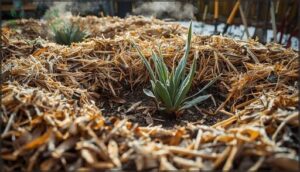
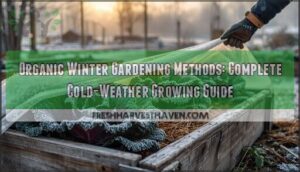
Mulch acts like a thermal blanket for your soil, buffering temperature swings and locking in precious moisture through winter’s harshest days. Apply a 2–4 inch layer around perennial beds, choosing materials that match your plants’ needs:
Mulch acts as a thermal blanket for soil, buffering temperature swings and locking in moisture through winter’s harshest days
- Straw mulch offers 2–3 inches of reliable insulation for temperate climates
- Wood chips reduce soil temperature fluctuation by 1–3 degrees Fahrenheit
- Leaf mold provides excellent moisture retention with excellent insulation
- Keep mulch 1–2 inches away from plant stems to prevent rot
Check depth every six weeks and refresh as needed.
Applying Frost Cloths, Caps, and Barriers

Lightweight fabric or caps turn your garden into a series of protected microclimates, raising temps near vulnerable plants by several degrees. Use clear caps for individual cold-hardy plants, creating mini-greenhouses that shield against frost damage.
Drape frost cloths loosely over tender perennials and secure them with stakes to prevent wind damage. Remove coverings on sunny days to avoid overheating, then reapply before nightfall.
Watering Techniques Before Freezes
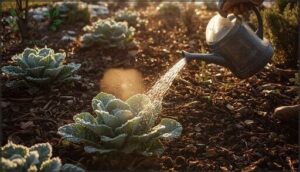
Water deeply a few days before a hard freeze to maintain soil moisture and reduce root stress—moist soil holds heat better than dry ground. Time your cold weather irrigation during the warmest part of the day when soils aren’t frozen, and apply mulch afterward to lock in moisture while insulating roots.
This freeze protection method aids winter gardening success and strengthens cold-hardy plants against temperature drops.
Insulating Containers and Delicate Plants
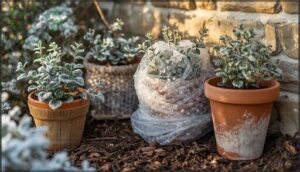
Wrap containers in bubble wrap or burlap to stabilize soil temperature and shield roots from freeze-thaw cycles—this container insulation boosts frost protection for cold-hardy plants by 2–5°C. Add 2–3 inches of winter mulching over the soil surface, then group pots near walls to create a warmer microclimate.
Plant wrapping with breathable frost cloth maintains airflow while keeping winter gardening setups thriving through harsh conditions.
Managing Soil and Moisture in Winter
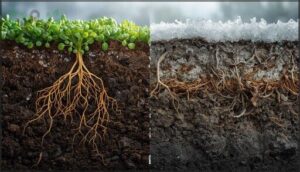
Cold weather changes how your soil behaves, and that affects everything from drainage to root health. When the ground freezes or stays waterlogged, your plants can’t access the moisture and oxygen they need to survive.
Here are three practical strategies to keep your soil in good shape through winter’s toughest conditions.
Aerating Compacted Soil
Compacted soil blocks air, water, and root growth—especially in winter when frost penetration worsens the problem. You can restore soil health and maintenance through simple winter tillage and compaction relief techniques:
- Use a broad fork or garden fork to loosen compacted layers without destroying soil structure
- Time your soil aeration when moisture is moderate—not frozen or waterlogged
- Add 2–5 cm of compost after aerating to boost soil porosity and microbial activity
- Apply mulch over aerated beds to prevent surface crusting during freeze-thaw cycles
- Focus on perennial beds and high-traffic areas where soil conservation matters most
These winter gardening practices improve oxygen flow and prepare your soil for vigorous spring growth.
Improving Drainage and Preventing Waterlogging
Poor drainage turns winter rains into a root-killer. Clay-heavy soils hold water, reducing oxygen and creating waterlogging that suffocates plants.
Install French drains or perforated pipes to lower your water table and improve soil health and maintenance. Add organic matter at 2–3% volume for better clay modification and soil aeration.
These drainage systems protect winter gardening efforts while supporting long-term soil conservation and frost protection and prevention through healthier root zones.
Using Raised Beds for Winter Gardening
Raised beds solve drainage problems while creating a microclimate that extends your growing season. Their elevated design warms soil faster—often 10–15°F above ground level—allowing earlier planting of cold-hardy plants like kale and spinach.
Choose bed insulation methods such as straw bales around edges. This raised bed design facilitates winter crop selection and cold weather gardening through better soil temperature management and winter plant care.
Controlling Winter Pests and Diseases

Winter doesn’t eliminate garden pests—it just makes them harder to spot. Many insects and diseases hide in bark, debris, and soil, waiting for warmer conditions to emerge.
You can protect your garden by taking a few proactive steps now to disrupt pest life cycles and prevent spring outbreaks.
Inspecting for Overwintering Insects
Vigilance during the dormant season reveals hidden threats that could devastate your spring garden. Many winter pests enter diapause—a survival state—tucking themselves into bark crevices, leaf litter, and stem bases where they wait for warmer days.
Your winter inspection strategy should include:
- Checking evergreen hosts and woody perennials for scale insects and aphids under buds
- Examining stem collars and crown bases on milder winter days when pests surface
- Using magnification tools to spot tiny overwintering insects in bark
Document what you find to predict outbreaks ahead.
Applying Dormant Oils and Diatomaceous Earth
Once you’ve identified overwintering pests, two effective pest control methods can reduce spring populations: dormant oils and diatomaceous earth.
Apply horticultural oils between 40°F and 70°F during dormancy—they smother eggs without harming bark.
For crawling pests like slugs, sprinkle food-grade diatomaceous earth around plant crowns on dry days.
Always test a small area first to verify your cold-hardy plants tolerate the treatment without damage.
Pruning Diseased or Damaged Branches
Beyond controlling pests, winter pruning removes diseased branches before pathogens spread. Cut back to healthy wood just above a bud, using sterilized tools between cuts. Focus on dead, damaged, or crossing branches that invite infection.
Late winter works best for fruit trees—they’re still dormant but near recovery mode. These pruning techniques protect your cold-hardy plants and set up stronger spring growth.
Cleaning Up Debris to Reduce Pest Habitat
After winter cleanup, rake fallen leaves and dead annuals from beds—they shelter aphids, spider mites, and fungal spores that reawaken in spring. Debris removal cuts overwintering pest populations and lowers disease pressure.
Turn thick mulch down to two or three inches to discourage slug eggs. Clean your tools between cuts to stop spreading pathogens.
This habitat reduction protects your garden until spring’s first thaw.
Indoor Gardening and Winter Maintenance
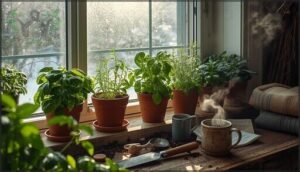
When outdoor conditions become too harsh, shifting your focus indoors keeps your gardening momentum alive through winter. You can grow fresh herbs, tend to houseplants, and maintain your tools so they’re ready for spring.
These practical indoor activities help you stay connected to your garden even when frost blankets the ground outside.
Starting Herbs and Greens Indoors
You can keep gardening fresh by starting herbs and greens indoors. Seed selection matters—basil, cilantro, and parsley germinate best between 65-75°F. Use a sterile soil mixture for healthy herb germination.
Indoor lighting of 12-16 hours daily promotes steady growth, while watering techniques focus on keeping soil moist but not waterlogged.
Your indoor herb garden rewards you with flavorful harvests all winter.
Using Grow Lights and Sunrooms
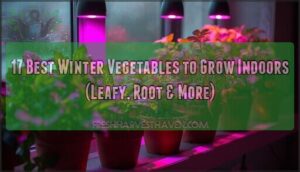
Full-spectrum LED gardening systems deliver the plant spectrums your indoor climate needs for winter gardening success. Position grow light systems 12-24 inches above foliage and run them 12-16 hours daily.
Your sunroom design benefits from reflective surfaces that boost natural light, creating a greenhouse effect for cold-hardy plants. This plant protection strategy keeps your indoor gardening productive through cold months.
Caring for Houseplants During Winter
Your houseplants need extra attention when indoor conditions shift. Shorter days reduce light intensity, often falling below 2000 lux, which slows photosynthesis and triggers dormancy in many tropical species.
Master these indoor gardening essentials for plant protection and care:
- Light Management: Position plants near bright windows or use grow lights 12-16 hours daily
- Humidity Control: Group herbs indoors together or use pebble trays to raise moisture above 40%
- Leaf Care: Dust foliage weekly to improve photosynthetic efficiency
- Pest Prevention: Check monthly for spider mites thriving in dry air
- Soil Monitoring: Water less frequently, letting the top inch dry between waterings
These gardening tips and tricks keep your indoor herb garden thriving all season.
Cleaning and Storing Garden Tools Properly
Your gardening tools deserve the same care you give your plants. Scrub dirt from metal surfaces with a stiff brush, then dry thoroughly to prevent rust prevention issues. Apply a light oil coating to form a moisture barrier, ensuring proper tool maintenance through cold months.
Store equipment in a dry, elevated spot for ideal shed organization and garden storage. This garden maintenance routine extends lifespan and keeps tools ready for winter gardening preparation tasks ahead.
Frequently Asked Questions (FAQs)
How do I protect garden structures from heavy snow?
Structure fails when you ignore snow load management. Tempered glass or polycarbonate sheets resist winter’s weight better than wishful thinking.
Brace roofs, seal gaps, insulate properly, and inspect after storms for structural reinforcement success.
What wildlife problems increase during winter months?
You’ll notice increased rodent activity under snow cover, deer browsing on shrubs when forage is scarce, and birds exploiting your garden for seeds—all requiring thoughtful deer management, rodent control, and strategic winter foraging deterrents.
Can I harvest vegetables throughout the winter season?
Where there’s a will, there’s a way”—and with cold-hardy vegetables like kale and spinach, frost protection methods, and season extension structures, you can maintain winter harvesting through strategic cold weather gardening and proper plant protection techniques.
When should I start seedlings for early spring?
Start your seedlings indoors six to eight weeks before your zone’s last spring frost date. Cool-season crops like spinach and kale can begin earlier since they tolerate light frosts better than warm-season vegetables.
How does winter wind affect plant health and growth?
Wind strips moisture from leaves faster than roots can replace it, weakening cold weather gardening efforts. Frost damage intensifies as gusts disrupt plant hardiness, making windbreak strategies essential for effective plant protection and winterization against soil erosion.
Conclusion
Think of your winter garden as a fortress—strong walls keep invaders out, but the real strength lies in preparation. You’ve built that defense by mastering winter gardening challenges through protective mulching, strategic plant selection, and vigilant pest control.
Your plants won’t just survive the cold months; they’ll emerge stronger when spring arrives. The work you do now pays dividends in healthier soil, hardier perennials, and earlier harvests. Winter doesn’t have to mean dormancy.
- http://www.yourgreenpal.com/
- https://blog.jungseed.com/winter-mulching-guide/
- https://planthardiness.ars.usda.gov/
- https://www.thetravel.com/gen-z-winter-travel-to-warm-orlando-florida/
- https://www.canva.com/photos/MAFERnqe4_w-eco-friendly-gardening-woman-improving-garden-bed-soil-for-planting-fertilizing-with-compost-organic-matter-soil-amendment-/