
This site is supported by our readers. We may earn a commission, at no cost to you, if you purchase through links.
Texas gardeners face a narrow window between brutal summer heat and winter freezes, but that window opens the door to some of the most productive planting months of the year. While August tomatoes limp toward their final harvest and September peppers struggle in lingering 90-degree afternoons, cool-season crops like spinach, carrots, and broccoli thrive in the state’s mild autumn temperatures.
The key to planting a fall garden in Texas lies in understanding your region’s first frost date and working backward from there—North Texas gardeners start in late August, while South Texas growers can wait until October. Success depends on matching the right crops to your specific climate zone and preparing your soil before the planting window arrives.
Table Of Contents
- Key Takeaways
- Choosing The Best Location for Fall Gardens
- Preparing Texas Soil for Fall Planting
- Selecting and Planting Fall Vegetables
- Caring for Fall Vegetable Plants
- Harvesting and Storing Fall Vegetables
- Frequently Asked Questions (FAQs)
- When should I start my winter garden in Texas?
- Can I grow tomatoes in September in Texas?
- What should you plant in your garden in the fall?
- When should you plant a fall garden in Texas?
- When should I start my fall garden?
- What to plant in Texas in September?
- How late can you plant a garden in Texas?
- What vegetables grow best in Texas heat?
- How to plant a fall Garden in Texas?
- When should you plant a garden in Texas?
- Conclusion
Key Takeaways
- Texas fall gardening success hinges on working backward from your region’s first frost date—North Texas starts late August, Central Texas in September, and South Texas can wait until October.
- Your soil needs 10-12 inches of tilling plus 1-2 inches of compost worked into the top 6-8 inches, and heavy clay requires additional coarse sand to prevent waterlogged roots.
- Cool-season crops like spinach, kale, and broccoli thrive in Texas fall temperatures, with transplants giving you 1-3 extra harvest weeks compared to direct seeding.
- Installing drip irrigation cuts water waste by 30-70% while a 2-inch mulch layer reduces evaporation by up to 50%, creating the moisture control your fall vegetables need.
Choosing The Best Location for Fall Gardens
Your fall garden’s success starts with choosing the right spot. You’ll need to evaluate how much sunlight hits the area, whether water drains properly, and how you’ll arrange your beds for maximum productivity.
Let’s walk through the three key factors that’ll set your garden up for a strong harvest.
Selecting a Site With Full Sun
Sunlight requirements for fall vegetable gardening in Texas start with choosing a site that receives 6 to 8 hours of direct solar exposure daily. Southeast or south-facing garden orientation captures the most consistent light during autumn months, maximizing growth potential for your cool-season crops.
When evaluating your site for fall gardening in Texas, consider:
- Avoiding tall buildings or dense trees that block critical sun during peak hours
- Understanding that soil reflection from light mulch won’t compensate for inadequate direct light
- Selecting locations with unobstructed exposure from mid-morning through afternoon
- Planning garden placement where photosynthesis can occur at peak levels throughout the season
To guarantee the accuracy of your gardening methods, it’s vital to review scientific study summaries for the best practices.
Ensuring Well-Draining Soil
Once you’ve locked down your sunlight, check your drainage. Dig a 12-inch test hole, fill it with water, and watch. If it doesn’t drain within 24 hours, you’ll need amendments.
Mix in 2–4 inches of compost to boost soil porosity and water infiltration. For heavy clay, add coarse sand or fine gravel—these create pathways that prevent waterlogged roots and promote soil aeration.
Planning Spacing and Bed Layout
Now that drainage is handled, map your bed layout before you break ground. Spatial planning and garden mapping prevent overcrowding and simplify fall gardening maintenance tasks like crop rotation and weeding.
Design your beds with these layout guidelines:
- Space rows 12–18 inches apart for comfortable hand-weeding and harvesting access.
- Build raised beds 4 feet by 8 feet—you can reach the center from either side without compacting soil.
- Use square-foot gardening density: plant 4–9 compact crops per square foot, 1–4 for larger vegetables.
- Orient beds east-west to optimize uniform sunlight distribution during shorter fall days.
Preparing Texas Soil for Fall Planting
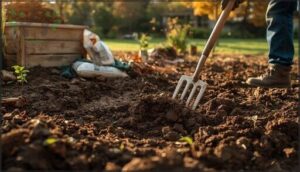
Getting your soil ready before planting can make or break your fall garden’s success. Texas soil often needs work—whether it’s heavy clay that drains poorly or sandy soil that won’t hold nutrients.
You’ll need to clear out debris, loosen compacted ground, and add the right amendments to give your vegetables the foundation they need to thrive.
Removing Weeds and Old Plants
Before you break ground, pull every weed and remove old plant material from your garden beds. Weeded beds cut nutrient competition by up to 40 percent during early fall growth, and clearing diseased debris reduces the risk of pests carrying over.
This essential fall cleanup and garden sanitation step sets the stage for healthy transplants and strong germination across Texas.
Tilling and Aerating The Soil
Once weeds are gone, till your garden soil to a depth of 10 to 12 inches. This tilling depth loosens compacted layers, improving soil structure and increasing root penetration for fall crops like broccoli and spinach.
Soil aeration through proper tillage delivers measurable benefits:
- Boosts air-filled porosity by 10 to 20 percent in compacted beds
- Increases water infiltration rates by several inches per hour
- Temporarily raises available nitrogen through faster organic matter mineralization
Till when soil reaches field capacity—crumbly but not wet—to prevent clumping and compaction. This garden soil management step fosters soil health and sets up strong aeration benefits for your fall vegetables.
Amending With Compost and Sand
After tilling, work in soil amendments that transform clay and compacted beds. Add 1 to 2 inches of compost to the top 6 to 8 inches of your garden soil to boost organic matter and microbial activity.
For drainage-challenged areas, blend in 1 to 2 inches of coarse sand alongside compost. These compost benefits and sand additions create the foundation your fall gardening in Texas demands.
Using Slow-Release Fertilizers
Apply slow-release fertilizer at planting to match nutrient uptake with your fall crops’ steady growth. Work polymer-coated granular formulations into the top 6 to 8 inches of soil, choosing products with 4- to 9-month release mechanisms.
These fertilizer types prevent nitrogen surges that stress cool-season vegetables and reduce leaching in Texas clay soils, supporting soil nutrition through your entire fall gardening season.
Selecting and Planting Fall Vegetables
Choosing the right vegetables and planting them correctly sets the foundation for your fall harvest. Texas gardeners need to match crops to their specific region’s climate and decide whether to start from seed or buy transplants.
Understanding these basics will help you get plants in the ground at the right time with the right technique.
Best Cool-Season Crops for Texas
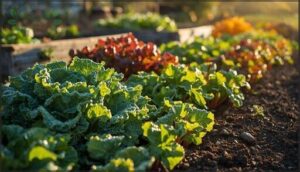
Spinach, lettuce, and kale form the backbone of Texas fall gardening, delivering reliable harvests when you plant them in cooler weather. Spinach matures in 35 to 50 days, while kale tolerates light frost and produces baby leaves in 25 to 40 days.
Carrots sweeten after cool nights, maturing in 60 to 80 days across Texas regions for consistent fall harvesting success.
Timing Planting by Texas Region
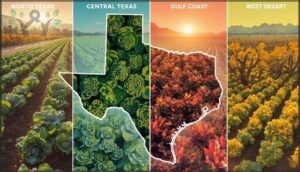
Your Texas zone dictates when you’ll start fall gardening, with North Texas planting dates falling in late August through October for leafy greens and brassicas.
Central Texas gardeners sow cool-season crops from late August through September, while Gulf Coast regions begin in August due to milder frost dates.
West Texas high desert areas require earlier planting—late July to August—as climate variations demand adjusted seasonal planting schedules.
Starting Seeds Indoors Vs. Transplants
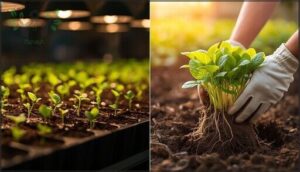
You’ll gain 1 to 3 extra harvest weeks choosing transplants over direct seed starting, making them ideal for fall gardening success. Indoor lighting and controlled temperature (65–75°F) enhance seed germination, but hardening-off takes 7 to 14 days—time you mightn’t have.
Consider these factors for vegetable gardening:
- Transplants reduce transplant shock when root development matches Texas conditions
- Seedling care indoors demands consistent monitoring and space
- Direct sowing protects root vegetables from handling damage
Using Seed Starter Trays for Early Growth
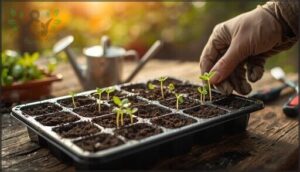
Seed starter trays give you uniform moisture control and 50–75°F temperature stability for faster germination. Choose 1.5–2.5 inch cells with drainage holes, fill with sterile soilless mix (pH 5.5–6.5), and keep consistently moist.
Your seedlings reach transplant readiness at 2–3 true leaves, reducing root disturbance.
Sanitize reusable trays between cycles to prevent disease transmission and enhance early growth.
Direct Sowing Vs. Transplanting Techniques
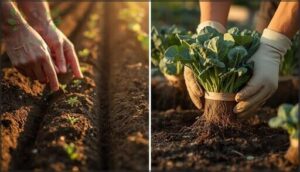
Once your trays are ready, you’ll need to choose the right planting approach. Direct sowing works best for quick crops like radishes and lettuce, achieving germination in 60–75°F soil while minimizing transplant shock. Transplanting suits broccoli and cauliflower, providing:
- Earlier harvests under short-day conditions
- Uniform spacing for better weed control
- Protection from early pest pressure
- Extended growing windows through indoor starts
Match your technique to crop type and regional frost dates for ideal root development.
Caring for Fall Vegetable Plants
Getting your fall vegetables in the ground is just the beginning—the real work starts once they’re growing. Your plants need consistent care to thrive through Texas’s unpredictable fall weather and produce the harvest you’re hoping for.
Here’s what you’ll need to focus on to keep your garden healthy and productive.
Efficient Watering and Drip Irrigation
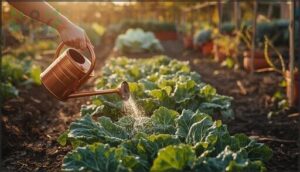
For steady growth in your fall garden, install a drip irrigation system that delivers water directly to root zones, cutting waste by 30–70% compared with overhead methods.
You’ll conserve soil moisture while preventing runoff common in North Texas sandy soils.
Check emitters weekly and adjust schedules to 1–2 inches per week, factoring in rainfall to maintain ideal hydration without overwatering.
Applying Mulch for Moisture Retention
Once irrigation manages water delivery, spread a 2-inch layer of hardwood or straw mulch across your vegetable beds to lock in moisture levels and moderate soil temperature. This organic matter cuts evaporation by up to 50%, supporting water conservation and reducing watering frequency.
For best garden maintenance results, follow these fall gardening steps:
- Apply mulch after seedlings establish to avoid overheating young plants.
- Keep a 1-inch gap around stems to prevent rot.
- Replenish after heavy rainfall reduces coverage.
- Pair with drip lines for maximum soil preparation efficiency.
- Monitor regularly to prevent waterlogging in your vegetable gardening routine.
These mulch benefits transform your fall garden into a self-regulating system.
Fertilizing During The Growing Season
Nutrient cycling accelerates once your fall crops enter active growth, making fertilizer timing critical for healthy yields. Apply a balanced organic fertilizer at planting, then side-dress with nitrogen when leafy greens reach 4 inches tall.
Soil nutrition improves through organic amendments like compost tea every 3 weeks.
Monitor micronutrient management by watching leaf color—pale tips signal deficiencies requiring prompt correction.
Managing Pests and Diseases Organically
Prevention beats intervention when you’re managing pests and diseases organically in your Texas fall garden. Start with these essentials:
- Install row covers immediately after transplanting to block beetles and aphids from young seedlings.
- Apply insecticidal soap weekly on leafy greens to suppress soft-bodied insects without harming beneficial predators.
- Water at soil level—never wet foliage—to minimize foliar diseases like downy mildew.
Maintain proper spacing between plants for air circulation.
Crop Rotation and Succession Planting
Rotate your crops in a 3- to 4-year cycle to interrupt pest life cycles and balance soil nutrients—swap brassicas for legumes, then follow with leafy greens.
Succession planting extends your harvest window: start a second wave of transplants 2–4 weeks after your first round.
Keep records of planting dates and families to adjust your rotation plan each season.
Harvesting and Storing Fall Vegetables
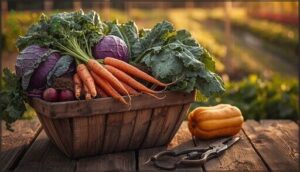
Knowing when and how to harvest your fall vegetables makes the difference between mediocre produce and truly outstanding flavor. Each crop has specific signs that tell you it’s ready, and using the right harvesting technique protects both the plant and the quality of what you’re picking.
Here’s what you need to know about harvesting timing, proper techniques, storage methods, and mistakes that can cost you your hard-earned harvest.
Identifying Optimal Harvest Times
Harvest scheduling starts with tracking your first frost date and monitoring crop maturity indicators. You’ll maximize yield by watching for firm broccoli heads, plump carrot roots, and tender leafy greens at their peak.
Weather monitoring helps you time fall harvest perfectly—cool nights sweeten root crops, while warm spells signal earlier picking. Record planting dates to predict when each crop reaches ideal maturity for harvesting and storage.
Harvesting Techniques for Different Crops
Crop timing determines whether you pull roots or clip leaves, but harvest tools make the difference between damaged produce and a spotless haul. Your harvesting techniques for different crops should match each vegetable’s structure.
- Leafy greens: Snip outer leaves at the base with sharp shears, allowing inner growth to continue producing through multiple harvests.
- Root lifting: Loosen soil 6 inches around carrots and beets before pulling to prevent breakage and splitting.
- Nightshade picking: Twist peppers and tomatoes gently at the stem joint when fully colored and firm.
Storing and Preserving Fall Produce
Cool storage extends your fall harvest weeks beyond garden season. Root cellaring works best at 32–40°F with 90–95% humidity control for produce packaging that maintains shelf life management. Brush soil off roots before storing—skip washing until use to prevent moisture buildup.
Food preservation starts with proper vegetable care during harvesting and continues through these storage methods:
| Crop Type | Storage Method |
|---|---|
| Root vegetables (carrots, beets) | Cool basement or refrigerator in perforated bags |
| Brassicas (broccoli, cabbage) | 32–35°F in high humidity; use within 2–3 weeks |
| Leafy greens (spinach, kale) | Refrigerate unwashed in breathable containers |
| Winter squash | 50–55°F in dry, dark space for months |
| Onions and garlic | Cure 2 weeks, store in mesh bags at room temperature |
Label containers with harvest dates to rotate older produce first, and check weekly for spoilage signs that signal immediate use.
Avoiding Common Harvesting Mistakes
Even perfect produce storage won’t save vegetables harvested too early or bruised during crop handling. Handle gently to prevent surface damage, cool leafy greens within two hours, and inspect for pests before storing.
Wait until morning after dew dries—harvest timing affects post harvest care and food safety. These harvesting and enjoying fall vegetables practices protect weeks of fall gardening preparation from one careless moment.
Harvest after morning dew dries to protect weeks of careful fall gardening from a single careless mistake
Frequently Asked Questions (FAQs)
When should I start my winter garden in Texas?
You’ll want to start your winter garden between late August and mid-October in North Texas, late September through November in Central Texas, and July through October in South Texas, depending on your local frost dates.
Can I grow tomatoes in September in Texas?
September tomato dreams? You’ll need reality more than optimism.
North Texas gardeners can squeeze in heat-tolerant varieties if transplants go in fast, but your September harvest window closes quicker than a frost date calculator—plan accordingly.
What should you plant in your garden in the fall?
Your fall garden thrives with cool-season crops like broccoli, spinach, kale, lettuce, and mustard greens. Include beets, radishes, and carrots for variety.
Crop rotation with leafy greens ensures balanced seasonal planting and steady harvests.
When should you plant a fall garden in Texas?
In Texas, start your fall garden between late August and early October, depending on your region.
Soil temperature and frost dates determine planting time—cooler zones plant earlier, warmer areas wait until September.
When should I start my fall garden?
Your planting time hinges on regional frost dates and climate considerations. Start transplants indoors 4–8 weeks before outdoor planting dates, usually late July through early September, adjusting garden preparation for your specific Texas zone.
What to plant in Texas in September?
You’ll want cool season crops like broccoli, cauliflower, kale, spinach, and lettuce transplants in early September. Direct-sow radishes and cilantro for quick fall harvests once temperatures drop below 90°F.
How late can you plant a garden in Texas?
You can plant leafy greens and fast-maturing crops through late September in most Texas Frost Zones.
South Texas gardeners extend fall planting dates into October for winter gardening tips, maximizing your seasonal gardening window before hard freezes arrive.
What vegetables grow best in Texas heat?
Heat tolerant vegetables like okra, Southern peas, Swiss chard, and summer squash thrive in Texas conditions.
These warm season crops and drought resistant plants deliver reliable harvests for North Texas gardening throughout the warm-weather veggies season.
How to plant a fall Garden in Texas?
Your Texas climate makes fall vegetable gardening possible when you match regional varieties to soil temperature and local frost dates.
Proper fall garden planning with the right gardening tools ensures a productive harvest season.
When should you plant a garden in Texas?
Your garden timing depends on where you live—northern regions start in late July through September, central areas from mid-August to late October, and southern zones extend into November or December.
Conclusion
A gardener in Austin planted broccoli transplants on September 15 and harvested mature heads by Thanksgiving—proof that timing beats guesswork every time.
Your fall garden won’t plant itself, but armed with frost dates, soil amendments, and the right cool-season varieties, you’ve got everything needed for planting a fall garden in Texas that produces through December.
Start preparing your beds now, because summer’s heat won’t last forever, and neither will your planting window.
- https://x.com/godofprompt/status/1990526288063324577
- https://www.sciencedirect.com/science/article/pii/S2949916X23000464
- https://onlinepubs.trb.org/onlinepubs/nchrp/cd-22/manual/v1appendixb.pdf
- https://academichelpexpress.blog/2024/08/please-use-the-bulleted-points-and-the-rubric-below-to-guide-your-work-your-pa/