This site is supported by our readers. We may earn a commission, at no cost to you, if you purchase through links.
The first jar of jam most people make surprises them. Not because it’s hard, but because it tastes so different from anything bought at a store—brighter, fresher, like fruit that remembers what it was supposed to be.
A few pounds of strawberries, some sugar, a little heat, and something almost magical happens on your stovetop. Homemade jam recipes don’t ask much from you.
What they give back, though, is worth every sticky spoon and steamed‑up kitchen. From classic strawberry to spiced peach and savory tomato, you’re about to see just how far a simple jar can take you.
Table Of Contents
- Key Takeaways
- Essential Tools and Ingredients for Jam Making
- Step-by-Step Homemade Jam Process
- Classic Homemade Jam Recipes
- Creative and Savory Jam Variations
- Storing, Serving, and Gifting Homemade Jam
- Frequently Asked Questions (FAQs)
- What’s the easiest jam to make?
- What is the secret to making jam?
- Is jam better with pectin or without pectin?
- What are common jam-making mistakes?
- How long does homemade jam last?
- Can you make jam without sugar?
- Why did my jam turn moldy?
- What causes jam to crystallize over time?
- How do you sterilize jars properly?
- Can I reduce sugar in jam recipes?
- Conclusion
Key Takeaways
- fruit choice and ripeness matter most — mix slightly underripe with ripe fruit, and you’ll get a natural set without relying on store-bought pectin.
- Sugar isn’t just for sweetness; it drives the gel, stabilizes the shelf life, and works best at roughly a 1:1 ratio with your fruit.
- You don’t need fancy equipment — a heavy-bottomed pan, sterilized mason jars, and a thermometer are all it takes to make safe, delicious jam at home.
- Once you’ve nailed the basics, small additions like fresh ginger, rosemary, or chia seeds can turn a simple jar into something truly memorable.
Essential Tools and Ingredients for Jam Making
Before you make first batch of jam, it helps to gather a few key things.
The right tools and ingredients make the whole process smoother and more enjoyable.
From sharp scissors to the right rooting hormone, essential tools for propagating oregano from cuttings are simpler than you might think.
Here’s what you’ll want to have on hand before you start.
Must-Have Equipment for Homemade Jam
Before you cook a single berry, gather your gear. The right kitchen gadgets make all the difference.
- A heavy-bottomed pan prevents burning and gives you room to stir safely
- Mason jars and sterilized jars keep your jam shelf‑stable after a boiling water bath
- A jar lifter protects your hands during canning
- A digital thermometer and wide‑mouth funnel take the guesswork out of filling
A water bath canner does the rest.
Proper sterilizing of jars is essential for safe canning.
Choosing The Best Fruits for Jam
Your fruit choice sets the tone for everything.
High-pectin fruits like tart apples, currants, and quince help your jam set without much fuss. Low-pectin picks — strawberries, peaches, ripe cherries — need a little help.
Ripeness timing matters too. Mix one part slightly underripe with three parts ripe fruit. Watch water content and fruit acidity, and lean into seasonal availability for the brightest flavor.
High pectin fruits such as apples provide natural thickening, as explained in the guide on high pectin fruits for jam.
Understanding Sugar, Lemon Juice, and Pectin
Once you’ve picked your fruit, three ingredients do the heavy lifting: sugar, lemon juice, and pectin.
Sugar isn’t just about sweetness — it drives gel formation and shelf stability. Lemon juice brings acid balance, helping pectin set low‑acidity fruits like strawberries. Get your sugar ratio right (roughly 2:1 fruit to sugar), choose the correct pectin types, and your jam practically sets itself.
Sugar does more than sweeten — it sets the gel, stabilizes the shelf, and with the right ratios, practically finishes the jam itself
Optional Flavor Boosters (Herbs and Spices)
Once your base is balanced, spices and herbs reveal a whole new level of flavor. Small additions make a big difference:
- Cinnamon Apple Pairing — a stick adds cozy warmth to fall jams.
- Ginger Strawberry Zing — fresh grated root brings bright, lively heat.
- Basil Berry Infusion — five sprigs steeped at the end lift the whole batch.
- Lavender Peach Aroma — just a pinch, and it’s unforgettable.
Try thyme with plums or a Pepper Plum Accent, using cracked black pepper. Cloves, nutmeg, and ginger round out stone fruits beautifully.
Step-by-Step Homemade Jam Process
Making jam from scratch is easier than you think — you just need to follow a few simple steps.
Strawberries are a great place to start — check out the best beginner-friendly fruits for homemade jam to pick the right one for your first batch.
Each part of the process builds on the last, so getting it right makes all the difference.
Here’s exactly what to do, from prepping your fruit to fixing any hiccups along the way.
Preparing and Measuring Fruit
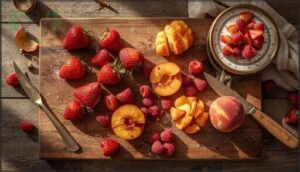
Good prep is half the battle. Before anything hits the pot, your fruit needs proper attention.
Hull strawberries, pit stone fruits, and remove stems gently. Peel and blanch peaches to slip the skins off easily. Uniform chopping size matters — half‑inch pieces cook evenly.
| Fruit | Stem Removal Techniques | Sugar-to-Fruit Ratio |
|---|---|---|
| Strawberries | Twist and hull cap | 1:1 by weight |
| Peaches | Blanch, peel, pit | 1:1 by weight |
| Raspberries | Pinch stem gently | 1:1 by weight |
Fruit weighing tips: always measure after prep. You’ll lose 30–40% during cooking, so prepare a little extra.
Cooking Methods (Stovetop, Freezer, Instant Pot)
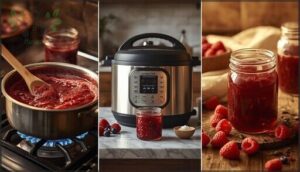
Three paths lead to perfect jam — and each one suits a different mood.
- Stovetop builds deep flavor over 40–50 minutes. Watch for foam skimming and heat control near set‑point timing (220°F).
- Instant Pot makes small‑batch jam cooking fast — pressure release takes just 15 minutes.
- Freezer jam is your no‑cook jam method — quick jam preparation in 30 minutes, no heat needed.
Achieving The Perfect Set Without Pectin
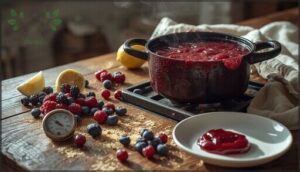
Skipping pectin doesn’t mean skipping structure. Your jam sets beautifully when Fruit Ripeness Mix, Acid Balance, and Sugar Ratio work together. These pectin‑free jam techniques rely on what’s already in your fruit.
| Element | What to Do | Why It Works |
|---|---|---|
| Fruit Ripeness Mix | Use 25% underripe fruit | Boosts natural pectin |
| Acid Balance | Add 1 tbsp lemon juice per 2 lbs | Activates gel bonds |
| Sugar Ratio | 1 lb sugar per 3 lbs fruit | Draws out moisture |
| Cooking Temperature | Reach 220°F exactly | Confirms proper set |
| Set Testing | Press chilled saucer test | Shows wrinkles when ready |
Troubleshooting Common Jam Mistakes
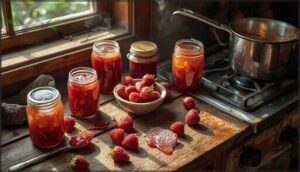
Even experienced jam makers hit bumps.
Foam skimming matters more than you’d think — skip it and your jam turns cloudy with weak jar seals.
Watch for jar seal issues caused by rim residue or cracked edges.
Overripe fruit kills your set, and overcooking effects are hard to reverse.
Sugar crystallization? Gentle reheating fixes it.
Small problems, easy fixes.
Classic Homemade Jam Recipes
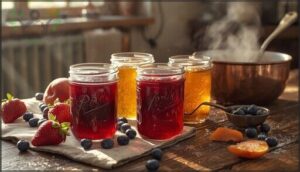
Now comes the fun part — actually making the jam.
These classic recipes are a great place to start, whether you’re new to jam making or just looking for a reliable go-to. Pick one that matches what’s in your kitchen and let’s get cooking.
Easy Strawberry Freezer Jam
Strawberry freezer jam is one of those easy homemade jam recipes that feel almost too simple to be real. No cooking, no fuss — just fresh flavor locked in.
- Crush 2 cups of berries and stir in 4 cups sugar
- Boil pectin with water for exactly one minute
- Stir vigorously for 3 minutes for perfect texture adjustments
- Freeze up to one year for excellent nutrient retention
Mixed Berry and Raspberry Jam
Mixed berry jam is where real depth of flavor begins. Combine 16 ounces of strawberries, 6 ounces of raspberries, and 6 ounces of blueberries for a berry ratio balance that’s sweet, tart, and rich.
Raspberries act as pectin alternatives, helping your mixed berry jam set naturally. This small-batch jam cooking approach means less sugar, better color retention, and a homemade mixed berry jam worth every jar — and every gift‑box presentation.
Blueberry and Cherry Jam
Blueberries and cherries are one of those flavor pairings that just work. Together, they create a deep red-purple jam with real fruit-forward richness.
This small-batch jam cooking approach keeps things simple:
- Use 2 lbs each of blueberries and cherries
- Add 4 tablespoons powdered pectin for set
- One lemon brings bright acidity
Shelf stability lasts up to one year.
Apple, Pear, and Stone Fruit Jams
From cherries, it’s a natural step to apples, pears, and stone fruits — each one a reliable pectin source that sets beautifully on its own.
Apple and pear jam comes together with just 1.5 pounds of each fruit, sugar, and lemon juice.
For stone fruit jam, use slightly underripe peaches or plums — their higher pectin levels mean better consistency without shortcuts.
Creative and Savory Jam Variations
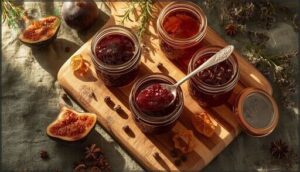
Classic jams are great, but once you’re comfortable, it’s fun to push things further.
A little herb, a roasted fruit, or a surprising savory twist can turn a simple jar into something really special.
Here are some creative variations worth trying.
Herb-Infused and Spiced Jams
Herbs and spices turn a good jam into something truly special.
rosemary apricot pairing brings pine-like warmth that feels almost fancy. Mint strawberry infusion brightens without overpowering.
Thyme bramble balance adds earthy depth to dark berries. ginger apple zest for a little kick, or a cinnamon citrus twist in orange thyme jam.
herbaceous jam variations are worth every extra step.
Roasted Fruit and Chia Seed Jams
Roasting fruit takes homemade jam recipes somewhere quietly unusual.
At 400°F, strawberries and blueberries burst into deep, concentrated sweetness — no stovetop watching needed.
That’s your roasted strawberry jam or berry chia jam base, ready in under 25 minutes.
Stir in chia seeds afterward. The chia gel ratio is simple: 1 teaspoon per 2 cups. It firms beautifully overnight.
Refrigerate up to 10 days.
Savory Tomato and Ginger Jam
Tomato ginger jam is the savory jam your cheese board didn’t know it needed. Ripe tomatoes, fresh ginger, and smart spice blends create exceptional flavor balance — sweet, tangy, and gently warm.
It’s a pectin-free jam that thickens naturally with slow cooking. Use canning techniques to preserve it year-round, and explore seasonal variations with heirloom tomatoes.
Bonus: it’s naturally gluten-free with real nutritional benefits.
Unique Fruit Combinations (Peach-Raspberry, Rhubarb)
Some fruit pairings just make sense. Peach-raspberry jam is a perfect example — sweet peach softness meets raspberry’s bright tang, creating natural Flavor Layering Techniques and stunning Colorful Jam Swirls.
Here are 5 Unique Jam Combinations worth trying:
- Raspberry Peach Jam — 3 cups peaches, 2 cups raspberries, lemon juice
- Rhubarb Jam with peach — sharp meets mellow beautifully
- Plum-raspberry for deep, wine-like richness
- Strawberry-basil for Aroma Pairing Science at its simplest
- Peach-ginger for warm Texture Contrast Balance
Storing, Serving, and Gifting Homemade Jam

You’ve made a beautiful batch of jam — now comes the fun part.
How you store it, serve it, and share it can make all the difference.
Here’s what you need to know to get the most out of every jar.
Freezer Vs. Canning Storage Techniques
Both methods work beautifully — it just depends on your kitchen and lifestyle.
Freezer jam keeps that bright, fresh flavor intact. Canning recipes offer Canning Shelf Stability without electricity, ideal for gifting.
| Feature | Freezer Jam | Canned Jam |
|---|---|---|
| Storage | Freezer Space Efficiency | Cool pantry shelf |
| Headspace Requirements | ½-inch for expansion | ¼-inch for Vacuum Seal Benefits |
| Shelf Life | 6–12 months frozen | 1+ year pantry |
| Temperature Impact | 0°F halts bacteria | Heat processing seals jars |
Choose what fits your space.
Proper Labeling and Shelf Life
A good label is your jam’s story — and its safety net. Before you gift or store a jar, take five minutes to do it right.
- Add your name and Ingredient Declaration, listing fruits by weight.
- Use Waterproof Labels so condensation won’t smudge details.
- Include Expiration Dating — two years for canned, three weeks refrigerated.
- Practice Allergen Highlighting for any added ingredients.
- Note Shelf‑Life Testing results if gifting low‑sugar versions.
Serving Ideas and Recipe Uses
Your jam deserves more than a shelf.
Spread it on sourdough for classic Breakfast Toast Pairings, or stir it into Yogurt Parfait Layers with honey and granola. For even more inspiration, these morning pairings shine brightest when you lean into fresh ingredients and seasonal produce tips — peak-ripeness fruit takes your toast and parfait from good to unforgettable.
Try it as Cheese Board Pairings — fig jam alongside brie is magic.
Use it for Baked Good Fillings, Cocktail Jam Glazes, or as ice cream toppings, and breakfast toppings your whole table will love.
Safe Gifting Tips for Homemade Jam
Gifting homemade jam is one of the sweetest things you can do — but a little care goes a long way.
- Seal verification: Press each lid center; no flex means it’s safe.
- Waterproof labeling: Include your name, date, and allergy disclosure for every recipient.
- Gift packaging: Wrap jars in bubble wrap and keep shipping temperature below 95°F.
Food safety makes the gift complete.
Frequently Asked Questions (FAQs)
What’s the easiest jam to make?
The simplest path? one-pot jam using frozen-fruit jam basics — just berries, sugar, and lemon juice.
No-cook jam and minimal-sugar jam options make starting easy, whether you try easy raspberry jam or easy mixed berry jam without pectin.
What is the secret to making jam?
The secret lies in three things: pectin balance, acid activation, and the right sugar ratio. Nail those, and your set point arrives right on cue.
Is jam better with pectin or without pectin?
Both work — it just depends on what you want.
Pectin locks in bright color and cuts cooking time dramatically. Skip it, and you get richer flavor intensity with natural sugar reduction and beautiful, chunky texture.
What are common jam-making mistakes?
Watch your overcooking temperature, avoid excessive stirring, and don’t skip insufficient pectin fixes. Improper sealing and uneven batch size ruin results fast. Small mistakes, big consequences.
How long does homemade jam last?
Good things don’t last forever — but your homemade fruit spread can come close.
Canned shelf life hits one year. Refrigerated longevity tops three weeks. Freezer storage time stretches a full year.
Can you make jam without sugar?
Yes, you can. Use low‑methoxyl pectin, chia seed thickening, or date sweetener instead. Acidic fruit balance helps it set naturally. Sugar‑free canning works well with the right technique.
Why did my jam turn moldy?
Mold means moisture found a way in.
Sterilization Errors, Seal Failure, or a poor Sugar Acidity Balance are usually the culprits.
Check your Storage Environment and practice strict Opened Jar Hygiene every time.
What causes jam to crystallize over time?
Crystallization happens when sugar supersaturation occurs — too much sugar, not enough acid. Without lemon juice, sucrose can’t invert properly.
Cooling shock and seed crystal nucleation speed up the process.
Balance your sugar, acid, and pectin-sugar interaction every time.
How do you sterilize jars properly?
Sterilize jars using the Boiling Water Method or Oven Sterilization. Boil jars 10 minutes, adjusting for Altitude Adjustments. Soak in Vinegar Soak to remove film. Prep lids separately — simmer, don’t boil.
Can I reduce sugar in jam recipes?
Sweet news — you can cut sugar, but with care.
Use low‑sugar pectin and natural sweeteners like honey or allulose for texture control.
Keep safety guidelines in mind: low-sugar jam has a shorter shelf life.
Conclusion
Like a garden that gives back what you put in, homemade jam recipes reward every bit of care you bring to them.
You’ve learned the tools, the fruit, the timing, and the little tricks that make each jar better than the last.
Now the stovetop is yours.
Pick a recipe, grab your fruit, and start cooking.
That first spoonful—warm, bright, and entirely your own—will tell you everything you need to know.