This site is supported by our readers. We may earn a commission, at no cost to you, if you purchase through links.
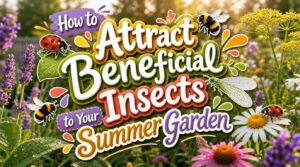
A single ladybug can wipe out 50 aphids in a day—without costing you a thing. Most gardeners spend money on sprays and treatments while the best pest control already exists in nature, waiting for an invitation. The problem isn’t a shortage of beneficial insects; it’s that most gardens don’t give them a reason to stay.
Attracting beneficial insects to your summer garden changes how the whole system works. Predators keep pests in check, pollinators boost your harvests, and your soil stays healthier without chemical interference.
A few smart plant choices and simple habitat tweaks are all it takes to bring these allies in and keep them working all season long.
Table Of Contents
- Key Takeaways
- Why Beneficial Insects Boost Summer Gardens
- Best Beneficial Insects to Attract
- Plant Nectar-Rich Summer Flowers
- Use Herbs as Insect Magnets
- Create Shelter, Water, and Nesting
- Plan Blooms From June to Frost
- Manage Pests Without Harming Allies
- Frequently Asked Questions (FAQs)
- Do bugs mourn their dead?
- What attracts flies immediately?
- What smells attract pollinators?
- What flowers attract the most beneficial insects?
- What mulches work best for beneficial insects?
- Can beneficial insects survive extreme summer heat?
- How long until beneficial insects colonize gardens?
- Do beneficial insects need supplemental feeding options?
- Which beneficial insects work well together naturally?
- How do I attract insects to a balcony garden?
- Conclusion
Key Takeaways
- A single ladybug eats up to 50 aphids a day, so building a garden that welcomes predatory insects is far more effective—and cheaper—than reaching for a spray bottle.
- Planting a mix of nectar-rich flowers like zinnias, mountain mint, and goldenrod from June through frost keeps beneficial insects fed and working all season long.
- Simple habitat additions—leaf litter, log bundles, standing stems, and a pebble-filled water dish—give beneficial insects a reason to stay, nest, and overwinter in your garden.
- Avoiding broad-spectrum pesticides and spraying only at dawn protects the predatory beetles, lacewings, and parasitoid wasps already doing the hard pest-control work for you.
Why Beneficial Insects Boost Summer Gardens
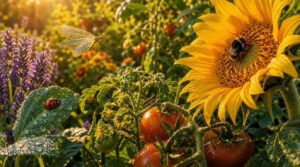
Beneficial insects are some of the hardest workers in your garden—and they show up for free. They control pests, boost pollination, and help your vegetables thrive without reaching for a spray bottle.
If you want to roll out the welcome mat for these helpers, protecting your herb garden from harmful insects is a smart first step toward building a thriving ecosystem.
Here’s why welcoming them in is one of the smartest things you can do this summer.
Natural Pest Control
Think of beneficial insects as your garden’s built-in pest control crew. Instead of reaching for a spray bottle, you can let nature handle the heavy lifting through biological control. Implement a companion planting strategy to boost beneficial insect populations.
Here’s what integrated pest management looks like in action:
- Ladybugs target aphid colonies directly
- Predatory insects like lacewings devour thrips and mites
- Parasitoid wasps eliminate caterpillars from the inside out
Better Vegetable Pollination
Beneficial insects are quiet heroes of pollination, beyond pest control. Bees, hoverflies, and butterflies visiting your nectar strips and flowering plants directly improve fruit set in squash, tomatoes, and cucumbers.
Pay attention to pollination timing and crop flower synchrony — when blooms and pollinators peak together, yields climb noticeably.
Plant row spacing matters too, ensuring clusters stay inviting and easy to navigate.
Stronger Garden Biodiversity
Pollination gains are just one piece of the picture. When you build a diverse planting scheme using native plant mixes, you’re quietly strengthening your whole garden ecosystem.
Structural habitat layers—from groundcover to shrubs—create pollinator corridors that connect feeding and nesting zones.
A healthy soil microbiome follows naturally, and with multi-season groundcover in place, beneficial insects find reasons to stay all summer.
Fewer Pesticide Needs
All that habitat diversification pays off in another big way — you’ll reach for the spray bottle far less often. When predatory insects keep aphids and caterpillars below pest thresholds naturally, targeted biological integration replaces blanket treatments.
Combine crop rotation, weekly monitoring tools, and selective sprays only when truly needed. Gardens using this approach can cut pesticide use by up to 60 percent.
Best Beneficial Insects to Attract

Not all insects are welcome in the garden, but the right ones can change everything. A small crew of natural hunters and pollinators can quietly do the heavy lifting for you.
Here are the best beneficial insects to invite in.
Ladybugs for Aphids
Ladybugs are among the reliable aphid predators you can invite into your garden. A single adult eats up to 50 aphids daily — and larvae consume even more.
Species selection matters: Hippodamia convergens works well in most North American gardens. Time your release when aphid numbers rise but before damage sets in.
Provide overwintering shelters, leaf litter, and humidity needs like moist mulch to help them stay and lay eggs nearby.
Lacewings for Soft Pests
Green lacewing larvae are tiny but fierce — each one can devour up to 400 aphids during its larval stage. They’re your garden’s quiet cleanup crew for soft-bodied pests like mealybugs, whiteflies, and spider mites.
Green lacewing larvae devour up to 400 aphids each, making them the garden’s fiercest tiny predators
To build strong lacewing habitats, focus on three key elements:
- Egg-laying sites: Keep pesticide-free borders with dense foliage nearby.
- Adult nectar sources: Plant flowering plants like dill or fennel.
- Release timing: Early morning releases in warm weather boost establishment.
Habitat connectivity between blooms and pest hotspots keeps these beneficial insects working all season.
Hoverflies for Pollination
Hoverflies — also called syrphid flies or flower flies — are among the most underrated beneficial insects in your garden. Their larvae eat aphids, while adults pollinate just as effectively as bees.
Plant continuous nectar sources like zinnias and yarrow with shallow corollas, and create warm sunny spots to build strong pollinator pathways. Color attraction matters too — they favor white and yellow blooms throughout your seasonal flower succession.
Parasitoid Wasps for Caterpillars
Tiny parasitoid wasps are silent bodyguards working deep in your garden. Through precise oviposition strategies, females lay eggs directly inside caterpillars like cabbage loopers and armyworms — host specificity ensures each species targets the right pest.
The parasitism benefits are real: larvae consume pests from within, effectively cutting leaf damage without chemicals.
Support these natural enemies by planting nectar-rich flowers for adult feeding and prioritizing habitat conservation.
Ground Beetles for Soil Pests
Ground beetles are some of the hardest-working natural predators you’ll never see — they hunt at night, patrolling soil and leaf litter for cutworms, wireworms, and slugs.
Support them with:
- A beetle bank or cover crops to keep soil moisture stable
- Pitfall traps to monitor activity
- Habitat connectivity through mulch and insect refuge zones
Soil health improvement starts below the surface.
Plant Nectar-Rich Summer Flowers
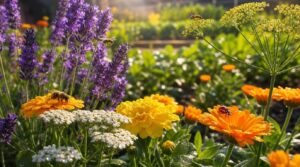
The right flowers do more than look pretty—they’re like a dinner invitation for the insects you actually want in your garden. Choosing plants that bloom from early summer through frost ensures a steady stream of beneficial insects like ladybugs, hoverflies, and parasitoid wasps working on your behalf.
These five nectar-rich flowers worth planting this season will attract and sustain these helpful allies, creating a natural pest control system while enhancing your garden’s beauty.
Zinnias for Continuous Blooms
Zinnia elegans is one of the hardest-working insectary plants you can grow. It blooms continuously from June to frost, drawing hoverflies, bees, and parasitic wasps right where you need them.
Succession sowing every two to three weeks keeps fresh flowers coming. Timing for deadheading matters—remove spent blooms regularly. Dwarf varieties fit containers well.
Maintain soil pH near 6.5 and follow a light monthly fertilizer schedule for steady, beneficial-insect-friendly blooms.
Mountain Mint for Predators
Mountain mint takes things up a notch from zinnias. Its Mint Flower Architecture — those dense, flat-topped clusters — gives small predators easy landing pads. Think of it as a dinner table built just for them.
- Extended Nectar Flow feeds beneficial predatory insects from midsummer into fall
- Mint Aroma Deterrence keeps herbivores away while predators move in freely
- Rhizome Spread Benefits and Winter Shelter Value grow your natural pest control zone year after year
Beebalm for Pollinators
Eastern beebalm brings the pollinators, contrasting with mountain mint’s predator appeal. Its tubular blooms are a hummingbird magnet, while bees crave the nectar density packed inside each flower.
Vibrant red, pink, and purple shades act as a visual beacon, drawing visitors from meters away. For optimal growth, plant in well-drained soil with good organic matter and deadhead regularly to ensure continuous blooming. With proper care, your garden will become a haven for beneficial insects.
Ironweed for Summer Nectar
If ironweed attracts pollinators from across the yard, its tall vertical display reaches up to 8 feet, forming dense clump habitats that nurture native pollinators all season. This moisture-loving plant requires minimal fertilizer once established, making it easy to maintain.
Its nectar-rich blooms offer a continuous food supply through an extended summer bloom—right into early fall.
Goldenrod for Late Support
When ironweed fades, goldenrod (Solidago spp.) steps in, offering continuous food for beneficial insects and migratory pollinator support during critical energy-gathering periods. Its extended nectar flow bridges late summer gaps, ensuring a reliable food supply. With a drought-tolerant bloom, it remains resilient during dry spells, making it a steadfast addition to your garden.
Leave seed heads standing as food through fall for birds, and you’ve built real pollinator habitat. This practice sustains wildlife during critical seasons, transforming your garden into a thriving ecosystem.
Use Herbs as Insect Magnets
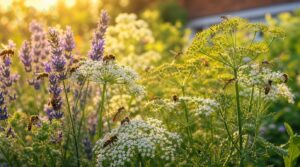
Your herb garden does more than flavor your food—it’s a magnet for beneficial insects you want most.
The right herbs draw in parasitoid wasps, bees, and predatory flies that work hard to keep pests in check.
Here’s how to put your herbs to work.
Dill and Fennel Umbels
Dill (Anethum graveolens) and fennel (Foeniculum vulgare) are workhorses for natural pest control. Their distinctive flat-topped umbels—dill’s measuring 2–4 cm, fennel’s forming a broader 6–8 cm dome—serve as recognizable floral landmarks once identified.
Both species bloom mid-season, drawing over 40 parasitoid wasp species to gardens and fields. This symbiotic relationship underscores their value in ecological pest management strategies.
Their subtle anise scent profile pulls beneficial insects reliably, simplifying the process of planting for biological control. This aromatic trait ensures consistent attraction of pollinators and predators alike.
Thyme and Oregano Flowers
Thyme and oregano punch well above their weight in a pollinator garden. Both deliver early-season nectar when bees need it most, and their small tubular blooms attract a surprising diversity of beneficial insects.
Use them as low-height edging along vegetable beds or tuck them into an herb spiral garden. Their compact growth habit makes them ideal for maximizing space while supporting pollinators.
They’re also a natural drought-tolerant pairing — culinary dual-purpose plants that earn their keep twice over. This resilience ensures they thrive with minimal water, adding both beauty and utility to sustainable gardens.
Basil Blooms for Bees
Most gardeners pinch basil back without a second thought — but letting a patch of Ocimum basilicum bloom changes everything. Basil flowering, from midsummer into early autumn, fills a key window for pollinators.
Bee-friendly basil varieties like African blue and holy basil create a genuine pollen corridor near your vegetables.
Basil nectar quality is strong enough to draw leafcutter bees, honeybees, and beneficial insects reliably.
Simple basil bloom maintenance — leaving one dedicated patch uncut — keeps that nectar source working all season.
Herb Spirals for Microclimates
An herb spiral garden is one of the smartest structures you can build for beneficial insects. Its sun exposure tiers, thermal mass core, and moisture capture zones create five distinct microclimates in one small circle — giving flowering plants for insects and native plants the right conditions to thrive all season.
- Top tier: hot and dry for thyme and rosemary
- Mid spiral: temperate for oregano — perfect for parasitoid wasps
- Lower zones: cooler moisture capture zones for chives and cilantro
- Base: shaded and moist for mint, supporting multi-season planting
The soil drainage strategy built into the spiral’s slope keeps each zone balanced without extra work.
Companion Planting Near Vegetables
Companion planting turns your vegetable beds into a working ecosystem.
Place Nitrogen-Fixing Beans near leafy greens to feed the soil naturally. Tuck Trap-Crop Nasturtiums beside tomatoes to pull aphids away. Aromatic Onion Borders confuse pests, while Marigold Pest Barriers draw predator insects like hoverflies and parasitic wasps. Add Comfrey Mulch around beds to retain moisture and boost soil life.
| Companion Plant | Primary Benefit |
|---|---|
| Dill | Attracts parasitoid wasps |
| Marigold | Draws hoverflies and beneficial insects |
| Nasturtium | Trap crop for aphids |
| Onion borders | Deters pests aromatically |
| Comfrey | Enriches soil as mulch |
Create Shelter, Water, and Nesting
Food and water bring beneficial insects in, but shelter is what makes them stay. Beyond the flowers and herbs, your garden needs a few simple physical features to support nesting, resting, and overwintering.
Here’s what to add.
Pebble-filled Water Dishes
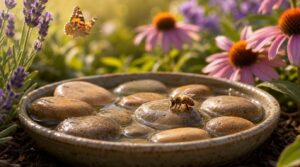
Insects need water just like you do, especially during dry summer heat. A shallow water dish with pebbles is one of the easiest beneficial insect water sources you can add to your garden. Good pebble depth design keeps water accessible without drowning small visitors.
- Use smooth river pebbles for safe footing
- Practice Seasonal Placement near blooming perennials for maximum microhabitat benefits
- Follow a Maintenance Routine — rinse weekly, check for cracks
Color Coordination with tan or gray pebbles blends naturally into any bed.
Insect Hotels Near Flowers
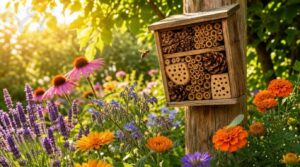
Once your water station is set, consider where beneficial insects rest.
An insect hotel corner placed 1.5 to 2 meters high, near a pollinator border with mixed blooms, provides solitary bees and lacewings with a ready home. Use natural materials like cedar and bamboo tubes for construction.
Ensure good moisture management by tilting the structure slightly to allow rainwater drainage. Seasonal cleaning maintains a healthy environment year-round.
Leaf Litter for Beetles
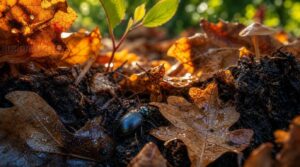
Beyond your insect hotel, don’t overlook what’s already on the ground. A simple layer of leaf litter creates surprising microhabitat complexity at soil level — offering moisture retention, beetle egg niches, and shelter for overwintering bugs.
Seasonal litter layers shift decomposition rates, supporting different ground beetle communities throughout the summer.
Leave a corner undisturbed, and beneficial insects will find it.
Log Bundles for Overwintering
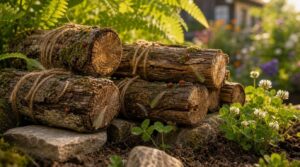
Log bundles take the idea of ground-level shelter one step further. A few decaying logs tied together with eco-friendly ties create ready-made insect refuges — sheltering lady beetle and lacewing larvae through cold months. Think of it as creating microhabitats with wood you already have.
Standard bundle design specs call for 18–24 inch lengths, stored off the ground for moisture management.
Rotate older bundles first — simple firewood rotation keeps the overwintering habitat fresh.
Standing Stems for Nesting
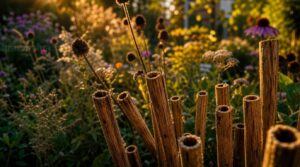
Dead flower stalks are free real estate for nesting bees. Leave perennial stems standing through winter — you’re building a Cavity Size Mosaic that fits many species at once.
- Practice Seasonal Stem Retention; don’t cut until spring nests hatch
- Vary Stem Height Variation between 8 and 24 inches
- Choose Native Stem Species from your native plant hedge row
- Use Sunlit Stem Placement when creating microhabitats for beneficial insects
Plan Blooms From June to Frost

Beneficial insects follow the food, and food has to keep coming all season long. If your garden goes quiet between blooms, those helpful visitors will move on to find better options.
A few smart plant choices can keep nectar flowing from June straight through the first frost.
Early Buckwheat Nectar
Buckwheat (Fagopyrum esculentum) is one of the fastest nectar bridges you can grow, flowering in just 4–6 weeks. Its hexose-rich nectar delivers a morning sugar surge that draws beneficial insects before vegetables bloom. Early bloom timing also provides an amino acid boost, feeding bee brood during critical pre-crop gaps.
Genotype nectar variation significantly influences seasonal bloom succession, making careful variety selection essential. Traits like nectar volume and bloom duration vary by cultivar, directly impacting pollinator support.
| Buckwheat Trait | Early Bloom Benefit | Best Practice |
|---|---|---|
| Hexose-rich nectar | Attracts pollinators fast | Plant in April |
| Morning sugar surge | Peak foraging window | Monitor sunny mornings |
| Amino acid boost | Enhances bee nutrition | Choose strong varieties |
| Early bloom timing | Fills pre-crop nectar gap | Pair with tomatoes |
| Genotype nectar variation | Affects nectar volume | Select proven cultivars |
Midseason Dill and Fennel
Once buckwheat fades, dill and fennel step in to maintain your seasonal bloom succession. Both herbs reach peak umbel production 60–90 days after sowing, so time plantings for June harvests.
Plant them in full sun with well-drained soil. Harvest dill every one to two weeks to encourage growth, and observe parasitoid wasps arrive—your garden’s most reliable pest deterrence strategy.
Coreopsis With Zinnias
Coreopsis and zinnias make a natural team for your summer garden. Their layered height design—golden coreopsis at the back, colorful zinnias upfront—creates a color contrast strategy that draws beneficial insects straight to your beds.
Both thrive in good soil drainage, bloom from June through frost, and double as cut flowers.
Together, they deliver unbroken, insect-friendly, season-long bloom without gaps.
Late Asters and Goldenrod
When summer winds down, goldenrod and New England asters take over as your garden’s final nectar sources. Their color contrast—bright yellow goldenrod beside purple asters—draws pollinators, supporting seasonal succession and pollinator migration.
With simple soil preparation and dividing clumps every few years, both plants stay vigorous.
Weaving in Stokes aster adds depth, keeping beneficial insects fed right through frost.
Avoiding Summer Nectar Gaps
A nectar gap is like a power outage for your garden’s beneficial insects—suddenly, the food supply cuts out. Avoid it by building a Pollinator Forage Calendar around Staggered Bloom Timing and Native Plant Succession.
Weave together native and seasonal blooms so each plant hands off to the next. This Nectar Corridor Design and Temporal Habitat Diversity creates a season-long bloom and steady food source from June through frost.
Manage Pests Without Harming Allies
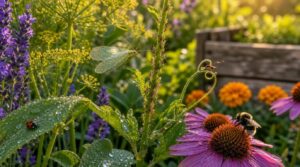
Keeping pests in check doesn’t mean you have to reach for the spray bottle every time something looks wrong. The good news is that a few smart habits can protect your plants without pushing away the insects doing good work.
Here’s what to do when pest pressure builds up.
Skip Broad-spectrum Pesticides
Broad-spectrum pesticides don’t distinguish allies from enemies — they wipe out everything. That’s a problem when you’re actively building a garden full of predatory beetles, parasitoid wasps, and lacewings.
For smarter resistance management and chemical-free, no-pesticide gardening, consider these targeted alternatives:
- Use threshold applications only when pest counts genuinely threaten your plants
- Apply targeted spot spraying instead of blanket coverage
- Maintain buffer zones around pollinator strips and beneficial insect habitat
Use Soaps Carefully
Soaps can still hurt the good guys if you’re not careful. Stick to 1–2% insecticidal soap or horticultural oil solutions—anything stronger risks harming beneficial insects. Always do leaf spot testing first and skip flower sprays entirely.
Check rain forecasts before applying and don’t spray above 90°F. These precautions ensure safety and effectiveness.
Used right, they’re solid chemical-free, organic pest control tools.
Spray During Low Activity
Dawn application works best—most beneficial insects aren’t active yet, so you protect those predator-prey relationships you’ve worked hard to build.
Use drift reduction nozzles and monitor wind speed before stepping outside.
Cool weather formulations perform well in lower temperatures.
Always check the reentry interval label before re-entering treated areas.
Identify Insects Before Treating
Knowing what you’re spraying at matters more. Before reaching for any treatment, use Mobile ID Apps like Seek by iNaturalist or Field ID Guides to confirm your suspect.
Check Damage Symptom Clues: ragged edges suggest chewers, while wilting or sticky honeydew points to suckers.
Follow a simple Sample Collection Protocol—photograph the insect alongside the damage.
Many beneficial insects, including ladybugs, predators, and syrphid fly adults, look surprisingly similar to harmful bugs at first glance.
Monitor Pest Levels Weekly
Once you’ve identified what’s in your garden, track how much of it appears each week. A Scouting Schedule keeps pest suppression on track.
- Walk each bed, check 10 plants per block, and log counts using Data Logging notes or a spreadsheet.
- Review Sticky Trap Checks and use Threshold Charts to decide if predator-prey relationships need support.
- Use Photo Documentation to spot trends early.
Frequently Asked Questions (FAQs)
Do bugs mourn their dead?
Bugs don’t mourn, but they do act fast.
Through necrophoresis behavior, ants detect the oleic acid signal from dead nestmates and remove them for colony sanitation—a simple but effective form of post-mortem care.
What attracts flies immediately?
Flies zero in fast on rotting odor cues, sugar spill scents, and moisture breeding sites.
Human breath attracts, and bright yellow traps also work.
Even fermenting fruit pulls them in within seconds.
What smells attract pollinators?
Sweet terpenes and citrus aromatics act like a dinner bell for pollinators. Lavender, basil, dill, and fennel release multi-species fragrance that draws bees and butterflies.
Temperature-driven volatiles peak on warm mornings, while night floral scent from aromatic aster guides moths after dark.
What flowers attract the most beneficial insects?
Zinnias, mountain mint, yarrow clusters, and Phacelia blooms top the list.
Gaillardia blankets, lavender spikes, coneflower, borage, and Sweet Alyssum draw diverse beneficials.
Marigold and beebalm round out a powerhouse planting lineup.
What mulches work best for beneficial insects?
Like nature’s own welcome mat, the right mulch rolls out shelter and moisture for garden allies.
Hardwood bark, straw mulch, a compost blend, or a wood-chip mix each creates habitats for insects while supporting organic gardening goals.
Can beneficial insects survive extreme summer heat?
Yes, most beneficial insects can handle summer heat by shifting activity to cooler hours and seeking moisture microhabitats.
They also rely on heat shock proteins to survive the high temperatures.
Thermal refuges like leaf litter also help these insects cope with the heat.
How long until beneficial insects colonize gardens?
Most beneficial insects arrive within 1 to 3 weeks of bloom onset latency, once soil temperature triggers consistent warmth above 59°F. Habitat proximity effect and succession of flowers speed colonization substantially.
Do beneficial insects need supplemental feeding options?
Most beneficial insects don’t need supplemental feeding if your garden has diverse blooms.
But during nectar gaps, sugar water stations or protein paste sprays give them a boost without overfeeding or disrupting balance.
Which beneficial insects work well together naturally?
Two heads are better than one — and in your garden, ladybugs and lacewings prove it. Together, these beneficial insects tackle aphids fast through natural predator complementarity.
By sharing nectar overlap zones, they maintain a balanced presence, effectively keeping pest pressure low.
How do I attract insects to a balcony garden?
Even a small balcony can welcome beneficial insects. Set up an insect hotel corner and add a water dish with pebbles to create a hospitable environment.
Arrange shallow containers with flowering groundcover strip plants across Modular Pot Arrangements to further enhance the habitat.
Conclusion
A single garden bed, planted with purpose, can become the most powerful pest control system on the planet. That’s not an overstatement—it’s ecology in action.
Attracting beneficial insects requires no chemistry degree or big budget. It simply demands the right plants, a little shelter, and consistent blooms from June to frost. Provide these allies a reason to stay, and they’ll do the hard work for you all season long.
- https://www.epicgardening.com/plants-beneficial-insects/
- https://blog.southernexposure.com/2021/05/10-plants-to-attract-beneficial-insects-to-your-garden/
- https://hort.extension.wisc.edu/articles/plant-flowers-to-encourage-beneficial-insects/
- https://www.finegardening.com/article/plants-to-attract-beneficial-insects?srsltid=AfmBOoq2yfCdvgZrrrFk54J3aZaqjPLSUR988ntJxbTAMUOSsa6QAYY9
- https://extension.psu.edu/programs/master-gardener/counties/york/native-plants/fact-sheets/attract-beneficial-insects-to-your-garden-using-these-amazing-native-pollinator-plants