This site is supported by our readers. We may earn a commission, at no cost to you, if you purchase through links.
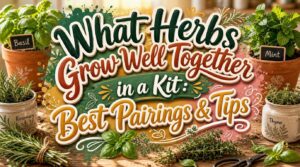
Most herb kits fail before they start—not from neglect, but from pairing the wrong plants together. Rosemary and basil look like natural roommates, but one craves dry, gritty soil while the other wilts without consistent moisture. That mismatch quietly kills both.
Knowing what herbs grow well together in a kit comes down to matching their needs: water, sun, soil, and space. Get those right, and a single container can hold a thriving, productive herb garden all season long.
Table Of Contents
Key Takeaways
- Pair herbs by matching their water, sun, and soil needs first — flavor compatibility in the kitchen means nothing if one plant is slowly killing the other.
- Three proven combos that thrive together are basil, parsley, and cilantro (moisture lovers), rosemary, thyme, and sage (drought-tolerant), and mint with lemon balm (fast-spreading tea herbs that need root barriers).
- Some herbs are bad neighbors by nature — fennel releases soil compounds that suppress nearby plants, dill can stunt basil, and mint will quietly take over any container without a physical root barrier.
- Simple daily habits like morning harvesting, regular pruning just above a leaf node, and choosing containers at least 10–12 inches deep make the difference between herbs that survive and herbs that genuinely thrive.
Best Herbs to Grow Together
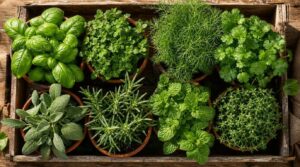
Some herbs are natural teammates — they share the same light, water, and soil needs, so they grow happily side by side without competing.
Pairing the right plants from the start makes a real difference — check out these best herbs to grow together for combinations that practically take care of themselves.
Grouping the right ones together makes your container garden easier to manage and more productive overall. Here are the pairings that consistently work well.
Basil, Parsley, and Cilantro
Regarding herb pairings that just work, basil, parsley, and cilantro form a classic trio. They share culinary synergy in the kitchen and nearly identical nutrient requirements in the pot.
- All three require consistently moist potting mix
- They thrive with 4–6 hours of daily sun
- Harvest timing aligns — prune regularly to prevent bolting
- Their flavor balance complements countless dishes
- Together, they’re ideal container herbs for companion planting
Rosemary, Thyme, and Sage
If basil, parsley, and cilantro are your moisture lovers, rosemary, thyme, and sage form a sun‑baked Mediterranean trio built for dry spells. These full-sun herb pairings thrive in gritty, well‑draining soil and require minimal watering. Their essential oil synergy enhances flavor layering in culinary blends and offers genuine medicinal benefits.
After winter pruning, all three herbs rebound vigorously. The thymol antiseptic role of thyme oil highlights its historical medicinal significance.
Oregano, Thyme, and Marjoram
Think of oregano, thyme, and marjoram as a kitchen dream team. Their aromatic profiles overlap beautifully, and the flavor synergy in culinary pairings—pizza, roasted meats, marinades—is hard to beat.
All three share a soil warmth preference, love full sun, and tolerate dry spells well. Oregano and thyme even offer medicinal properties.
Plant them together, harvest seasonally, and they’ll reward you generously.
Lavender and Rosemary
Lavender and rosemary are a natural match — both are drought-tolerant herbs that thrive in full sun and well-draining soil.
Their essential oil profiles differ (floral versus piney), but the fragrance synergy in a shared pot is genuinely lovely.
For culinary pairing and companion planting, this full sun herb combination also offers pest resistance.
Just don’t overwater — dry roots keep both happy.
Mint and Lemon Balm
Mint and lemon balm are one of those herb combinations that just work — in the cup and in the container. Mint brings menthol-driven digestive benefits, while lemon balm adds a soft citrus-mint fusion perfect for herbal tea blends.
In container gardening, use a root barrier to manage mint’s spread. Follow herb spacing guidelines of 4–6 inches, and practice seasonal harvest timing with weekly pruning.
Propagation techniques like division keep both thriving as companion planting partners.
Match Herbs by Growing Needs
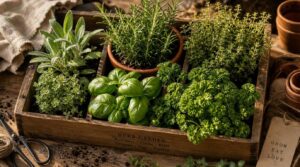
Getting herbs to thrive together starts with one simple rule: match their needs before you match their flavors. Sun, water, and soil habits have to line up, or one herb will always struggle at the expense of another.
Before matching flavors, match needs — sun, water, and soil must align or one herb will always suffer
Here are the five growing factors worth checking before you plant anything side by side.
Before you start pairing plants, it helps to know when and how to harvest herbs for the best flavor—timing and technique can vary a lot depending on what’s growing nearby.
Same Sunlight Requirements
Sunlight is where most mixed herb kits go wrong. Full sun herb pairings like rosemary, thyme, and basil need at least six hours of direct light daily — that’s your full sun match. Grouping them respects their sun exposure requirements naturally.
Partial shade herb pairings, like mint with lemon balm, suit softer sun exposure zones.
Light intensity matching keeps everyone thriving without competition.
Similar Watering Frequency
Watering schedule sync is where container herb kits quietly succeed or fail. Group herbs by how thirsty they are — rosemary and thyme can wait; cilantro and parsley can’t. Use a moisture meter at 1–2 inches deep to stop guessing.
- Match herbs with consistent moisture needs in one pot
- Use mulch to retain moisture and slow surface drying
- Account for the impact of pot material — terracotta dries faster
- Adjust for seasonal changes in water needs during heat waves
Compatible Soil Texture
Soil texture is the silent factor that makes or breaks a mixed herb kit. Get it wrong, and even perfectly matched sun and water schedules won’t save your plants.
| Herb Group | Best Texture | Avoid |
|---|---|---|
| Rosemary, Sage | Sandy loam | Clay loam |
| Parsley, Cilantro | Loam blend | Sandy loam |
| Mint, Lemon Balm | Silty loam | Well-draining soil |
Texture matching starts with your soil mix composition. Mediterranean herbs need sand or pine bark fines for improved drainage, while moisture-lovers prefer a loam blend with slower drainage. Don’t mix these groups — one pot, one texture.
Shared Soil PH Range
Think of soil pH as the dial that controls what nutrients your herbs can actually use. Most culinary herbs share a sweet spot between 6.0 and 7.5 — that’s your plant compatibility window.
Within this range, phosphorus, calcium, and magnesium remain accessible, supporting healthy soil fertility.
Test your soil mix composition before planting using a simple home kit. Then apply lime adjustment strategies if needed to shift acidic readings toward ideal pH levels.
Balanced Growth Habits
Growth habit compatibility is what separates thriving herb kits from struggling ones. Fast spreaders like mint will crowd out slower herbs if you’re not paying attention. Build your container around these three habits:
- Consistent Routines for watering and pruning
- Prioritized Rest — let soil dry between waterings
- Reflective Review to catch overcrowding early
Herbs grow well together when their pace matches.
Container Kits for Herb Groups
Once you know which herbs like the same conditions, building a kit around them gets much easier. The key is choosing a container setup that matches the group — not the other way around.
Here are five herb kit ideas worth putting together.
Moisture-Loving Herb Kit
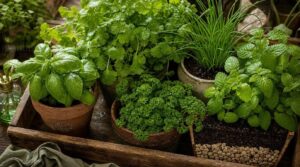
If you want herbs that don’t stress you out, a moisture-loving kit is your starting point. It keeps consistent moisture steady without waterlogging — pairing basil, cilantro, parsley, chives, and lemon balm beautifully through smart soil moisture management.
| Herb | Care Tip |
|---|---|
| Basil | Prune weekly for air circulation |
| Cilantro | Tray management prevents spills |
| Parsley | Fertilizer schedule every 3–4 weeks |
| Chives | Best shelf placement near bright windows |
Fungal prevention starts with good drainage and regular harvesting.
Mediterranean Herb Kit
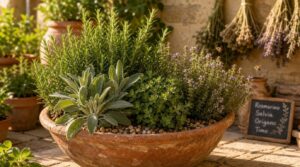
Mediterranean herbs like rosemary, sage, oregano, and thyme thrive together because they share the same dry-soil preference. Switching from moisture-loving herbs, these varieties grow better in conditions that mimic their native environment.
Build a DIY soil mix with sand or perlite to create ideal drainage. This approach not only supports their growth but also naturally integrates flavor pairings and pest repellence into your garden design.
Harvest scheduling is simple: wait until the soil feels bone-dry, then trim. This method ensures optimal flavor concentration while respecting the herbs’ natural cycles.
Tea Herb Kit
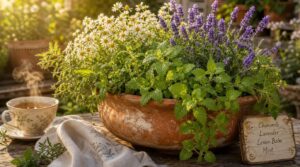
From Mediterranean to mellow — a tea herb kit is a different kind of garden. Fill your container herb garden with chamomile, lavender, lemon balm, and mint.
These herbs share moist, well-drained soil and steady sunlight. Mint and lemon balm grow fast, so use a root barrier to manage their spread.
Dry harvests slowly for better shelf life, and match brewing temperatures to each herb’s flavor pairings and health benefits.
Pizza Herb Kit
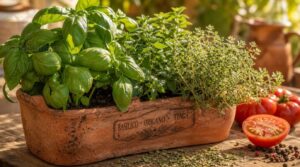
If tea herbs bring calmness, pizza herbs are your weeknight win. A pizza herb kit provides your container garden with basil, oregano, and thyme—herb combos that grow better together.
Italian Genovese Basil leads with a sweet aroma boosting warmth, while oregano and thyme add depth to the blend. These herbs thrive synergistically, enhancing both growth and flavor when cultivated as a trio.
Monitor harvest timing closely, apply the nutrient solution as directed, and maintain temperature control steadily around 20–22°C. Enjoy the portability options to optimize sunlight exposure, ensuring vibrant, flavorful yields.
Compact Kitchen Herb Kit
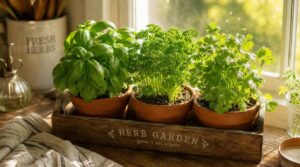
Most home cooks already have these three on their grocery list — basil, parsley, and cilantro. Grouping them in one compact kitchen herb kit is smart container gardening.
They share the same sun, water, and soil needs, making companion planting easy.
- Shelf placement near a south-facing window gives all three 6–8 hours of light
- Aromatic pairing adds fresh scent and flavor right where you cook
- Growth monitoring is simple since all three grow at a similar pace
- Herb rotation keeps harvests going — snip often to prevent bolting
Herbs to Keep Separate
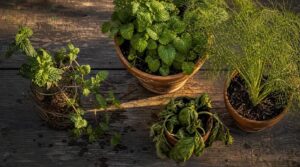
Not every herb plays nicely with its neighbors. Some spread too aggressively, compete for moisture, or quietly sabotage the plants beside them.
Here are the ones worth keeping in their own corner.
Mint Needs Root Barriers
Mint looks harmless at first, but its aggressive roots can travel up to two meters in a single season. That’s why root barriers are non-negotiable in container gardening.
For mint and lemon balm, bury a barrier at least 12 inches deep and choose smooth HDPE or thick plastic for material selection. Install barriers early — installation timing matters more than you’d think.
Check regularly for escaping roots.
Fennel Grows Alone
Fennel is a loner by nature — and for good reason. Its allelopathic inhibition releases compounds into the soil that suppress almost every herb you’d want nearby, making companion planting with fennel a losing game.
Its tall stature, aggressive self-seeding, and cool temperature preference further ensure it doesn’t play well with others. These traits collectively hinder harmonious growth alongside other plants.
Give fennel its own pot and focus on bulb development there.
Rosemary Dislikes Wet Soil
Rosemary is built for drought — pair it only with fellow drought-tolerant herbs like sage in companion planting setups. Wet roots are its biggest enemy, causing rot quickly.
Use aerated soil with perlite, prioritize soil drainage improvement, and try container elevation to shed excess moisture.
Skip moisture monitoring tools here; just let the well-draining soil do its job.
Lavender Needs Dry Conditions
Lavender thrives on neglect — the good kind. It requires full sun hours (at least 6–8 daily) and well-draining soil that sheds water quickly.
Deep soaking every 2–4 weeks surpasses frequent watering. A light mulch strategy helps maintain cool roots without trapping excess moisture.
Avoid pairing lavender with thirsty herbs. Lavender and sage, both drought-tolerant herbs, make ideal companions.
Dill Can Stunt Basil
Dill looks harmless, but its quietly competitive nature manifests through allelopathic suppression. Its roots release growth-inhibiting compounds that can slow basil’s growth noticeably.
Tall dill foliage adds light shading, reducing basil’s sunlight intake, while warm spells accelerate bolting acceleration, further stressing basil. To mitigate these effects, maintain 12–18 inches of spacing between the plants.
Dill’s proximity causes the following effects:
- Triggers allelopathy in herbs through root exudates
- Causes aroma blending that shifts basil’s essential oil profile
- Creates light shading that reduces basil’s sun intake
- Drives insect attraction that benefits dill more than basil
- Speeds bolting acceleration during heat, cutting basil’s yield short
Care Tips for Mixed Herb Kits
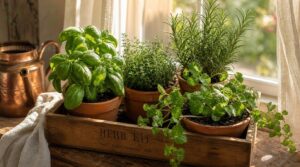
Getting your herb pairings right is only half the work. How you care for them day-to-day decides whether they thrive or just survive.
A few simple habits make all the difference.
Choose Deep Containers
For mixed herb kits, pot depth matters more than most gardeners expect. A container at least 10–12 inches deep gives your herbs real root zone expansion, which means better nutrient uptake and moisture buffering between waterings. Large pots also offer weight stability for tall herbs like rosemary.
Terracotta provides thermal insulation, keeping roots cooler.
Pair any pot size selection with well-draining soil and a quality potting mix composition.
Add Drainage Holes
Good soil drainage starts at the bottom of your pot. Aim for three to five drainage holes, following even hole placement patterns across the base.
Hole size selection matters too — around ¼ to ½ inch keeps your potting mix composition intact without clogging.
Add an inch of gravel as a drainage layer material for clog prevention.
That’s smart water management from day one.
Space Herbs Properly
Now that your container drains well, think of spacing as your herb garden design blueprint. Leave at least 6 inches of airflow clearance between plants — this keeps light zoning balanced and cuts disease risk fast. A basic spacing grid works wonders.
For herb intercropping in pots or containers 12 inches wide, consider vertical stacking to manage plant growth habits and protect root volume.
Prune for Bushy Growth
Spacing sets the stage — now pruning keeps the show going. When you snip a stem tip, you break apical dominance, pushing the plant to sprout two or three side shoots instead of one tall leader. Use pruning shears and make heading cuts just above a leaf node.
Follow these pruning techniques for herbs that grow well together:
- Pinch basil tips weekly to encourage bushiness
- Trim rosemary lightly — light summer pruning prevents woody legginess
- Cut thyme back by a third each spring for seasonal timing
- Use sharp tools to avoid crushing stems
- Apply after‑pruning care: water lightly and skip fertilizer for a few days
Harvest Leaves Often
Harvest leaves in the morning, right after the dew dries. That’s when essential oil content peaks — meaning better flavor, stronger scent, every time. Always leave at least one-third of the plant intact for fast regrowth.
| Herb | Best Harvest Timing |
|---|---|
| Basil | Morning, before flowering |
| Cilantro | Early morning, young leaves |
| Thyme | After dew dries |
| Parsley | Morning, outer stems first |
| Mint | Before bloom spikes form |
Frequently Asked Questions (FAQs)
What herbs can be planted together in a box?
You could fill an entire garden with the wrong pairings.
Instead, keep it simple: basil, parsley, and cilantro share moisture needs beautifully, while rosemary, thyme, and sage form a drought-tolerant trio that practically thrives on neglect.
Can herbs in kits attract beneficial garden insects?
Yes, they absolutely can. Herb kits double as pollinator corridors and aromatic trap crops. Basil, thyme, and mint attract bees, hoverflies, and predatory wasps through nectar timing and scent — turning your kit into a beneficial insect magnet.
Which herbs improve flavor of nearby vegetables?
Some herbs do more than look pretty next to vegetables.
Basil boosts tomato flavor through Aroma Transfer Mechanism, while cilantro brings Cucumber Dill Enhancement vibes.
Flavor synergy is real — companion planting benefits your whole garden.
Do terracotta pots work better for certain herbs?
Terracotta pots genuinely shine for Mediterranean herbs. Their breathable walls support root aeration, natural soil drying cycles, and pot temperature regulation —
giving rosemary, thyme, and sage the essential oil boost they need through steady breathable moisture control.
Can aggressive herbs ever share a container safely?
Yes, aggressive herbs can share a container safely — but only with the right setup. Root Zone Management is the key.
A tall root barrier around mint or lemon balm stops rhizome spread cold.
Which herbs bolt fastest in warm weather conditions?
Cilantro bolt speed tops the list — it can flower in just 18 days above 80°F. Basil heat bolt, dill rapid bolting, and parsley fast bolting follow close behind in warm weather.
Conclusion
Think of your kit as a small neighborhood—the plants that share space need to share values. When you match herbs by water, sun, and soil, you’re not just gardening. You’re building something that works together.
Knowing what herbs grow well together in a kit is the difference between a container that thrives and one that quietly falls apart.
Get the pairings right, and your herbs won’t just survive the season—they’ll carry it.
- https://www.almanac.com/content/companion-planting-herbs
- https://scottsmiraclegro.com/en-us/learn/gardening/best-container-plant-combinations.html
- https://journeywithjill.net/gardening/2023/05/03/companion-planting-herbs-in-containers/
- https://kellogggarden.com/blog/gardening/companion-plants-for-herbs-in-pots/
- https://blog.gardenuity.com/herbs-to-plant-together/