
This site is supported by our readers. We may earn a commission, at no cost to you, if you purchase through links.

Fresh basil costs $4 a bunch at most grocery stores, and it’s dead within three days. Grow it yourself, and you’re clipping leaves straight into pasta water for months from a single $3 pod.
That math alone converted a lot of apartment kitchens into mini herb gardens—no backyard required.
The problem is picking the right setup when you’re working with 12 inches of counter space and a landlord who’d notice a single nail hole.
Some kits run quietly in the background and practically grow herbs for you; others demand more attention than they’re worth.
The eight options ahead sort that out.
Table Of Contents
- Key Takeaways
- Top 8 Apartment Herb Growing Kits
- 1. Click and Grow Indoor Smart Garden
- 2. GooingTop Clip LED Grow Light
- 3. AeroGarden Harvest Lite Indoor Hydroponic Garden
- 4. Back to the Roots Aquaponic Garden
- 5. Lettuce Grow Farmstand Nook Hydroponic Tower
- 6. Gardyn Home 4 Vertical Hydroponic Garden
- 7. iDOO Indoor Hydroponic Garden Kit
- 8. Rise Gardens Personal Indoor Hydroponic Garden
- Best Kits by Apartment Space
- Key Buying Factors
- Smart Features Worth Paying For
- Growing Herbs Successfully Indoors
- Frequently Asked Questions (FAQs)
- Conclusion
Key Takeaways
- Growing your own herbs from a $3 pod beats paying $4 for a grocery store bunch that dies in three days — the savings stack up fast once you make the switch.
- The right kit depends on your actual space: countertop systems like the Click and Grow suit tight kitchens, while vertical towers like the Lettuce Grow Farmstand pack 20 plants into a floor‑lamp footprint.
- Smart features worth paying for include automated light schedules and water-level alerts — they’re the difference between herbs that thrive and ones you forget about until it’s too late.
- Pruning above a leaf node and harvesting no more than a third of the plant at once keeps your herbs producing longer and tasting better all season.
Top 8 Apartment Herb Growing Kits
Not every herb kit is built for apartment life, so the options below are picked with small spaces and busy schedules in mind. Each one brings something different to the table — from compact countertop pods to vertical towers that grow a dozen herbs at once.
If you’re just getting started, this roundup of herb growing kits for beginners breaks down what to look for before you buy.
Here are the eight best kits worth your attention.
1. Click and Grow Indoor Smart Garden
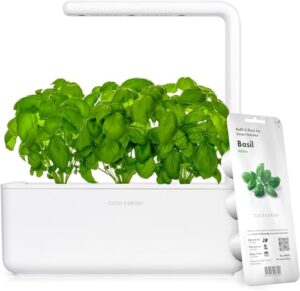
The Click and Grow Smart Garden 3 is about as close to foolproof as indoor herb growing gets. You drop in the pre‑seeded pods, plug it in, and the built‑in LED runs a 16‑hour light cycle automatically, with no timers to set.
The patented Smart Soil controls nutrients and pH on its own, so you’re not mixing anything. Refill the reservoir every two to three weeks, and your basil stays happy.
Compact and silent — perfect for a kitchen counter.
| Best For | Anyone who wants fresh herbs at home but doesn’t want to fuss with soil, fertilizer, or complicated grow setups — great for beginners, busy people, and classroom use. |
|---|---|
| Plant Capacity | 3 pods |
| Grow Light | LED, 16hr timer |
| Watering System | Passive capillary wicking |
| Price (USD) | $124.95 |
| Target User | Beginners/seniors |
| Indoor Use | Yes |
| Additional Features |
|
- The Smart Soil handles nutrients and pH automatically, so there’s genuinely nothing to mix or measure.
- Silent and compact — it fits on a kitchen counter or desk without getting in the way.
- Works year-round, giving you fresh, pesticide-free herbs no matter the season.
- You can only grow three plants at a time, which feels limiting if you want more variety.
- The light timer can’t be set to specific hours — resetting it means unplugging, which can leave it running at odd times.
- Some users report occasional mold in the Smart Soil, and not every seed pod is guaranteed to sprout.
2. GooingTop Clip LED Grow Light
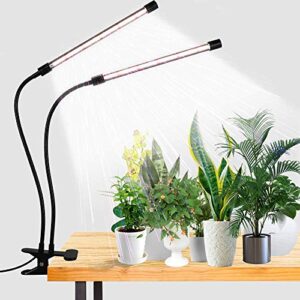
Not every apartment needs a full hydroponic system. Sometimes you just need a little extra light over a struggling basil plant on your windowsill — and that’s exactly where the GooingTop Clip LED Grow Light earns its spot.
Clip it to a shelf edge, bend the gooseneck toward your herbs, and you’re done. Its 84 LEDs at 6000 K mimic natural daylight closely. At only 10 W, it costs roughly $2 a month to run on a 12-hour cycle.
| Best For | Anyone who just needs a simple, affordable light boost for a few small houseplants or a windowsill herb garden — no complicated setup required. |
|---|---|
| Plant Capacity | Not applicable |
| Grow Light | 84 LED, adjustable timer |
| Watering System | Manual/external |
| Price (USD) | Not listed |
| Target User | Hobbyists/beginners |
| Indoor Use | Yes |
| Additional Features |
|
- The built-in timer handles the on/off routine for you, so your plants get consistent light without any daily effort.
- At around $2 a month to run, it’s about as cheap as grow lights get — and the USB power option makes it even more flexible.
- The clamp-and-gooseneck setup takes seconds to adjust, so you can aim the light exactly where it’s needed.
- The clamp opening is pretty narrow, so it won’t grip thicker shelves or trays without a fight.
- If the power cuts out, the timer resets — which means you might need a separate plug-in timer to keep things on schedule.
- Ten watts is fine for a basil plant, but don’t expect it to carry anything bigger or a whole shelf of greenery.
3. AeroGarden Harvest Lite Indoor Hydroponic Garden
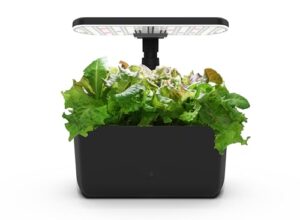
If the GooingTop gave your herbs a boost, the AeroGarden Harvest Lite takes things up a level — it’s a full self-contained system, not just a light add-on.
Six pods sit in a compact deck, and a 15W full-spectrum LED manages germination up to five times faster than soil. The automatic 15-hour timer runs itself. Just watch your water level indicator and add nutrients when prompted. Simple, quiet, and honest about what it is.
| Best For | Anyone new to indoor growing who wants a low-fuss, all-in-one setup that fits on a kitchen counter or desk. |
|---|---|
| Plant Capacity | 6 pods |
| Grow Light | Full-spectrum LED, 15hr timer |
| Watering System | Automatic pump circulation |
| Price (USD) | Not listed |
| Target User | Beginners/apartment dwellers |
| Indoor Use | Yes |
| Additional Features |
|
- Grows up to six plants at once with no soil, no mess, and very little daily attention required.
- The automatic light timer and water pump handle most of the work for you — set it and mostly forget it.
- Compact enough for apartments, dorms, or small offices where traditional gardening just isn’t an option.
- Seeds, pods, and liquid nutrients are all sold separately, so the startup cost adds up fast.
- The built-in timer has been known to stop working after a few months, which means babysitting the light manually.
- Plants top out at about 12 inches, so anything that grows tall — think full-size tomatoes or peppers — won’t have enough room.
4. Back to the Roots Aquaponic Garden
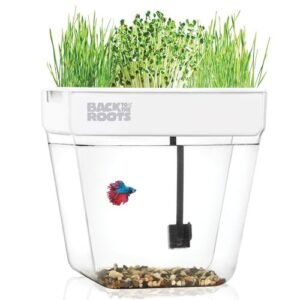
The AeroGarden runs clean and efficient, but here’s something different — a tiny ecosystem you can actually watch work.
The Back to the Roots Aquaponic Garden pairs a 3-gallon fish tank with three grow trays on top. Fish waste feeds the plants; plant roots help filter the water. Radish microgreens and wheatgrass are ready in 7–10 days. It’s compact, countertop-ready, and doubles as a conversation piece. Just know the tank is small, so fish care needs attention.
For the best flavor from your microgreens, harvest herbs at peak morning freshness right after the dew dries but before the midday heat sets in.
| Best For | Beginners, kids, and anyone who wants a low-maintenance living setup that’s equal parts functional and fun. |
|---|---|
| Plant Capacity | 3 trays |
| Grow Light | No built-in light |
| Watering System | Continuous-cycle pump |
| Price (USD) | $85.00 |
| Target User | Educators/beginners |
| Indoor Use | Yes |
| Additional Features |
|
- A real closed-loop system — fish feed the plants, plants clean the water
- Microgreens are ready in 7–10 days, so you see results fast
- Compact enough for a kitchen counter and comes with almost everything you need to get started
- At 3 gallons, the tank is a bit small for a betta to truly thrive
- The pump runs continuously and can hum loud enough to notice in a quiet room
- No heater or light included, and replacement parts can be hard to track down
5. Lettuce Grow Farmstand Nook Hydroponic Tower
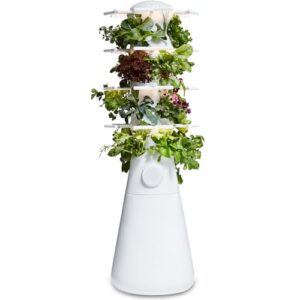
The Lettuce Grow Farmstand Nook is the rare indoor garden that actually earns its counter — or rather, its floor. Standing nearly 4.5 feet tall with a footprint under 4 square feet, it fits where a floor lamp would.
It holds 20 plants across four levels and cycles nutrient solution automatically. You can harvest leafy greens in about 3 weeks.
The built-in LED grow lights and smart timer handle the heavy lifting, so your weekly effort stays around 15 minutes.
| Best For | Apartment dwellers, busy home cooks, or beginners who want fresh greens without the fuss of a traditional garden. |
|---|---|
| Plant Capacity | 20 plants |
| Grow Light | Full-spectrum LED, smart timer |
| Watering System | Integrated water pump |
| Price (USD) | $599.20 |
| Target User | Busy professionals |
| Indoor Use | Yes |
| Additional Features |
|
- Harvest ready in about 3 weeks — you’re eating what you grew faster than most houseplants even settle in.
- Practically runs itself: the smart timer handles lighting and watering, so you’re only spending around 15 minutes a week.
- Tiny footprint (under 4 sq ft) means it actually fits in a real apartment without rearranging your life.
- $599 upfront is a real commitment, and nutrient cartridges keep the costs rolling after that.
- PH balancing has a learning curve — some users go through a fair bit of trial and error before things stabilize.
- Customer support has been hit or miss, and a few buyers got their tower without the promised seedlings and had trouble getting help.
6. Gardyn Home 4 Vertical Hydroponic Garden
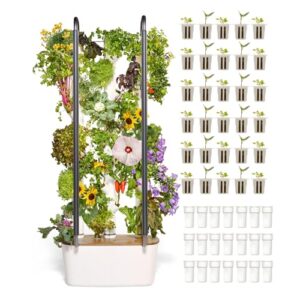
The Gardyn Home 4 packs 30 plants into 2 square feet — that’s a serious harvest in the space of a doormat. It’s a vertical hydroponic tower with full-spectrum LEDs, automatic watering, and an AI plant coach named Kelby that sends care tips to your phone.
The catch? It costs $718 upfront, plus an optional $28–$39 monthly subscription. Wi-Fi pairing is 2.4 GHz only, and some users found the cleaning routine genuinely tedious.
| Best For | People who want a serious indoor garden but don’t have much space — especially beginners, apartment dwellers, or anyone who’s killed every plant they’ve ever owned. |
|---|---|
| Plant Capacity | 30 yCubes |
| Grow Light | LED, 16hr sunrise/sunset |
| Watering System | Automatic reservoir cycling |
| Price (USD) | $718.00 |
| Target User | Beginners/schools |
| Indoor Use | Yes |
| Additional Features |
|
- Grows up to 30 plants in just 2 square feet, so it fits almost anywhere
- Automated watering and AI coaching take the guesswork out of keeping things alive
- Uses about 95% less water than traditional soil gardening
- The upfront cost is steep at $718, and a monthly subscription stacks on top of that
- Wi-Fi only works on 2.4 GHz networks, and pairing can be frustrating
- Cleaning the system means disassembling everything and soaking parts — not exactly a quick rinse
7. iDOO Indoor Hydroponic Garden Kit
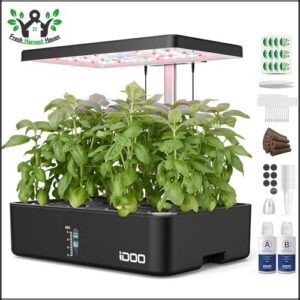
The iDOO 12-Pod Hydroponic Kit is the no-fuss option for apartment herb growing. It runs two light modes — one for leafy greens, one for flowers — on an automatic 12-hour cycle, so you don’t have to think much.
The 4.5 L reservoir lasts about two weeks before a refill. Just note the light arm tops out at 11 inches, so stick to basil, arugula, or lettuce — not tomatoes.
| Best For | Apartment dwellers, students, or beginners who want fresh herbs and greens on the counter without any gardening experience. |
|---|---|
| Plant Capacity | 12 pods |
| Grow Light | 22W LED, 12hr timer |
| Watering System | Low-noise aeration pump |
| Price (USD) | Not listed |
| Target User | Indoor gardeners |
| Indoor Use | Yes |
| Additional Features |
|
- Two preset light modes handle the timing for you — just set it and let it run.
- The 4.5 L tank only needs a top-off every week or two, so it’s low maintenance.
- Grows herbs like basil, lettuce, and arugula about 20% faster than soil, with no outdoor space needed.
- The light arm maxes out at 11 inches, so taller plants like tomatoes are a no-go.
- No smart features — you’ll have to eyeball the water level yourself, and LED burnout around the 6-month mark has been a common complaint.
- Nutrient solutions and replacement pods add up over time, making it pricier than it looks upfront.
8. Rise Gardens Personal Indoor Hydroponic Garden
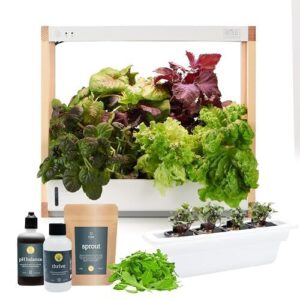
Rise Gardens takes a different approach — it grows up to 12 plants at once using a vertical, multi-tray design that stacks upward instead of spreading across your counter. Full-spectrum LEDs sit above each tray level, so every plant gets decent light without shading its neighbor. The built-in pump circulates nutrient solution continuously, feeding roots directly.
Assembly takes 30–60 minutes, and the app manages reminders for watering and nutrients. Good pick if you want serious capacity in a small footprint.
| Best For | Anyone who wants to grow a solid variety of herbs or greens indoors year-round, especially beginners with limited counter space who don’t mind a little tech help from an app. |
|---|---|
| Plant Capacity | 8–12 pods |
| Grow Light | Full-spectrum LED, auto timer |
| Watering System | Hydroponic reservoir |
| Price (USD) | $349.00 |
| Target User | Beginners/apartment dwellers |
| Indoor Use | Yes |
| Additional Features |
|
- Grows up to 12 plants at once, so you can keep a real mix of herbs and greens going at the same time.
- The Smart Care app takes the guesswork out of feeding and watering, which is great if you’re new to this.
- Compact footprint for the capacity — it stacks up instead of spreading out, so it fits in most kitchens.
- Connectivity problems (Wi-Fi drops, app crashes) are common enough that you should expect some troubleshooting.
- Mold can build up around the reservoir if you’re not on top of cleaning — and when it does, it’s a pain to deal with.
- You’re locked into proprietary nutrient cartridges, which adds to the ongoing cost and limits your options.
Best Kits by Apartment Space
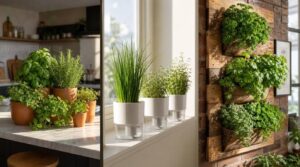
Your apartment’s layout matters more than you’d think when choosing an herb kit. Whether you’ve got a generous counter, a sliver of windowsill, or just vertical wall space, there’s a setup built for exactly that. Here’s how the best kits stack up by space type.
Countertop Herb Gardens
Your kitchen counter is prime real estate — and a countertop herb garden uses every inch of it smartly. Most kits occupy under two square feet and include a self-watering reservoir that needs refilling roughly every two weeks.
Pair that with built-in LED grow lights running 12–16 hours daily, and you’ve got fresh basil or cilantro growing without a single window.
Herbs thrive when they receive six hours of direct sunlight.
Windowsill-friendly Setups
A windowsill isn’t wasted space — it’s a growing zone waiting to be activated.
Compact LED fixtures running 8 to 12 hours daily fill in where natural light falls short. Look for light tilt brackets that angle 15 to 25 degrees for even coverage. Pot drainage holes are non‑negotiable; waterlogged roots fail fast. Keep humidity between 40 and 60 percent with gentle airflow to prevent mold.
Vertical Garden Towers
When your windowsill runs out of room, go up instead of out. A hydroponic tower like the Lettuce Grow Farmstand Nook stacks plants vertically — up to 36 herbs within a compact floor-lamp footprint.
Its modular design lets you add tiers as your collection grows. Tower water delivery pumps nutrient solution from the base reservoir upward, feeding every level automatically.
Small Kitchen Layouts
Towers solve the "no space" problem brilliantly — but small kitchens have their own rules. Here, work triangle efficiency matters.
Keeping your herb kit within three feet of the sink cuts prep time and keeps your workflow tight. A countertop kit under two square feet slots in without crowding the 36-inch aisle clearance you need to move comfortably.
Renter-friendly Placement Ideas
Renters play by different rules. You can’t drill into walls or leave permanent marks — so flexible shelving options and portable cart placement become your best friends. A rolling cart with locking wheels lets you slide your modular garden system out for watering, then tuck it back in seconds.
Here are five placement ideas that work without touching a single wall:
- Rolling kitchen cart near the window — movable and damage-free
- Freestanding shelf unit with vertical wall-mounted designs for visual height
- Windowsill-width cart sized for compact design kits under 18 inches deep
- Corner floor placement with airflow space planning — keep six inches clearance on all sides
- Bookshelf herb station using decor integration ideas like chalkboard tags and neutral-toned pots
One thing renters often overlook: quiet pump positioning. Place hydroponic kits on anti-vibration pads away from bedrooms. A hum at midnight gets old fast. Space-saving indoor garden kits designed for small apartments fit this lifestyle perfectly — no lease violations, no hassle.
Key Buying Factors
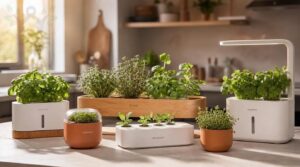
Not every herb kit is worth your counter space—or your money. Before you buy, a few practical specs will tell you more than any marketing blurb ever could. Here’s what actually matters when you’re comparing your options.
LED Spectrum and Wattage
The light your kit uses matters more than most people think. Full-spectrum LEDs covering 400–700 nm hit the exact wavelengths herbs need to photosynthesize properly.
Look for kits in the 20–28 W range — enough intensity without spiking your electricity bill. A color temperature of 3000K–4000K works well for leafy herbs like basil.
Dimmable controls let you dial back intensity for seedlings, which prevents early burnout.
Pod Capacity and Spacing
Pod count shapes what’s possible in your kitchen. Compact kits start at 3 pods, but most countertop units hit 12. If you want basil, mint, and parsley going at once, that range covers you comfortably.
Spacing between pods — usually 2.5 to 4 inches — matters just as much. Tight spacing causes leaf overlap and uneven light. A modular, expandable pod system lets you scale up without replacing the whole unit.
Reservoir Size
Reservoir size shapes how often you’re hovering over your kit with a watering can. A 4 L self-watering reservoir needs refilling every two weeks. Jump to 8 L, and you’re looking at roughly once a month.
Bigger water tank volume also means better temperature stability and system resilience when you forget — which you’ll.
Pump Noise Level
Apartment walls are thin, and a humming pump at midnight is nobody’s idea of zen. Look for a quiet pump rated at ≤ 40 dB — that’s roughly library-quiet. Most quality kits cycle 30 minutes on, 30 minutes off, which keeps noise minimal.
Here’s what actually helps:
- Vibration dampening pads under the unit cut transmitted hum dramatically
- Flexible tubing absorbs pump pulsations before they rattle your countertop
- Energy-efficient pumps run cooler and quieter than older motor designs
Height Adjustability
Your herbs don’t stay small forever — and neither should your light. Adjustable light height is a must-have.
Most kits offer an adjustable light arm that raises 6–20 inches as plants grow, preventing leaf burn. Some premium models include height memory presets so you’re not guessing. Without it, you’re constantly improvising — and your basil will notice.
Smart Features Worth Paying For
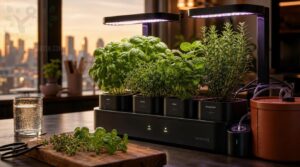
Not every smart feature is worth the extra cost — but some genuinely make the difference between thriving herbs and a forgotten experiment on your counter. The right tech takes care of the tedious stuff so you can focus on actually cooking with what you grow. Here are the features that earn their place.
Automated Light Schedules
Think of automated light schedules as a silent gardening partner. Once set, your kit manages the daily rhythm so you don’t have to.
- Timer programming turns lights on and off automatically — no daily guesswork
- The sunrise-sunset feature gently ramps light up and down, reducing plant stress
- Seasonal adjustments let you shift timing as days shorten or lengthen
- RTC accuracy keeps your schedule rock-solid even after power blips
App-connected kits save up to 30% on energy by cutting lights the moment they’re not needed.
Water-level Alerts
Running out of water mid-cycle is a quiet herb killer. That’s why water-level alerts are worth every penny.
Sensors near the reservoir bottom detect drops and trigger a water shortage alarm before roots go dry.
Most kits push instant notifications through a plant monitoring app, so you catch the problem from anywhere.
Refill promptly — roots exposed to air for even a few hours won’t recover.
App-based Plant Reminders
Water-level alerts keep your roots safe — and app-based plant reminders keep your whole routine on track.
Custom schedules let you set pruning, feeding, and light adjustments per plant. Plant profiles store species-specific needs and attach notes or photos. Push notifications land right on your phone, so nothing slips. It’s quiet home automation for plants that actually fits apartment life.
Seed Pod Subscriptions
Seed pod subscriptions take that hands-off approach even further. Instead of hunting store shelves, you get curated herb pods delivered on a schedule you control — monthly, quarterly, or paused whenever life gets busy.
Many services rotate seasonal varieties, so your kitchen stays interesting. Fresh seeds with guaranteed germination rates mean less guesswork and fewer failed sprouts.
Nutrient Dosing Systems
Nutrient dosing systems are the quiet engine behind consistent growth.
Automated nutrient dosing removes the guesswork entirely — peristaltic pumps deliver precise amounts of solution directly to roots, with tolerances as tight as 1–5 percent. Pair that with EC pH control, and your herbs stay in the sweet spot between 5.5 and 6.5 pH, where they actually absorb what you’re feeding them.
Growing Herbs Successfully Indoors
Having the right kit is only half the battle — how you care for your herbs makes all the difference. A few simple habits can turn a struggling plant into something you’re actually proud to snip for dinner. Here’s what works.
Best Herbs for Apartments
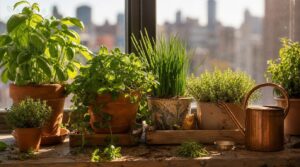
Not every herb deserves a spot in your apartment — but the right ones will genuinely pull their weight.
Top herbs for apartment growing:
- Basil — fast-growing, needs 6+ hours of bright light
- Mint — thrives in partial sun, keep it in its own pot
- Chives — tolerates moderate light, harvests year-round
- Thyme — low-water, stays compact, works fresh or dried
Pruning for Bigger Harvests
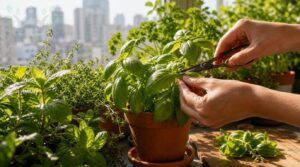
Most apartment herbs double in yield when you prune them right. Cut just above a leaf node to trigger bushier growth instead of a single tall stem.
Remove flower buds the moment they appear — once basil bolts, flavor drops fast. Aim to harvest no more than one-third of the plant at a time to keep it producing.
Preventing Yellow Leaves
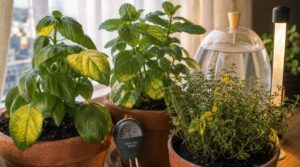
Yellow leaves are your plant sending an SOS. In most indoor herb garden kits, the cause comes down to three things: water consistency, nutrient balance, and light.
Check your reservoir first. Uneven watering stresses roots and blocks nutrient uptake. Then look at your LED grow lights — insufficient light shuts down photosynthesis fast. Finally, test for pH imbalance; most herbs prefer a mildly acidic range.
Managing Pests Naturally
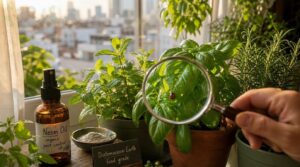
Even the tidiest apartment kitchen can attract uninvited guests. Aphids and spider mites show up fast, especially in warm, still air. Your first move: weekly leaf inspections, checking undersides where pests hide early. Catch them small and a simple soap-and-water spray does the job. Wait too long and you’re fighting a colony.
Neem oil is your reliable backup — effective for up to seven days and safe around food. For fungus gnats in your indoor herb garden kits, try beneficial nematodes mixed into the growing medium. They target larvae invisibly. Diatomaceous earth sprinkled on the surface stops crawling insects cold. Prefer something you can make at home? A garlic spray releases sulfur compounds that send most pests packing — just reapply after watering. For aphid outbreaks on a balcony setup, releasing ladybugs works surprisingly well; they’ll get to work within a day. Organic pest control isn’t complicated — it just rewards consistency.
Harvesting Fresh Kitchen Herbs
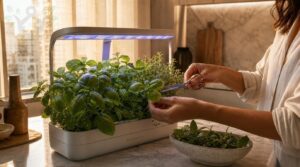
Timing your harvest right is half the battle. Morning harvest timing matters more than most people think — essential oils peak before heat builds up, so your basil or mint hits the kitchen at full flavor. With compact indoor garden solutions like the AeroGarden Harvest, that means snipping before your coffee cools.
Harvest herbs in the morning, when essential oils peak and flavor is at its finest
- Cut 1–2 inches above a node — clean scissors only, never pull
- Take no more than one third of the plant at once
- Store leafy herbs upright in water, loosely tented with a plastic bag
Frequently Asked Questions (FAQs)
How much electricity does a grow kit use?
Like a phone charger you forgot about, grow kit energy use adds up quietly. A 60W LED running 16 hours daily draws roughly 96 kWh — about $8–9 monthly at average rates.
Do hydroponic herbs taste different than soil-grown?
The difference is subtle. Hydroponic herbs tend to taste brighter and cleaner, while soil-grown ones carry deeper, earthier complexity. Freshness and harvest timing often matter more than the growing method itself.
What happens to pods when you travel?
Think of your pods like a low-maintenance houseguest. Self-watering reservoirs hold enough water for two weeks, so a short trip won’t stress your herbs. For longer travel, app connectivity sends water shortage alarms straight to your phone.
Are herb kits safe around kids and pets?
Most kits use BPA-free, food-grade plastic and inert growing media, so they’re generally safe. Stick to basil, parsley, and mint around pets. Keep cords tucked and lights out of reach.
Conclusion
single herb pod can quietly take over your entire cooking routine—once you’re clipping fresh basil at midnight for pasta, store-bought bunches start feeling absurd. The right herb growing kits for apartment dwellers don’t just save counter space; they change how you actually cook.
Pick a kit that matches your light, your layout, and your patience level. Then stop buying herbs that dies before Tuesday.
- https://www.cnet.com/home/smart-home/best-indoor-garden
- https://www.goodhousekeeping.com/home-products/g70930106/best-indoor-herb-garden
- https://nymag.com/strategist/article/best-indoor-garden-kits.html
- https://www.wired.com/gallery/best-indoor-gardening-systems
- https://tascllc.com/en/blog/how-to-choose-the-perfect-herb-grow-kit-for-your-indoor-garden-140