This site is supported by our readers. We may earn a commission, at no cost to you, if you purchase through links.
Somewhere between the first green sprout and the moment a student realizes they grew that, something shifts.
Herb growing kits for classroom learning have a way of turning a Tuesday science lesson into something students talk about at dinner. The best kits don’t just keep plants alive—they keep kids curious, give every group a job to do, and hand you curriculum-aligned lesson plans so you’re not building from scratch.
Whether your classroom gets four hours of sunlight or none, there’s a kit worth knowing about.
Table Of Contents
Key Takeaways
- Kits like Fernroot accommodate up to 18 students, include curriculum-aligned lesson plans tied to AFNR standards, and support hands‑on STEM learning without requiring teachers to build materials from scratch.
- Even windowless classrooms can grow herbs successfully using full-spectrum LED lights set to a 12–16‑hour daily cycle, so limited natural light isn’t a dealbreaker.
- Biodegradable coconut coir pots and compostable soil mixes make herb kits a practical sustainability lesson—students see eco‑friendly choices in action, not just on paper.
- School garden grants from organizations like the Herb Society of America and Corteva Agriscience (up to $2,500) can cover kit costs, but application windows typically open in fall and require a clear budget and sustainability plan.
Best Classroom Herb Growing Kits
Not all herb kits are built the same, and the right one can make a real difference in how your students connect with the material. Whether you’re teaching 18 kids at once or working with a small group by the window, there’s an option on this list for you. Here are five classroom herb growing kits worth knowing about in 2026.
If you’re just getting started, this guide to herb growing kits for beginners breaks down what actually matters before you buy.
Fernroot Classroom Herb Kit
The Fernroot Classroom Herb Kit is built for real classroom life. It fits up to 18 students and includes biodegradable coconut coir pots, seed packs of basil, parsley, and cilantro, plus a teacher lesson plan aligned to AFNR standards.
It’s tool‑free, sustainability‑focused, and grant‑eligible — making it a smart pick for any STEM education or classroom science program.
Students also benefit from hands‑on herbal activities that deepen their engagement with plant science.
1. LED Indoor Garden Kit Kids
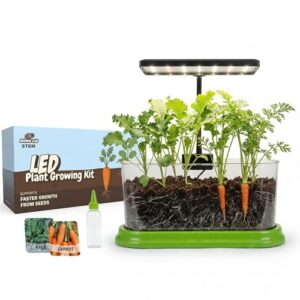
If your classroom only fits one small planter, the LED Indoor Garden Kit Kids might be exactly what you need. It comes with a full-spectrum LED light, 2 seed packets (carrot and kale), 5 soil tablets, and a water dropper — all in one box.
Setup takes under 30 seconds with click-and-clip assembly, no tools required. The transparent planter lets students watch roots develop in real time, making plant biology visible and exciting.
- Everything you need is in the box — light, seeds, soil tablets, and a water dropper
- The see-through planter lets kids watch roots grow, which makes learning feel real
- Setup takes under 30 seconds with no tools, so you’re growing in minutes
- Only comes with carrot and kale seeds — you’ll need to buy others separately
- No plug or batteries included, so you’ll need a power source ready
- It’s compact by design, meaning it’s not built for anything bigger than small herbs or veggies
2. National Geographic Kids Gardening Kit
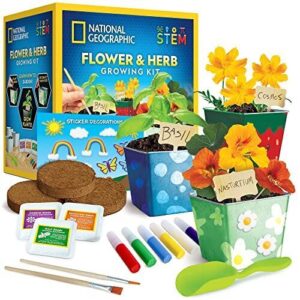
If hands-on creativity matters to you, the National Geographic Kids Gardening Kit brings something fresh to the table.
It includes three stainless-steel pots, cosmos, nasturtium, and basil seeds, peat pellets, wooden labels, a garden shovel, and an illustrated Learning Guide.
Students can also paint and decorate their own pots using the six included paint colors and 15 nature-themed stickers — turning a science activity into a STEAM experience that your class won’t forget.
- Combines gardening and art in one kit — kids paint their own pots, making the whole thing feel personal and fun
- Comes with everything you need to get started: seeds, peat pellets, labels, a shovel, and a learning guide
- Great for small spaces since it’s a compact, self-contained indoor garden project
- No drainage holes in the pots, so you’ll need a saucer handy or risk soggy roots
- The paint can chip over time, especially with kids handling the pots regularly
- The kit runs a bit small for the price — some parents feel like they’re not getting a ton for what they spend
Best for Small Groups
When you’re managing four or more small groups at once, the Fernroot kit’s Group Rotation System keeps things running smoothly. It accommodates up to 24 students across four growing beds and six starter trays, with Group Lesson Templates built right in.
Each bed and tray pairs perfectly with guidance from spring vegetable seed starting tips, so germination rates and spacing are never a guessing game.
Plus, Small Group Pricing kicks in when you buy a class set — making it a practical pick for budget-conscious teachers.
Best for Windowsills
If your classroom doesn’t have a big sunny corner to spare, don’t worry — a good windowsill is all you need.
Compact design fits two or three herb pots side by side without crowding, making it perfect for a windowsill, kitchen counter, or classroom desk.
The self-watering feature keeps moisture steady, the adjustable height stand conforms to any sill depth, and a clear tray makes seed germination easy to monitor.
Classroom Kit Features Compared
Not all classroom herb kits are built the same, and the differences really do matter when you’re managing 18 students at once. Before you buy, it helps to know exactly what you’re comparing. Here are the key features worth looking at.
Student Capacity
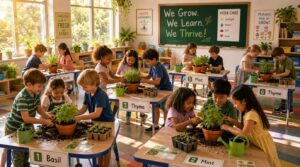
One kit, one class — it really can be that simple. A growing herbs classroom kit usually accommodates 18 students at once, making it ideal for classroom learning without the chaos. Here’s how station capacity breaks down:
- 2–3 students per station for comfortable group project work
- 6–8 stations per class to cover 24 students
- 15-minute rotations keep everyone actively involved
- Double kits scale to 48 learners across two groups
Flexible seating plans and adaptable kit deployment make fitting any class size straightforward.
Seeds Included
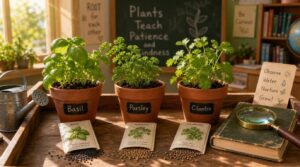
What’s actually inside those seed packs matters more than you’d think. The Fernroot kit includes seed packs of basil, parsley, and cilantro — all pre-measured and ready to sow. Seeds are certified non-GMO, with germination rates above 80%.
| Herb | Germination Time |
|---|---|
| Basil | 5–7 days |
| Parsley | 7–14 days |
| Cilantro | 7–10 days |
Labeled seed packets include sowing depth and care tips for quick setup.
Pot and Soil Materials
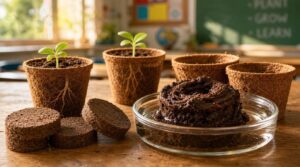
The pots and soil in your kit do a lot of quiet work. Fernroot’s biodegradable coconut coir pots break down naturally after use, so there’s no plastic waste to toss.
Each kit also includes compressed peat disks that expand with water, giving seeds a nutrient‑rich, well‑aerated starting point that fosters strong early root growth.
Tool-Free Setup
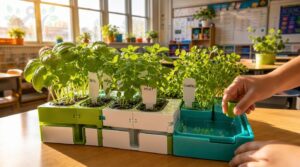
Setting up a classroom herb garden shouldn’t feel like assembling furniture on a Sunday afternoon. With a quality STEM gardening kit, everything snaps together without a single tool in sight.
Here’s what makes tool-free setup a classroom win:
- Snap Assembly Design locks components securely into place using color cue guidance
- Reusable connectors allow quick disassembly and reconfiguration between classes
- Modular connectivity lets you expand or rearrange your indoor herb garden for kids
- Pre-cleared channels route water lines cleanly, keeping it a mess-free indoor garden
- Weight limits and pictogram instructions are printed directly on each piece for safety
No hex keys. No confusion. Just growing.
Teacher Guide Quality
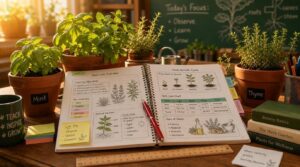
A great teacher guide does half the work for you.
The Fernroot teacher and student Growing & Experiment Guides include clear learning objectives, standard alignment to AFNR, ready-to-use teacher scripts, student-facing prompts, and safety guidelines — everything you need to run a confident, curriculum-connected herb lesson without scrambling for resources the night before.
Learning Benefits for Students
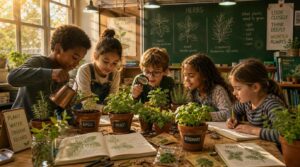
Growing herbs in the classroom does more than just keep the windowsill green. It quietly builds real skills in your students — from science thinking to taking turns watering without being reminded. Here’s a look at what kids actually gain when they get their hands in the soil.
Plant Life Cycle Lessons
Growing herbs in class gives students a front-row seat to the plant life cycle — start to finish. They watch seed germination steps unfold as tiny roots push through soil, then track stem growth on a Growth Checkpoint Chart.
By harvest, they understand how one seed becomes food and then seeds again — a full, satisfying cycle.
Hands-on STEM Skills
Once students understand the life cycle, the real science kicks in. A good herb garden kit for kids turns your windowsill into a full hands-on STEM lab.
They measure, record, problem-solve, and work together — all while watching basil sprout. That’s classroom science doing exactly what it should: connecting real observations to real skills, naturally.
Growth Tracking Activities
Tracking your herbs’ progress is where the magic really clicks.
Each week, you and your class measure plant height, log leaf count every three days, and plot everything onto a class growth chart. It’s simple math meeting real science — and students suddenly care about the numbers because they grew what they’re measuring.
Nutrition and Herb Tasting
Once the numbers are on the chart, it’s time to bring the harvest to your senses. When kids taste fresh basil or cilantro they’ve grown themselves, nutrition stops being a textbook topic.
Cilantro delivers a citrusy brightness; parsley offers mild, grassy notes.
Both pack vitamin K and vitamin C — real nutrition, straight from the windowsill.
Teamwork and Responsibility
A classroom garden quietly teaches more than plant biology. When kids label pots, water in turns, and harvest together, they’re building real teamwork skills without even realizing it.
- Shared garden tasks keep everyone contributing equally
- Role rotation prevents one student from doing everything
- Group accountability means the whole team notices a wilting plant
- Collaborative planning shapes how seeds get spaced and scheduled
- Peer mentoring pairs confident growers with hesitant ones
That’s responsibility teaching at its best.
Sustainable Herb Growing Projects
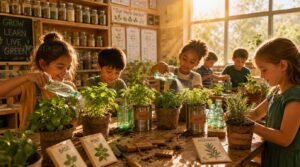
Growing herbs in your classroom doesn’t have to mean piles of plastic pots heading straight to the trash. The best kits today are built with the planet in mind — and they give students something real to think about beyond just watching seeds sprout.
Here’s what to look for when you want your herb projects to be as good for the earth as they’re for learning.
Biodegradable Pots
Every pot in the Fernroot kit is made from coconut coir, a natural fiber that comes from coconut husks. It’s a byproduct, so nothing goes to waste.
These biodegradable pots break down in soil within months, meaning no plastic ends up in the bin. That’s real classroom sustainability, your students can see and feel firsthand.
Compostable Seed Starting
When seeds go into the ground, what they’re surrounded by matters more than most people realize. The compost mix benefits your students directly — a seed starting medium rich in coco coir and mature compost gives those parsley and cilantro seed packs the perfect launchpad.
It holds moisture evenly, promotes organic germination support, and keeps pH balanced between 6.0 and 7.0.
Low-Waste Classroom Supplies
Small swaps add up fast. Swap disposable bags for reusable silicone bags to store your seed packs of parsley between sessions.
Choose compostable seed pots and recycled planting materials to keep your herb growing kit for kids nearly waste-free.
Bulk purchase benefits cut packaging by up to 40%, and LED grow lights use 30–50% less energy — a simple, classroom sustainability project win.
Farm-To-Table Connections
Growing herbs in your classroom isn’t just a science lesson — it’s a tiny window into the farm-to-table concept. When students harvest basil or cilantro, they grew themselves, they finally understand where food actually comes from.
That direct connection mirrors how local supply chains work, linking nearby farms to neighborhood tables through shorter, fresher routes — no mystery, no middleman.
Environmental Stewardship Lessons
Herb kits don’t just teach plant biology — they’re a gateway to environmental responsibility. When students use biodegradable coconut-coir pots and compostable peat disks, they see ecofriendly materials in action, not just in textbooks. That hands-on experience makes sustainability click in a way no worksheet can.
Biodegradable pots and compostable soil teach sustainability better than any worksheet ever could
Buying Tips for Teachers
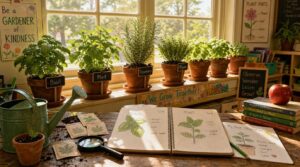
Picking the right herb kit isn’t just about what looks good in a catalog. A few practical questions can save you time, money, and a lot of mid-unit scrambling. Here’s what to think about before you buy.
Match Kit to Class Size
Picking the right herb growing kit starts with one simple question: how many students do you have? The Fernroot kit accommodates 18 students comfortably — perfect for a smaller class. For larger groups, consider these class size planning tips:
- Classes of 24 or fewer work well with a single educational gardening kit
- Classes of 28–30 need two kits for fair growth station distribution
- Flexible group allocation keeps every student hands-on
Check Curriculum Alignment
Once you’ve sorted out class size, it’s worth checking whether a kit actually fits your curriculum alignment goals. The Fernroot kit maps to AFNR standards and includes structured lesson plans with built-in assessment criteria — so you’re not starting from scratch.
Look for kits that connect to your existing teacher lesson plan framework and offer measurable learning outcomes students can track themselves.
Consider Light Requirements
Light can make or break your indoor herb garden. Basil and cilantro need 2,000 to 5,000 lux for 12 to 16 hours daily, so a sunny spot near a south-facing window works well.
No bright windowsill? A full-spectrum LED delivering 100 to 400 μmol m⁻² s⁻¹ fills the gap. Watch for stretched stems — that’s a classic light stress indicator.
Compare Maintenance Needs
Once you’ve sorted out lighting, take a quick look at day-to-day upkeep. Soil-based kits need 1 to 2 cups of water per plant, weekly. Refresh soil every 8 to 12 weeks to keep nutrients balanced.
Biodegradable coir pots can crumble if overwatered, so gentle spray bottles work best.
LED kits demand less watering but need regular power checks.
Explore School Garden Grants
Good news: school garden grants exist, and many teachers don’t know how to look for them. The Herb Society of America funds elementary classrooms in grades 3–6, while the Corteva Agriscience Grant awards $2,500 to K–12 teachers.
Your application needs a clear budget, a sustainability plan, and proof of classroom integration. Start early — grant windows usually open in fall.
Frequently Asked Questions (FAQs)
Can students take herb plants home after harvest?
Yes, many programs allow students to take herb plants home after harvest. You’ll need a parent consent form, and some schools require an allergy check and home care checklist before family pickup time.
How long does it take herbs to sprout?
Sprouting time varies by herb. Basil sprouts fastest — just 5 to 7 days. Cilantro takes 7 to 14 days. Parsley is the slowest, often needing 2 to 4 weeks.
What age groups benefit most from herb kits?
Herb kits work well for children ages 6 and up, though even Grades PreK can join in. Older students dig deeper into data and science concepts as they grow.
Do herb kits work in windowless classrooms?
Absolutely — LED grow lights make it possible. A 12–16 hour daily light cycle gives herbs everything they need, even without a single window in sight.
How do teachers handle herb allergies in class?
Teachers keep an allergy roster on hand and post an emergency action plan in the room. Allergen-free zones and gloves keep things safe during planting sessions.
Conclusion
You don’t need a green thumb or a fancy budget to make this work. The right herb growing kits for classroom learning do most of the heavy lifting—seeds, soil, guides, and all.
What they can’t provide is the look on a student’s face when something they planted actually grows. That moment belongs entirely to your classroom.
Pick the kit that fits your space, start small, and let the roots do the rest.
- https://www.realityworks.com/blog/exploring-plant-science-with-a-classroom-gardening-kit
- https://www.ed.sc.gov/districts-schools/health-and-nutrition/special-programs/school-garden-and-education/2025-26-sc-school-garden-education-and-assistance-program-instructions
- https://www.friendsgkf.org/ag-tivity-kits
- https://growingspaces.com/gardening-grants
- https://www.seedyourfuture.org/educator_grants