
This site is supported by our readers. We may earn a commission, at no cost to you, if you purchase through links.

A wire cage that seemed plenty sturdy in April often ends up flat on its side by August, crushed under the weight of a loaded indeterminate plant. That’s the moment most gardeners realize height and thickness matter more than price. Small gardens make this problem worse, since cramped rows and container beds punish any cage that hogs space or wobbles in the wind.
The right tomato cages for small gardens solve both issues at once: sturdy enough to hold heavy fruit, compact enough to fit tight footprints without crowding neighboring plants. Some fold flat for winter storage, others adjust as your seedling grows into a six-foot vine, and a few use galvanized steel that’ll outlast the raised bed itself.
Below, you’ll find ten cages worth your money, along with the sizing and setup details that separate a season-saver from a summer disappointment.
Table Of Contents
- Key Takeaways
- Top 10 Tomato Cages for Small Gardens
- 1. Gardener’s Blue Ribbon Bamboo Plant Stakes 5 Feet
- 2. Texas Tomato Cage Medium Folding Set
- 3. Gardener’s Blue Ribbon Ultomato Tomato Cage
- 4. Galvanized Tomato Pepper Support Towers
- 5. Titan Tomato Cage Support Set
- 6. Adjustable Tomato Cage Plant Support Kit
- 7. Adjustable Square Tomato Cage
- 8. Heavy Duty Tomato Plant Cages
- 9. Adjustable Tomato Plant Cage
- 10. Square PVC Coated Tomato Cages
- Choosing Cages for Compact Growing Spaces
- Match Cage Size to Tomato Variety
- Secure Tomato Cages in Small Gardens
- Compare Durability, Storage, and Value
- Frequently Asked Questions (FAQs)
- What can be used instead of tomato cages?
- Do small tomato plants need a cage?
- How tall should a tomato cage be for tomatoes?
- Where can I get cheap tomato cages?
- When should rusted or damaged cages be replaced?
- How much does a decent tomato cage cost?
- Do tomato cages work well for peppers too?
- Should cages be installed before or after transplanting?
- Conclusion
Key Takeaways
- Match your cage height to your plant’s growth habit—determinate tomatoes do fine with 36-48 inches, but indeterminate varieties need 48-68 inches since they keep climbing and fruiting until frost.
- In small gardens, cage material matters as much as size, since galvanized or PVC-coated steel resists rust and bending under heavy fruit loads far better than thin bamboo or basic wire.
- Space your cages 12-18 inches apart to keep airflow moving through the canopy, which cuts humidity and lowers your risk of fungal disease in cramped beds or containers.
- Foldable and adjustable designs give you the best return for tight spaces, letting you resize support as your plant grows and collapse everything down for easy off-season storage.
Top 10 Tomato Cages for Small Gardens
Small gardens demand cages that pull double duty, offering sturdy support without swallowing up your limited space.
For patios where every inch counts, rolling herb garden baskets built for small-space harvesting keep your cages company while storing tools and clippings within easy reach.
You’ll find options here ranging from bamboo stakes to galvanized steel towers, each built for a different mix of budget, durability, and footprint.
Take a look at these ten picks to find the setup that fits your beds, your budget, and your tomato plans.
1. Gardener’s Blue Ribbon Bamboo Plant Stakes 5 Feet

Six bamboo poles, five feet tall, and a price that won’t dent your wallet — that’s the appeal of Gardener’s Blue Ribbon’s BB5 stakes.
They’re best for lightweight support: staking young tomatoes, or lashing together for a bean teepee. Don’t expect them to hold up a loaded indeterminate vine alone, since the thin bamboo can snap under real weight.
Tie two or three together at the top for extra backbone, and they’ll earn their keep season after season.
| Best For | Home gardeners who need affordable, lightweight support for young tomato plants, climbing beans, peas, or flowering vines. |
|---|---|
| Material | Bamboo |
| Height | 5 ft |
| Pack Quantity | 6 |
| Assembly Type | Tie/insert |
| Adjustability | None |
| Ground Insertion | Push into soil |
| Additional Features |
|
- Budget-friendly 6-pack with a natural tan bamboo look that blends into any garden
- Versatile enough for trellises, teepees, and general vegetable staking
- Lightweight at under 10 ounces per pack, making them easy to handle and store
- Thin construction means they can snap under heavy weight or during installation
- Not strong enough on their own for large or heavy fruiting plants
- Often need to be bundled together for extra strength in high-load situations
2. Texas Tomato Cage Medium Folding Set
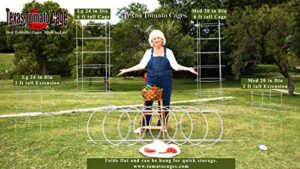
Once your tomatoes outgrow bamboo, the Texas Tomato Cage Medium Folding Set steps up with real backbone. Its two-piece design, a 3.5-foot base plus a 2.5-foot top section, builds to six feet of galvanized steel support for heavy vine varieties.
The sharp legs bite into soil without warping, and come fall, the whole thing folds flat for storage. At 20 inches wide, it’s a proven fit for beds, grow bags, and season after season of use.
| Best For | Gardeners growing large vine tomatoes or heavy-fruiting chile plants who want sturdy, long-term support in raised beds, garden plots, or large grow bags. |
|---|---|
| Material | Galvanized steel |
| Height | 6 ft |
| Pack Quantity | 4 |
| Assembly Type | Fold & connect |
| Adjustability | Fixed diameter |
| Ground Insertion | 1.5-2 ft legs |
| Additional Features |
|
- Six feet of galvanized steel construction handles heavy vine varieties and fruit loads without buckling
- Sharp legs insert cleanly into soil without warping, even in tougher ground
- Folds flat for easy off-season storage, with a proven 20 year outdoor lifespan
- Fixed 20-inch diameter can’t be adjusted once assembled
- Initial setup requires connecting the two sections with tubing connectors
- Costs more upfront than basic tomato cages, and galvanized steel may show slight corrosion over time
3. Gardener’s Blue Ribbon Ultomato Tomato Cage
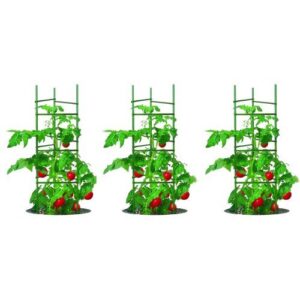
If folding steel feels like overkill, the Ultomato Cage takes a different approach: three 5-foot stakes with a green plastic coating, paired with nine adjustable arms that snap on wherever your plant needs lifting.
That arm system is the real draw. Instead of a fixed ring shape, you reposition support as branches spread, which keeps stems from bending under fruit weight. Press-fit joints mean quick teardown, too, so storage stays simple between seasons.
| Best For | Gardeners growing tomatoes or other climbing vegetables who want a flexible support system that can adapt as their plants grow, whether in ground beds, containers, or patio planters. |
|---|---|
| Material | Steel w/ plastic coat |
| Height | 5 ft |
| Pack Quantity | 1 (3 stakes) |
| Assembly Type | Snap-on arms |
| Adjustability | Adjustable arms |
| Ground Insertion | Stakes driven in |
| Additional Features |
|
- Nine adjustable arms let you customize height and support placement as the plant develops
- Easy to disassemble for compact, multi-season storage
- Versatile enough for in-ground gardens, containers, and patio planters
- Plastic-coated arms may bend or break under heavy fruit loads or strong winds over time
- Effective above-ground height shrinks once stakes are driven into the soil
- Very tall or heavy-producing tomato varieties may need extra reinforcement like twine or wire
4. Galvanized Tomato Pepper Support Towers
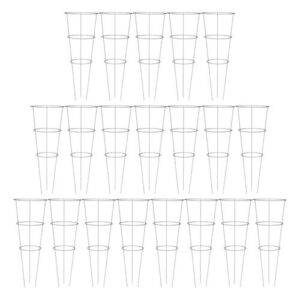
Want something you never have to fuss with mid-season? Galvanized towers skip clips and arms entirely, using zinc-coated steel rings welded into a fixed three or four-panel frame that won’t budge once it’s in the ground.
Built-in soil legs anchor the base against wind, while heavy-gauge wire keeps rings from bowing under a loaded plant. No reconfiguring required, just straightforward, rust-resistant support that folds flat for off-season storage.
| Best For | Gardeners who grow tomatoes, peppers, or other vining plants in bulk and want a sturdy, no-fuss support that can be pushed straight into garden beds, raised beds, or large containers. |
|---|---|
| Material | Galvanized steel |
| Height | 32.5 in |
| Pack Quantity | 20 |
| Assembly Type | Insert legs |
| Adjustability | Fixed rings |
| Ground Insertion | 15 in legs |
| Additional Features |
|
- Galvanized steel construction resists rust and holds up well outdoors
- Graduated rings widen toward the top, supporting healthy upward plant growth
- Built-in 15-inch legs make it easy to anchor firmly into soil or pots
- Some units suffer from inconsistent weld quality, which can lead to broken joints
- The wire is relatively thin and may bend under heavy fruit loads
- Packaging can be inadequate, increasing the risk of shipping damage
5. Titan Tomato Cage Support Set
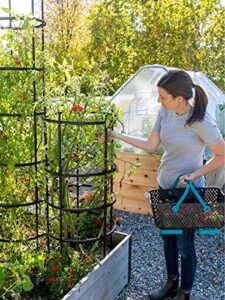
Three cages here, each built on a steel spine with a polyethylene coating, and the movable rings snap onto that frame without tools or zip ties. That’s the real selling point: rings slide up and reposition as branches spread, so you’re not locked into one support pattern all season.
If you’re still figuring out which style fits your plants, this beginner’s guide to choosing tomato cages breaks down which setups work best for sprawling versus compact varieties.
At 19.5 inches wide and 46 inches tall, they suit indeterminate plants that outgrow basic cones, and the UV-resistant coating keeps rings from cracking under summer sun year after year.
| Best For | Gardeners growing mature tomatoes, peppers, or other climbing vegetables who need heavy-duty support that can handle strong wind and rain. |
|---|---|
| Material | Steel w/ polyethylene coat |
| Height | 46 in |
| Pack Quantity | 3 |
| Assembly Type | Zip-tie assembly |
| Adjustability | Adjustable rings |
| Ground Insertion | Insert around plant |
| Additional Features |
|
- Sturdy alloy steel frame with a protective polyethylene coating stands up to harsh weather
- Adjustable support rings let you reposition plant support as needed
- Modular design breaks down easily for compact off-season storage
- Assembly involves securing 30 zip-tied arc pieces per cage, making setup lengthy and hand-intensive
- May be difficult to assemble for users with arthritis or limited hand strength
- Some plastic components are reported to bend under load, and the price runs higher than basic wire cages
6. Adjustable Tomato Cage Plant Support Kit
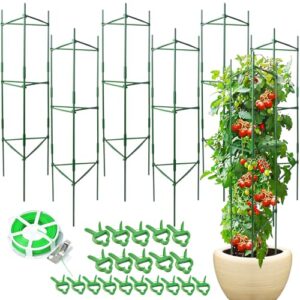
When one cage size won’t carry a plant through a whole season, this kit earns its keep: connecting pipes stretch the frame from 16 to 48 inches, so seedlings and mature vines get proper support without buying a second set.
Steel center stakes with green plastic coating resist rust while blending into foliage, and snap-on arms build triangular, square, or hexagonal shapes for windy-spot stability. Six complete cages, 165 feet of ties included.
| Best For | Gardeners growing tomatoes, climbing vegetables, or flowers like roses and dahlias who need adjustable support that keeps pace with the plant from seedling to full maturity. |
|---|---|
| Material | Steel w/ plastic coat |
| Height | 16-48 in |
| Pack Quantity | 6 |
| Assembly Type | Snap-on, tool-free |
| Adjustability | Adjustable height |
| Ground Insertion | Stake insertion |
| Additional Features |
|
- Height adjusts from 16 to 48 inches, so one kit covers every growth stage without buying replacements
- Tool-free snap-on arms let you build triangular, square, or hexagonal shapes for better stability in windy spots
- Comes complete with 6 full cages, plant clips, and 165 ft of twist ties, so it’s ready to use right out of the box
- Stability relies on connectors being fully seated, so sloppy assembly can lead to wobbling or collapse
- The plastic coating may chip or scratch over time with rough handling or heavy UV exposure
- Not built for extremely heavy fruiting plants unless you add extra reinforcement
7. Adjustable Square Tomato Cage
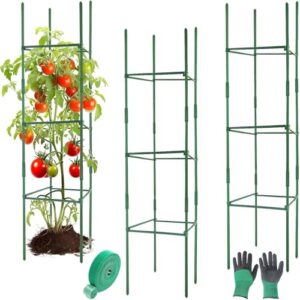
A square footprint changes the physics of staking: that wider base resists tipping in gusty spots where round cages twist and lean.
Interlocking panels expand as vines climb, with connectors added at preset intervals so the frame grows from seedling to full-size plant without a rebuild. Reinforced corner joints spread fruit weight across all four sides, and wide rails keep dense foliage from sagging outward.
For raised beds with wind exposure, this shape is the sturdier choice.
| Best For | Gardeners with raised beds or windy spots who grow vining plants like tomatoes, peppers, cucumbers, or beans and want a support system that adjusts as the plants grow. |
|---|---|
| Material | Steel and plastic |
| Height | 48 in |
| Pack Quantity | 1 (243 pieces) |
| Assembly Type | Snap-on, tool-free |
| Adjustability | Adjustable height |
| Ground Insertion | Stake insertion |
| Additional Features |
|
- Square base resists tipping in windy conditions better than round cages
- Height adjusts up to 48 inches with snap-on arms, so it grows along with the plant
- Reusable and tool-free to assemble, with compact storage after disassembly
- Some users find the components feel flimsy, and full assembly can take a while
- Not collapsible, so it has to be taken apart for storage each season
- Limited to 48 inches, which won’t be enough for taller or heavier climbing plants
8. Heavy Duty Tomato Plant Cages
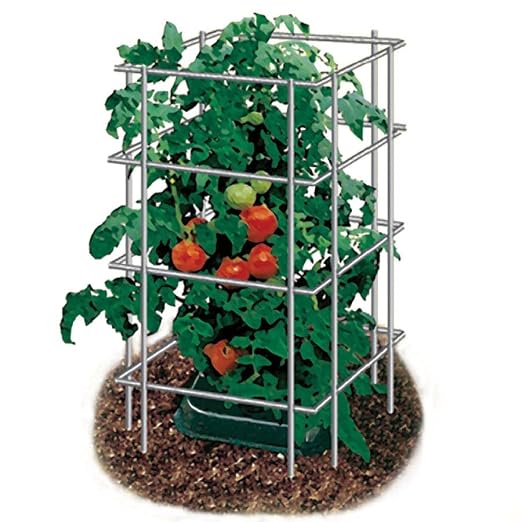
When a beefsteak plant loads up with fruit, thin wire just bends. That’s where 12 to 14 gauge steel earns its keep, holding rigid under weight that would fold a standard cage in half.
Wide reinforced bases stop tipping when the top gets heavy, and square panel openings let you pull fruit free without jamming it against the mesh. Powder coating adds rust resistance for humid summers.
Tool-free interlocking panels mean setup takes minutes, not a wrestling match.
| Best For | Gardeners growing tomatoes, peppers, cucumbers, and other climbing vegetables who want a sturdy, reusable vertical support that’s easy to set up and store. |
|---|---|
| Material | Galvanized steel wire |
| Height | 47 in |
| Pack Quantity | 3 |
| Assembly Type | Foldable, tool-free |
| Adjustability | Foldable/stackable |
| Ground Insertion | 6 in legs |
| Additional Features |
|
- Durable 8-gauge galvanized wire resists rust and holds up season after season
- Tool-free, tapered legs make setup quick with just 6 inches of soil insertion
- Foldable, stackable design saves storage space and adjusts to plant height
- Not suitable for hard or rocky ground where legs can’t sink in
- May need extra support for very heavy fruit like large watermelons
- Limited to two-cage stacking, so it’s not ideal for extremely tall indeterminate varieties
9. Adjustable Tomato Plant Cage
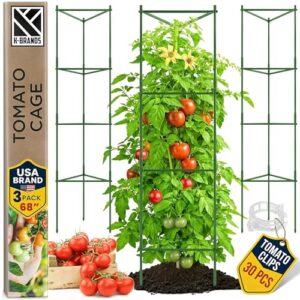
Growth spurts don’t follow a schedule, so your cage shouldn’t either. Snap-on arms and connecting pipes let you stretch this one from 24 inches up to 60, adding rings as the plant gains height and fruit weight.
Ring diameters run 6 to 12 inches, so you can swap in larger rings once flowering starts and space gets tight. No tools needed for reconfiguring, which makes midseason adjustments genuinely painless rather than a chore you keep putting off.
| Best For | Home gardeners growing tomatoes, peppers, cucumbers, or other climbing plants who want vertical support that adjusts as their plants grow taller and heavier. |
|---|---|
| Material | Steel w/ plastic coat |
| Height | Up to 68 in |
| Pack Quantity | 3 |
| Assembly Type | Snap-together, tool-free |
| Adjustability | Adjustable clips |
| Ground Insertion | Stake insertion |
| Additional Features |
|
- Snap-together poles and adjustable height clips mean no tools and easy repositioning as plants grow
- Sturdy steel core with thick plastic coating stands up to regular garden use
- Keeps fruit and foliage off the ground, cutting down on disease risk while fitting neatly into beds or pots
- Not sturdy enough for very heavy indeterminate tomato varieties
- Can tip over in strong wind unless it’s anchored down
- Assembly can be a bit fiddly, and it won’t work with older product versions
10. Square PVC Coated Tomato Cages
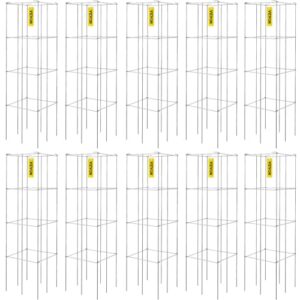
Rounding out this list is a coated frame that trades bare metal for something gentler on stems: PVC-coated steel wire at 4mm thick, holding 22 pounds per cage without buckling.
You get ten cages at 46.1 inches tall, each folding flat with interlocking joints and ground stakes for tool-free setup. That’s a full season’s worth of support for a raised bed or patio row, stored away in a fraction of the space come fall.
Weld defects show up occasionally, so check joints before you rely on them.
| Best For | Gardeners with raised beds, patios, or small outdoor spaces who grow climbing vegetables, fruits, or flowers and want sturdy, easy-to-store support for the season. |
|---|---|
| Material | Steel w/ PVC coat |
| Height | 46.1 in |
| Pack Quantity | 10 |
| Assembly Type | Foldable interlock |
| Adjustability | Foldable shapes |
| Ground Insertion | 10 in stakes |
| Additional Features |
|
- Durable 4mm PVC-coated steel wire holds up to 22 lbs without buckling
- Tool-free setup with interlocking joints and ground stakes
- Folds flat for compact storage between growing seasons
- Occasional weld defects mean joints should be checked before use
- Not suitable for plants taller than 59.1 inches
- PVC coating may degrade with prolonged UV exposure, and extra anchoring is needed in windy areas
Choosing Cages for Compact Growing Spaces
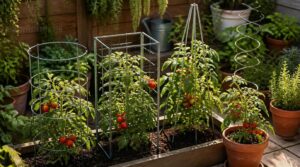
Small gardens don’t give you room for error, so every cage decision needs to earn its spot. You’re working with tight footprints, containers, and raised beds, which means dimensions and setup matter just as much as sturdiness. Here’s what to weigh before you pick the cage that fits your space best.
Raised Bed Cage Dimensions
A raised bed sets the rules before you even buy a cage, so measure first. Standard beds run 24 to 36 inches wide, and your cage needs 6 to 12 inches clearance for airflow. Since bed width and cage clearance shift with each planting, pairing your layout with a step-by-step crop rotation plan for raised beds helps keep future seasons just as well-organized.
Height matters too: 48 inches works for determinate plants, while 68-inch towers give indeterminate vines room to sprawl without toppling over.
Container-Friendly Cage Designs
Pots and buckets play by different rules than open soil, so your cage needs to work with the container, not against it. Look for a lightweight aluminum frame that resists rust in recycled plastic pots up to 20 gallons.
A twist lock system secures the cage to the rim, no drilling required, making it a genuinely portable balcony solution with integrated trellis panels and recyclable materials throughout.
Vertical Growing Efficiency
Once your container cage is anchored, think upward. Vertical efficiency turns cramped patios into real tomato support systems: an adjustable plant cage lets you raise trellis height as vines climb, while wider ring spacing improves canopy airflow.
That extra space between leaves cuts humidity, dries foliage faster, and keeps compact garden structures productive without inviting disease into a tight footprint.
Foldable Versus Modular Cages
Vertical growth is great until fall cleanup, and that’s when the foldable-versus-modular question matters most.
Foldable cages collapse flat, cutting storage volume up to 70%—a real win for compact garden structures.
Modular systems trade that portability for configuration flexibility, letting you resize panels as plant needs change.
| Feature | Foldable | Modular |
|---|---|---|
| Setup | Under a minute | Several minutes |
| Storage | Highly compact | Bulkier |
| Flexibility | Preset patterns | Custom layouts |
Tool-Free Assembly Features
Skip the toolbox entirely. The best small-garden cages now rely on snap-together pole systems and quick-release connector clips, so setup takes minutes, not a wrestling match with a socket wrench.
Look for interlocking ring design and magnetic alignment guides—they keep panels square automatically. That’s true tool-free height adjustment: durable, adjustable, modular design that reconfigures as your tomatoes grow, no hardware required.
Match Cage Size to Tomato Variety
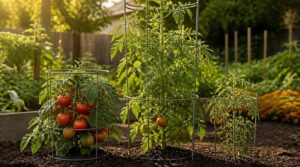
Not every tomato plant needs the same kind of support, and picking the wrong cage size is one of the most common mistakes new gardeners make.
Your plant’s growth habit, whether determinate, indeterminate, or cherry, should drive the cage you choose, not the other way around.
Here’s how to match the two correctly, from height requirements down to spacing.
Determinate Tomato Cage Sizes
Bushy determinate plants don’t need a skyscraper, just a snug, sturdy frame: aim for a standard cage height of 3 to 4 feet with a 12 to 18 inch diameter. That height-to-diameter ratio keeps dense branches supported without crowding.
- Sturdy clusters held safely off the soil
- Airflow that fights off disease
- No toppling after a heavy storm
Narrow cages under 12 inches choke airflow; wider ones ease harvesting.
For determinate varieties, proper cage sizing is essential to support growth without damage. determinate tomato varieties usually require smaller cages like 12″x24″.
Indeterminate Tomato Support Needs
Once vines take off, indeterminate varieties demand real vertical support height, often 6 to 8 feet, with wind resistance anchoring driven deep to stop toppling.
| Season Stage | Support Action |
|---|---|
| Weeks 1-4 | Set tall cage, begin sucker pruning |
| Weeks 8-12 | Add ties for fruit load management |
| Peak season | Check anchors after storms |
Adjustable clips make vine training simple as growth accelerates.
Supporting Cherry Tomato Growth
Cherry tomatoes look modest but grow like they’ve got somewhere urgent to be, so cages need multiple cross-members to catch that sprawling, indeterminate habit.
Use soft stem tying every 12 to 18 inches, threading laterals through openings instead of cinching them tight.
Cage anchoring matters here too, especially in small gardens where wind funnels between structures and airflow optimization keeps foliage dry.
Ideal Cage Height
Height makes or breaks your support system: too short, and heavy vines flop over the rim by August. Cage height selection depends on habit, determinate types stay fine around 48 inches, while indeterminate plants push toward 68 inches as they keep climbing.
Taller cages also improve airflow and access height for pruning. Adjustable models let you match growth without buying twice.
Proper Cage Spacing
Crowd cages together and you’re just inviting disease, not more tomatoes. Keep ideal cage spacing at 12–18 inches for airflow clearance, whether you’re growing determinate or indeterminate types.
Reserve harvest access lanes and canopy buffer zones around each cage, and mind the post-to-plant gap in containers. In small gardens, proper cage spacing saves your whole season’s yield from crowding and rot.
Secure Tomato Cages in Small Gardens
Picking the right cage size is only half the job, since a cage that tips over or blocks airflow can undo all that careful matching.
Small gardens demand a bit more strategy, especially when space is tight and every plant competes for sun and breathing room.
Here’s how to get your cages properly anchored, spaced, and set up for easy picking all season long.
Install Cages During Planting

Set the cage the day you transplant, not weeks later, so you never wrestle it over a tall, brittle stem. Push legs 6-8 inches into undisturbed soil, center the seedling to avoid stem damage, and level the top.
In small gardens, this early cage leveling check keeps indeterminate vines training upward from the start.
Stabilize Container-Grown Tomatoes
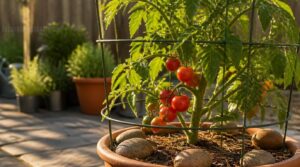
A pot changes the rules a bit, since roots can’t grip soil the way garden beds allow. Pick a broad, level surface placement so wind or fruit weight won’t tip things. Weight the base with stones, keep soil moisture balanced, and mulch over the top to steady root temperature and stem support timing as growth takes off.
Maintain Airflow Between Plants

Once cages are anchored, give them room to breathe. Keep 12 inches of clearance around each cage so wind sweeps through, cutting humidity that invites fungal diseases.
Stagger your layout instead of lining plants in rows, and prune interior suckers regularly, opening ventilated corridors through the canopy that keep leaves dry and stems sturdy.
Improve Harvesting Access
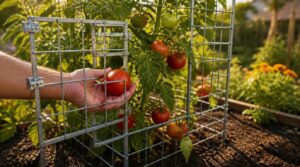
Good airflow means nothing if you can’t reach the fruit without wrestling wire. Choose mesh opening size of 4×4 inches or wider for easy hand reach and clear fruit visibility.
Adjustable square cages and toggle-style curved tops widen the harvest path clearance around the plant’s center, while tool-free adjustments let you reposition panels mid-season as vertical gardening growth demands.
Compare Durability, Storage, and Value
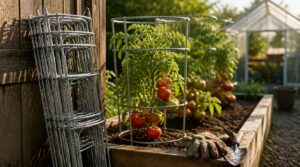
A cage that can’t survive the season, or won’t fold down when it’s over, isn’t saving you money no matter what the price tag says. Durability, storage, and value all work together, and skimping on one usually costs you in another. Here’s what separates a cage worth buying from one you’ll be replacing next spring.
A cage that can’t survive the season or won’t fold away isn’t really saving you money at all
Galvanized Steel Durability
Zinc doesn’t just sit on the surface, it sacrifices itself to protect the steel underneath, which is why galvanized steel shrugs off scratches that would doom painted cages.
That coating often lasts decades before rust becomes a real worry, even with container gardening’s constant watering.
Check welds each spring for pitting; it’s the simplest way to confirm your heavy-duty, rust-resistant investment still has structural integrity.
Coated Cage Weather Resistance
When bare metal won’t cut it, a polymer coating over steel gives you that rust resistant edge coastal and rainy gardens demand.
- UV protection resists chalking
- Corrosion inhibitors fight salt spray
- 60–120 micron thickness standard
- Flexible polyethylene coating resists cracking
- Green coating hides soil stains
Plastic-coated steel stands up to frost cycling without splitting—ideal weather resistance for humid or acidic-rain climates.
End-of-Season Cage Cleaning
Once frost hits, pull every cage and lay it flat for a once-over before the season closes the books. Rinse off caked soil, then scrub with mild soap and a soft brush—never anything abrasive that scars coatings.
Check welds and joints for hidden rust spots, let cages dry fully, then store off the ground in a ventilated spot.
Space-Saving Storage Options
Storage space matters as much as garden space. Foldable frame efficiency shines here: slim folding cages collapse to about 2 inches thick, while stacking wire panels nest flat around 6 inches.
Collapsible towers and telescoping designs shrink to a third of their height, locking bases flat for easy stacking—turning a shed corner into a tidy off-season home.
Affordable Cage Alternatives
Not every gardener wants to spend big, and you don’t have to. Pallet Wood Trellis builds run 3–6 feet tall, holding 15 pounds per plant for pennies. Try these budgetfriendly swaps:
- PVC Ring Systems stacked and expandable
- Fabric Bin Bases for container gardening stability
- Bicycle Rim Spokes tensioned into stakes
Skip toolfree assembly gimmicks—rustresistant reclaimed wood outlasts them.
Frequently Asked Questions (FAQs)
What can be used instead of tomato cages?
Picture your tomato plants sprawling across the ground, fruit rotting where it touches soil. That’s the fate you avoid with Stake Support Systems, garden trellis grids, string training, PVC frames, or grape vine weaving—all solid vegetable trellis alternatives for containers or open beds.
Do small tomato plants need a cage?
Yes, even compact plants benefit: cages deliver structural support, lift fruit for rot prevention, and boost space efficiency in small-space agriculture.
Determinate varieties need lighter support, but containment still improves plant stability, harvesting access, and disease risk reduction in container tomato growing.
How tall should a tomato cage be for tomatoes?
Match height to growth habit: determinate varieties need just 36–48 inches, while indeterminate types demand 48–68 inches of sturdy support, since they keep climbing and fruiting until frost stops them cold.
Where can I get cheap tomato cages?
Last spring a neighbor scored a dozen cages for under twenty bucks at clearance time. Check Tractor Supply and Home Depot for bulk purchase discounts, compare online prices, and grab generic brands during end-of-season clearance sales.
When should rusted or damaged cages be replaced?
Replace once joint corrosion exposes bare metal, rust spots exceed an inch, or coating peels—check every 4–6 weeks.
Bent bars or wobbly frames signal structural failure; galvanized or plastic-coated steel resists this longest, so swap sooner for safety.
How much does a decent tomato cage cost?
Budget picks run 10 to 20 USD, mid-range powder-coated models land around 25 to 45 USD, and heavy-duty welded steel climbs toward 100 USD—cost vs durability usually favors spending a bit more for seasons of reliable, sturdy support.
Do tomato cages work well for peppers too?
Like sturdy scaffolding holding up a growing vine, yes: pepper support stability matters just as much. Use 18–24 inch coated cages, spaced for airflow, installed at transplant time, to prevent stem breakage and rust.
Should cages be installed before or after transplanting?
Install at planting for root health protection and stem damage prevention. Waiting until vegetative growth allows better growth habit observation but risks disturbing roots.
For most gardens, early timing offers stability and easier plant training as the cage holds emerging stems.
Conclusion
Funny thing about a cage that costs less than a pizza: it can save a hundred dollars of tomatoes, or bury them when a July storm hits. That’s the quiet irony behind every flimsy ring at the big-box store.
The best tomato cages for small gardens aren’t the cheapest; they’re the ones sized right, anchored deep, and built to outlast the vine. Choose wisely now, and August will reward you with fruit still standing tall.