This site is supported by our readers. We may earn a commission, at no cost to you, if you purchase through links.
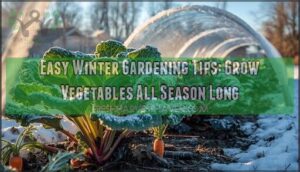
Most gardeners abandon their plots when frost arrives, assuming nothing edible survives those freezing nights. Wrong! Spinach laughs at 0°F temperatures, kale shrugs off 10°F like it’s nothing, and carrots actually taste sweeter after a cold snap converts their starches into sugar.
Your winter garden can produce fresh vegetables right through the coldest months—you just need the right crops and a few protective strategies. With smart planning in late summer, simple row covers, and cold-hardy varieties that thrive in chill, you’ll harvest crisp greens and sweet roots all season long while your neighbors are stuck with grocery store produce.
Table Of Contents
- Best Vegetables to Grow in Winter
- When to Plant Winter Vegetables
- Protecting Your Winter Vegetable Garden
- Winter Garden Soil Preparation Tips
- Caring for Winter Vegetables Successfully
- Top Winter Gardening Products and Tools
- Harvesting and Storing Winter Vegetables
- Frequently Asked Questions (FAQs)
- What is the quickest vegetable to grow in winter?
- What are the best vegetables to grow over winter?
- What companion plants grow well with winter vegetables?
- How do winter vegetables affect soil nutrients?
- Which winter vegetables regrow after cutting?
- What organic fertilizers work best in winter?
- How do you manage garden pests in winter?
- What winter vegetables grow fastest indoors?
- Can winter vegetables survive without greenhouse protection?
- Which winter crops need least sunlight hours?
- Conclusion
Best Vegetables to Grow in Winter
Not all vegetables throw in the towel when temperatures drop! Some crops actually thrive in the cold, developing sweeter flavors and richer nutritional profiles than their summer cousins.
For hands-on advice about maximizing flavor and timing your plantings, check out these fall harvest garden-to-table tips.
Here are the top winter champions that’ll keep your garden productive when most plants have called it quits for the season.
From cold-hardy kale to resilient root vegetables, growing winter herbs outdoors alongside your seasonal crops creates a thriving cold-weather garden.
Kale and Other Hardy Leafy Greens
Kale’s your winter garden MVP! This nutritional powerhouse tolerates temperatures down to 10°F with its impressive frost tolerance, making winter harvesting a breeze.
For tips on maximizing your leafy green yield in chilly conditions, check out these cold-weather gardening techniques that work perfectly with kale’s hardy nature.
You’ll find varieties like ‘Winterbor’ and ‘Lacinato’ thrive alongside mustard greens, arugula, and Swiss chard—all cold-loving leafy greens perfect for greenhouse growing or outdoor beds.
These crops also work beautifully in cold frame setups for extending your harvest season well beyond the first frost.
These brassicas actually sweeten after frost, transforming your winter vegetables into culinary gold!
Brussels Sprouts and Cold-Hardy Brassicas
Beyond kale, you’ll love Brussels sprouts and their brassica cousins—broccoli, cabbage, and cauliflower—for cold climate gardening success. These champions of frost tolerance handle temperatures down to 12°F, making winter harvesting reliable and rewarding! Sprout varieties like ‘Long Island Improved’ actually develop nutty sweetness after frost exposure.
Your brassica care routine stays simple: mulch well, monitor protection, and watch these cold-weather gardening superstars thrive through winter’s chill. For best results, consider using cold hardy vegetables in your winter garden.
Carrots and Sweet Root Vegetables
Root vegetables like carrots and beets transform into something magical when frost hits—temperatures below 41°F trigger starch-to-sugar conversion that makes them noticeably sweeter!
Frost below 41°F triggers a magical transformation in root vegetables, converting starches to sugars that make them noticeably sweeter
Plant these cold weather champions in late summer, let them mature before day length drops below 10 hours, then wait two to four weeks after the first frost.
Your winter harvest timing maximizes sugar content enhancement and delivers superb flavor!
Spinach for Overwintering and Spring Harvest
If you want leafy greens that laugh at winter, spinach varieties like Bloomsdale are your champions! These tough plants survive temperatures around 0°F with frost protection and spring back to life whenever soil temperature hits 40°F.
Plant them in fall using a cold frame or winter mulch, and you’ll harvest fresh salads all winter long—then watch them explode with growth come spring!
Beets and Cold-Weather Root Crops
Beets sweeten up beautifully when cold weather hits, converting starches into sugar around 41°F—making winter-grown beets taste better than summer ones! Hardy varieties tolerate 10°F to 12°F with mulch protection, so you can leave them right in the garden soil as living storage.
Plant beets in late summer, let frost work its magic on beet nutrition, then harvest these nutritious root vegetables fresh all winter long!
When to Plant Winter Vegetables
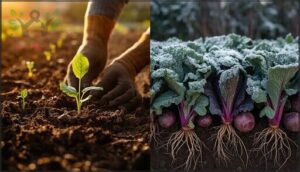
Timing is critical for winter gardening success! Most winter vegetables need to be planted between late summer and early fall—long before the first frost arrives—so they can establish strong roots before temperatures really drop.
Focus on cold-hardy vegetables for winter harvest like kale, spinach, and Brussels sprouts that can handle frost and even taste sweeter after cold exposure.
Let’s break down exactly when you should plant to guarantee fresh vegetables throughout the coldest months.
Late Summer Planting for Fall Harvest
Here’s the secret to mastering winter gardening tips: plant your cool weather crops in late July through August! In central Virginia, that means starting your fall crop selection around mid-July, counting back from your first frost (usually mid-October) plus 28 extra days for slower late season sowing.
This extended harvest technique ensures your cold weather gardening pays off beautifully. Understanding fall planting timelines is essential for a successful harvest.
Early Fall Planting Strategy
By September, shift your cold weather gardening focus to hardy, fast-maturing crops that thrive even as daylight shrinks. These fall gardening tips emphasize frost date planning and season extension techniques for your winter vegetable gardening success.
- Plant lettuce, spinach, and arugula from early to mid-September for fresh greens into December
- Direct-sow radishes and turnips through late September—they’ll mature before hard freezes
- Transplant broccoli starts by September 1st, giving brassicas time to establish strong roots
Monitor soil temperature and adjust your crop selection accordingly!
Succession Planting for Continuous Winter Harvest
Succession planting transforms your winter gardening from a one-shot harvest into a continuous buffet! Sow cold-hardy crops like spinach, lettuce, and kale at two-week intervals from late summer through early fall.
This season extension technique ensures you’re harvesting mature greens while younger plantings size up.
Combine crop rotation with cold frame management to keep your winter harvest rolling—even when outdoor growth stalls during the shortest days.
Understanding Frost Dates and Timing
Frost date calculation isn’t guesswork—it’s your winter crop scheduling roadmap! Your local average last spring frost and first fall frost (usually mid-April and mid-October in places like Ashburn, Virginia) define your planting windows.
But here’s the twist: these are probabilistic forecasts, not guarantees. Check climate zone mapping for freeze thresholds at 32°F, 28°F, and 24°F to master cold-weather gardening, season extension, and reliable winter harvest with smart frost protection timing.
Protecting Your Winter Vegetable Garden
Your winter vegetables won’t survive without protection—frost, wind, and freezing temperatures can wipe out your hard work overnight. The good news? You’ve got several simple, effective ways to shield your crops and extend your harvest deep into winter.
Here’s how to create a protective barrier that keeps your garden thriving when temperatures drop.
Using Row Covers and Low Tunnels
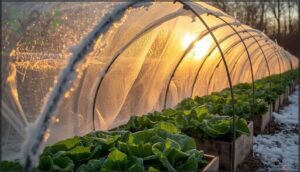
Row covers and low tunnels are your winter garden’s best defense, creating protective microclimates that boost temperatures by 2-10°F! These season extension tools shield crops from frost while blocking pests and wind damage. Here’s what makes them work:
- Floating row covers in lightweight or heavyweight fabric
- Low tunnel hoops spaced 5 feet apart using 10-foot wire
- Clear polyethylene film (1-2 mil thickness)
- Proper ventilation to prevent overheating above 86°F
Building and Using Cold Frames
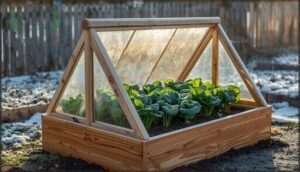
Cold frames work like solar-powered greenhouses, trapping warmth for spinach, kale, and carrots throughout winter! Build yours with rot-resistant larch boards and twinwall polycarbonate glazing for enhanced insulation. Position it facing south on well-drained ground near a windbreak—your winter crop selection will thank you.
Frame ventilation starts at 40°F—prop lids open to prevent overheating! Close them before dusk to lock in warmth for your cold-weather gardening success.
| Frame Component | Best Material Options | Key Benefit |
|---|---|---|
| Walls | Wood, brick, straw bales | Durability & insulation |
| Glazing | Polycarbonate, glass | Light transmission & heat retention |
| Location | South-facing, sheltered | Maximum solar gain |
Mulching to Insulate Plants and Soil
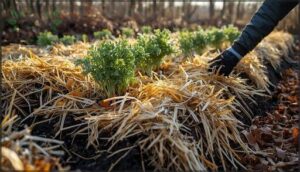
Mulching creates a protective blanket that moderates soil temperature fluctuations—bare ground swings wildly, but a 3-inch layer keeps your root zone stable! Apply straw, shredded leaves, or pine needles after the first hard freeze to insulate carrots and beets without inviting pests.
Essential mulching strategies for winter insulation:
- Wait until after first freeze to discourage rodent nesting
- Apply 2–4 inches around plants, avoiding direct crown contact
- Use straw or leaves for quick decomposition and nutrient enrichment
- Keep soil moisture consistent during dry, windy winter spells
- Prevent erosion from snowmelt with protective surface coverage
Choosing The Best Garden Location
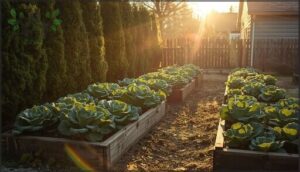
Where you place your winter garden matters more than most beginners realize. You’ll want at least 8 hours of direct sunlight daily—southern exposures warm the soil faster and boost photosynthesis during short winter days. Avoid low spots where cold air pools and water collects; gentle slopes with good drainage prevent root rot and frost damage. Wind protection near structures or hedges reduces chilling injury and keeps your hardy crops thriving!
| Site Factor | Ideal Condition | Why It Matters |
|---|---|---|
| Sunlight Exposure | 8–10 hours direct sun | Faster soil warming, better growth |
| Soil Selection | Well-drained, sloped beds | Prevents waterlogging and root rot |
| Wind Protection | Sheltered by fence or building | Reduces heat loss and physical damage |
Winter Garden Soil Preparation Tips
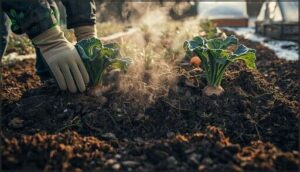
Your winter garden’s success starts long before the first frost hits. Healthy soil is the foundation that keeps cold-hardy vegetables thriving through freezing temperatures, snow, and ice.
Let’s walk through three essential soil preparation strategies that’ll set you up for a productive winter harvest.
Improving Drainage for Cold Weather
Waterlogged soil kills winter vegetables faster than frost ever will! Raised beds are your best defense, lifting roots above soggy ground and warming earlier in spring.
Combat soil compaction by loosening beds now—dense soil drowns roots in cold-weather gardening. Layer 3–4 inches of organic mulch (straw, wood chips) to prevent surface crusting and boost infiltration.
For seriously wet sites, install gravel subsurface drainage beneath beds to channel excess water away from your winter garden.
Adding Organic Matter and Fertilizers
Healthy winter vegetables demand nutrient-rich soil you build now—not later! Work 2–4 inches of fully aged compost into new beds several weeks before planting, giving microbes time to stabilize nutrients for hungry roots.
Your soil-building essentials:
- Compost application: 1 inch annually maintains established beds perfectly
- Manure usage: Only fully composted manure (131°F+ for three days) ensures pathogen safety
- Fertilizer timing: Apply moderate phosphorus and potassium in fall; limit nitrogen to prevent frost-tender growth
- Organic matter: Improves drainage, water retention, and aggregate stability through brutal winter weather
- Soil amendments: Layer 2–4 inches of organic mulch late fall for erosion protection and gradual nutrient release
Preparing Beds in Late Summer
By mid-August, your winter garden success story is already being written—in the soil prep work you tackle before autumn’s first chill arrives. Check soil temperature (ideally 50–75°F for late summer sowing), clear spent crops, and map your garden layout with frost protection zones in mind.
This bed preparation window sets the foundation for successful vegetable gardening through winter’s toughest months!
Caring for Winter Vegetables Successfully
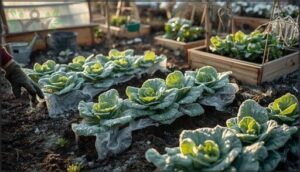
Once your winter vegetables are planted and protected, your work isn’t over—it’s just getting started! The cold months require a different approach to watering, monitoring, and pest management than you’d use during the growing season.
Here’s how to keep your winter garden thriving until harvest time.
Proper Watering Techniques in Cold Weather
Winter garden care hinges on smart irrigation timing and soil moisture checks. Your cold-weather gardening tips should emphasize water conservation—test soil 1–2 inches down before watering, and irrigate deeply 12–24 hours before a freeze for freeze protection. Avoid watering when temperatures dip below 40°F.
These cold weather strategies prevent root rot while keeping winter gardening simple and successful!
Monitoring and Maintaining Plant Protection
Check your row covers, cold frames, and mini hoop tunnels daily when weather shifts—inside temperatures can swing 20–35°F above outside air! Inspect for tears, gaps, or sagging after storms to maintain frost protection and soil insulation.
Vent on sunny days above 70°F to prevent overheating. Replace worn materials promptly for consistent crop protection, winter mulching performance, and reliable pest control all season.
Managing Pests in Winter Gardens
Cold-weather gardening disrupts pest life cycles naturally, but don’t skip sanitation methods—remove crop debris and weeds before winter to eliminate overwintering sites!
Use barrier techniques like floating row covers for crop protection and integrated management combining monitoring with biological controls such as lacewings or lady beetles.
These strategies keep your winter garden thriving while maintaining effective vegetable gardening practices all season.
Top Winter Gardening Products and Tools
The right tools can make all the difference when you’re gardening in cold weather. From protective gear that keeps your hands warm to the books that’ll teach you season-extension secrets, a few smart investments set you up for winter success.
Here are five products that’ll help you grow fresh vegetables even when snow’s on the ground!
1. Growing Under Cover Garden Book
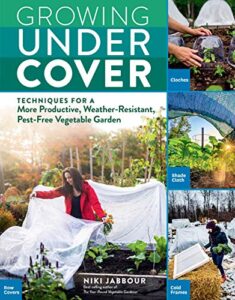
You’ll want Niki Jabbour’s Growing Under Cover on your winter garden bookshelf—it’s packed with 216 pages of proven techniques for mastering season extension! This exhaustive guide walks you through building cold frames, mini hoop tunnels, and row covers that create protective microclimates for cold-weather gardening success.
You’ll discover how garden covers exclude pests, extend winter harvesting windows, and boost productivity year-round. At just $13.84, it’s an invaluable resource whether you’re protecting a small raised bed or managing a larger winter garden plot!
| Best For | Home gardeners who want to extend their growing season, protect crops from pests and weather, and harvest fresh vegetables year-round using physical covers like row covers, cold frames, and hoop tunnels. |
|---|---|
| Primary Use | Season extension guide |
| Target Season | All seasons |
| Skill Level | Beginner to advanced |
| Price Range | $13.84 |
| Durability | Long-term reference |
| Weather Protection | Educational coverage |
| Additional Features |
|
- Comprehensive coverage of protective structures from simple cloches to full greenhouses, with practical construction details and real garden photos
- Proven techniques for pest exclusion and season extension that reduce pesticide use while increasing harvest windows and overall productivity
- Accessible to beginners and experienced gardeners alike, with affordable price point and methods that work in small spaces or larger plots
- Requires investment in materials and space for protective structures, which may not be practical for all gardeners
- Heavy focus on growing under cover might feel limiting to those preferring traditional open-bed gardening methods
- Effectiveness depends heavily on your specific climate and growing conditions, so some techniques may not translate to all regions
2. Tierra Garden Poly Tunnel Cloche Protector
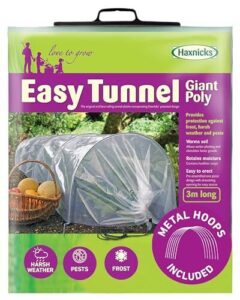
The Tierra Garden Haxnicks Easy Poly Tunnel delivers serious season extension benefits without breaking your budget! This 118″L × 24″W × 18″H cloche features UV-stabilized polyethylene and rust-proof galvanized hoops that create a protective microclimate, raising temperatures 4°C above ambient air.
You’ll love the accordion-style design—just pull it open over your vegetable rows, secure the drawstring ends for ventilation control, and watch your cold-weather crops thrive under shelter from frost, pests, and harsh winds!
| Best For | Home gardeners who want to extend their growing season and protect vegetable rows from frost, pests, and harsh weather without complicated setup. |
|---|---|
| Primary Use | Row cover protection |
| Target Season | Cold weather |
| Skill Level | All levels |
| Price Range | Under $20 |
| Durability | 1 year lifespan |
| Weather Protection | Frost and wind |
| Additional Features |
|
- One-piece accordion design makes setup and storage incredibly easy—no wrestling with loose plastic or separate hoops
- Creates a warm microclimate that can raise temperatures around 4°C, letting you plant earlier in spring and harvest later into fall
- Drawstring ends give you full control over ventilation, so you can prevent overheating on sunny days while keeping frost out at night
- You’ll need to manually water since the solid plastic cover blocks rain from reaching your plants
- The lightweight polyethylene may tear or degrade after about a year of outdoor use, requiring replacement
- Won’t hold up well under heavy snow loads or extreme winds without additional support like PVC pipe reinforcement
3. Year Round Vegetable Gardener Book
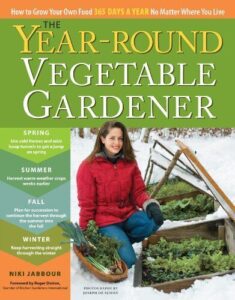
Niki Jabbour’s The Year-Round Vegetable Gardener is your blueprint for four-season gardening success, even in cold climates! This 256-page manual (Storey Publishing, 2011) transforms season extension from theory into practice, with detailed instructions for building low tunnels, managing cold frames, and selecting cold-hardy varieties like winter-sweet carrots and sturdy kale.
You’ll discover succession planting strategies, intensive spacing techniques, and precise timing charts that turn your garden into a year-round harvest machine—no matter how harsh your winters get!
| Best For | Home gardeners in cold climates who want to harvest fresh vegetables year-round without expensive heated greenhouses. |
|---|---|
| Primary Use | Year-round gardening book |
| Target Season | All year |
| Skill Level | Beginner to experienced |
| Price Range | Under $20 |
| Durability | Long-term reference |
| Weather Protection | Climate guidance |
| Additional Features |
|
- Step-by-step plans for building affordable season-extension structures like low tunnels and cold frames that actually work in harsh winters
- Specific cold-hardy variety recommendations and precise planting timing charts take the guesswork out of four-season gardening
- Field-tested techniques from Nova Scotia (a challenging climate with heavy snowfall) prove the methods work in real-world conditions, not just theory
- Advanced gardeners already familiar with season extension may find the content too basic for their experience level
- Heavy focus on the author’s Nova Scotia climate means some regional advice won’t translate perfectly to different zones
- At 8.5 x 11 inches, the book’s large format makes it awkward to carry outside for quick reference while working in the garden
4. Superior Glove Freezer Winter Gloves

Your hands deserve protection while tending your cold-weather garden! Superior Glove’s Freezer Winter Gloves (model SNTAPVC) combine nylon shells with fleece linings for reliable insulation down to 23°F, perfect for winter gardening tasks.
The palm coating delivers outstanding cold weather grip whether you’re harvesting root vegetables or adjusting row covers, while ANSI A3 cut protection and touchscreen compatibility add practical versatility.
These insulated gloves maintain winter dexterity without the bulk, keeping your fingers nimble for delicate transplanting and precise pruning work!
| Best For | Gardeners and outdoor workers who need reliable hand protection for cold-weather tasks like harvesting, pruning, and handling tools in temperatures down to 23°F. |
|---|---|
| Primary Use | Cold weather gloves |
| Target Season | Winter |
| Skill Level | Professional use |
| Price Range | $10-30 |
| Durability | Multi-season use |
| Weather Protection | -5°C rated |
| Additional Features |
|
- Dual-layer insulation with nylon and fleece keeps hands warm while maintaining enough dexterity for detailed garden work
- Palm coating provides solid grip on wet or dry tools and materials without stiffening in cold weather
- Touchscreen-compatible design lets you check weather apps or take photos without removing your gloves
- Temperature rating of 23°F means they won’t cut it for extremely cold days below zero
- Water-resistant palm coating doesn’t extend to the whole glove, so prolonged exposure to wet snow or rain will soak through
- Some users report the sizing runs small, so you might need to order up a size for a comfortable fit
5. Buttercrunch Heirloom Lettuce Seeds
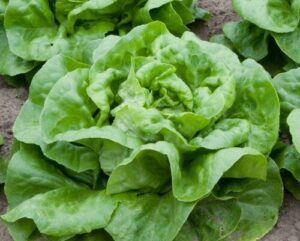
Buttercrunch heirloom lettuce seeds bring outstanding value to your cool season growing lineup! This 1963 All-America Selections winner produces compact 4.5-inch heads with crispy, sweet leaves in just 45 days, showing impressive heat tolerance for extended harvests.
With 2,000+ seeds per packet and a 90% germination rate (usually sprouting in 5-10 days), you’ll enjoy abundant leafy greens for fresh winter salads. The slow-bolting nature makes Buttercrunch ideal for succession planting—perfect gardening tips for continuous cold weather gardening success with nutritious winter vegetables!
| Best For | Home gardeners looking for a reliable, easy-to-grow heirloom lettuce that produces sweet, crispy heads quickly and tolerates warmer weather better than most butterhead varieties. |
|---|---|
| Primary Use | Lettuce seeds |
| Target Season | Spring/summer |
| Skill Level | All levels |
| Price Range | Under $10 |
| Durability | Single season |
| Weather Protection | Moderate needs |
| Additional Features |
|
- Produces compact, flavorful heads in just 45 days with an impressive 90% germination rate and over 2,000 seeds per packet
- Slow to bolt and more heat-tolerant than typical butterhead lettuces, giving you a longer harvest window through spring and early summer
- Award-winning 1963 All-America Selections variety that’s versatile enough for containers, hydroponics, or traditional garden beds
- Some users have reported low or no germination, so results may vary depending on growing conditions and seed storage
- Indoor-grown plants without full sun can produce thin, flimsy leaves that lack the crisp texture this variety is known for
- Attracts pests like woodchucks and may require thinning and ongoing pest management for best results
Harvesting and Storing Winter Vegetables
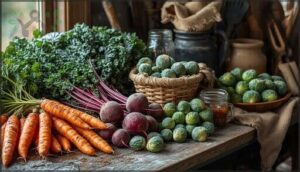
You’ve done the hard work of planting and protecting your winter garden—now comes the rewarding part! Knowing when and how to harvest your cold-weather crops makes all the difference in flavor, texture, and how long your bounty lasts.
Let’s walk through the best practices for bringing in your winter vegetables and keeping them fresh for weeks to come.
When to Harvest Root Vegetables
Frost actually makes your root vegetables taste better! Carrots and beets sweeten dramatically after several light freezes, as cold temperatures trigger starches to convert into sugars.
You’ll know carrots are ready when they reach 50 to 80 days from planting, while beets should be golf-ball sized for baby roots or baseball-sized for roasting. Root vegetable timing depends more on size than calendar dates—check those root shoulders for firmness!
Harvesting Leafy Greens at Peak Freshness
Morning harvests deliver the crispest, most flavorful greens—that’s when leaves are fully hydrated and sugar content peaks! Handle these delicate leaves gently to preserve peak nutrition and freshness—bruised greens deteriorate faster than you’d think.
Cut outer leaves first, leaving the center to produce more growth. Your leafy greens taste sweetest after light frost exposure, so don’t rush your winter harvest!
Storage Methods for Winter Produce
Proper cold storage transforms your winter harvest into months of fresh eating! Root vegetables thrive in root cellars at 32-40°F with 90-95% humidity—layer carrots, beets, and turnips in moist sand for maximum freshness.
Leafy greens need refrigeration tips: store at 35-40°F in crisper drawers, away from ethylene-producing fruits.
Winter squash requires curing methods—cure butternut and hubbard varieties for 10 days before cool, dry storage to harden those protective rinds!
Enjoying Fresh Vegetables All Winter Long
Your winter garden delivers fresh produce when supermarkets charge premium prices—that’s true season extension! Harvest kale and leafy greens continuously through January, dig root vegetables from mulched beds whenever needed, and watch cold weather transform starches into natural sugars.
Strategic garden planning means Brussels sprouts sweeten after frost, while succession-planted greens supply salads all winter. You’re eating peak-fresh winter vegetables from your own backyard!
Frequently Asked Questions (FAQs)
What is the quickest vegetable to grow in winter?
Microgreens growth reaches harvest in just 7–21 days indoors, making them the fastest growing greens!
Radish varieties and arugula harvest follow close behind at roughly 22–30 days, even in cold weather crops conditions.
What are the best vegetables to grow over winter?
The best vegetables to grow over winter are cold hardy leafy greens like kale and spinach, frost tolerant brassicas such as Brussels sprouts, and sweet root crops including carrots and beets.
What companion plants grow well with winter vegetables?
Companion planting amplifies your winter garden’s success! Pair brassicas with garlic to repel pests, grow beets alongside leafy greens for efficient spacing, and plant carrots near onions—these cold-hardy combinations thrive together beautifully.
How do winter vegetables affect soil nutrients?
Your crops work like underground miners, pulling nutrients from deep soil layers and redistributing them near the surface.
They boost soil nitrogen, increase carbon sequestration, improve microbial activity, and strengthen overall soil fertility through active nutrient cycling.
Which winter vegetables regrow after cutting?
Think of your garden like a haircut that grows back—Regrowing Kale, Spinach, Swiss chard, Cut Greens, and Brassicas rebound after cutting, offering a steady Winter Harvest, Leaf Regeneration, and unbeatable Frost Tolerance for leafy greens and some root vegetables.
What organic fertilizers work best in winter?
Your winter garden thrives with compost tea, worm castings, and aged manure applied during soil preparation.
Fish emulsion works for quick nitrogen boosts, while greensand slowly releases minerals—perfect for sustainable gardening practices.
How do you manage garden pests in winter?
Cold weather naturally reduces pest pressure in your winter garden.
You’ll still want to check regularly for aphids and slugs, using organic pest management methods like handpicking or insecticidal soap when needed.
What winter vegetables grow fastest indoors?
You’ll harvest microgreens in just 7-14 days—faster than any full-size crop!
Baby lettuce, radishes, and fast spinach follow close behind at 4-6 weeks indoors, perfect for rapid harvest when winter hits hard outside.
Can winter vegetables survive without greenhouse protection?
Many winter vegetables thrive outdoors without greenhouses. Kale, Brussels sprouts, carrots, and spinach demonstrate excellent frost tolerance and cold hardiness, surviving freezing temperatures with simple row covers, mulch, or even completely exposed in milder climates.
Which winter crops need least sunlight hours?
Leafy greens like spinach, kale, and arugula shine in shady winter gardens, thriving with just 3-4 hours of sunlight daily.
These shade-tolerant, frost-resistant cold hardy crops deliver bountiful winter harvests even in low light conditions!
Conclusion
The coldest months can yield your warmest gardening victories. While others huddle indoors convinced nothing grows, you’ll be bundled up harvesting sweet carrots and crisp kale from beneath the snow. These easy winter gardening tips vegetables transform what seems like gardening’s end into its most rewarding chapter.
Frost isn’t your enemy—it’s your secret ingredient. Plant strategically, protect wisely, and discover that winter’s garden offers flavors summer never could.
- https://www.gardenary.com/blog/12-frost-resistant-herbs-and-vegetables-to-grow-in-winter
- https://growingformarket.com/articles/20071229_31
- https://createmygarden.net/growing-fall-winter-vegetable-container/
- https://homesteadingfamily.com/gardening-in-winter-cold-weather-growing-methods/
- https://wearevita.com/blogs/learning/create-a-winter-vegetable-garden