This site is supported by our readers. We may earn a commission, at no cost to you, if you purchase through links.
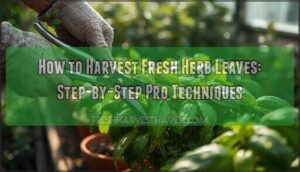
Most gardeners clip their herbs with casual abandon, then wonder why their basil turns bitter or their plants peter out by midsummer. The truth is, harvesting fresh herb leaves isn’t just about cutting what you need—it’s a surgical strike that can triple your yield or accidentally trigger early flowering and weak, flavorless growth.
Cut above the wrong node, harvest at the wrong hour, or skip sanitizing your shears, and you’re sabotaging months of careful cultivation.
Master the timing and technique, though, and you’ll transform scraggly stems into relentless producers that pump out aromatic leaves for months. The difference between mediocre herbs and restaurant-quality flavor lives in those critical seconds when your blade meets the stem.
Table Of Contents
- Key Takeaways
- Why Proper Herb Harvesting Matters
- Best Times to Harvest Fresh Herbs
- Tools and Preparation for Herb Harvesting
- Step-by-Step Herb Harvesting Techniques
- Harvesting Different Types of Herbs
- Postharvest Handling and Microbial Safety
- Storing and Preserving Fresh Herb Leaves
- Frequently Asked Questions (FAQs)
- Conclusion
Key Takeaways
- Harvest herbs in the morning after dew dries but before midday heat to capture peak essential oil concentration—thyme cut at noon contains 58% more extractable aroma than evening picks, directly controlling flavor intensity and shelf life.
- Cut strategically above the fourth or fifth node while removing no more than one-third of foliage per session to trigger explosive regrowth—this technique can boost basil yield by 67% and multiply fresh mass tenfold through hormonal activation.
- Sanitize your cutting tools with 70% rubbing alcohol between plants and use sharp, clean blades to prevent disease spread and tissue damage—crushed stems from dull tools invite pathogens and sabotage the plant’s ability to recover quickly.
- Time your harvest before flowering begins to capture tender leaves with balanced aroma at their prime, as post-flowering cuts risk bitterness, tougher texture, and reduced essential oil content that weakens culinary impact.
Why Proper Herb Harvesting Matters
You might think harvesting herbs is just about grabbing what you need for dinner, but there’s actually a method behind those snips and cuts.
The way you harvest directly shapes your plant’s health, the intensity of flavor in your kitchen, and how much you’ll get from future harvests.
Let’s break down exactly why your technique matters more than you’d expect.
Benefits for Plant Health
Your power over your herb garden starts with understanding how harvesting techniques transform plant health. When you cut strategically, you’re not just gathering ingredients—you’re commanding stronger plants:
- Stimulates explosive leaf production through hormonal activation at cut nodes
- Forces sturdy branching, converting single stems into bushy, productive canopies
- Opens dense foliage for excellent airflow, slashing fungal disease risk
- Extends herb longevity by preventing premature flowering and resource depletion
- Maximizes healthy yield through optimized photosynthetic capacity and regrowth cycles
By adopting proper pruning techniques, such as those related to plant health benefits, gardeners can markedly improve the overall well-being of their herb plants.
Influence on Flavor and Aroma
Your harvest clock dictates whether your herbs explode with flavor or taste flat. Timing controls essential oil concentration—the chemical foundation of aroma preservation and flavor intensity. Summer savory harvested at full bloom delivers maximum oil yield, while thyme cut at noon contains 58% more extractable aroma than evening picks. Morning cuts capture peak sensory quality before sun and heat burn off those volatile compounds that make culinary herb usage life-changing. Understanding the impact of environmental factors is vital for optimizing harvest time and essential oil yield.
| Harvest Window | Oil Concentration Impact | Flavor Enhancement Result |
|---|---|---|
| Morning (6–11 AM) | Thymol peaks; oils 33% higher in dry weight | Sharp, clean flavor dominance |
| Midday (12 PM) | Maximum fresh-leaf volatile content | Full-bodied aroma preservation for immediate use |
| Late Day (5 PM) | Carvacrol rises; total oils drop 36% | Softer, warmer flavor profile but weaker intensity |
Maximizing herb flavor and aroma means harvesting fresh herbs when their chemistry works for you, not against you—that’s flavor enhancement techniques you can taste.
Encouraging Regrowth and Yield
Cut smart and your plants reward you with explosive regrowth. Pruning techniques that leave more stem—15 cm versus 5 cm—boost basil yield by 67%, while node management (cutting after the fourth or fifth node) multiplies fresh mass tenfold.
Strategic pruning—leaving 15 cm of stem and cutting after the fourth node—can boost basil yield by 67% and multiply fresh mass tenfold
Canopy development thrives when you remove only a third of foliage per week, triggering branching that doubles future stems.
That’s yield optimization through strategic harvesting techniques, not luck.
Best Times to Harvest Fresh Herbs
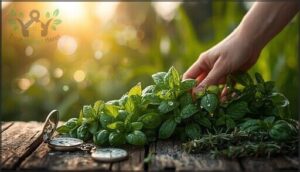
Timing isn’t just a detail—it’s the difference between herbs that sing with flavor and leaves that fall flat. The clock, the calendar, and even the weather all play a role in when you should reach for your shears.
Let’s break down exactly when to harvest so you can capture your herbs at their absolute peak.
Morning Vs. Afternoon Harvests
Timing isn’t just about convenience—it’s about capturing peak flavor when essential oils sit at their daily high point. Diurnal Oil Variation means morning harvest benefits far outweigh afternoon efforts, giving you control over taste intensity and shelf life.
Why morning harvesting techniques dominate:
- Essential oil peaks occur after dew dries but before midday heat
- Leaves stay turgid and resist bruising during handling
- Harvest timing effects preserve aroma that afternoon sun evaporates
- Daily flavor shifts mean fresh herbs cut early taste noticeably stronger
- Cooler harvest time extends refrigerated storage by several days
Your herb harvesting window matters more than you’d think.
Pre-Flowering Vs. Post-Flowering Timing
Often, your best herb harvest comes just before flowers open—that’s when flavor profiles peak and leaf quality hits its prime. Pre-flowering harvesting techniques deliver tender leaves with balanced aroma, while post-flowering cuts risk bitterness and tougher texture.
Smart harvest scheduling around bloom cycles controls oil yield and regrowth patterns, letting you harvest time after time instead of watching your plants fade into woody mediocrity.
Seasonal and Climatic Considerations
Your climate zone sets your harvest windows—rosemary thrives year-round in zones 7–10, while mint tolerates zones 3–10 but stops producing through winter. Temperature thresholds matter: basil blacks out below 10 °C, and frost kills tender annuals instantly.
Drought effects reduce leaf mass even when boosting oils. Humidity control prevents mold on wet leaves, so skip rainy-day harvesting and let morning dew evaporate first.
Tools and Preparation for Herb Harvesting
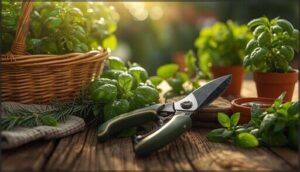
You can’t harvest herbs like a pro without the right gear in your hands. Clean, sharp tools protect your plants from stress and disease while making each cut precise and smooth.
Let’s get your setup dialed in so you’re ready to harvest with confidence every single time.
Choosing and Sanitizing Tools
Your harvesting blades are the gatekeepers of quality—dirty tools spread plant disease and human pathogens like wildfire through your garden. Tool selection starts with sharp, clean scissors or pruning shears that make precise cuts.
Sanitizing methods matter: wipe blades with 70% rubbing alcohol between plants, or soak in bleach solution for thirty minutes. Cleaning protocols and blade maintenance aren’t optional—they’re your insurance against contamination during herb harvesting techniques.
Using Harvest Baskets and Gloves
Your hands and containers become contamination vectors the moment you step into the garden—glove hygiene practices and harvest basket materials determine whether you’re protecting or poisoning your crop.
Choose breathable, aerated baskets that prevent moisture buildup and mechanical damage during herb harvesting.
Wash hands before donning gloves, change them between tasks, and scrub baskets with sanitation protocols before each use to slash herb contamination risks and safeguard fresh handling techniques.
Preventing Disease Spread
Your shears carry yesterday’s infection to today’s harvest—break that chain with deliberate sanitation methods and watch your herb hygiene transform. Scrub harvesting tools with detergent, then sanitize using 50–200 ppm chlorine solution between plants to stop contamination control failures.
Document your microbial management routine as part of plant care and maintenance. These disease resistance strategies aren’t optional in herb gardening tips—they’re survival tactics that protect every future cutting and harvesting technique you’ll employ.
Step-by-Step Herb Harvesting Techniques
Now that you’ve got your tools ready and know when to harvest, it’s time to learn the actual techniques that’ll keep your plants thriving. The way you cut makes all the difference between a herb that bounces back stronger and one that struggles to recover.
Let’s break down the three core methods that’ll turn you into a confident harvester who gets maximum yield without harming your plants.
The One-Third Rule Explained
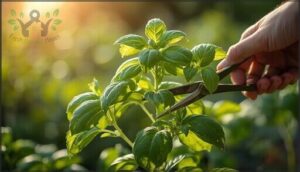
Think of your herb plant as a power source—strip more than one-third of its leaves at once, and you’ll drain the reserves it needs to bounce back.
This harvest limit is your defoliation strategy for fresh herbs: keep removal under 33% per cutting, and you’ll maintain vigorous regrowth patterns while maximizing herb yield throughout the season.
That’s sustainable herb gardening in action.
Pinching, Snipping, and Cutting Methods
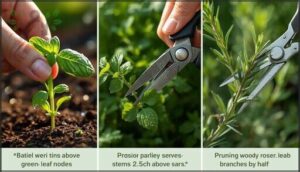
You’ve mastered the one-third rule—now command three harvesting techniques that reveal regrowth strategies and harvest optimization.
Pinch techniques work best for bushier basil: squeeze stem tips between thumb and forefinger above a leaf node to trigger lateral branching.
Snip timing matters when you’re harvesting fresh herbs like parsley—use sharp cutting tools 2.5 cm above soil for rapid comeback.
Cutting back perennials like rosemary by half stimulates tender new growth you’ll actually want to cook with.
Avoiding Damage to Plants
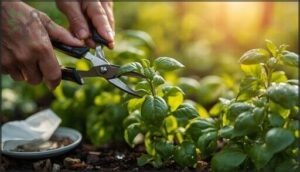
Sharp, clean cuts protect your plant’s vascular highways—crushed stems invite pathogens and slow regrowth strategies. Tool sanitization between plants stops disease spread cold. Harvest timing in early morning reduces plant stress management challenges when turgor’s high. Never strip one stem bare or tear tissue by hand.
- Make cuts just above leaf nodes to trigger two new shoots per stem
- Disinfect blades with alcohol before each harvesting herbs session
- Leave 4–6 inches of foliage on annuals for stem protection
- Harvest outer stems first to preserve central structure
- Avoid midday cuts when heat amplifies wilting stress
Harvesting Different Types of Herbs
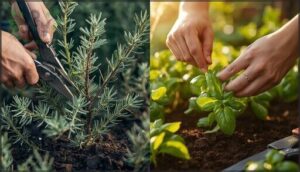
Not all herbs are created equal—some thrive on aggressive cutting, while others need a gentler hand. Understanding whether you’re working with soft-stemmed annuals or woody perennials changes everything about your harvest technique.
Let’s break down the specific approaches that’ll help you master each type and keep your plants producing all season long.
Leafy Annual Herbs (e.g., Basil, Parsley)
Harvesting herbs like basil and parsley demands perfect timing—catch them late afternoon for extended shelf life and minimal chilling damage. You’ll release excellent flavor enhancement and leaf regrowth by removing only the upper third at each cut.
Storage methods matter: basil thrives at room temperature in water, while parsley tolerates refrigeration. Master these fresh herbs techniques, and you’ll control herb quality from garden to table.
Woody Perennial Herbs (e.g., Rosemary, Thyme)
Unlike their tender annual cousins, woody perennial herbs like rosemary and thyme demand different harvesting fresh herbs techniques. You’ll boost harvest optimization and herb regeneration by trimming only the green tips—never cut into older woody stem care zones.
Focus on perennial maintenance using these pruning techniques:
- Harvest every 2–3 weeks for rosemary, removing no more than one-third
- Cut thyme every 4–6 weeks during active growth
- Trim on dry mornings after dew evaporates
- Stop pruning by August to harden tissue before winter
Tips for Popular Culinary Herbs
Each culinary herb demands its own harvesting rhythm for peak herb flavor enhancement and aromatic oil extraction. Basil thrives when you cut stems at 42 days, boosting leaf texture management and freshness preservation methods. Parsley needs 15–20 cm height before harvest, while cilantro bolts fast in heat—choose slow-bolt varieties.
Mint rewards aggressive cutting when lower leaves yellow, and chives bounce back strongest with monthly trims, perfecting your culinary herb pairing game through smart herb gardening.
Postharvest Handling and Microbial Safety
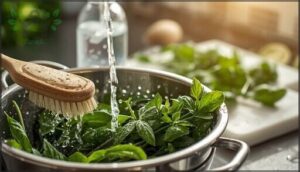
Once you’ve cut your herbs, the real work begins—keeping them clean and safe to eat. Poor handling after harvest can introduce unwanted bacteria or parasites, turning your fresh bounty into a health risk.
Let’s walk through the essential steps to wash, sanitize, and handle your herbs like a pro.
Washing and Cleaning Fresh Herbs
Once your fresh herbs are cut, you need to wash them right—not just to remove dirt, but to reduce microbial loads that could compromise freshness preservation. Cool running water is your best ally for herb rinsing, stripping away surface contaminants without damaging delicate leaves.
Here’s how to handle culinary herbs like a pro:
- Use fresh, cool running water—never soak herbs in a standing sink
- Gently swish leaves under the stream to dislodge dirt and insects
- Skip commercial produce cleansers; potable water quality alone works effectively
- Pat dry with clean paper towels or spin in a salad spinner
- Discard any yellowing or spotted leaves before washing to prevent contamination spread
Proper herb care at this stage sets you up for excellent herb storage and preservation later.
Reducing Microbial Contamination
Vigilance at harvest can slash contamination risks before they escalate. Surveillance data reveals basil can harbor Cyclospora at 9.2% and Salmonella at 2.8%, while cilantro and parsley show lower rates—yet any slip in water quality or hygiene practices during cutting can escalate these numbers fast.
Here’s your contamination control toolkit:
| Control Point | Action |
|---|---|
| Water Quality | Use potable water; verify microbial indicators regularly |
| Sanitizer Efficacy | Apply 50–200 ppm chlorine for 1–3 log reductions |
| Tool Sanitation | Disinfect blades between batches to prevent spread |
| Microbial Testing | Monitor process water and surfaces for pathogens |
| Freshness Preservation | Store below 4 °C immediately after washing |
Smart contamination control now means safer fresh herb storage and extended food preservation later.
Safe Handling Practices
Hand hygiene stands as your first defense—20 seconds of thorough soap-and-water washing before and after touching fresh herbs cuts diarrheal illness risk by up to 40%.
Clean equipment matters just as much: sanitized knives and cutting boards prevent cross contamination from moving pathogens onto your harvested leaves.
These sanitation methods aren’t optional extras—they’re core food safety practices that protect every step from harvesting herbs through herb storage and preservation.
Storing and Preserving Fresh Herb Leaves
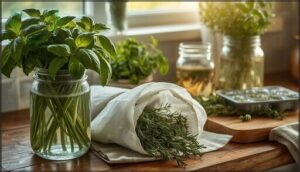
Once you’ve harvested your herbs, the clock starts ticking on their freshness. How you store them determines whether they’ll stay vibrant and flavorful for days—or turn into brown, wilted disappointments by tomorrow.
Let’s break down the most effective methods for keeping your harvest at its peak, from quick refrigerator tricks to long-term preservation techniques.
Short-Term Refrigeration Methods
You’ve mastered herb harvesting—now keep that quality alive. For soft herbs like basil and parsley, the jar-and-water trick works wonders: stand stems upright in 2–3 cm of water, refrigerate at 3–5 °C, and change the water every few days for up to two weeks of vibrant freshness.
Hardy herbs like rosemary and thyme prefer a damp paper towel wrap in ventilated plastic bags, extending their shelf life to three weeks.
Drying and Freezing Techniques
Want shelf-stable flavor bombs? Air Drying Methods preserve herbs in 7–14 days when you hang bundles in darkness at 20–25 °C—moisture control is everything. Dehydrator Settings of 95–115 °F finish the job in 2–4 hours without destroying volatile oils. Freezing Techniques lock in color and aroma for months, though blanching cuts vitamin C by half.
Master these Herb Preservation Methods and you’ll command flavor year-round.
Maintaining Flavor and Freshness
Preservation locks in potential—Quality Control turns it into power. Your Fresh Herb Storage strategy determines whether aroma vanishes in days or lingers for weeks. Flavor Enhancement and Freshness Preservation demand precision:
- Store at 0 °C for 3-week shelf life versus 2 weeks at 5 °C
- Maintain humidity above 95% to prevent wilting
- Wash in sanitized water to cut microbial loads
- Keep large-leaved herbs like basil away from freezing zones
- Monitor respiration rates—warmer temps spike CO2 production 9-fold
Master Aroma Retention through temperature control and you’ll command peak flavor on your terms.
Frequently Asked Questions (FAQs)
Can I harvest herbs after the first frost?
You’re not out of luck yet—hardy herbs like thyme, mint, parsley, and chives tolerate light frosts and remain harvestable.
Tender basil, however, won’t survive freezing temperatures, so grab it beforehand.
How do I revive wilted herbs after harvesting?
Your wilted herbs aren’t lost—just thirsty. Plunge them into ice water for 10–30 minutes to revive limp leaves fast.
Cold water revival restores crispness through rapid rehydration, bringing back their fresh-cut vitality.
Which herbs should not be harvested together?
Fennel’s allelopathic effects sabotage most herb pairings—it’ll stunt basil and neighbors ruthlessly.
Never harvest strong-scented herbs like rosemary with delicate ones; cross-contamination ruins flavors.
Keep ethylene-sensitive herbs separated, and sanitize tools between cuts to prevent microbial transfer across your herb garden.
Do different soil types affect harvest frequency?
Soil texture drives water retention and root development—loam soils hold moisture better than sand, supporting faster herb growth and shorter harvest intervals.
Richer fertility levels in your herb garden mean more frequent cutting without exhausting plants.
Can I harvest from seedlings or only mature plants?
Hold off on aggressive cutting until your herb plants advance beyond their delicate early growth stages. Seedling harvesting stunts development—young plant care demands patience.
Wait for vigorous leaf development and established herb maturity before applying standard harvesting methods confidently.
Conclusion
Studies show that properly harvested herbs produce up to 40% more essential oils than carelessly clipped plants—proof that your technique directly shapes potency.
You’ve now got the blueprint for harvesting fresh herb leaves that keeps plants vigorous and flavor concentrated. Sanitized shears, strategic morning cuts, and respect for the one-third rule aren’t extra steps—they’re your leverage over mediocrity.
Execute with precision, and your kitchen will never suffer from bland, store-bought substitutes again.
- https://pmc.ncbi.nlm.nih.gov/articles/PMC4243263/
- https://www.sciencedirect.com/science/article/abs/pii/S0304423820301643
- http://pse.agriculturejournals.cz/artkey/pse-202107-0007_effects-of-harvest-stage-and-diurnal-variability-on-yield-and-essential-oil-content-in-mentha-piperita-l.php
- https://journals.plos.org/plosone/article?id=10.1371%2Fjournal.pone.0324133
- https://www.facebook.com/groups/GardenFundamentals/posts/1644584289345327/