
This site is supported by our readers. We may earn a commission, at no cost to you, if you purchase through links.

Whiteflies don’t announce themselves. One week your tomatoes look fine; the next, you tap a leaf and a pale cloud lifts into the air like ash from a fire. By the time most gardeners notice, the infestation has already spread two or three plants deep. The insects feed on the undersides of leaves, draining sap and coating foliage in sticky honeydew that turns black with mold—damage that compounds quietly before it becomes obvious.
The good news is that natural remedies work well when applied early and consistently, without reaching for a chemical spray.
What follows covers everything from physical removal and homemade sprays to biological controls and cultural habits that keep whiteflies from returning.
Table Of Contents
- Key Takeaways
- Identify Whiteflies and Plant Damage
- Remove Whiteflies Without Chemicals
- Use Homemade Whitefly Sprays
- Attract Beneficial Whitefly Predators
- Prevent Whiteflies With Garden Practices
- Protect Crops Long Term
- Frequently Asked Questions (FAQs)
- Will Dawn dish soap kill whiteflies?
- What smell do white flies hate?
- What is the best homemade whitefly spray?
- What are the natural enemies of whiteflies?
- What kills whitefly eggs?
- How do you get rid of whiteflies naturally?
- What is the best homemade spray for whiteflies?
- Does vinegar kill white flies?
- What is the best natural way to get rid of whiteflies?
- What is a homemade recipe to kill whiteflies?
- Conclusion
Key Takeaways
- Catching whiteflies early — before they spread two or three plants deep — is what separates a quick fix from a full-blown battle, so flip your leaves weekly and act the moment you spot eggs, honeydew, or adults.
- Simple kitchen ingredients like castile soap (1 tbsp per quart of water) and neem oil (2 tbsp per gallon) applied directly to leaf undersides every 7–10 days are among the most effective non-chemical treatments available.
- Biological allies — particularly parasitic wasps like Encarsia formosa, green lacewing larvae, and predatory mites like Amblyseius swirskii — work around the clock to suppress whitefly populations when you stop using sprays that harm them.
- Long-term prevention hinges on cultural habits: proper plant spacing (12+ inches), crop rotation on a four-year cycle, avoiding excess nitrogen fertilizer, and removing weeds that quietly harbor eggs between growing seasons.
Identify Whiteflies and Plant Damage
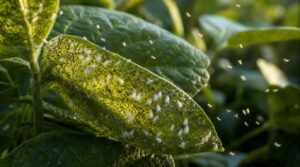
Whiteflies are sneaky — by the time you notice them, they’ve often been feeding for days. Learning what to look for early is the fastest way to stop an infestation before it spreads.
Their waxy coating and habit of clustering on leaf undersides make early detection tricky — this herb garden pest control guide breaks down exactly what to look for before the damage shows.
Here are the key signs to check for on your plants.
Leaf Undersides
Flip any suspect leaf over — that’s where whiteflies hide. The underside’s microclimate humidity, thinner cuticle thickness, and stomatal distribution make it the perfect shelter for these tiny pests. Some species even exploit sunken stomata and epidermal trichomes as cover.
A leaf undersides inspection should be your first move. Spot them early, and physical removal methods like a strong water spray or vacuuming them up become far more effective.
Yellow Egg Clusters
Once you’ve checked the leaf undersides, look closer — you may spot pale yellow egg clusters, each egg barely a millimeter wide, arranged in neat arcs. These clusters require careful inspection, as their viability declines rapidly with temperature swings or drying air. Moisture management in your garden directly influences their survival, making early detection critical. Catch them now, before nymphs emerge.
Early cluster spotting matters because environmental shifts threaten egg survival. Recognizing beneficial insect eggs helps distinguish harmless species from pests, ensuring appropriate action.
Sticky Honeydew
After spotting those egg clusters, run your finger along a leaf — if it feels tacky, that’s sticky honeydew, a clear waste liquid whiteflies leave behind while feeding. Don’t ignore it.
Honeydew removal matters because ants are attracted to it, and they’ll protect whiteflies from predators.
Regular leaf surface cleaning, good airflow enhancement, and humidity control all slow its buildup considerably.
Black Sooty Mold
That sticky honeydew attracts ants and, if left unchecked, feeds fungal growth, leading to black sooty mold. This mold forms a dark, charcoal-like film on leaves and stems, blocking light and impairing photosynthesis. It also creates entry points for secondary pathogens, with high humidity accelerating its spread.
To identify the mold, look for the distinctive dark coating. Its presence significantly reduces the plant’s ability to photosynthesize and weakens defenses against other diseases.
For treatment, gently wipe affected leaves with a damp cloth. Follow up with organic sprays and natural methods to control the infestation and prevent recurrence.
Wilting, Yellowing Leaves
Yellowing, wilting leaves are your plant’s distress signal — and whiteflies are often the culprit. Their feeding strips nutrients directly from leaf tissue, mimicking symptoms of nutrient deficiency, light stress, or even root rot from poor soil moisture.
Temperature stress compounds the damage quickly. Once you spot limp, pale foliage alongside the other signs, it’s time to act with neem oil solution or insecticidal soap spray.
Remove Whiteflies Without Chemicals

Good news — you don’t need a single chemical to start pushing back against whiteflies. A few hands-on methods can knock down their numbers fast when you catch the problem early.
Here’s what actually works.
Morning Water Spray
A simple stream of water is one of your first — and best — lines of defense. Spray timing matters: aim for early morning, when temperatures are cool and whiteflies are sluggish. Use room-temperature, non-chlorinated water and a fine-mist nozzle — your nozzle selection directly affects results.
- Target leaf undersides with steady, directional pressure
- Repeat every 2–3 days, adjusting your watering schedule to pest pressure
- Follow with a leaf underside inspection to catch remaining eggs
Consistent leaf surface moisture discourages re-settlement between sessions.
Handheld Vacuum Method
When adult whiteflies cluster on foliage, you can vacuum them up before they scatter. Use your handheld vacuum cleaner during cooler morning hours — suction timing is everything, since sluggish insects are easiest to catch. This nonchemical control method works fast with the right setup.
After vacuuming, apply a layer of organic mulch around your plants — organic herb gardening mulching techniques can help you lock in moisture and keep weed pressure down between treatments.
| Step | Detail |
|---|---|
| Nozzle Selection | Use a narrow nozzle for targeted suction |
| Battery Management | Confirm full charge before starting |
| Vacuum Hygiene | Seal and freeze the bag 24 hours after |
| Safety Precautions | Avoid touching foliage with the intake port |
Vacuum up any whiteflies you spot, then dispose of them carefully.
Prune Infested Leaves
Pruning is one of the most underrated cultural control methods in integrated pest management. When you spot dense clusters on leaf undersides, cut those leaves off cleanly — pruning 1–2 inches beyond visible damage ensures you’re not leaving infested tissue behind.
- Follow a Seasonal Pruning Schedule every 1–2 weeks during peak activity
- Practice Dry Weather Pruning to minimize pathogen spread
- Maintain correct Pruning Angles and disinfect tools between cuts for plant health maintenance
Bag Damaged Plant Parts
Once you’ve pruned infested leaves, bag them immediately — don’t just toss them on the ground. Seal the bag tightly before moving it, since torn edges create pathogen entry points and physical abrasion on nearby stems. Poor sealing also causes moisture imbalance and heat stress inside, accelerating tissue collapse.
Fiber contamination from shredded bag material can embed in wound sites, slowing recovery.
Trash it; don’t compost it.
Clear Garden Debris
Think of fallen leaves and spent stems as whitefly nurseries — remove them and you eliminate countless eggs before they hatch. Rake debris from plant bases regularly, shred leaves using leaf mulching techniques to speed decomposition, and maintain weed-free borders to cut off hidden breeding sites.
Sound compost pile management and consistent tool sanitization practices complete your garden sanitation routine, keeping cultural practices for pest prevention firmly in place.
Use Homemade Whitefly Sprays
You probably already have most of what you need sitting in your kitchen right now. A few simple ingredients mixed together can knock back a whitefly population without harsh chemicals or expensive products.
Here are the most effective homemade sprays to get started.
Castile Soap Spray
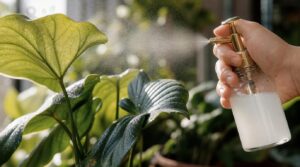
One of the simplest weapons against a whitefly infestation is already in your kitchen. Mix 1 tablespoon of liquid Castile soap per quart of warm water — that’s your homemade soap spray.
This organic insecticidal soap disrupts the insects’ waxy coating on contact.
Apply early morning or evening, coat leaf undersides thoroughly, and reapply every 7–10 days.
Avoid using it on stressed plants.
Neem Oil Solution

Neem oil takes things a step further. Its active compound, azadirachtin, disrupts whitefly feeding and development rather than just knocking them off.
For proper field dilution, mix 2 tablespoons neem oil per gallon of water, using liquid soap as emulsifier — this keeps the solution blended.
Phytotoxic testing on a small leaf patch before full application prevents damage. Thorough spray coverage on leaf undersides is non-negotiable.
Garlic Pepper Spray

Garlic pepper spray works on a different principle — it repels rather than suffocates. The sulfur compounds from garlic and capsaicin from hot peppers make your plants genuinely uninviting to adult whiteflies.
Here’s a simple mixing method for this natural insect repellent:
- Garlic preparation: Steep crushed cloves and chopped peppers in water for 12–24 hours
- Concentration ratios: Dilute one part strained concentrate with 4–10 parts water
- Application timing: Spray in the early morning or evening only
- Safety precautions: Wear gloves — capsaicin irritates skin
Shelf life is short; use your concentrate within a few weeks.
Coat Leaf Undersides

Whatever spray you’ve mixed — soap, neem oil, or garlic pepper — it only works if it actually reaches the whiteflies. That means flipping every stem and coating the plant undersides thoroughly.
Whiteflies nest in the abaxial layer, sheltered by trichomes and a waxy cuticle. Your organic insecticidal soap, potassium soap, or neem oil needs direct contact to break through that natural anti-adhesive coating and suffocate them.
Reapply Every Week

Even one missed week gives whiteflies room to rebound. Stick to a weekly application calendar — organic insecticidal soap, neem oil, or potassium soap each need consistent reapplication for residue longevity and dose consistency.
- Reapply every 7 days, adjusting for rainfall
- Alternate formulas for integrated scheduling
- Pair with sticky trap monitoring to track populations
Consistency is everything here.
Attract Beneficial Whitefly Predators
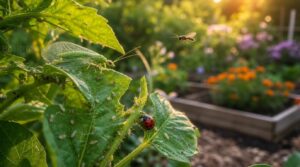
Nature has its own pest control crew, and you can recruit them. Certain insects are natural whitefly hunters that will work around the clock to keep whitefly population in check.
Here are the most effective beneficial predators to bring into your garden.
Parasitic Wasps
Parasitic wasps are one of nature’s most precise pest fighters. A female uses her specialized ovipositor to inject a single egg directly inside a whitefly nymph — venom immune suppression keeps the host alive just long enough for the larva to develop.
A parasitic wasp injects her egg inside a living whitefly nymph, keeping it alive just long enough to be consumed
With strong host specificity, these natural predators won’t harm your other plants or beneficial insects.
Commercial releases of Encarsia formosa — about 1,000–3,000 per 1,000 sq ft — deliver reliable biological control through sex allocation strategies that favor more females in healthy host populations.
Green Lacewing Larvae
Think of green lacewing larvae as tiny, armor-clad hunters working quietly through your garden. Their curved mandibles inject feeding enzymes that liquefy prey before consumption — remarkably effective against whitefly eggs and nymphs. Each larva progresses through three instars before retreating into a silken cocoon, and their camouflage setae disguise them brilliantly.
In Integrated Pest Management, natural predator release of lacewings delivers measurable predation efficiency:
- Consuming dozens of whiteflies daily
- Targeting multiple pest life stages simultaneously
- Blending into foliage using debris camouflage
- Supporting biological control without chemical interference
Lady Beetles
Lady beetles — or ladybugs, as most gardeners call them — are some of the hardest-working beneficial insects you can invite into your space. Their species diversity is impressive, and each stage of their life cycle targets whitefly eggs and nymphs through relentless predatory behavior.
That bold aposematic coloration — red wings, black spots — warns predators away, keeping your natural enemies safe and working. Their wide habitat range means they’ll find your garden.
Predatory Mites
Predatory mites are surprisingly effective biological control agents. Amblyseius swirskii, one of the most reliable beneficial predatory mites, targets whitefly eggs and first-instar crawlers, making it a life-stage-specific control tool. It thrives under ideal climate conditions between 20–29°C.
For integrated pest management for whiteflies, release them where pest pressure peaks, and avoid soaps nearby — non-chemical compatibility keeps them working.
Flowering Herb Habitat
Your garden’s layout can quietly do some of the pest-control work for you. Planting fennel, oregano, and marigolds near vulnerable crops draws in the predators you want — parasitic wasps, lacewings, and ladybugs all need nectar to thrive.
These beneficial plant companions do best with proper sunlight exposure, soil pH optimization around 6.0–7.0, smart irrigation scheduling, and mulch selection that retains moisture.
Companion planting also enhances pollinator support.
Prevent Whiteflies With Garden Practices

Treating an active infestation is only half the battle — your garden habits determine whether whiteflies come back.
A few smart adjustments to how you grow and maintain your plants can make your garden far less inviting to them. Here are the key practices worth building into your routine.
Avoid Excess Nitrogen
Overfertilizing is one of those quiet mistakes that invite pests. When nitrogen levels climb above 300 ppm, plants produce soft, lush foliage—exactly what whiteflies love for egg-laying.
To prevent this, maintain soil fertility through regular Soil Nitrogen Testing and aim for around 40 ppm. This balanced approach avoids creating vulnerable conditions for pests.
Implement Balanced Fertilizer Application using Slow-Release Fertilizer or organic alternatives, alongside Legume Cover Crops and Mulch Moisture Management. These practices ensure steady growth without compromising plant health.
Remove Host Weeds
Weeds like sow thistle and nightshade act as breeding reservoirs, quietly sheltering eggs and nymphs between crops.
Pull them early using hand weeding when the soil is moist, then lay weed barrier fabric and practice cover crop rotation for lasting weed seed suppression. Consistent weed management closes the gap.
Space Plants Properly
Closing the gaps between plants does more than just keep things tidy — it’s a practical tool against whiteflies. Aim for at least 12 inches between medium-sized plants to support airflow optimization and canopy management.
Row staggering improves light penetration and keeps humidity lower. These simple spacing guidelines, combined with your weed-clearing cultural practices, make your beds far less inviting.
Rotate Vulnerable Crops
Moving your crops around each season is one of the smartest crop rotation benefits you’ll ever use against whiteflies. A four-year cycle works well — rotate tomatoes and other vulnerable crops so each bed stays host-free for at least three years.
Use family-based sequencing and slip in a legume inclusion to restore soil nitrogen. Maintain rotation recordkeeping notes to track your sequence effectively.
This approach breaks the cycle reliably, disrupting whitefly habitats and reducing infestations over time.
Inspect Leaves Weekly
Checking leaf undersides every week is your single best early-warning system. Flip leaves gently — that’s your core sampling technique — and scan for pale eggs, crawlers, or sticky honeydew.
Build a simple inspection schedule tied to environmental cues like warm spells. Log findings using basic documentation tools: notes and photos.
Once populations creep past your threshold levels, yellow sticky traps confirm the spread before it gets ahead of you.
Protect Crops Long Term

Beating a whitefly outbreak is one thing — keeping them from coming back is another. Long-term protection comes down to a handful of habits and tools you can put in place right now.
Here’s what actually works.
Yellow Sticky Traps
Yellow sticky traps work because whiteflies are drawn to a specific color wavelength—roughly 400–550 nm—which mimics young foliage. This visual attraction makes placement strategy critical. Hang traps at canopy height, one per 25–50 sq ft, and check them twice weekly to monitor rising populations effectively.
The adhesive remains effective for weeks, even in humid and windy conditions.
- Hang at flight height — not too high, not buried in foliage
- Space evenly across rows to map pest hotspots accurately
- Replace clogged traps promptly to maintain reliable monitoring
- Position away from beneficial insect habitat to minimize non-target impact
Reflective Mulch Barriers
Lay aluminum reflective mulch flat over your soil beds, shiny side up, and you’re doing more than deterring pests. The surface bounces light up into your plant canopy, improving canopy light distribution for lower leaves.
This setup also provides moisture retention and weed germination inhibition underneath.
Best of all, the glare disrupts whitefly landing deterrence—confusing adults before they settle—while delivering a gentle soil temperature boost early in the season.
Companion Planting Herbs
Some herbs do double duty — they’re culinary staples and quiet pest defenders. The Basil Tomato pairing is a classic example: basil’s volatile oils actively deter whiteflies and thrips nearby.
Try companion planting strategies like a Sage Brassica shield around cabbage, Thyme Lettuce intercropping between rows, or a Rosemary Bean border for enhanced protection. These combinations leverage herbs’ natural pest-repelling properties.
Marigolds, calendula, and parsley also confuse and repel pests — plant them generously throughout garden beds to maximize their defensive benefits.
Greenhouse Sanitation
Think of your greenhouse as a clean room — pests thrive wherever disorder settles. Keep floors well-drained and power wash surfaces regularly to eliminate algae and organic buildup.
Sanitize benches, sterilize equipment between tasks, and set up a foot bath at entry points. Remove plant debris daily to disrupt pest habitats.
Pair sticky traps with reflective mulch for year-round greenhouse pest management, combining physical barriers with monitoring tools.
Early Outbreak Response
Catching a whitefly outbreak early is the difference between a quick fix and a full-blown battle. The moment your digital alert system flags threshold monitoring counts, act within 24–72 hours.
- Start rapid scouting with photo documentation to confirm pest identity
- Deploy row covers immediately to block new arrivals
- Follow up with parasitic wasp release, organic insecticide, or biological pest control
Sticky traps help you keep monitoring populations between visits.
Frequently Asked Questions (FAQs)
Will Dawn dish soap kill whiteflies?
Yes, Dawn dish soap kills whiteflies on contact. When mixed as dish soap and water, it disrupts their waxy coating and causes dehydration.
This makes it a simple, effective nonchemical control method for light to moderate infestations.
What smell do white flies hate?
Whiteflies flee from strong scents like garlic essential oil, neem oil, citrus peel extract, marigold volatiles, and mint citronella blend. These botanical sprays and companion herb deterrence serve as natural whitefly treatment solutions.
What is the best homemade whitefly spray?
The most effective homemade option is an insecticidal soap spray — combine potassium soap with a 2% neem oil-water emulsion.
This botanical spray disrupts whitefly membranes on contact and deters re-infestation for up to seven days.
What are the natural enemies of whiteflies?
Nature already built your defense team. Encarsia formosa and Eretmocerus wasps parasitize nymphs from within. These powerful beneficial insects work quietly on your behalf.
Delphastus beetles, Amblyseius swirskii mites, hoverfly larvae, and ladybirds hunt eggs daily — a dedicated force of predators ensuring continuous protection.
What kills whitefly eggs?
Heat exposure above 40°C, sunlight reflection from reflective mulch, and desiccating airflow effectively kill whitefly eggs.
Hydrogen peroxide sprays, horticultural oil, garlic or pepper spray, and potassium soap also serve as effective control measures.
Biological controls, including Encarsia formosa and predatory wasps, target whitefly eggs successfully.
How do you get rid of whiteflies naturally?
Start with sticky traps and morning water sprays, then introduce predatory wasps and beneficial insects. Organic mulch reflectors, habitat diversification, and integrated pest management for whiteflies keep populations down naturally and long term.
What is the best homemade spray for whiteflies?
The best homemade spray combines 1 tablespoon castile soap per gallon of water. This simple organic pesticide disrupts the insect exoskeleton softening its protective layer on contact, killing whiteflies effectively.
Does vinegar kill white flies?
Vinegar’s efficacy against whiteflies is limited. Its acid concentration isn’t strong enough to kill them on contact, and spraying foliage risks leaf scorch.
It works better as a trap than a treatment.
What is the best natural way to get rid of whiteflies?
Like peeling back a stubborn knot, tackling whiteflies naturally means layering your defenses — reflective mulches, Encarsia formosa releases, neem oil, and beneficial insects introduction work together far better than any single fix.
What is a homemade recipe to kill whiteflies?
Mix 1 tablespoon Castile soap with 1 quart warm water and a teaspoon of neem oil. Spray every leaf surface, especially undersides, every 5–7 days until whiteflies are gone.
Conclusion
Whiteflies thrive in neglect; they retreat in the face of consistency. That’s the quiet truth behind every natural remedy for whitefly infestation covered here—none of it requires harsh chemicals, just steady attention and the right habits applied at the right time.
Inspect weekly, spray thoroughly, welcome the predators, and give your plants room to breathe. Do that, and the pale cloud that once lifted from your leaves won’t find a reason to return.
- https://ucanr.edu/site/uc-master-gardeners-ventura-county/controlling-whiteflies-your-garden
- https://overgrow.com/t/white-flies-i-need-a-solution/192794
- https://blog.bugsforgrowers.com/biological-control/five-beneficial-insects-for-whitefly-control/
- http://naturescontrol.com/opencart/Yellow-Sticky-Traps-Fungus-Gnats-Whiteflies-Aphids-insects-Pest-Controls
- https://www.missouribotanicalgarden.org/gardens-gardening/your-garden/help-for-the-home-gardener/advice-tips-resources/insects-pests-and-problems/other/beneficial-insects