This site is supported by our readers. We may earn a commission, at no cost to you, if you purchase through links.
Most growers discover organic integrated pest management strategies only after a season of watching chemicals fail—or worse, after beneficial insects vanish and pest resistance takes hold. The reality is that spraying alone never built a resilient garden.
Real pest control happens when you shift from reacting to outbreaks to creating conditions where problems don’t spiral in the first place. That means layering prevention, monitoring, and targeted interventions into a system that protects your crops while keeping your soil, water, and beneficial wildlife intact.
When you understand how these pieces fit together, you gain control without depending on products that undermine long-term health.
Table Of Contents
Key Takeaways
- Organic IPM layers prevention, monitoring, and targeted interventions to control pests without undermining soil health or beneficial insects, cutting chemical use by 24–38% while maintaining comparable yields.
- Building pest resistance starts before planting—choosing resistant varieties, enriching soil with compost, and spacing crops properly can reduce pest pressure by 20–60% and slash disease incidence up to 27%.
- Regular scouting catches 60–80% of pest problems early, letting you set action thresholds that prevent unnecessary treatments and reduce interventions by 25–40% compared to calendar-based spraying.
- Supporting beneficial insects like lady beetles and parasitic wasps through diverse plantings delivers 60–90% pest suppression naturally, while physical barriers and organic-approved products handle problems that cross your thresholds.
Key Principles of Organic Integrated Pest Management
Managing pests organically isn’t about eliminating every bug you see—it’s about working with nature to keep problems at a level you can live with. The principles behind organic IPM give you a framework that reduces your reliance on sprays while protecting the beneficial organisms already doing pest control work in your garden.
Organic pest management works with nature to maintain tolerable pest levels while protecting beneficial organisms that naturally control garden pests
Here are the core principles that make this approach effective and sustainable.
Prevention and Proactive Measures
Prevention forms the backbone of organic pest control—your first and strongest line of defense. By taking charge early, you gain freedom from synthetic sprays while nurturing a garden that naturally resists trouble.
- Choose pest-resistant varieties to cut pressure by up to 40%
- Build soil health with amendments that lower pest incidence 15–30%
- Increase crop diversity through intercropping to reduce outbreaks by an average of 25%
- Practice garden sanitation and bed preparation to drop initial pest loads by 20%
Effective gardening also involves understanding the literature review process to make informed decisions.
Monitoring and Early Detection
Once you’ve set up those preventive barriers, regular monitoring becomes your early-warning system. Visual scouting catches 60–80% of pest presence before damage escalates, while pheromone traps flag infestations one to two weeks ahead of visible symptoms in fruit crops.
This pest surveillance and timely detection lets you reduce unnecessary treatments by 25–40%, keeping your integrated pest management lean and your threshold management sharp.
Effective study habits, including AP study guides, can also improve your understanding of ecological principles.
Pest Identification and Action Thresholds
Spotting pests isn’t always straightforward—68% of organic growers use visual scouting and simple traits for accurate pest identification, yet 83% of mistakes happen when you confuse harmless life stages with true threats.
That’s where threshold setting comes in: you’ll target 0.5–1.0 larva per plant in leafy greens, then adjust upward when beneficial insect counts rise, cutting unnecessary moves by 28%.
Minimizing Chemical Interventions
Once you’ve set thresholds through pest scouting, threshold management naturally guides intervention strategies toward organic controls—biological controls, cultural controls, and natural remedies—before you reach for any spray.
Field data shows integrated pest management cuts chemical reduction by 24–38% when you rely on monitoring instead of calendar sprays, and organic pest management systems preserve beneficials while achieving comparable yields across most crops.
Preventing Pest Problems Organically
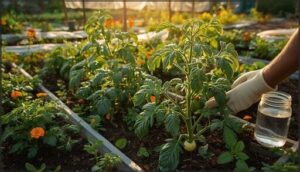
The best way to handle pests is to stop them before they start. When you build a strong foundation through careful planning and smart growing practices, you’re already several steps ahead of trouble.
Let’s look at four practical strategies that work together to keep your garden resilient and pest populations low.
Selecting Resistant Plant Varieties
Think of resistant plant varieties as your garden’s first line of defense—before pests even arrive. Choosing cultivars bred for pest tolerance can slash damage by 20–60%, trim pesticide needs by up to 40%, and fit seamlessly into organic pest management strategies.
- Match varieties to your local pest pressures through regional variety trials
- Source certified, disease-resistant seed from reputable programs
- Rotate resistant lines to maintain crop diversity and slow pest adaptation
- Combine seed selection with cultural controls for stronger integrated pest management
Healthy Soil Management Techniques
Your soil is the engine room of pest resistance. When you build soil health through organic matter, you’re fueling microbial armies that protect roots and strengthen plants. Amending with compost boosts microbial biomass by 25–40% within a year, while practices like mulching and cover crops improve soil structure, fertility, and water retention—giving your plants the resilience to shrug off pests naturally.
| Technique | Soil Benefit | Impact on Pests |
|---|---|---|
| Compost & organic matter | Raises organic carbon 0.5–1.5% over 3 seasons; feeds soil microbes | Strengthens plant immunity, reduces stress-related pest attraction |
| Cover crops & mulch | Increases soil respiration 10–50%; improves structure and moisture | Enhances beneficial habitat; reduces pest overwintering sites |
| Compost tea & biofertilizers | Boosts enzyme activity 20–60%; improves nutrient cycling | Promotes vigorous growth that outpaces pest damage |
These organic gardening methods don’t just enrich soil quality and conservation—they create an underground defense network. Healthy, biologically active soil delivers the soil fertility your crops need to resist disease and pest pressure before problems start.
Proper Plant Spacing and Garden Design
Your garden layout shapes the battleground against pests. Row spacing at 45–60 centimeters improves airflow management and cuts disease by up to 27% in tomatoes, while bed orientation along prevailing winds prevents humidity buildup that invites fungal outbreaks.
In organic gardening, microclimate control through proper garden design disrupts pest concentration, bolsters your garden ecosystem, and sets the stage for companion planting and crop rotation strategies.
Crop Rotation and Companion Planting
Rotating your crops year after year breaks pest life cycles—field studies show 20–40% fewer beetle and moth problems after three-year cycles compared to monoculture. Pair that crop rotation with companion planting for powerful plant synergy:
- Basil near tomatoes cuts aphids by 18–35%
- Marigolds reduce root-knot nematodes 12–28%
- Alliums lower cucumber beetle damage 10–25%
- Dill and fennel boost parasitism rates 20–40%
This crop diversity fuels soil renewal, pest disruption, and ecosystem balance—core pillars of integrated pest management and organic pest control that rely on biological controls rather than synthetic inputs.
Monitoring and Identifying Garden Pests
You can’t control what you don’t see, and successful organic IPM starts with knowing exactly what’s happening in your garden. Regular monitoring helps you catch problems early, identify friend from foe, and decide when action is truly needed.
Let’s walk through the practical steps that turn observation into effective pest management.
Regular Inspection Techniques
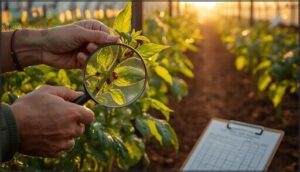
You can’t manage what you don’t measure—weekly crop monitoring catches 92% of pest problems before serious damage begins. Set up inspection schedules that align with your garden’s rhythm, using sticky traps and visual pest scouting to detect infestations early.
Pair temperature logs with garden surveys to enhance your integrated pest management approach. This consistent monitoring reduces your need for biological controls by spotting issues when they’re still manageable.
Differentiating Pests From Beneficials

Not every insect in your garden is an enemy—lady beetles can slash aphid populations by 90% in just two weeks, while parasitic wasps reduce pest emergence by 40–80% per season.
Accurate pest identification protects these biological controls and maintains ecosystem balance.
Weekly scouting boosts your recognition accuracy to 70–85%, preventing the 10–30% extra costs that come from misidentifying natural pest control allies.
Setting and Using Action Thresholds
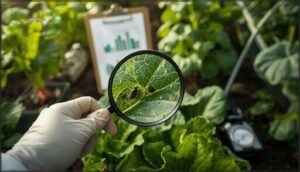
Once you’ve spotted pests, threshold planning helps you decide when to act—not just if. Action levels range from 0.5 to 2.0% infestation per week; for aphids on greens, intervene at 10–20% leaf damage.
Economic injury calculations factor in crop value and pest density, guiding your organic pest control strategies so you protect yield without overreacting.
Record-Keeping for Pest Trends

Keeping logs turns scattered observations into actionable data. Track pest species, counts, location, and weather in a digital logbook or simple spreadsheet—pest monitoring systems help you spot patterns fast.
When 68% of organic farms use pest trend analysis to guide interventions, you know record keeping software works. Those data management tools empower your Integrated Pest Management decisions and sharpen your Garden Pest Management year after year.
Organic Pest Control Methods

Once you’ve monitored your garden and identified a pest problem that’s crossed your action threshold, it’s time to respond with targeted control methods. The beauty of organic IPM is that you have a range of tools at your disposal, from encouraging nature’s own pest fighters to using physical barriers and carefully selected organic products.
Let’s look at the main approaches you can use to manage pests without compromising your garden’s ecological balance.
Biological Controls and Beneficial Insects
Nature’s own pest fighters—lady beetles, beneficial wasps, and ground beetles—deliver biological pest control you can count on. Lady beetles slash aphid numbers by up to 90%, while parasitic wasps achieve 60–80% egg parasitism in field trials.
You’ll see natural predators handle insect management when you support their populations through diverse plantings. This insect ecology approach works because biological pest solutions target specific pests without disrupting your garden’s balance.
Mechanical and Physical Barriers
While beneficial insects do heavy lifting, physical barriers give you hands-on control that stops pests before they arrive. Row covers cut early-season aphid and flea beetle pressure by 40–70%, while exclusion nets block flying arthropods with 60–95% effectiveness.
Your mechanical controls toolkit includes:
- Sticky traps for monitoring flying pests
- Horticultural fleece that breathes while reducing whitefly colonization by 50%
- Properly installed nets that slash pesticide needs by 30–50%
- Yellow prism traps in beds
- Row covers timed to pollination windows
These integrated pest management solutions protect crops without chemicals.
Organic-Approved Pesticides (e.g., Neem Oil, DE)
When barriers aren’t enough, organic-approved pesticides become your next line of defense. Neem oil efficacy reaches 40–70% suppression against aphids and whiteflies, disrupting growth without harsh chemicals.
Diatomaceous earth and silica products deliver 25–70% reductions through physical action, while essential oils like pyrethrum provide rapid knockdown.
Insecticidal soap rounds out organic formulations, targeting soft-bodied pests while preserving beneficial populations when applied correctly.
Safe Application and Timing Practices
Timing transforms your organic pest control methods from guesswork into precision. Spray calibration improves coverage by 15–30%, while weather forecasting helps you avoid wind or rain that washes treatments away.
Application scheduling aligned with pest life cycles cuts pressure up to 50%. Always respect reentry intervals—even organic products need safe handling.
Regular monitoring sharpens your integrated pest management approach, ensuring natural pest prevention and biological control methods work together as part of your ecofriendly pest control strategy.
Sustaining a Balanced Garden Ecosystem

Once you’ve tackled immediate pest problems, the real work begins—keeping your garden resilient for the long haul. A thriving ecosystem doesn’t happen by accident; it requires consistent attention to the living systems that keep pests in check naturally.
Let’s walk through four practical ways to maintain that balance and adapt your approach as your garden evolves.
Encouraging Beneficial Wildlife
Think of your garden as a living network where every creature plays a role. You can boost Biological Control Methods by attracting Natural Predators like ladybugs and lacewings through strategic Habitat Creation.
Plant native flowers, install birdhouses, and add water features. These Ecosystem Services and Biodiversity Management practices support Wildlife Conservation while delivering powerful pest suppression.
Diverse landscapes hosting Beneficial Insects create resilient, self-regulating systems.
Reducing Pest Habitats Through Maintenance
Simple maintenance is your first line of defense in Integrated Pest Management. Border Cleaning and Debris Removal cut ground-dwelling pests by 34–58% in field trials, while Mulch Management reduces weed-associated pests by 22–45%. Regular pruning lowers overwintering sites by 16–40%, and Water Management eliminates mosquito habitats by 60%.
These Sanitation Practices support organic Pest Management Methods and strengthen Garden Ecosystem Management without chemicals.
Restoring Soil and Microbial Health
Your soil is the engine behind every pest defense you’ve planted. Organic Amendments like compost boost Microbial Richness—soils under organic management show 32–84% higher microbial biomass, fueling Ecosystem Services that suppress disease and cycle nutrients.
Cover crops and reduced tillage improve Soil Structure and increase carbon by up to 53%, strengthening Soil Health Management. These Soil Conservation steps restore Soil Microbe Balance, fortifying your Integrated Pest Management and Organic Gardening system from the ground up.
Evaluating and Adjusting IPM Strategies
Your Integrated Pest Management system isn’t static—track Performance Metrics like pest counts, beneficial populations, and intervention costs each season.
Strategy Assessment reveals what works: if Efficacy Evaluation shows a tactic suppressed pests by less than expected, adjust Intervention Timing or shift to stronger Organic Pest Control methods.
Adaptive Management keeps your Natural Pest Management evolving, sharpening Pest Prevention year over year.
Frequently Asked Questions (FAQs)
How does IPM reduce long-term gardening costs?
Like a smart insurance policy, IPM cuts costs by preventing problems before they start—trimming pesticide spending by 25–60%, reducing fertilizer bills through healthier soil, and delivering 20–40% higher returns over time.
Which trap crops work best for common pests?
Marigolds draw nematodes away from tomatoes, cutting damage by 40%. Sunflowers lure pests from cotton, mustards divert flea beetles from brassicas, and castor beans protect cucurbits—real pest control without chemicals.
Can IPM work in small urban gardens?
Container gardeners often face more pest pressure than field growers—neighboring plants share insects freely.
Yet IPM thrives in tight quarters: monitoring, resistant varieties, and organic controls cut pesticide use nearly in half within two seasons.
What percentage of crops use IPM globally today?
About 13% of global cropland operates under some form of IPM today, with organic systems representing a smaller subset.
Adoption varies widely by region and crop, driven by policy support and market access.
How quickly do beneficial insects colonize new gardens?
Think of your garden as a new neighborhood: beneficial insects like ladybugs and lacewings usually move in within one to two weeks, bringing natural pest suppression and ecosystem balance along with them.
Conclusion
Think of your garden as a conversation, not a battlefield. When you apply organic integrated pest management strategies consistently, you’re not just fighting pests—you’re building a system where problems lose their foothold before they escalate.
The work isn’t glamorous, but it’s honest: observe, intervene thoughtfully, and trust that balance rewards patience.
Your crops, your soil, and the creatures you protect will prove the approach works season after season.