
This site is supported by our readers. We may earn a commission, at no cost to you, if you purchase through links.

Most lawns look worse in spring than they did all winter. Snow recedes, and what’s left behind is a patchwork of matted grass, dead spots, and soil that’s been compacted under months of freeze-thaw cycles. That first warm weekend pulls you outside, rake in hand, and suddenly the job feels bigger than expected.
The good news: spring damage is mostly cosmetic, and a few targeted steps fix the majority of problems. Soil pH, blade sharpness, seeding timing—these details separate a lawn that limps through summer from one that stays dense and green. Here’s what actually works.
Table Of Contents
- Key Takeaways
- Spring Lawn Cleanup and Preparation
- Test and Improve Lawn Soil
- Fertilize, Aerate, and Overseed
- Prevent Weeds, Pests, and Disease
- Top 5 Spring Lawn Care Products
- Frequently Asked Questions (FAQs)
- What is the 150 rule for grass?
- What are common spring lawn care mistakes?
- What is the first thing you put on your lawn in the spring?
- What lawn care should be done in spring?
- What is spring lawn care & maintenance?
- How do you care for a lawn in spring?
- What is a good spring lawn care routine?
- Should you start your spring lawn care routine right?
- Can You top-dress a lawn in spring?
- How do I care for my lawn in the fall?
- Conclusion
Key Takeaways
- Test your soil pH before spending a cent on fertilizer — if it’s outside the 6.0–7.0 range, nutrients lock out and nothing you apply will work.
- Aerate before you overseed, not after — the plug holes give new seed direct soil contact and cut germination failure dramatically.
- Timing your pre-emergent to soil temperature (55–60°F), not the calendar, is the difference between stopping crabgrass and missing it entirely.
- Don’t rush spring cleanup — raking wet turf, mowing with dull blades, or skipping debris removal sets back your lawn before the season even begins.
Spring Lawn Cleanup and Preparation

Before anything else hits your lawn care checklist, the yard itself needs a reset. Winter leaves behind more than cold memories — matted grass, hidden debris, and tired equipment can quietly set your season back before it even starts. Here’s where to begin.
If you want to get ahead of spring, working through a solid fall season gardening checklist now saves you from digging out of a mess come March.
Remove Leaves and Sticks
Start spring cleanup by removing all leaves and sticks before they smother your turf. Matted leaf layers block sunlight and trap moisture — a fast track to fungal trouble. You should also eliminate tripping hazards by clearing away any fallen debris.
- Use a plastic rake to avoid tearing grass blades
- Run your lawn mower with a bagging attachment over large volumes
- Shred dry leaves as leaf mulch for garden beds
Don’t bag everything. Compost leaf piles or return shredded debris to beds as natural mulch — it’s free organic matter.
Rake Matted Grass Gently
Once leaves and sticks are cleared, turn your attention to matted grass. Over winter, grass blades flatten and clump — cutting off airflow and blocking crown sunlight exposure. That’s where gentle raking comes in.
Use the Flexible Rake Technique: choose a rake with wide-spaced, flexible tines — not a stiff garden rake. Light, overlapping passes lift flattened blades without tearing roots.
| Condition | Action | Outcome |
|---|---|---|
| Matted turf | Gentle overlapping passes | Blades upright, crown exposed |
| Wet ground | Wait for dry window | Prevents soil compaction |
| Visible thatch | Light surface skimming | Improved airflow, reduced disease |
Dry day raking matters more than most people realize. Raking wet turf compacts soil and tears crowns. Wait for a calm, dew-free morning.
Work from the lawn’s outer edges inward. Collect debris using a Debris Collection Method — pile cuttings for composting rather than leaving them to re-mat. Good spring lawn care starts with giving your turf room to breathe.
Check for Snow Mold
After raking, walk the lawn slowly and scan for snow mold patches. These appear as round, bleached tan or straw-colored spots — often less than 8 inches across — with pink or gray margins. Look for:
- Matted, brittle grass blades
- White fluffy mycelium on damp turf
- Gray or pink patch margins
- Circular discoloration near shaded areas
- Wet soil near former snow banks
Clear Rocks and Obstacles
Once you’ve scanned for snow mold, walk the yard with fresh eyes — this time looking down at the ground, not the grass. Winter heave and seasonal thaw push hidden rocks to the surface every spring. Left in place, they’ll catch your mower blade fast.
Classify rocks before clearing. Small pebbles get raked aside. Medium stones go in a wheelbarrow. Large rocks need two hands and sturdy footwear. Wear gloves — jagged edges cut quickly.
Sweep gravel off your mowing line first, then relocate larger obstacles at least 30 centimeters off each side of your travel path.
Tune Up Mowing Equipment
Before you cut a single blade of grass, your mower deserves a proper once-over. A neglected engine won’t just underperform — it can damage healthy turf.
Run through these five checks:
- Replace the spark plug annually or every 100 hours.
- Swap the air filter after 25 hours of heavy use.
- Change the oil per your manufacturer’s schedule.
- Test the safety switch — the mower must stop instantly when released.
- Sharpen mower blades to a 25–35 degree angle, then balance them.
Don’t skip the deck belt inspection, either. Cracks or fraying mean slippage mid-mow. Also drain any fuel sitting from last season — old gas degrades in 30 days and clogs the fuel filter fast.
Test and Improve Lawn Soil

Good grass starts from the ground up — literally. Before you spread a single pound of fertilizer, you need to know what your soil is actually working with. Here’s what to check and fix this spring.
Test PH and Nutrients
Think of your soil as a bank account. Before you invest in fertilizer or lime, you need to know the balance.
A soil test tells you exactly what’s missing—just like checking your balance before a big purchase, it keeps you from wasting money on nutrients you don’t actually need.
A soil test tells you exactly where things stand — your pH, nitrogen, phosphorus, potassium, and any hidden nutrient deficiencies. Send samples to a lab for accurate results. Home kits give ballpark numbers, but a professional test guides real decisions.
Target 6.0 to 7.0 PH
Most cool-season grasses thrive when soil pH sits between 6.0 and 7.0. In that window, nutrients like nitrogen, phosphorus, and potassium stay soluble and available. Outside it, your fertilizer dollars go to waste — locked out by chemistry.
Keep cool-season grass soil pH between 6.0 and 7.0, or your fertilizer dollars get locked out by chemistry
Here’s why that range matters:
- Microbial activity peaks — beneficial bacteria and fungi break down organic matter efficiently, feeding roots naturally.
- Phosphorus solubility improves — critical for spring root development after winter dormancy.
- Micronutrients stay accessible — iron, manganese, and zinc remain available, keeping grass green and stress-resistant.
- Earthworm populations thrive — naturally aerating your soil without any extra effort.
Your soil test results will confirm where you stand.
Apply Lime When Needed
If your soil pH test comes back below 6.0, lime is your fix. Pelletized lime is the easiest option for home lawns — it spreads cleanly and evenly with a broadcast spreader. Apply it when soil is dry and wind is calm. Water lightly after spreading to rinse it off the blades and settle it into the soil.
Lower High PH Carefully
High pH is a slow fix — don’t rush it. Use aluminum sulfate or sulfur as your soil amendment of choice. Both lower soil acidity gradually.
- Test soil pH every 1 to 2 weeks after applying
- Dissolve acidifying products in water before application
- Avoid heavy rain days to prevent runoff
Small, repeated doses beat one large application every time.
Add Compost for Structure
Compost is one of the best soil amendments you can use this spring.
A thin layer worked into the topsoil improves soil structure almost immediately — breaking up clay, binding sandy particles, and creating stable pore spaces for air and water. It also fuels microbial soil networks that protect roots long after the season changes.
Fertilize, Aerate, and Overseed
Once your soil is balanced, it’s time to give your lawn the fuel it needs to thrive. Fertilizing, aerating, and overseeding work together — skip one, and the others don’t hit as hard. Here’s exactly how to do each step right.
Choose Spring Lawn Fertilizer

Picking the right spring fertilizer starts with understanding nitrogen. Most spring blends use an NPK ratio like 20-0-10 or 24-0-6 — heavy on nitrogen, light on everything else.
Look for products that combine slow-release and quick-release nitrogen. Quick-release greens your lawn within 72 hours. Slow-release keeps feeding it for 6 to 10 weeks without triggering excessive growth spurts.
Apply Nutrients by Test Results
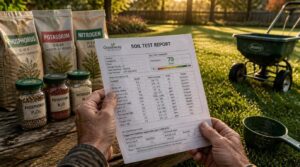
Your fertilizer choice is only as good as the data behind it. A soil test report tells you exactly what’s missing — not just nitrogen, but phosphorus, potassium, and micronutrients too.
Apply nitrogen at targeted rates per 1,000 square feet based on your results. Low phosphorus? Use a starter blend. Potassium deficient? Address it now for stronger root stress tolerance.
Core Aerate Compacted Soil
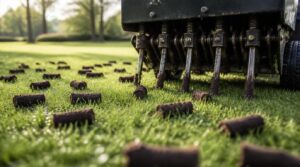
Once your nutrients are in place, compacted soil can still block all that goodness from reaching the roots. That’s where core aeration comes in.
A core aerator pulls small plugs — roughly ½ to ¾ inch wide and 2–3 inches deep — straight out of the ground. Leave them on the surface. They break down and return organic matter to the soil.
Five reasons to aerate this spring:
- Reduces soil compaction for easier root growth
- Boosts water infiltration and cuts runoff
- Increases oxygen flow to the root zone
- Encourages deeper, drought-resistant roots
- Improves nutrient uptake across the lawn
Aeration timing tips matter. Do it in spring or fall when turf is actively growing. Skip it during heat waves — stressed grass won’t recover well. For heavily compacted lawns, run two passes in different directions for better coverage.
Aeration frequency guidelines are simple: once a year works for most lawns. Tough, heavily compacted areas benefit from a second session six to twelve weeks later.
Overseed Thin Lawn Areas

Fresh aeration holes are the perfect zone for grass seed. Overseed right after core aeration.
Seed blend selection matters. Match seed to turf type, climate, and soil testing. Use certified seed with 85% germination or higher.
| Factor | Tip |
|---|---|
| Seeding Rate | 5–10 lbs / 1,000 sq ft |
| Seed Soil Contact | Rake or roll after sowing |
| Post Overseed Fertilizer | Starter fertilizer at seeding |
Water Seed Until Germination
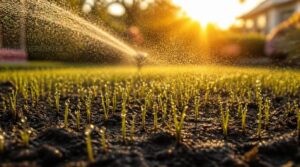
Newly seeded areas need consistent moisture to survive. Water 2 to 3 times daily in short sessions — just enough to keep the top inch damp. Dry spells between waterings trigger hydration memory effects that slow germination or kill seedlings outright.
Don’t soak the surface. Waterlogged soil cuts oxygen supply and suffocates developing roots before they ever take hold.
Prevent Weeds, Pests, and Disease

A healthy lawn doesn’t stay that way on its own — weeds, pests, and disease will test it every single season. The good news is that catching problems early makes them much easier to handle. Here’s what to watch for and when to act.
Time Crabgrass Prevention Correctly
Timing is everything with crabgrass prevention. Apply your pre-emergent herbicide when soil temperatures reach 55–60°F for several consecutive days — not by calendar date. Use a soil thermometer or check your local extension service.
- Scout for your germination window using growing degree days
- Target 2–3 weeks before crabgrass usually germinates in your region
- Reapply if bare spots appear mid-spring
Avoid Pre-emergent Before Seeding
Pre-emergent herbicides are germination barriers — they don’t discriminate. They’ll stop crabgrass and your new grass seed alike. If you plan to overseed this spring, skip the pre-emergent entirely. Wait until soil temperature hits 55–60°F consistently, seed first, then revisit weed control after six to eight weeks.
| Scenario | Recommended Approach | Timing |
|---|---|---|
| Overseeding planned | Skip pre-emergent; use post-emergent options | Seed first, treat after 6–8 weeks |
| No seeding planned | Apply pre-emergent herbicide | At 55–60°F soil temperature |
| Weeds present during seeding | Spot-treat only; use seed safe herbicides | After germination confirms |
Run a soil test before anything. Poor pH slows seedling establishment and invites weeds anyway. Keep irrigation steady — consistent moisture helps germination without washing seeds away.
Spot-treat Broadleaf Weeds
Dandelions, clover, and plantain don’t wait. Spot-treat them with a 2,4-D or dicamba product while they’re small and actively growing — that’s when absorption is highest.
Apply on a calm day between 50–85°F using a hand sprayer until leaves are wet but not dripping. Check back in two to three weeks and re-treat stubborn survivors.
Keep pets and kids off until the spray dries.
Scout Weekly for Grubs
Grubs are quiet destroyers. They chew through roots underground while your lawn looks fine on the surface — until it doesn’t.
Scout weekly by lifting a square foot of turf in two to four spots per 1,000 square feet. Here’s what to track:
- White C-shaped larvae beneath the turf layer
- Roots that pull away from soil easily
- Irregular thinning or footprints on the surface
- Soil moisture levels alongside grub counts
Treat only if you find more than five grubs per square foot. Keep a simple log — date, location, count — to spot rising populations before damage spreads.
Watch for Fungal Patches
Fungal patches move fast once conditions turn in their favor. Look for circular or irregular discoloration — yellow, brown, or reddish — especially after rain. Edges stay defined while centers fade. Moist, spongy spots on high-traffic areas are red flags.
Reduce irrigation immediately, rake out thatch, and apply a labeled fungicide only when patches are actively spreading.
Top 5 Spring Lawn Care Products
The right products make every step easier — from stopping weeds before they start to keeping your cuts clean all season. You don’t need a garage full of gear, just a few well-chosen tools that actually do the job. Here are the five spring lawn care products worth your money in 2026.
1. Quali-Pro Prodiamine Pre-Emergent Herbicide Granules
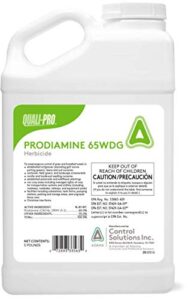
One product worth keeping in your spring arsenal is Quali-Pro Prodiamine Granules. It uses 65% prodiamine as its active ingredient to stop crabgrass, goosegrass, and foxtail before they ever break the surface.
Apply it when soil temps hit 50–55°F, then water it in within 24 hours.
At 5 lbs per bag, it’s a cost-effective alternative to liquid formulas and delivers season-long weed prevention across turf, landscapes, and even golf courses.
| Best For | Homeowners, landscapers, and groundskeepers who want to stop weeds before they start — especially across turf, gravel areas, and golf courses. |
|---|---|
| Product Form | Granules |
| Primary Use | Weed Prevention |
| Best Season | Spring & Fall |
| Lawn Compatibility | Most Grass Types |
| Application Type | Broadcast Spread |
| Ease of Use | Requires Spreader |
| Additional Features |
|
- Stops crabgrass, foxtail, and goosegrass before they ever sprout
- Works across a wide range of settings — lawns, landscapes, even golf courses
- More cost-effective than liquid herbicide options with the same season-long coverage
- Won’t touch weeds that are already growing — strictly pre-emergent
- Blocks all seed germination, so avoid it anywhere you plan to plant
- Needs water within 24 hours to activate, and can stain hard surfaces yellow
2. Scotts Halts Crabgrass and Weed Preventer
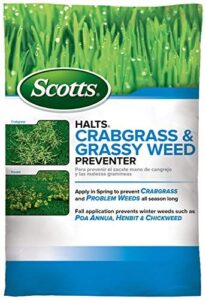
Another solid option is Scotts Halts Crabgrass and Weed Preventer. Where Prodiamine uses a concentrated active ingredient, Scotts Halts uses Pendimethalin to block germination of foxtail, spurge, and chickweed before they take hold.
Each 10 lb bag covers 5,000 sq. ft., making it practical for most home lawns. Apply it in early spring, then water in at least 0.5 inches within 24 hours to activate the soil barrier. Don’t overseed after application — the herbicide won’t distinguish between weed seeds and grass seed.
| Best For | Homeowners and groundskeepers who want a straightforward, granule-based solution for stopping crabgrass and common weeds before they ever sprout. |
|---|---|
| Product Form | Granules |
| Primary Use | Weed Prevention |
| Best Season | Spring & Fall |
| Lawn Compatibility | Most Grass Types |
| Application Type | Broadcast Spread |
| Ease of Use | Requires Spreader |
| Additional Features |
|
- Covers 5,000 sq. ft. with a single 10 lb bag — practical for most home lawns
- Works against multiple weed types including foxtail, spurge, and chickweed
- Weather-resistant formula holds up against rain, snow, and freezing temps
- Won’t touch weeds that are already growing — timing your application is everything
- Can’t be used on Dichondra or Bentgrass lawns
- Moss prevention feature is off-limits for California residents
3. Scotts Turf Builder Lawn Food Fertilizer
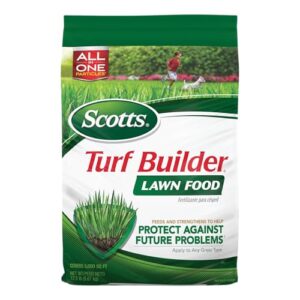
Once your pre-emergent is down, the next step is feeding. Scotts Turf Builder Lawn Food covers 5,000 sq. ft. per 12.5 lb bag and works on all grass types. Its NPK sits around 32-0-4, with added iron to deepen your lawn’s color fast.
Apply to dry or damp grass, then water it in. One key warning: spread it evenly. Uneven application risks fertilizer burn — and that’s a setback no one wants in spring.
| Best For | Homeowners who want a fast-acting, all-season lawn food that works on any grass type without pesticides. |
|---|---|
| Product Form | Powder |
| Primary Use | Lawn Nutrition |
| Best Season | Any Season |
| Lawn Compatibility | All Grass Types |
| Application Type | Broadcast Spread |
| Ease of Use | Requires Spreader |
| Additional Features |
|
- Covers 5,000 sq. ft. and works on all grass types, so it’s versatile enough for most yards
- Added iron gives your lawn a noticeably deeper green without extra products
- Use it spring, summer, or fall — wet or dry lawn, it doesn’t matter
- Pricier than buying liquid fertilizer in bulk
- Uneven spreading can burn your grass, so you need to be careful with application
- Requires the right spreader settings to get accurate, even coverage
4. Scotts Turf Builder EdgeGuard Broadcast Spreader
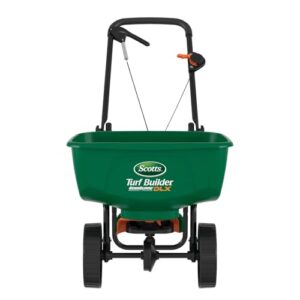
Good fertilizer only works if it lands where it should. That’s where the Scotts Turf Builder EdgeGuard Broadcast Spreader earns its place. Its built-in EdgeGuard technology blocks product from drifting onto driveways and sidewalks — so your turf gets fed, not your pavement.
It covers up to 15,000 sq. ft., comes pre-calibrated, and weighs just 10.9 pounds. Dial in your rate, walk at a steady pace, and you’ll get consistent, even coverage every time.
| Best For | Homeowners with larger residential yards who want clean, even coverage without spreading product onto driveways or sidewalks. |
|---|---|
| Product Form | Liquid |
| Primary Use | Weed Removal |
| Best Season | Spring & Summer |
| Lawn Compatibility | Northern & Southern |
| Application Type | Spot Treatment |
| Ease of Use | Ready-to-Use |
| Additional Features |
|
- EdgeGuard technology keeps fertilizer, seed, or salt exactly where you want it — off your pavement and on your lawn
- Pre-calibrated and ready to go right out of the box, no setup hassle
- Handles everything from fertilizer to ice melt, so it earns its storage space year-round
- Keep loads under 20 pounds or the axle can get unstable and the cap may pop off
- The EdgeGuard mechanism can snag on uneven ground, which gets annoying fast
- Taller users may find the handle height a bit of a stretch over a long session
5. Greenworks Cordless Push Lawn Mower
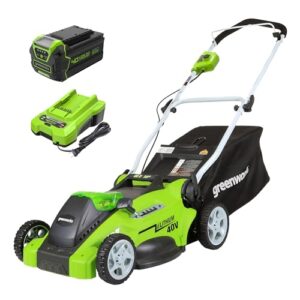
The Greenworks 40V Cordless Push Mower cuts the cord without cutting corners. Push-button start, a brushless motor, and up to 40 minutes of runtime mean you’re mowing — not troubleshooting. At 37.5 pounds with a 16-inch deck, it accommodates slopes and tight spaces easily.
No gas. No oil changes. No emissions. Just charge the 4.0Ah battery, and go. It even mulches or rear-bags depending on your preference — a clean finish either way.
| Best For | Homeowners with smaller yards (up to 1/3 acre) who want a quiet, low-maintenance mower that’s easy to handle on slopes and tight spaces. |
|---|---|
| Product Form | Wheeled Tool |
| Primary Use | Product Spreading |
| Best Season | Year-Round |
| Lawn Compatibility | All Grass Types |
| Application Type | Push Operation |
| Ease of Use | Pre-Calibrated |
| Additional Features |
|
- Push-button start and zero maintenance means you spend more time mowing, less time tinkering
- At 37.5 pounds, it’s easy to maneuver around landscaping, slopes, and awkward corners
- Works with 75 Greenworks 40V tools, so your battery does double duty across your whole lineup
- The grass bag is on the small side — expect to stop and empty it more than you’d like
- Struggles with thick or wet grass, so timing your mow matters
- Mostly plastic build, including the wheels, which may not hold up as well over the long haul
Frequently Asked Questions (FAQs)
What is the 150 rule for grass?
Think of it as a weather alarm for your turf. The 150 rule adds daily high temperature plus humidity. When that sum hits 150, disease pressure rises fast.
What are common spring lawn care mistakes?
Most mistakes happen early. Leaving debris on the lawn smothers new growth. Raking too hard damages crowns. Skipping a mower tune-up tears grass instead of cutting it cleanly.
What is the first thing you put on your lawn in the spring?
First things first." Before anything else, clear the debris. Rake out leaves, sticks, and matted grass. That opens the soil to air and light — the foundation everything else builds on.
What lawn care should be done in spring?
Spring lawn care covers cleanup, soil testing, fertilizing, aerating, overseeding, and weed and pest control. Each step builds on the last, so timing matters. Start early, work methodically, and your lawn rewards the effort.
What is spring lawn care & maintenance?
Spring lawn care is the seasonal process of cleaning, testing, feeding, and protecting your lawn so it grows thick and healthy all season long.
How do you care for a lawn in spring?
A lawn is like a living system — neglect it and it unravels fast. Test soil pH, clear debris, aerate, overseed thin spots, and time your pre-emergent right. Consistency wins every time.
What is a good spring lawn care routine?
A good routine starts with cleanup, then soil testing, fertilizing, aeration, and weed prevention. Follow that order. Skipping steps early means fixing problems later — and that costs more time than doing it right the first time.
Should you start your spring lawn care routine right?
Yes — but not yet. Rush too early, and you’ll compact wet soil and stress dormant grass. Wait until the ground firms up and overnight temperatures stay consistently above 40°F.
Can You top-dress a lawn in spring?
Absolutely. Top-dress in spring once the grass is actively growing and the soil isn’t waterlogged. Keep it thin — no more than 1/4 to 1/2 inch — so you don’t smother new growth.
How do I care for my lawn in the fall?
Fall is the unsung hero of lawn care. Remove leaves weekly, aerate compacted soil, and overseed thin patches. Target pH 0–0 and apply a balanced fall fertilizer to fuel strong root growth before winter.
Conclusion
The real test of any spring lawn care advice isn’t what’s written—it’s what your lawn actually looks like come July.
Test your soil before you treat it. Aerate before you seed. Apply pre-emergent before crabgrass gets a foothold.
These aren’t loose suggestions—they’re cause-and-effect relationships your lawn enforces regardless of your intentions. Follow the full sequence now, and by midsummer you won’t be patching bare spots. You’ll just be mowing a lawn that held.
- https://lawnscience.com/proper-crabgrass-management-is-timing-everything
- https://www.landandcoates.net/blog/top-spring-lawn-care-tips
- https://naturalawn.com/lawn-care-tips/7-spring-lawn-care-tips
- https://www.lawnstarter.com/blog/lawn-care-2/lawn-care-schedule
- https://fairwaylawns.com/crabgrass-preventer-when-to-apply-to-get-rid-of-crabgrass