
This site is supported by our readers. We may earn a commission, at no cost to you, if you purchase through links.
Most gardeners treat fall like a finish line—the season ends, tools are stored, and the garden is neglected until March. This mindset costs months of momentum. What occurs in garden beds between the first frost and the last leaf drop sets the ceiling for next year’s growth.
Fall gardening tasks aren’t about wrapping up—they’re about loading spring with potential. Pull the right plants, feed the soil before it freezes, and tuck in a cover crop, and spring practically plants itself.
By acting now, you ensure next season thrives. These steps create a foundation that unlocks easier, more bountiful growth when warmth returns.
Table Of Contents
- Key Takeaways
- Fall Garden Cleanup Tasks
- Prepare Soil for Spring
- Mulch Leaves and Protect Beds
- Plant and Divide Before Frost
- Top 7 Fall Gardening Tools
- Frequently Asked Questions (FAQs)
- What do gardeners do in the fall?
- What is the 70 30 rule in gardening?
- What is the 3-hour gardening rule?
- What are some fall chores?
- What should you do in the fall to prepare your garden?
- What can you do in the fall garden?
- What are some autumn garden tips?
- What to do in autumn to keep busy in the garden?
- Is fall a season of shut down in the garden?
- Why should you care for your garden in the fall?
- Conclusion
Key Takeaways
- Fall cleanup isn’t about closing down — pulling spent plants, clearing weeds, and disposing of diseased debris now cuts pest and disease pressure before it can take hold over winter.
- What you do to your soil before the ground freezes — testing pH, adding compost or aged manure, and planting cover crops — directly sets the ceiling for how well your beds perform next spring.
- Shredded leaves and organic mulch aren’t just tidy habits; a 2–4 inch layer insulates perennial crowns, locks in moisture, and buffers roots against freeze-thaw damage through the coldest months.
- Fall is one of the most productive planting windows you have — get spring bulbs in the ground, divide overcrowded perennials, and save seeds from your healthiest plants while the soil is still workable.
Fall Garden Cleanup Tasks

Once the growing season winds down, your garden needs a proper reset before winter sets in. A good fall cleanup now means fewer problems — pests, diseases, weeds — waiting for you in spring.
Pulling out diseased plants and clearing weeds each fall cuts down the hiding spots pests use to survive winter — a habit covered well in this guide to seasonal garden pest solutions.
Here are the key tasks to work through before the first hard freeze.
Remove Spent Annual Vegetables
Clearing out spent annual vegetables is one of those fall jobs that pays you back tenfold in spring. Pull everything down to soil level — old tomato vines, bean stalks, exhausted squash plants — and you’re cutting off hiding spots for pests before they can settle in.
- Pull all dead or yellowing annuals root and stem
- Practice hand hygiene — wash up after handling spent plants
- Use tool sterilization between beds to stop pathogen spread
- Bag suspicious material; don’t risk your compost pile
- Rake beds clean for better soil aeration and bed sanitation
Promptly discarding diseased plant material helps limit soil pathogens.
Dispose Diseased Plant Debris
Once you’ve pulled those spent plants, don’t let diseased debris linger. Bag and seal anything showing mold, rot, or lesions — municipal disposal facilities handle pathogen containment far better than your backyard pile can.
Tool sanitation matters here too, so wipe blades with a bleach solution between beds.
For persistent problems, soil solarization helps clean up garden beds before spring planting begins.
Weed and Clear Beds
With diseased debris handled, now is the time to weed and clear beds completely. Root rhizome extraction is the real move here — pulling the whole root system prevents spring resprouting. Think of it as early weed detection before dormancy hides everything.
- Barrier fabric placement blocks light and slows regrowth
- Solar bed heating via clear plastic solarizes stubborn weed seeds
- Edge buffer management keeps grass from sneaking back in
- Hand-pull young weeds before they anchor deeper
- Level soil hollows for cleaner garden bed preparation
Compost Healthy Plant Material
Once your beds are cleared, don’t let that healthy plant material go to waste — add it straight to the compost pile. Garden composting turns spent stems and composted fallen leaves into real soil gold.
Aim for compost temperatures between 131–170°F for pathogen suppression, and maintain moisture control at 50–60%. This microbial enrichment delivers serious nutrient balance come spring.
Protect Beneficial Insect Habitat
While you’re tidying up, leave a few things intentionally undone — and that’s actually good gardening. Retain leaf litter habitats in quiet corners, stack log refuges near borders, and install bee hotels to support solitary pollinators through winter. These practices create vital shelters for beneficial organisms.
Leave a few things undone — log piles, leaf litter, and bee hotels are winter shelter for the garden’s best allies
Set out shallow water stations with pebbles, and tuck native wildflower seeds under organic leaf mulch along native flower borders where beneficial insects can overwinter safely. Such measures provide essential resources for sustaining wildlife during colder months.
Prepare Soil for Spring
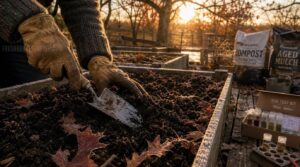
Fall is the best time to give your soil a head start on next year. What you do now — testing, amending, and protecting — determines how well your beds perform come spring.
Here are the key steps to get your soil ready before winter sets in.
Test Soil PH Levels
Fall is the perfect window to test your soil pH before winter sets in. Collecting a simple sample from multiple spots across each bed gives a true picture of what’s happening beneath the surface. Your local extension lab provides precise result interpretation and amendment timing recommendations.
- Soil pH below 6.0 signals a need for lime
- Soil pH testing methods include probes, slurry kits, or lab submissions
- Calibration standards matter — digital meters need buffer solutions for accuracy
Add Compost or Manure
Spreading compost or aged manure now gives your soil a serious head start. Work 1–2 inches into the top 6–12 inches of each bed as soil amendments — this boosts organic matter, improves soil structure, and feeds microbial life all winter. Nutrient benefits include steady nitrogen, phosphorus, and potassium release.
A balanced blend like reed sedge peat and composted manure mix makes hitting that ideal nitrogen-phosphorus-potassium ratio much easier without the guesswork.
Compost garden waste from your compost pile works perfectly, provided it’s fully finished to support pathogen management and minimize environmental impact.
Adjust Acidity Before Winter
Soil pH quietly controls everything your plants can access.
If your fall test shows acidity below 6.0, broadcast lime at 5–10 pounds per 100 square feet and rake it into the top 6 inches — lime application now gives it 3–4 months to react before spring.
For alkaline soils above 7.0, sulfur amendment works the same way.
Always account for buffer capacity; heavier clay soils need more product to shift.
Plant Fall Cover Crops
Empty beds are a missed opportunity — plant cover crops now and put your soil to work all winter. Winter rye builds deep roots that improve structure, while hairy vetch and crimson clover fix nitrogen like green manures.
Mixing species amplifies cover cropping benefits, boosting biomass benefits and soil health improvement.
Seed 1–2 inches deep by late October for solid establishment before frost.
Prevent Erosion and Runoff
Bare soil doesn’t just sit there—it bleeds nutrients every time it rains. Mulching for erosion control with leaf litter mulch or wood chips cushions raindrop impact and slows surface flow.
Add contour swales to capture runoff and direct it into the soil, reducing surface water velocity.
Bunch grasses along slopes and install check dams in low channels to stabilize soil on inclines and prevent gully formation.
Incorporate rain gardens near hard surfaces and establish riparian buffers beside waterways to filter pollutants and enhance water absorption, completing your soil erosion control and nutrient runoff prevention strategy.
Mulch Leaves and Protect Beds
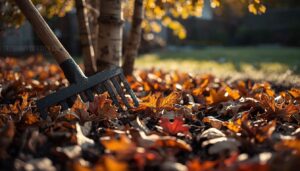
Those fallen leaves piling up in your yard aren’t a problem — they’re actually free mulch waiting to be put to work. A little prep now means your beds, perennials, and young trees stay protected all winter long.
Here’s how to handle it the right way.
Shred Fallen Leaves
Running your mower over fallen leaves — set to a medium height — can shrink piles by up to 90%. Shredded leaves break down faster, triggering a soil microbe boost and accelerating nutrient release that nourishes plants through spring.
Leaf mulching also suppresses weeds and reduces moisture loss by up to 50%, while creating beneficial habitat and insulating soil.
- Dime-sized pieces from leaf mold composting break down fastest
- Leaf litter mulch creates winter habitat for beneficial insects
- Mulching for insulation buffers soil from freeze-thaw swings
- Shredder safety tip: wear gloves and eye protection every time
- Processing techniques: dry leaves shred cleanest through electric shredders
Spread Vegetable Bed Mulch
Once your leaves are shredded, put them to work in your vegetable beds. A 2-inch layer of organic mulch — straw or shredded leaves — keeps moisture locked in and moderates temperature swings by 2–4°F.
| Mulch Type | Key Benefit |
|---|---|
| Straw | Temperature moderation effects |
| Wood chips | Weed suppression at 3–4 inches |
| Shredded leaves | Organic matter enrichment |
Mulch thickness guidelines matter — if it’s too thin, you’ll lose moisture retention benefits fast.
Insulate Perennial Crowns
Your vegetable beds are covered—now turn that same attention to your perennials. The Mulch Ring Technique works well here: apply a 2–4 inch layer of organic mulch or leaf mulch around each crown, keeping it 2–3 inches back from the stem.
For tougher winters, Crown Mudding and Fabric Wraps add extra protection, while Root Zone Warming and Alpine Crown Insulation keep deep-rooted plants stable through freeze-thaw cycles.
Mulch Young Trees
Young trees need the same care as your perennials—perhaps more. Apply a 3–4 inch layer of organic mulch like shredded bark or wood chips in a wide radius out to the drip line, keeping it a few inches clear of the trunk. This protective layer cuts moisture loss by up to 40 percent and buffers roots from freeze-thaw cycles.
Water deeply before mulching, then check depth monthly.
Avoid Walnut Leaves
If you have black walnut trees, keep their leaf litter well away from your vegetable beds. Juglone toxicity is real—tomatoes, peppers, and potatoes can wilt, yellow, and underperform due to contact with fallen leaves.
For safe walnut leaf disposal, hot compost them separately at 140°F before use. Sensitive plant exclusion matters here. Stick to alternative mulches like straw or bark, and your garden cleanup remains problem-free.
Plant and Divide Before Frost
Fall doesn’t just mean wrapping things up — it’s also one of the best times to get ahead on next year’s garden.
A few smart moves now, before the ground freezes solid, can mean earlier blooms, healthier plants, and less work come spring.
Here’s what to do before the first hard frost hits.
Plant Spring-flowering Bulbs

Fall is the best window to plant spring-flowering bulbs — tulips, daffodils, crocuses, hyacinths, and alliums — before the ground locks up.
Nail your bulb depth by going two to three times the bulb’s height. Good drainage strategies prevent rot, so loosen soil 12 inches down.
Consider companion planting and container planting for staggered bloom timing, and feed with bulb fertilizer for stronger spring returns.
Divide Overcrowded Perennials
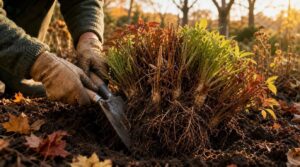
When a perennial clump starts dying out in the center, that’s your sign it’s ready for division time. Water the clump the day before, then dig a wide circle to protect the root ball preservation. Sharp tool use matters here — a clean spade cuts cleanly, reducing stress.
- Divide perennials into sections with several healthy shoots each
- Space divisions according to mature size for proper spacing guidelines
- Replant at the original crown depth for transplant shock mitigation
Divide and transplant perennials promptly, then water deeply.
Save Seeds for Spring

Save your seeds now, and you’re already ahead for spring. Collect seeds from your healthiest open-pollinated plants on a dry day, then use proper seed drying techniques — spreading them on a screen in a ventilated spot until moisture drops to around 6–8%.
A simple labeling system with crop name and harvest date keeps everything traceable. Tuck seeds into airtight storage containers with silica gel for moisture control.
Leave Seed Heads Standing

Not every stem needs to go. Leaving seed heads standing through winter pulls double duty — delivering seasonal aesthetic texture to bare borders while creating winter wildlife food for finches and sparrows.
They’re microhabitat creation at its best, sheltering insects and controlling soil erosion where stems trap light snow.
- Echinacea and rudbeckia hold color tones into cold snaps
- Standing stems reduce soil temperature swings naturally
- Seed heads support microhabitat creation for beneficial insects
- Collect seeds before birds do for your own seed saving benefits
Water New Divisions Deeply

After dividing perennials, don’t skimp on water — root establishment depends on it.
Deep-soak scheduling right after replanting drives moisture straight into the root zone, reducing transplant shock before cold sets in.
Time your irrigation during cooler parts of the day to support soil moisture retention.
Consistent root zone saturation in those first weeks gives every new division the strongest possible start.
Top 7 Fall Gardening Tools
The right tools make fall garden work faster and a lot less frustrating. Having a solid set on hand means you’re ready for everything from pruning and raking to aerating and moisture-checking.
Here are seven tools worth keeping in your shed this season.
1. Centurion 1222 Lopper Shear Pruner Combo
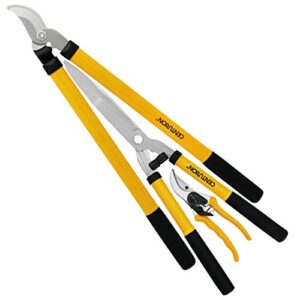
The Centurion 1222 offers a lopper, hedge shear, and pruner in one $39.99 set — providing everything needed for fall cleanup without juggling multiple kits.
The bypass lopper features telescoping aluminum arms that extend from 27 to 33 inches, enabling easy reach for overgrown shrubs without strain. Its carbon steel blades maintain sharpness through repeated cuts, while non-slip foam grips ensure comfortable control, even in cold weather. Weighing just 4.2 pounds, the tool minimizes arm fatigue during extended use.
| Best For | Homeowners who want a versatile, budget-friendly pruning set for everyday garden maintenance like trimming vines, shrubs, and light branches. |
|---|---|
| Price | $39.99 |
| Weight | 4.2 lbs |
| Primary Use | Pruning |
| Season | Fall |
| User Level | Casual gardener |
| Durability Concern | Flimsy feel reported |
| Additional Features |
|
- All-in-one set covers a range of cutting tasks — from small stems to larger limbs — so you’re not buying separate tools
- Lightweight at 4.2 lbs with non-slip foam grips, making it comfortable to use for longer stretches without wearing out your hands
- At $39.99, it’s an easy entry point for casual gardeners who don’t need heavy-duty equipment
- Some buyers have reported a flimsy feel, so it’s probably not the right pick for tackling thick, woody branches regularly
- Quality control seems inconsistent — there are reports of missing parts, rust, and even moldy packaging arriving out of the box
- The telescoping arms and bypass lopper may struggle with very heavy pruning jobs that call for more robust, professional-grade tools
2. Adjustable Metal Leaf Rake Long Handle
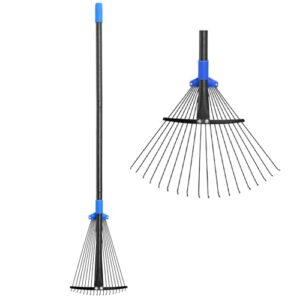
Once your pruning is done, leaves become the next challenge — and a good rake makes all the difference. This adjustable metal leaf rake stretches from 8 to 17 inches wide and telescopes from 30 to 58 inches, allowing you to tackle tight flower beds and open lawn stretches without switching tools. Easy on your back and your budget, it weighs just one pound and costs $21.99.
However, it manages light to medium debris best — not dense, heavy piles.
| Best For | Gardeners who need one rake that works in tight spots and open areas — great for varied heights, including kids and shorter adults. |
|---|---|
| Price | $21.99 |
| Weight | 1 lb |
| Primary Use | Leaf removal |
| Season | Fall |
| User Level | General gardener |
| Durability Concern | Flimsy width-lock clamp |
| Additional Features |
|
- Adjusts from 8 to 17 inches wide, so you can switch from flower beds to open lawn without grabbing a second tool
- Telescoping handle (30–58 in) means less back strain, whatever your height
- At just 1 lb and $21.99, it’s easy to carry and easy on the wallet
- The outer tines can curl at the narrowest setting, which limits how well it actually works in tight spaces
- The plastic width-lock clamp feels a bit flimsy and can loosen with heavy use
- Struggles with thick, dense leaf piles — best kept for light to medium debris
3. Michigan Peat Compost Manure Blend
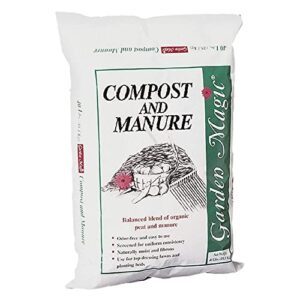
After clearing debris, your beds need something to work with over winter. That’s where Michigan Peat Compost Manure Blend earns its place. It combines reed-sedge peat with composted animal manure — a pairing that improves drainage, builds organic matter, and feeds soil microbes all at once.
Spread 1–3 cubic feet per 10 square feet before the ground freezes, and you’re giving roots a head start come spring.
At $26.99 for a 40-lb bag, it’s solid value for a full season of prep.
| Best For | Gardeners prepping raised beds, in-ground plots, or containers who want an organic, ready-to-use soil amendment that feeds plants and improves drainage without any mixing. |
|---|---|
| Price | $26.99 |
| Weight | 40 lbs |
| Primary Use | Soil amendment |
| Season | Fall |
| User Level | General gardener |
| Durability Concern | Bags under full weight |
| Additional Features |
|
- Combines peat and composted manure in one bag — no blending needed, just open and spread.
- Works for a wide range of plants, from tomatoes and squash to ornamentals and turf grass.
- Improves soil structure and feeds microbes, so your beds are in better shape come spring.
- Can lower soil pH over time, so acid-sensitive plants may need a lime adjustment.
- A 40-lb bag is a lot to wrestle with if you’re only working a small patch or tight space.
- Some buyers have reported bags arriving under full weight, which means dealing with the vendor to sort it out.
4. Walensee Manual Lawn Aerator 15 Spikes
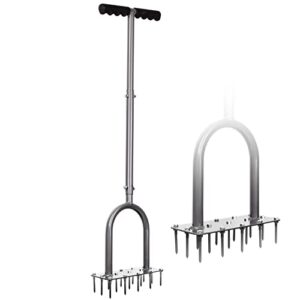
Healthy soil starts underground, and that’s exactly where the Walensee Manual Lawn Aerator does its work. Its 15 iron spikes punch roughly 2.3 inches into the ground per step, opening channels for air, water, and nutrients to reach grass roots before winter sets in.
It weighs under 5 pounds, so fatigue isn’t a factor. The foot pedal gives you real leverage on compacted spots without straining your back.
Fall aeration means your lawn isn’t just surviving winter — it’s getting ready to thrive.
| Best For | Homeowners with small to medium lawns who want an easy, low-effort way to aerate edges, bare patches, or tight spots without hauling out heavy equipment. |
|---|---|
| Price | Not listed |
| Weight | Under 5 lbs |
| Primary Use | Lawn aeration |
| Season | Fall |
| User Level | Homeowner |
| Durability Concern | Spikes rust if wet |
| Additional Features |
|
- 15 spikes in three rows means decent coverage per step — you’re not poking one hole at a time.
- At under 5 pounds with a foot pedal, it’s genuinely easy to use without wrecking your back.
- Detachable design makes it simple to store, and the two bonus replacement spikes are a nice touch.
- Heavy clay or rocky ground will fight back — this isn’t built for seriously compacted soil.
- Covering a large lawn spike-by-spike takes real time and patience.
- Leave it wet and the steel spikes will rust, so it needs a dry home after every use.
5. Briliantwerk Adjustable Lawn Aerator Shoes
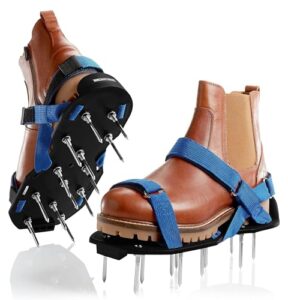
If walking your lawn feels like actual work, the Briliantwerk Aerator Shoes make it productive. Strap them over your existing footwear — they fit sizes 5 to 14 — and every step drives steel spikes up to 2 inches into the soil, opening pathways for water and nutrients before winter locks the ground.
Two spike lengths let you switch between deep aeration and light dethatching.
Just retighten the nuts after your first few passes, and keep the spikes clear of clay buildup.
| Best For | DIY homeowners and small contractors who want a simple, low-effort way to aerate their lawn or prep floors for epoxy without renting heavy equipment. |
|---|---|
| Price | Not listed |
| Weight | Not listed |
| Primary Use | Lawn aeration |
| Season | Fall |
| User Level | DIY homeowner |
| Durability Concern | Straps slip over time |
| Additional Features |
|
- Fits a wide range of shoe sizes (US 5–14) and straps right over your existing footwear
- Two spike lengths give you flexibility — deeper aeration or lighter dethatching, depending on what your lawn needs
- Works for more than just lawns — doubles as a tool for laying epoxy flooring evenly
- The Velcro straps can slip, so you’ll need to stop and readjust more than you’d like
- Spike nuts loosen quickly on hard ground — retightening after the first few steps is basically mandatory
- Some spikes arrive dull out of the box, which means they pull up turf clumps instead of cleanly aerating
6. CedarCraft Greenhouse Cover Steel Frame
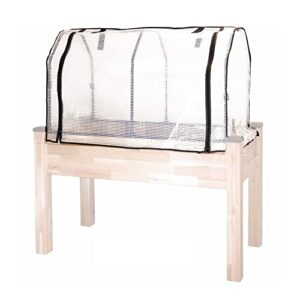
Cold snaps can end your season weeks too soon — but the CedarCraft Greenhouse Cover buys you that time back. It’s a smart fall investment for anyone growing herbs or greens on a patio or balcony.
The steel tube frame assembles in minutes with push-fit connectors, no tools required, and fits CedarCraft planters in the SW2349 and SW2248 series.
A reinforced polyethylene cover with dual-zipper access keeps frost and wind out while letting you check on plants easily.
It’s a smart fall investment for anyone growing herbs or greens on a patio or balcony.
| Best For | Small-space gardeners who want to stretch their growing season on a balcony or patio using CedarCraft raised planters. |
|---|---|
| Price | Not listed |
| Weight | Not listed |
| Primary Use | Frost protection |
| Season | Fall |
| User Level | Small-space gardener |
| Durability Concern | Velcro loses grip |
| Additional Features |
|
- Snaps together fast with push-fit connectors — no tools, no frustration
- Dual-zipper door makes it easy to water, check, or harvest without pulling the whole cover off
- Shields plants from frost, wind, and critters so you can start earlier in spring and keep going later in fall
- Planter sold separately, and it only works with specific CedarCraft models
- Velcro tabs can lose their grip in strong wind, so you may need to add extra fastening in exposed spots
- The semi-translucent cover cuts some light, and seams can gap if you’re not careful about setup
7. XLUX Long Probe Soil Moisture Meter
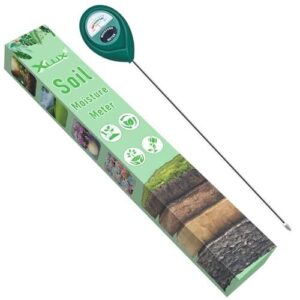
Guessing when to water is one of those habits that quietly costs you plants. The XLUX Long Probe Soil Moisture Meter takes the guesswork out of it.
Its 5.5-inch probe reaches deep into containers and beds, reading moisture levels on a clear 1–10 dial — no batteries needed.
Insert it, check the color-coded zone, and you’ll know whether to water or wait. At $14.99, it’s a small tool that earns its spot in your fall kit.
| Best For | Indoor gardeners and hobbyists who want a simple, no-fuss way to know exactly when to water their houseplants, herbs, or container garden. |
|---|---|
| Price | $14.99 |
| Weight | 0.13 kg |
| Primary Use | Moisture testing |
| Season | Fall |
| User Level | Hobbyist/professional |
| Durability Concern | Probe corrodes over time |
| Additional Features |
|
- No batteries or charging — just stick it in and read the dial
- The 5.5-inch probe reaches deep into big pots without disturbing roots much
- Easy 1–10 dial with color-coded zones makes it genuinely simple to use
- You have to pull it out within 5 minutes or the tip can start to corrode
- Won’t work well in hard, rocky, or very compacted soil
- Some users have seen it wear out faster than expected with heavy use
Frequently Asked Questions (FAQs)
What do gardeners do in the fall?
Fall is when gardeners roll up their sleeves and get serious. You’re clearing beds, planting bulbs, testing soil, and tucking everything in before winter arrives.
This preparation sets the stage for a strong spring comeback, ensuring the garden emerges vibrant after the cold season.
What is the 70 30 rule in gardening?
The 70/30 rule splits your garden plan into 70 percent reliable, low-maintenance plants and soil work, and 30 percent seasonal experiments — keeping your garden resilient while still leaving room to try something new.
What is the 3-hour gardening rule?
Like Icarus flying too close to the sun, gardening during peak hours can burn you. The 3-hour rule means avoiding outdoor work from 11 am to 2 pm, when UV exposure and heat stress peak.
What are some fall chores?
Your fall chore list keeps the garden healthy and sets up spring for success. Clean up beds, test soil, mulch leaves, plant bulbs, divide perennials, and winterize your tools.
What should you do in the fall to prepare your garden?
Your garden needs a clear plan before winter sets in.
To prepare, clean up spent plants, test your soil, mulch your beds, divide overgrown perennials, and plant spring bulbs while the ground is still workable.
What can you do in the fall garden?
Think of autumn as your garden’s reset button. You can clean out spent plants, prep soil, plant bulbs, divide perennials, and mulch beds — setting everything up for a stronger spring.
What are some autumn garden tips?
Autumn is prime time to clean up beds, test your soil, shred leaves for mulch, plant spring bulbs, and divide crowded perennials.
Small efforts now pay off big come spring.
What to do in autumn to keep busy in the garden?
There’s plenty to keep your hands busy once the season shifts. Clean up beds, plant spring bulbs, divide perennials, amend soil, and mulch everything before the ground freezes solid.
Is fall a season of shut down in the garden?
Fall is actually one of the busiest seasons for a gardener.
You’re cleaning up, feeding soil, planting bulbs, and setting everything up so spring practically takes care of itself.
Why should you care for your garden in the fall?
Fall isn’t the time to walk away from your garden — it’s when the real groundwork happens.
What you do now directly shapes how strong your plants, soil, and lawn come back in spring.
Conclusion
Next March, when neighbors scramble to prep neglected beds, yours will already be ahead—soil fed, bulbs waiting, cover crops quietly working beneath the surface. Every fall season gardening task you’ve completed this season is a quiet promise your garden is already keeping.
The cleanup, the mulching, the divisions—none of it was busywork. It was preparation wearing the disguise of maintenance. Spring doesn’t reward last-minute effort. It rewards what you did when the season went cold.
- https://www.almanac.com/fall-vegetable-garden-cleanup-11-things-do-now
- https://www.canr.msu.edu/news/fall_cleanup_in_vegetable_gardens
- https://www.piedmontmastergardeners.org/fall-garden-cleanup
- https://www.oregonlive.com/hg/2025/11/these-quick-fall-garden-tasks-will-make-your-spring-planting-season-dramatically-easier.html
- https://yardandgarden.extension.iastate.edu/how-to/fall-garden-tasks