This site is supported by our readers. We may earn a commission, at no cost to you, if you purchase through links.
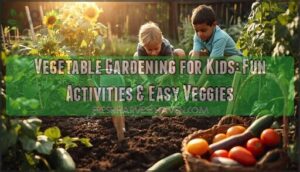
Your kid just ate a radish. Not the fancy heirloom kind from the farmers market—the dirt-crusted one they yanked from the ground five minutes ago, rinsed with the garden hose, and chomped down like a victory snack. That’s the magic of vegetable gardening for kids.
When children grow their own food, they don’t just learn about photosynthesis and soil—they build confidence, curiosity, and a genuine connection to what ends up on their plates. A simple six-foot garden bed transforms into a classroom without walls, where mistakes become lessons and patience pays off in strawberries.
You don’t need acres of land or a green thumb to get started, just a sunny spot and a willingness to let your kids get their hands dirty.
Table Of Contents
- Key Takeaways
- Planning a Kid-Friendly Vegetable Garden
- Selecting Safe and Easy-to-Grow Vegetables
- Engaging Gardening Activities for Children
- Teaching Kids Garden Care and Safety
- Top 6 Kid-Friendly Gardening Products
- Frequently Asked Questions (FAQs)
- What are the easiest vegetables to grow for kids?
- How to start a vegetable garden for kids?
- What age is best to start gardening with kids?
- How do you handle garden pests without harsh chemicals?
- What should kids wear while gardening for safety?
- How often should children visit their garden weekly?
- Can container gardening work for small apartment spaces?
- What vegetables grow best in partial shade?
- How do you handle pests without chemicals?
- When is the best time to start planting?
- Conclusion
Key Takeaways
- Vegetable gardening builds kids’ confidence, curiosity, and connection to food through hands-on experiences that turn mistakes into lessons and patience into tangible rewards like fresh strawberries.
- Fast-growing vegetables like radishes (ready in 3-4 weeks), lettuce, and beans deliver quick wins that keep young gardeners engaged, while colorful varieties and climbing plants transform the garden into an adventure zone.
- Kids learn responsibility and safety through simple daily tasks like checking soil moisture with their fingers, hand-weeding after rain, and using child-sized tools with rounded edges stored properly after each session.
- A successful kid-friendly garden needs just a sunny 6-foot plot with well-draining soil, accessible paths wide enough for wheelbarrows, and thoughtful plant selection that avoids toxic species while maximizing vertical space with trellises and grow bags.
Planning a Kid-Friendly Vegetable Garden
Starting a garden with kids doesn’t have to be complicated, but a little planning up front makes all the difference. The right setup keeps things fun and manageable, so your young gardeners stay engaged instead of overwhelmed.
Simple choices like growing herbs at home can give kids quick wins while teaching them the basics of watering, sunlight, and patience.
Here’s what you need to think through before you break ground.
Choosing The Right Location and Size
Before you break ground, scout a sunny spot with six to eight hours of daily light—ideal for warm-season crops. A six-foot-square plot or raised bed provides plenty of space optimization without overwhelming young gardeners.
Consider these essentials for your garden plan:
- Test soil quality and aim for a pH between 6.0 and 7.0
- Keep the garden within 30 feet of your water source
- Choose flat or gently sloping ground for easy access
Designing an Engaging and Manageable Layout
Once you’ve picked the perfect spot, sketch a garden design for kids that balances adventure and simplicity. Raised beds measuring 3 by 6 feet create defined zones without overwhelming little hands, while an 18-inch-wide path with turnaround space lets wheelbarrows roll through easily.
A central hub—complete with a rain barrel and tool caddy—anchors your small space gardening layout beautifully.
Dividing Sections for Different Crops
With your garden plan in place, organize your layout by crop type to make vegetable gardening less complicated. Crop rotation works best when you label each bed division—try pairing radishes with beets in one zone, then tomatoes with peppers in another.
This garden zoning approach reduces root competition and simplifies your kid-friendly garden ideas, so weeding and watering become quick, satisfying tasks instead of overwhelming chores.
Creating Paths and Walkways for Easy Access
Once you’ve divided your sections, lay down paths that won’t trip little feet or block wheelbarrows. Primary walkways should measure 36 inches wide so two kids can stroll side by side, while surface textures like smooth pavers or rubber mulch cushion falls and shed water.
Thoughtful drainage systems and path materials transform your small garden design into a safe, accessible playground where children explore freely.
Selecting Safe and Easy-to-Grow Vegetables
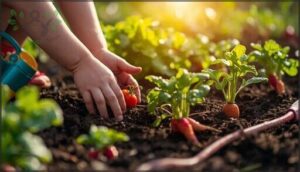
The secret to keeping kids excited about gardening? Choose vegetables that practically grow themselves and deliver quick wins. You want plants that sprout fast, forgive beginner mistakes, and produce something kids actually want to eat or show off.
The secret to keeping kids excited about gardening is choosing fast-growing vegetables that deliver quick wins and forgive beginner mistakes
Let’s explore the best options that’ll turn your young gardeners into confident green thumbs.
Best Fast-Growing Veggies for Kids
When you’re teaching little ones about vegetable gardening for beginners, radishes are your secret weapon—they germinate in just three to seven days and can be ready to munch in three to four weeks.
Spinach, lettuce, and bush beans also make the list of quick-growing plants that deliver kid-friendly harvest wins, turning your easy garden ideas into luscious, irresistible rewards for impatient young gardeners.
Kid-Friendly Fruits and Herbs
Strawberries, blueberries, and raspberries reward young growers with sweet, colorful harvests that make fruit harvesting feel like treasure hunting. Basil and mint bring kid nutrition and herb gardening into focus—just snip fresh leaves for quick taste tests.
These kid-friendly plants thrive in easy garden ideas like containers or raised beds, turning children’s gardening and gardening with children into flavorful, hands-on adventures that celebrate plant variety and garden safety.
Unique and Fun Plant Varieties
Odd shaped veggies like curvy mini cucumbers and dragon tongue beans turn vegetable gardening for kids into a discovery zone. Unusual textures like luffa gourds spark curiosity, transforming easy to grow vegetables into unforgettable kid friendly gardening activities.
Edible flowers such as nasturtiums add peppery punch, while miniature melons and colorful foliage from scarlet oakleaf lettuce make kidfriendly plants irresistible.
Avoiding Toxic Plants in Children’s Gardens
Keeping your children’s garden free from poisonous species is the foundation of real garden safety. Azalea, oleander, and castor bean plants can cause serious reactions if curious hands explore them, so use these child protection steps:
- Replace hazardous plants with kidfriendly plants like herbs and edible greens
- Install clear plant markers for quick toxic plant ID
- Teach kids never to taste unknown leaves or berries
- Supervise outdoor play and designate plant-free zones for active games
Take time to educate your family about safe gardening practices for children to help everyone enjoy a fun and safe outdoor experience.
Engaging Gardening Activities for Children
Getting kids excited about gardening means turning everyday tasks into adventures they’ll actually remember. From building cool structures to watching plants shoot up overnight, hands-on projects keep young gardeners coming back for more.
Here are four activities that transform your vegetable garden into an outdoor classroom where learning happens naturally.
Building a Bamboo-Pole Tepee With Vines
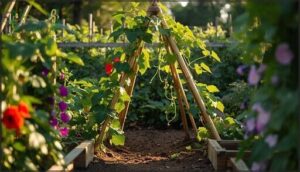
Build a garden tepee by tying four to six bamboo poles together at the top and spacing them evenly around a central point. Anchor each pole 8 to 12 inches deep for stability, then plant fast-growing climbers like morning glory or pumpkin vines near the base. This magical hideaway combines trellis systems with kid-friendly garden ideas, turning gardening activities into pure adventure.
| Tepee Element | Kid-Friendly Details |
|---|---|
| Bamboo Care | Seal ends with non-toxic waterproof coating |
| Vine Selection | Choose runner beans or sweet peas for quick cover |
| Garden Structures | Leave 12 to 18 inch entrance gap for easy access |
| Trellis Systems | Add light lattice inside to guide early vine growth |
| Tepee Design | Create shaded interior space perfect for low-growing veggies |
Planting a Sunflower Circle for Shade

Sunflower Benefits shine in a circle layout that creates natural shade for heat-sensitive crops like lettuce and spinach. Space tall, branching varieties 18 to 24 inches apart around your garden perimeter to form a living canopy that improves soil retention and builds a cool garden microclimate.
This kid-friendly garden idea transforms gardening with children into an adventure while protecting tender plants from scorching afternoon rays.
Fun Planting and Harvesting Projects

Once your sunflower circle provides cooling shade, you’re ready to launch exciting gardening projects for children that transform everyday tasks into adventures. Try these interactive seed planting experiences to turn vegetable gardening for beginners into memorable family moments:
- Host monthly planting parties where kids gardening groups rotate between mini garden stations for sowing, watering, and weeding
- Create a build-your-own planting treasure map showing where each crop grows
- Run harvest games with simple counting activities tracking collected vegetables
- Design a garden scavenger hunt for ripe produce showing color changes
- Start gardening journals recording flavor experiments with edible flowers
These gardening with kids activities build responsibility while making seed starting genuinely fun.
Simple Science Activities in The Garden
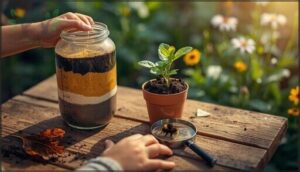
Beyond harvest games, your garden becomes a living classroom for nature-based education through simple soil experiments and pollinator watching. Set up clear jars where kids observe seed germination and the plant life cycle firsthand, or track water cycles by measuring how quickly different garden spots drain after watering. These compost lessons and plant growth observations turn everyday gardening with kids into hands-on science discovery. Explore enriching STEM garden project ideas to further inspire kids’ scientific curiosity outside.
| Activity | What Kids Learn | Simple Setup |
|---|---|---|
| Soil texture jars | How sand, silt, and clay separate | Fill jar with soil and water, shake, and watch layers form |
| Growth measurement | Tracking plant life cycle progress | Weekly ruler checks on one vegetable plant |
| Pollinator counts | Insect behavior and flower visits | Sit quietly by blooms, tally visitors for 10 minutes |
| Decomposition watch | Compost lessons showing nature’s recycling | Layer scraps and leaves in a clear container |
Teaching Kids Garden Care and Safety
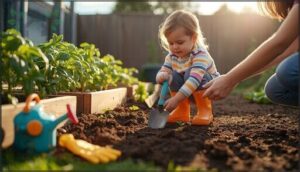
Getting kids involved in garden care isn’t just about growing vegetables—it’s about teaching responsibility, building confidence, and keeping everyone safe while they learn. When children understand how to use tools properly, water plants without drowning them, and spot potential hazards, they become capable gardeners who can work alongside you with less worry.
Here’s how to turn daily garden tasks into valuable lessons that stick.
Involving Children in Daily Garden Tasks
Start kids with simple routines like daily watering tips they can master—checking soil dryness and using lightweight cans. Rotate weeding and pest checks so everyone learns different skills, a clear task rotation benefit.
These childrens gardening habits build confidence, turning gardening with kids into consistent, rewarding practice they’ll actually stick with. Track harvests in a simple journal to celebrate their wins.
Proper Use of Child-Sized Tools
Once kids learn their daily tasks, the next step is giving them the right gardening gear. Tool safety tips start with choosing equipment they can actually handle—lightweight rakes and trowels with rounded edges and ergonomic design make all the difference.
Teach proper storage and child handling basics:
- Carry tools with pointed ends down, away from their body
- Inspect grips for splinters before each gardening session
- Clean and store tools in a designated tote after use
Regular maintenance checks keep kid-friendly gardening activities safe and fun.
Watering, Weeding, and Plant Maintenance
Your garden thrives when you teach hands-on watering tips, weed control, and plant pruning basics. Soil moisture checks are simple—kids poke fingers two inches deep into soil, feeling for dryness before watering. Early morning sessions reduce evaporation by 25 percent, making vegetable gardening efficient for children.
| Task | How Kids Help | Frequency |
|---|---|---|
| Checking soil moisture | Finger test or wooden skewer method | Daily in hot weather |
| Gentle watering | Spray bottles, pipettes, child-sized cans | 1-2 inches weekly |
| Hand weeding | Pull after rain, bucket competitions | Weekly sessions |
| Mulch application | Spread straw around plants, leave stem gaps | Once after planting |
| Plant health monitoring | Check leaves, measure growth, remove aphids | Weekly observations |
Weekly weed removal stops nutrient theft, while three-inch straw mulch layers cut evaporation and suppress weeds by 70 percent. Garden hygiene includes monitoring droopy leaves and checking for aphids daily—kid-friendly gardening activities that build responsibility. These vegetable gardening routines transform gardening with children into rewarding learning experiences, teaching patience through plant care while gardening for kids becomes second nature.
Supervising and Ensuring Garden Safety
Throughout your child-friendly gardens, active adult supervision prevents accidents before they happen. Stay within sight and hearing distance, especially near tools and water features, so you can respond quickly to potential garden hazards.
Follow these safety rules to maintain child protection during gardening with children:
- Lock away tools and chemicals in secured storage where kids can’t reach them without permission.
- Set clear emergency procedures like no running with tools, no tasting plants, and staying on marked paths.
- Scan regularly for new risks such as wasp nests, loose boards, or exposed nails, removing them before garden safety tips become lessons learned the hard way.
Kid friendly gardening activities flourish when gardening with kids includes proper supervision and hazard awareness.
Top 6 Kid-Friendly Gardening Products
Getting your hands dirty is even more fun when you have the right gardening gear. From space-saving planters to sturdy trellises, these six products make gardening easier and more exciting for kids.
Let’s look at what really works for young gardeners.
1. Colorful Metal Hanging Flower Pots

Bright, cheerful pots bring instant personality to your child’s balcony or patio garden. These metal hanging planters come in sets of six to ten vibrant colors—red, yellow, blue, pink—so each child can claim their own.
The powder-coated finish keeps colors lively through rain and sun, while galvanized steel resists rust better than plain iron. Most measure four to six inches across, perfect for herbs, lettuce, or compact flowers.
Detachable S-hooks slip over rails at kid-friendly heights, and pre-drilled drainage holes prevent overzealous watering disasters.
| Best For | Parents looking to create a colorful, manageable first garden for young kids who want to grow herbs or small flowers on a balcony or patio. |
|---|---|
| Material | Galvanized steel |
| Primary Use | Herbs and small flowers |
| Space Efficiency | Hanging/vertical |
| Drainage | Pre-drilled holes |
| Best Setting | Balcony/patio |
| Kid-Friendly | Adjustable heights |
| Additional Features |
|
- Comes in a set of 10 vibrant colors that let each child personalize their own pot
- Detachable hooks make it easy to hang at kid-friendly heights on railings or windows
- Drainage holes help prevent overwatering mistakes
- Small 10cm size limits you to herbs and tiny plants only
- Hooks don’t attach very securely and handles can slide out if the pot isn’t hung up
- Iron with varnish finish may fade in direct sunlight over time
2. Stackable Strawberry Herb Garden Planter
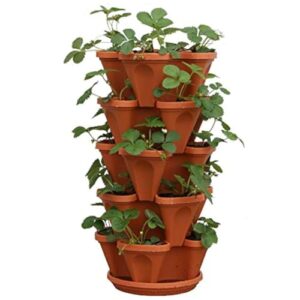
When space is tight, this terra-cotta-colored vertical planter lets you grow strawberries, basil, and lettuce in a footprint smaller than a pizza box. Five stackable tiers create multiple planting pockets while water flows from the top layer down through each level, so you don’t have to water every tier separately.
The food-safe polypropylene won’t crack or fade easily, and the whole setup stands about twenty-eight inches tall. You’ll need to stake it once plants mature, but assembly requires zero tools—just stack and plant.
| Best For | Apartment dwellers and small-space gardeners who want to grow strawberries and herbs vertically without taking up much floor space. |
|---|---|
| Material | Polypropylene |
| Primary Use | Strawberries and herbs |
| Space Efficiency | Vertical stacking |
| Drainage | Cascading water flow |
| Best Setting | Small apartments |
| Kid-Friendly | No-tool assembly |
| Additional Features |
|
- Takes up less than a square foot of space while offering five tiers of planting area
- No-tool assembly makes setup quick and straightforward
- Self-watering design lets water cascade from top to bottom through all levels
- Becomes wobbly when fully stacked, especially once plants grow in
- Small planting pockets limit what you can grow and how big plants can get
- Bottom tiers get harder to water properly as upper plants fill in
3. Mobile Garden Vegetable Planter Pot
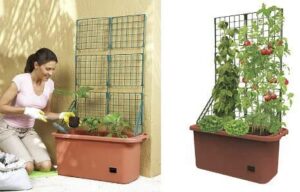
Kids love rearranging their creations, and this wheeled planter lets them chase the sunshine across your patio. Two wheels and a sturdy handle make relocation simple, even for older children who want ownership of their garden’s placement.
The ten-gallon bed holds enough soil for cherry tomatoes, snap peas, or a sprawling basil forest, while the built-in drain system protects roots during surprise downpours. Sectional trellis panels support climbing beans or flowering vines up to three feet high.
The weather-resistant construction stands up to summer storms.
| Best For | Families with kids who want a movable garden that can chase the sun around a patio or small yard. |
|---|---|
| Material | Weather-resistant plastic |
| Primary Use | Vegetables and herbs |
| Space Efficiency | Wheeled mobility |
| Drainage | Built-in drain system |
| Best Setting | Patio/small yard |
| Kid-Friendly | Easy mobility |
| Additional Features |
|
- Two wheels and a handle make it easy for kids to move their plants to sunny spots
- Ten-gallon capacity holds enough soil for tomatoes, peas, herbs, and other vegetables
- Built-in drain system and trellis panels support climbing plants up to three feet tall
- Trellis sections can be brittle and may break or need reinforcement over time
- Plastic construction might become more fragile with extended outdoor exposure
- Higher price point compared to the durability some users expected
4. Black Wrought Iron Garden Trellis
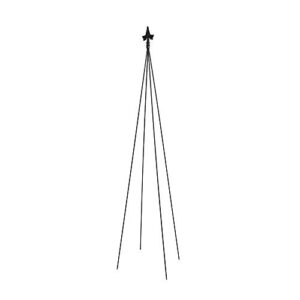
Climbing plants turn a flat garden into a vertical wonderland, and this 78-inch iron trellis gives peas, beans, and morning glories the sturdy grip they crave. The Fleur-de-Lis design adds a touch of elegance while the powder-coated black finish weathers rainstorms without rusting away.
You can adjust the legs to fit your flowerbeds or containers, making it perfect for tomato vines or even a pumpkin tunnel.
Your young gardeners will love watching their plants spiral upward, creating a living wall that transforms a simple plot into a secret hideaway.
| Best For | Families who want to maximize garden space with climbing vegetables and flowers while adding decorative vertical interest to small yards or patios. |
|---|---|
| Material | Powder-coated iron |
| Primary Use | Climbing plants |
| Space Efficiency | Vertical climbing |
| Drainage | Not applicable |
| Best Setting | Small yards/patios |
| Kid-Friendly | Creates hideaway |
| Additional Features |
|
- Adjustable legs let you customize the footprint to fit containers, raised beds, or ground planting
- Classic Fleur-de-Lis design looks elegant while providing sturdy support for peas, beans, cucumbers, and flowering vines
- Corrosion-resistant black finish holds up through seasons of rain and sun without constant maintenance
- Not strong enough for heavy plants like large pumpkins or mature squash vines
- Springy legs can be tricky to install solo, and the trellis may need extra anchoring in windy spots
- Actual height shrinks a few inches when you push the legs into soil
5. Heavy Duty Plant Trellis Netting
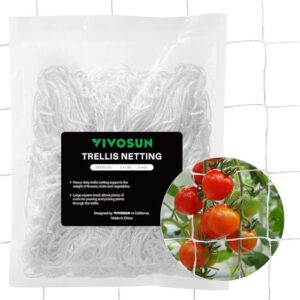
When a pumpkin vine or cucumber plant starts its climb, it needs something more flexible than iron—that’s where heavy-duty polyester netting comes in. This 5-by-15-foot white mesh offers 6-inch square openings that let your child’s hands slip through easily to harvest cherry tomatoes or snap peas.
You can cut it to any size without watching it unravel, drape it across a homemade A-frame, or stretch it between posts to create a living screen that maximizes every inch of your garden.
| Best For | Gardeners who want a flexible, space-saving way to support climbing vegetables and flowers without investing in permanent metal structures. |
|---|---|
| Material | Polyester mesh |
| Primary Use | Climbing vegetables |
| Space Efficiency | Flexible placement |
| Drainage | Mesh openings |
| Best Setting | Any garden layout |
| Kid-Friendly | Easy harvesting |
| Additional Features |
|
- Cuts to custom sizes without fraying, so you can fit it to any garden layout or trellis frame
- Large 6″ x 6″ openings make it easy to reach through for pruning, training, and harvesting
- Lightweight polyester stores flat and reuses season after season
- Can sag or stretch when loaded with heavy fruiting plants like large pumpkins
- Tends to tangle during storage if not rolled or folded carefully
- Removing spent vines at season’s end can be tricky since stems weave tightly through the mesh
6. Breathable Garden Grow Bags Set
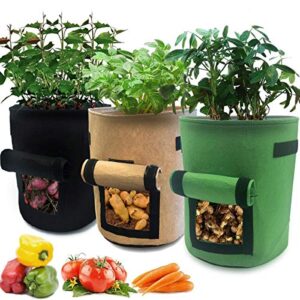
While vertical growers need support, root crops thrive below the surface in portable fabric containers. These 11.8-inch breathable grow bags in black, tan, and green let you start a potato patch on your patio or raise carrots where sunlight reaches best.
The thick non-woven fabric keeps roots cool during summer heat waves, drains fast enough to prevent soggy soil, and folds flat for winter storage. Built-in grips mean your young gardener can relocate a radish experiment without spilling dirt across the deck.
| Best For | Gardeners with limited outdoor space who want to grow root vegetables like potatoes, carrots, and radishes on patios or balconies. |
|---|---|
| Material | Non-woven fabric |
| Primary Use | Root vegetables |
| Space Efficiency | Compact footprint |
| Drainage | Breathable fabric |
| Best Setting | Patio/outdoor spaces |
| Kid-Friendly | Growth monitoring window |
| Additional Features |
|
- Non-woven fabric provides excellent drainage and airflow to keep roots healthy and prevent waterlogging
- Built-in handles and visualization window make it easy to move bags around and check on plant growth without digging
- Reusable and folds flat for compact storage when not in use
- Soil dries out faster than traditional pots due to the breathable material, requiring more frequent watering
- Bags may be smaller than expected at under 12 inches, so double-check the dimensions before buying
- Risk of mold growth if drainage isn’t properly managed or bags stay wet too long
Frequently Asked Questions (FAQs)
What are the easiest vegetables to grow for kids?
Radishes are the speed demons of the garden, maturing in just 25 to 30 days with bright sun and good drainage.
Lettuce grows in 30 to 45 days, while carrots thrive in loose, sandy soil.
How to start a vegetable garden for kids?
Start by picking a sunny spot that gets six to eight hours of direct light daily.
Next, build a small raised bed or in-ground plot—four by six feet works perfectly for beginners.
What age is best to start gardening with kids?
There’s no time like the present—you can introduce your little one to gardening as early as ages two or three with simple activities like watering, touching soil, and watching plants grow together.
How do you handle garden pests without harsh chemicals?
You can hand-pick larger bugs like beetles and caterpillars, use floating row covers to block flying pests, plant herbs that repel insects, or spray gentle soap-and-water mixtures on affected leaves.
What should kids wear while gardening for safety?
An ounce of prevention beats a pound of cure. Long sleeves and full-length pants keep skin safe from scratches and bugs.
Don’t forget closed-toe shoes, gloves, and a wide-brimmed hat for sun protection.
How often should children visit their garden weekly?
Plan on two visits per week, each lasting 15 to 30 minutes. This keeps your kids engaged without overwhelming them, while giving plants the steady attention they need to thrive.
Can container gardening work for small apartment spaces?
Absolutely. Container gardens thrive on balconies and windowsills, maximizing two to six square feet per planter. Lightweight grow bags, self-watering pots, and vertical stacking help young gardeners explore planting without needing yard space.
What vegetables grow best in partial shade?
Leafy greens like spinach and lettuce flourish with just three to five hours of sun, while radishes, carrots, and herbs such as parsley adapt well to dappled light and cooler spots.
How do you handle pests without chemicals?
Think like a detective instead of reaching for bottles. Plant marigolds near tomatoes to confuse pests, hang fine mesh over seedlings, and invite ladybugs by adding dill nearby.
When is the best time to start planting?
Timing depends on your local frost date and what you’re growing.
Cool-season crops like peas can go in a few weeks before the last frost, while tomatoes and peppers need warmer soil afterward.
Conclusion
What happens when you hand a child a seed and say, “This is yours to grow”? You’re not just teaching vegetable gardening for kids—you’re planting something bigger. Confidence blooms alongside those carrots. Curiosity sprouts with every watering can trip. And patience? It ripens right next to the tomatoes.
The garden becomes their canvas, their laboratory, their pride. So grab some seeds, stake out that sunny spot, and watch your kids grow roots deeper than any vegetable ever could.
- https://www.facebook.com/mumslittleexplorers/
- https://www.gardenersworld.com/how-to/grow-plants/10-gardening-projects-for-kids/
- https://extension.psu.edu/plant-life-cycles
- https://www.canr.msu.edu/news/science_ideas_for_young_children_playing_in_the_dirt
- https://childsplayabc.wordpress.com/2021/07/01/soil-science-and-sensory-activities/