
This site is supported by our readers. We may earn a commission, at no cost to you, if you purchase through links.
A garden changes fast once frost hits—stems go limp, leaves darken, and by morning it’s clear the season’s done. That moment marks the quiet shift from growing to rebuilding.
Cleanup after the freeze isn’t about tidiness; it’s about giving soil and plants a head start for spring. Knowing what to compost, what to pull, and what to leave standing can make all the difference between decay and renewal.
Fall garden cleanup and composting turn the year’s remains into next season’s foundation, one deliberate task at a time.
Table Of Contents
- Key Takeaways
- When to Start Fall Garden Cleanup
- Essential Fall Garden Cleanup Tasks
- Composting Fall Garden Materials
- Maintaining and Using The Compost Pile
- Preparing Soil and Beds for Winter
- Frequently Asked Questions (FAQs)
- Should you clean up your garden in the fall?
- How much does a fall cleanup usually cost?
- What plants should you never cut back in the fall?
- Should you put compost on your garden in the fall?
- What should I do with my garden in the fall?
- When should fall cleanup be done?
- When should I stop watering my garden completely?
- How do I protect tender plants from frost?
- Can I plant bulbs during fall cleanup time?
- What tools work best for heavy garden cleanup?
- Conclusion
Key Takeaways
- Start fall cleanup right after a hard frost, using local frost dates and climate to time your work while soil is still easy to dig and beds are workable.
- Pull dead annuals and diseased growth, keep most perennials and some seed heads standing, and trash any sick or invasive plants instead of composting them.
- Turn fall debris into compost by sorting safe materials, chopping them small, keeping a 2–4 to 1 balance of dry browns to green waste, then turning and watering the pile so it stays like a wrung-out sponge.
- Finish by feeding and protecting soil for spring with a surface layer of compost, a few inches of mulch or shredded leaves, and cover crops or mulch around perennials to shield roots and block winter weeds.
When to Start Fall Garden Cleanup
Knowing when to begin fall garden cleanup makes the work easier and more effective. The right timing protects your soil and plants before winter sets in.
For a detailed guide on what tasks to tackle first, check out this fall garden cleanup checklist to make your prep smoother and more seasonal.
Here’s what to keep in mind as you plan your cleanup schedule.
Timing After First Frost
After your first hard frost, you can start serious Fall Garden Cleanup and Winter Preparation without rushing. As you plan this work, keep in mind that cutting back certain perennials after the first frost helps prevent pests and disease, as outlined in these essential post-frost pruning guidelines.
Use local Frost Date Variations and forecasts for Cleanup Scheduling, then give yourself one to two weeks of mild weather to work through beds. Watch plants for Freeze Damage Assessment, not just calendar dates. As stems blacken and flop, that’s your cue to clear Garden Waste Disposal, start Composting and Recycling, and focus on long-term Fall Garden Preparation and Compost for healthier soil and steadier Soil Temperature going into winter.
Identifying Annuals Vs. Perennials
As those frost‑burned tops collapse, you need to know which plants stay and which become Garden Waste in your Fall Garden Cleanup. Annual Flowers finish their Plant Lifecycles in one season, so you pull them, roots and all, for Compost.
Perennials keep living Root Systems that send up new shoots next year. Their Growth Habits and Bloom Patterns repeat, so they stay in place for long‑term Garden Planning.
Considering Regional Climate Factors
You’ve sorted which plants stay; now you match your Fall Gardening Tasks to your Climate Zones and Frost Dates so timing works with your weather, not the calendar.
In cold, dry regions, you start Fall Garden Cleanup earlier, then lean on thicker Winter Mulching for Soil Health, Soil Moisture, and root protection. Windy sites need extra Wind Protection. Mild, wet areas clean later, use lighter mulch, and watch Compost and beds so they don’t stay soggy. As you fine-tune timing, consider leaving some plant debris to support beneficial insects and wildlife.
- In very cold zones, clean beds early and mulch 4–6 inches once soil cools.
- In rainy falls, clear thick leaves so soil doesn’t waterlog, then mulch lightly.
- In windy spots, stake tall plants, add windbreaks, and secure mulch edges so it doesn’t blow away.
Essential Fall Garden Cleanup Tasks
Once the weather cools and plants start fading, it’s time to get your garden ready for the months ahead. Fall cleanup keeps your beds healthy and your tools in good shape. Here’s what to focus on before winter settles in.
Removing Spent Plants and Debris
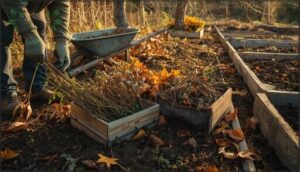
Think of Debris Removal as your fall reset button for Garden Sanitation and pest control. Pull or cut spent annuals, then sort Garden Waste into Compost Sorting and Plant Disposal piles.
For step-by-step tips on prepping clean beds and healthy soil, check out the complete fall gardening guide for raised beds.
Healthy plants and small weeds can go to compost. Diseased Plants, rotten fruits, and invasive weeds belong in the trash so Fall Garden Cleanup doesn’t spread problems.
Final Weeding and Bed Clearing
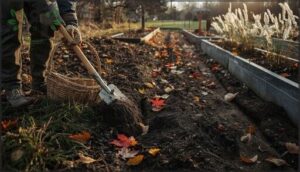
Quiet, thorough weeding is the backbone of Fall Garden Cleanup and real Weed Prevention. Start with Weed Identification: pull shallow annual weeds, then dig out deep perennial roots so they don’t return.
Clear Garden Waste from rows, rake beds smooth for Bed Preparation, then mulch to support Garden Sanitation, Compost use, and overall Garden Cleanup and Organization.
Pruning and Protecting Trees and Shrubs
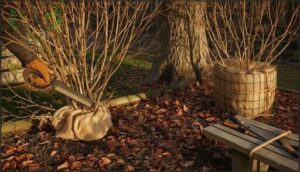
Tackle Fall Pruning once trees and shrubs are dormant, focusing on Tree Pruning and Branch Pruning of dead, damaged, or rubbing wood for simple Shrub Care and Shrub Renovation. Avoid cutting more than about one third of a shrub in one season, then add Winter Protection with Tree Wrapping, burlap screens, or cages.
Use this Fall Garden Cleanup step to create a safer structure now, better growth, and Compost later.
Cleaning Up Perennial Beds
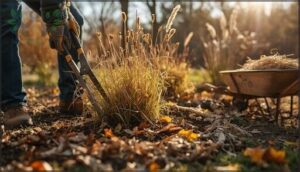
Order matters here. Start Fall Garden Cleanup in perennial beds with Garden Sanitizing so disease doesn’t carry over, then use Perennial Deadheading and light Fall Pruning only where foliage is truly done, and save clean Garden Waste for Compost while you keep some seed heads and Leaves for wildlife and later Mulch Application around Perennials to boost Weed Prevention.
- Cut back most perennials to a few inches once foliage yellows and collapses, but keep sturdy ornamental grasses and seed heads for winter food and shelter.
- Remove and trash any diseased stems and leaves instead of composting them, then wipe your tools between plants.
- Weed thoroughly around each clump so roots don’t compete with winter-hardened weeds next spring.
- Spread 1–2 inches of compost, then add a loose mulch layer of shredded leaves around but not on top of crowns.
- Mark any crowded clumps you divided this fall so you can track how they respond and adjust your cleanup and pruning plan next year.
Composting Fall Garden Materials
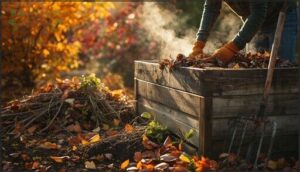
Fall cleanup gives you more than just a tidy garden—it’s your best chance to start a healthy compost pile. The leftover plants and leaves are packed with nutrients your soil will need next season.
Fall cleanup transforms garden leftovers into nutrient-rich compost that fuels next season’s healthy soil
Here’s what to know before you start adding materials to your compost.
What You Can and Cannot Compost
Want your Compost to help, not harm your beds? Focus on safe Compost Materials first. You can add most Garden Waste and Organic Matter like healthy plants, dry leaves, grass clippings, kitchen scraps, and small twigs as part of smart Garden Waste Management and Organic Recycling.
Keep Compost Safety tight by leaving out meat, dairy, oils, pet waste, diseased plants, seedy weeds, and herbicide‑treated Green Waste Management.
| Can Compost | Can’t Compost |
|---|---|
| Healthy plant tops | Meat, fish, dairy |
| Dry fall leaves | Fats, oils, greasy food |
| Untreated grass clippings | Pet waste and litter |
| Plant-based kitchen scraps | Diseased or pest‑covered plants |
| Small twigs, straw, shredded paper | Weeds with seeds, treated lawn waste, glossy packaging |
Balancing Browns and Greens
Strong Compost starts with the right Carbon Ratio. Aim for about two to four parts dry Brown Sources to one part Green Materials so the Microbe Balance stays active and steady.
Layer your Garden Waste in thin Compost Layers, alternating Browns and Greens, and adjust by eye if it smells sour or looks soggy using these Composting Tips.
Chopping and Preparing Plant Material
Good Compost starts with smart Material Preparation during Fall Garden Cleanup. For fast Decomposition Speed, aim for an Ideal Chop Size of about 2–5 cm, so Compost Shredding and Plant Fragmentation give microbes lots of edge to work. Snip stalks with pruners, slice thick stems smaller, then mix these pieces into your Compost pile using these Composting Tips for better Garden Cleanup and Maintenance.
Excluding Diseased and Invasive Plants
After chopping your materials, pause before tossing everything into the Compost pile. Diseased Plants, Pest-Infested Plants, and tough Weeds need separate handling. Bag and trash them to protect your garden from re-infection.
For Invasive species control and Pathogen prevention, exclude these from Compost pile management. That’s real Weed seed destruction and smart Fall Garden Cleanup.
Maintaining and Using The Compost Pile
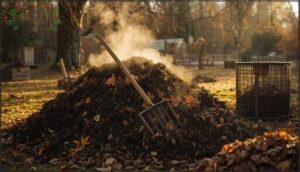
Once your compost pile is started, you’ll need to keep it healthy as it breaks down. Regular care helps everything decompose evenly and keeps unwanted smells away.
Here’s what to focus on as you manage your pile through the season.
Turning and Aerating The Pile
Turn your compost pile to boost oxygen levels and speed decomposition rates. This key part of pile maintenance keeps microbes active during fall garden cleanup. Good compost turning prevents sour smells and builds soil health for gardeners.
Here are five aeration techniques:
- Use a garden fork to lift outer layers into the hot center.
- Try a winged aerator to pull up compacted material.
- Drill an auger through the pile for easy mixing.
- Shift material to a second bin to invert layers.
- Rotate tumblers every few days instead of forking.
Managing Moisture Levels
After compost aeration mixes air through the pile, check moisture balance next. Grab a handful from the center and squeeze—if it holds like a wrung-out sponge with just a few drops, you’re set for compost aeration and soil health.
Too wet? Add dry material for water absorption and humidity control. Too dry in fall garden cleanup? Mist it lightly. These gardening tips guarantee strong soil preparation.
Speeding Up Decomposition
If the moisture feels right, focus next on speeding up decomposition. Small tweaks make big differences in fall garden cleanup results. Try this:
- Increase pile turning every few days for better heat retention.
- Add microbe boosters like coffee grounds or comfrey leaves.
- Keep carbon balance steady for faster decomposition rates and healthier soil maintenance in spring.
Storing Finished Compost for Spring
For winter compost storage after fall garden cleanup, treat finished compost like a living soil amendment, not trash. Use bins, buckets, or bags with loose lids for Compost Storage, so Compost Aeration and Moisture Control stay balanced for Winter Protection and Nutrient Preservation.
Keep it just damp, then use this Winter Composting habit to boost Soil Health and Maintenance when Composting for Gardeners in spring.
Preparing Soil and Beds for Winter
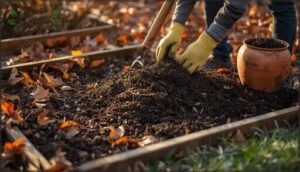
Once your compost is ready, it’s time to turn your attention to the soil itself. A little work now helps your garden rest and recharge through the cold months. Here’s how to prepare your beds so they’re in top shape come spring.
Adding Compost and Organic Amendments
Healthy soil starts here. Spread 2–3 inches of Compost across empty beds for strong Soil Health and Maintenance. Mix it into the top layer to boost Nutrient Cycling and Microbe Management.
Add Organic Fertilizers or other Soil Amendments now—fall moisture helps them blend in, creating Nutrient-Rich Soil ready for Organic Gardening next spring.
Composting for Gardeners never sleeps.
Mulching Beds With Leaves and Debris
Leaf Mulching is a key step in Fall Garden Cleanup. Spread 3–6 inches of shredded Leaves and Debris for Soil Insulation and Winter Protection.
This Mulch layer locks in moisture and suppresses weeds while adding Organic Matter that breaks down into Compost by spring.
Good Debris Management keeps your beds clean and ready for next growth.
Sowing Cover Crops for Soil Health
Think of sowing cover crops as tucking your soil in for the night. After Fall Garden Cleanup, choose your mix with smart Cover Crop Selection: Winter rye benefits include strong Soil Erosion Prevention and deep roots that build Nutrient-Rich Soil, while legumes handle Legume Nitrogen Fixing.
Rotate beds with simple Crop Rotation Strategies, then let these plants pair with your compost for truly Sustainable Gardening Practices and real-world Gardening Tips and Advice.
Protecting Perennials With Mulch
Strong perennials handle cold better when you give them simple Winter Protection with mulch after your Fall Garden Cleanup, once the first hard frost hits and plants go dormant. Aim for a Mulch Depth of about 2–4 inches for good Soil Insulation and Pest Control without smothering roots, and use loose Mulch Materials like shredded leaves, pine needles, straw, or Compost for steady Perennial Garden Care and better soil health by spring.
Keep mulch pulled a couple inches back from crowns so stems stay dry and less tempting to slugs and voles, and treat this as one of your core Gardening Tips and Advice every year.
Frequently Asked Questions (FAQs)
Should you clean up your garden in the fall?
You should do some Garden Cleanup in fall, but not strip everything bare. Fall Garden Maintenance is essential to remove diseased plants, protect Soil Enrichment, and maintain Ecosystem Balance.
Leaving some leaves is beneficial for Wildlife Preservation and Compost production, ensuring a balanced and sustainable garden environment.
How much does a fall cleanup usually cost?
Most pros charge for Fall Garden Cleanup by a mix of Cost Factors: common Price Ranges run about $185 to $500 for a typical Yard Size, but Service Scope, Regional Fees, and add‑ons like Compost or extra Fall Garden Maintenance can push Garden Cleanup higher under standard Gardening Best Practices.
What plants should you never cut back in the fall?
You might want to cut everything, but some plants should stand all winter. Leave Seed-Rich Plants like coneflower, black-eyed Susan, globe thistle, coreopsis, and heliopsis, Winter Interest grasses and sedum, Old Wood Shrubs like lilac, azalea, rhododendron, forsythia, hydrangea, mock orange, plus dense shrubs and evergreens for Wildlife Habitat and Evergreen Care.
Skip cutting roses hard, and never Compost Pest-Infested Plants or Diseased Plants from your Perennial Garden in fall.
Should you put compost on your garden in the fall?
Yes, you should add Compost in the fall because Fall Compost Benefits stack up for Soil Health, Nutrient Cycling, and Winter Preparation. Cooler Compost Timing lets microbes work all winter, so spring beds are fed and ready for Seasonal gardening and Garden cleanup during Fall garden maintenance and preparation and Winter Composting.
What should I do with my garden in the fall?
Picture your fall garden like an old VHS tape you’re carefully rewinding: start garden cleanup after the first hard frost, clear dead plants, protect perennials, build compost, and focus on Fall Gardening Tips, Winter Planting Strategies, Frost Protection Methods, Garden Tool Care, Soil Erosion Prevention, and overall fall garden maintenance and preparation as part of smart seasonal gardening and compost use.
When should fall cleanup be done?
You should schedule fall cleanup for the fall season right after a hard frost blackens your annuals, while the soil is still workable.
Use local Frost Timing and Climate Zones to adjust Cleanup Scheduling and Winter Preparation.
Incorporate other garden cleanup tips like compost use and consider Regional Variations.
When should I stop watering my garden completely?
Stop watering once Soil Temperature stays near freezing for several nights. That’s your cue for a Seasonal Shutdown.
Beyond this point, Winter Irrigation risks frost damage, so focus on Water Conservation and preparing garden for winter.
How do I protect tender plants from frost?
To protect tender plants from frost, watch Frost Risk alerts, then use Plant Covers, Cold Frames, and Winter Mulch to boost Soil Insulation and root warmth.
While you shift containers, manage pests and disease, and continue careful Compost and Winter Composting, ensure these measures are part of your Fall Garden Cleanup routine.
Can I plant bulbs during fall cleanup time?
Bright bulbs bring beauty, and yes, you can plant them during fall cleanup.
Follow your Fall Cleanup Schedule with proper Soil Preparation Methods and Compost use—these Gardening Tips guarantee strong roots and colorful spring blooms.
What tools work best for heavy garden cleanup?
For heavy Garden Cleanup, you’ll lean on cordless Leaf Blowers, wide Garden Rakes, and Lawn Sweepers for fast Lawn Care.
Additionally, Chipper Shredders and sharp Pruning Tools serve as core Gardening Tools, supported by steady Tool Maintenance habits.
Conclusion
It’s no coincidence that the beds you clean now wake up strongest in spring. Each plant you pull, chop, or leave standing is a choice about next year’s growth.
Use what you learned this season, and adjust how you clear, layer, and pile. Let fall garden cleanup and composting turn waste into stored power.
When frost returns next year, you’ll see it not as loss, but as your signal that the work paid off today.
- https://marrazzosgardencenter.com/2025/10/06/putting-the-garden-to-bed-fall-cleanup-checklist/
- https://ginghamgardens.com/fall-garden-clean-up/
- https://ecogardener.com/blogs/news/fall-garden-cleanup-what-to-compost-vs-what-to-trash
- https://www.oakhillhomestead.com/2025/09/fall-garden-cleanup-guide.html
- https://als-gardencenter.com/blogs/tips-and-inspiration/composting-101-how-to-turn-october-leaves-into-garden-gold