
This site is supported by our readers. We may earn a commission, at no cost to you, if you purchase through links.

Most lawns don’t struggle in summer because of neglect—they struggle because of well-meaning mistakes. Watering every evening, mowing too short to "buy time" between cuts, throwing down fertilizer during a heat wave: these habits feel logical until your grass tells you otherwise, usually in the form of brown patches, fungal rings, or turf that peels back like a bad toupee.
Summer changes the rules, and what kept your lawn green in May can quietly destroy it by July. Your grass type, your soil, and your local heat patterns all shape which summer lawn care strategies actually work. Get those details right, and you’ll spend less time diagnosing problems and more time enjoying a yard that holds up all season.
Table Of Contents
- Key Takeaways
- Why Summer Lawn Care Changes
- Water Deeply, Not Daily
- Mow for Heat Protection
- Feed Lawns Without Burning
- Control Summer Weeds Early
- Spot Pests Before Damage Spreads
- Prevent Common Lawn Diseases
- Build Strong Summer Soil
- Top 3 Summer Lawn Care Products
- Frequently Asked Questions (FAQs)
- Should I mow my lawn during a drought?
- Can I overseed my lawn in summer heat?
- How do I prevent lawn stress from foot traffic?
- What grass type is most heat and drought resistant?
- Is it safe to use herbicides in hot weather?
- How do shade-tolerant grasses survive summer heat?
- Can dormant brown grass recover after a heatwave?
- How does soil compaction affect root growth over time?
- When should you overseed a struggling summer lawn?
- Can I overseed my lawn during summer?
- Conclusion
Key Takeaways
- Water deeply once or twice a week—pushing moisture 4 to 6 inches down—instead of a little every day, so roots grow deeper and handle heat without wilting.
- Match your mowing height to your grass type: cool-season varieties need 3.5 to 4 inches for shade and root depth, while Bermuda and Zoysia stay tightest at 1 to 2 inches.
- Skip extra nitrogen in summer heat and lean on slow-release fertilizers plus potassium, which keeps moisture locked in and strengthens grass against scorching temperatures.
- Catch pests and diseases early—grubs, chinch bugs, brown patch, and dollar spot all show small warning signs before they cause serious damage, so a weekly dusk walkthrough pays off.
Why Summer Lawn Care Changes

Summer hits your lawn like a switch flips — suddenly the same routine that worked in spring starts falling apart. Your grass isn’t being difficult; it’s just responding to a whole new set of pressures. Here’s what’s actually changing under your feet.
Heat Stress on Turf
When summer temperatures climb past 75°F, your lawn starts fighting to survive. Cool-season grasses slow photosynthesis, burn through stored carbohydrates, and close their stomata — cutting off evaporative cooling just when they need it most.
Once the heat breaks and soil temps cool back down, a seasonal fall gardening checklist can help you time that recovery window before your cool-season grass misses its best chance to rebound.
The result? Wilting, thinning, and that frustrating yellow tinge no amount of watering seems to fix. Additionally, extreme heat can lead to rapid root death and stunted growth.
Dormancy Versus Drought Damage
Not all brown lawns are dying — some are just resting. Dormancy is intentional: your grass reduces growth and conserves energy when heat and soil moisture deficit push past its tolerance threshold.
Drought damage, by contrast, happens when that threshold breaks entirely, causing xylem embolism, pigment loss, and delayed recovery that lingers even after moisture returns.
Cool-season Summer Slowdown
Cool-season grasses don’t crash in the heat — they slow down strategically. Once daytime highs push past 85°F, shoot growth can drop to less than 0.5 inches per week. Your lawn isn’t failing; it’s rationing.
- Stomatal conductance reduction cuts water loss but also slows new leaf production
- Carbohydrate reserves shift toward root maintenance, not top growth
- Nighttime temps above 65°F limit recovery even with deep watering schedules
Warm-season Peak Growth
While cool-season grasses pull back, warm-season varieties like Bermuda and Zoysia are just getting started.
Peak growth timing kicks in when daytime temps consistently top 80°F. That’s your grass in full stride — deep green, rapidly expanding, and hungry for water and nutrients.
Match your inputs to that pace, and your lawn rewards you.
Garden-friendly Lawn Balance
Striking a garden-friendly balance starts with native grass selection. Native or well-adapted varieties naturally need up to 20% less water than non-native mixes — a real edge during summer heat.
Pair that with mulching clippings to feed soil microbial life, and you’re building resilience from the ground up.
Add low-growing flowering species along your lawn’s edges to quietly support biodiversity all season long.
Water Deeply, Not Daily
Most people water their lawns too often and not long enough — and that’s exactly what summer punishes you for. Deep, infrequent watering trains roots to grow down where the soil stays cool and moist. Here’s what you need to get your watering routine right.
Water Between 4 and 9 AM

Set your irrigation to run between 4 and 9 AM — that’s the sweet spot for summer watering. Early morning temperatures are cooler, winds are calmer, and evaporation losses drop markedly. Water soaks straight into the root zone instead of burning off under midday sun.
A smart controller makes scheduling simple and cuts water usage by up to 30%.
One to 1.5 Inches Weekly
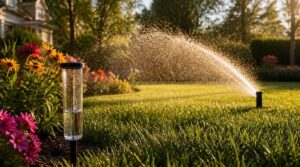
Most lawns need just 1 to 1.5 inches of water weekly — no more, no less. Spreading that across one or two deep sessions beats watering a little every day.
If rain falls mid-week, subtract it from your irrigation schedule. After a dry spell or heat wave, bump toward 1.5 inches to ease drought stress before the grass shows it.
Soak Soil 4 to 6 Inches

Think of moisture like a savings account — shallow deposits run out fast. When you water deeply, pushing moisture down 4 to 6 inches, grass roots chase it downward and anchor themselves stronger. That deeper root zone builds real drought resilience, so your turf endures a scorching afternoon without wilting.
Deep watering drives roots downward, building the drought resilience your lawn needs to survive summer’s worst
Check depth with a screwdriver or soil moisture probe after irrigating.
Use Soaker Hoses Efficiently

Soaker hoses take the guesswork out of summer watering. Lay them 6 to 12 inches from plant stems, then cover with 2 to 4 inches of mulch to lock in moisture and shield the hose from sun damage.
Attach a pressure regulator at 10 to 12 psi for steady, even seepage — and keep each run under 100 feet to avoid pressure drop.
Adjust During Heat Waves

When a heat wave hits, your lawn needs a different game plan. Adjust your watering schedule to deliver those same 1 to 1.5 inches weekly, but lean toward fewer, deeper sessions.
Raise mowing height slightly, boost soil potassium, and apply a mulch layer to trap moisture. Skip extra nitrogen — heat stress turns that soft growth into a liability fast.
Mow for Heat Protection

How you mow in summer matters more than most people realize. Your mowing habits can either shield your lawn from heat stress or leave it wide open to damage. Here’s what to keep in mind when you fire up the mower this season.
Cool-season Grass: 3.5 to 4 Inches
Keeping cool-season grass at 3.5 to 4 inches is one of the smartest summer lawn care tips you can follow.
That extra height shades the soil, slowing moisture loss and discouraging weed seeds from sprouting. It also promotes deep root growth, helping your lawn hold up through summer heat mitigation without burning out.
Bermuda and Zoysia: 1 to 2 Inches
Warm-season grasses like Bermuda and Zoysia actually thrive at a lower cut — just 1 to 2 inches. That tight, dense canopy is their sweet spot. It keeps crowns cool, promotes deeper root development, and locks out crabgrass before it gets a foothold.
Mow within this range consistently, and your lawn builds real drought resilience all summer long.
Follow The One-third Rule
Once you’ve dialed in your mowing heights, the one-third rule keeps every cut safe. Never remove more than one-third of the blade at once. Cut too much and you stress the plant, stall root growth, and invite disease.
If your cool-season grass hits 5 inches, mow it back to 3.5 — not lower.
Sharpen Blades Regularly
A sharp blade is just as important as mowing heights. Dull blades tear grass instead of cutting it, leaving ragged edges that turn brown and invite disease.
Sharpen every 20 to 25 hours of use — and always disconnect the spark plug wire first. Maintain the factory bevel, typically 20 to 30 degrees, for a clean, efficient cut every time.
Leave Clippings as Mulch
Don’t bag those clippings — let them work for you.
Grass clippings mulch returns nitrogen to the soil naturally, reducing your fertilizer needs. Spread in a ¼-inch layer, they retain moisture, suppress weeds, and lower soil temperature on hot afternoons. That’s free organic matter every single time you mow.
Feed Lawns Without Burning

Summer heat turns fertilizing into a bit of a balancing act — your lawn needs fuel, but too much of the wrong kind can do more harm than good. The good news is that a few smart adjustments make all the difference. Here’s what to keep in mind when feeding your lawn this season.
Choose Slow-release Fertilizer
Think of slow-release nitrogen fertilizer as a slow drip rather than a flood. Coating technology controls how fast nutrients reach your soil — polymer-wrapped granules break down gradually over weeks, not hours. That steady pace protects your lawn from sudden nutrient spikes that scorch grass in summer heat.
Match your fertilization strategies to soil moisture levels, since release rates respond directly to warmth and water.
Prioritize Potassium in Summer
Potassium is summer’s unsung hero. While nitrogen gets most of the credit, potassium does the heavy lifting when temperatures climb. It controls stomatal regulation, so your grass loses less water on scorching days, and it strengthens cell walls to resist heat damage.
Here’s what potassium delivers for your lawn:
- Stomatal regulation keeps moisture locked in during peak heat
- Cell wall strength reduces blade scorching when temperatures spike
- Maintains osmotic balance so turf stays green under drought stress
- Speeds heat recovery by fueling carbohydrate transport in stressed grass
- Works with calcium to sustain potassium uptake and root activity
Use summer-specific fertilization strategies with high-potassium formulas — your soil health and turf color will thank you.
Avoid Excess Nitrogen
More nitrogen isn’t better in summer — it’s a liability. Excess nitrogen pushes your grass into rapid shoot growth, which weakens roots and rolls out a welcome mat for pests and disease. It also triggers nitrogen runoff into nearby waterways during storms.
| Risk | What Happens | Consequence |
|---|---|---|
| Excess shoot growth | Roots weaken under heat stress | Increased drought vulnerability |
| Thatch buildup | Grassroots get suffocated | Poor air and water movement |
| Delayed hardening | Grass stays vegetative too long | Winter damage risk rises |
| Pest attraction | Lush growth invites chinch bugs | Lawn damage spreads faster |
| Nitrogen runoff | Nutrients leach into waterways | Environmental and legal concerns |
Soil test nitrogen levels before each application — your results may show you don’t need to feed at all. When you do fertilize, slow-release fertilizers are your safest bet, matching nutrient delivery to actual turf uptake. Organic nitrogen sources like compost offer gentler feeding with zero burn risk. Smart nitrogen application timing keeps your lawn healthy without the consequences.
Water After Granular Feeding
Once you’ve spread granular summer fertilizer, water within 24 hours — no exceptions. Without moisture, those granules just sit on the surface, concentrating salts that can burn your roots.
A good soak dissolves the granules and pulls nutrients down into the root zone. Aim for 4 to 6 inches of soil moisture depth to support even nutrient uptake.
Try Compost Tea Gently
Compost tea is one of the gentler organic fertilizers you can add to your summer lawn care routine.
Brew finished compost at a 1:5 to 1:10 ratio with water, aerate for 24 to 36 hours, and apply within that same window. Drench the soil early morning to deliver live microbial activity directly to the root zone.
Control Summer Weeds Early
Weeds don’t wait for an invitation — they move in fast the moment your lawn shows any weakness. Getting ahead of them in summer takes a few targeted moves, each matched to the type of weed you’re dealing with. Here’s what actually works.
Prevent Crabgrass Before Sprouting
Crabgrass wins before you ever see it. That’s the thing most homeowners miss — by the time those coarse, spreading blades show up, the battle’s already over. Preemergent herbicides are your real weapon, and timing is everything.
The trigger is soil temperature threshold: once the ground climbs above 55°F, crabgrass seeds start germinating. Miss that window, and no barrier product will save you.
Your early spring application checklist:
- Rake away debris so the product spreads evenly across the surface
- Test soil pH to confirm your chosen product will perform properly
- Aerate compacted areas a few weeks before treatment for better infiltration
Once you apply, activate the crabgrass seed barrier with just 0.25 to 0.5 inches of water within 24 to 72 hours. That moisture bonds the product to the soil without washing it away. Always follow product label compliance — timing, rate, and reapplication intervals vary and skipping steps kills effectiveness.
Building this step into your lawn care schedule every spring is what separates a clean lawn from one you’re fighting all summer.
Spot-treat Broadleaf Weeds
Once preemergent stops working, spot treatment takes over. If dandelions, plantain, or thistles pop up mid-summer, reach for a selective postemergent herbicide — one labeled safe for your specific grass type.
Apply between 60 and 85°F, ideally in the early morning. Spray weed leaves until evenly wet, avoid nearby grass, and don’t mow for a few days after treatment.
Pull Perennial Roots Completely
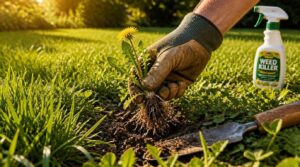
Herbicide covers the leaves, but the roots are a different fight. Perennial weeds like dandelions, plantain, and thistles anchor with taproots 6 to 18 inches deep — snap them off and they grow back.
Water the bed 24 hours before pulling, then use a hand shovel or grub hoe, working in a circle to free the entire root cleanly.
Stop Weeds Before Seeding
Pulling roots stops the plant in front of you — but what about the thousands of seeds already waiting in the soil? That’s your weed seed bank, and summer heat is its best friend.
- Scout weekly and remove weeds before they flower
- Use soil solarization for 4–6 weeks to deplete seeds pre-seeding
- Apply a mulch barrier or stale seedbed technique to exhaust surface seeds first
Grow Dense Competitive Turf
Think of your lawn as a team — the denser the lineup, the less room weeds have to play. Canopy density boost starts with mowing smart: keep your mower’s blade height matched to your grass type.
Overseed late summer on cool-season lawns, and pair it with aeration to improve soil microbial activity, nutrient uptake balance, and deeper root system depth naturally.
Spot Pests Before Damage Spreads

Summer pests don’t announce themselves — they quietly wreak havoc before you even notice something’s wrong. The good news is that your lawn leaves clues if you know where to look. Here’s how to catch the most common culprits early.
Grub-damaged Loose Turf
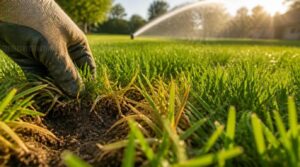
Grubs are silent destroyers — by the time you see brown patches, the root damage is already done. Do a quick turf lift test: grab a handful of dead grass and tug. If it peels back like loose carpet, grubs are likely the culprit.
Here’s a simple damage assessment checklist:
- Check for spongy, unstable turf underfoot.
- Look for white, C-shaped larvae 2–4 inches beneath the surface.
- Watch for birds or skunks digging — they’re following the food trail.
For lawn recovery, start with core aeration to open compacted soil, then move into overseeding during cooler temperatures. Support new growth with balanced fertilizer and deep, infrequent watering to encourage strong roots. For grub prevention going forward, preventive nematode application early in the season is a smart, chemical-free first line of defense.
Chinch Bug Yellow Patches
Chinch bugs are easy to overlook until your lawn looks like a patchwork of dying grass. These tiny insects inject feeding toxins that turn turf yellow before it browns and dies.
Spot them early by doing a soapy water flush test along sunny edges near driveways — prime real estate for heat-loving chinch bugs.
Armyworm Soap Flush Test
Armyworms can strip your lawn overnight — and you won’t see them until the damage is done.
To confirm their presence, mix 3 tablespoons of dish soap per gallon of water and pour it evenly over a 3-by-3-foot damaged area. Watch for larvae surfacing within 15 minutes. Spot them? Apply a labeled insecticide promptly.
Inspect at Dusk
Dusk is one of the best times to catch lawn problems before they spiral. Evening light and shadow reveal stress zones, pest activity, and disease signs that bright midday sun often washes out.
Walk your lawn slowly around 7–8 PM. Chinch bug damage, loose grub-affected turf, and armyworm feeding all become easier to spot once the glare drops.
Use Integrated Pest Management
Reaching for a pesticide the moment you spot damage is tempting — but it’s often the wrong move. Integrated pest management means you monitor first, confirm the pest, then choose the least disruptive fix.
Encourage beneficial insects like predatory beetles, set action thresholds, and use targeted pesticides or insecticidal soaps only when damage is confirmed. Keep a log. It makes future seasons easier.
Prevent Common Lawn Diseases
Summer heat and humidity are the perfect recipe for lawn diseases to take hold fast. Knowing what to watch for—and how to stop it—makes all the difference between a lawn that recovers and one that doesn’t. Here’s what you need to keep disease from gaining the upper hand.
Brown Patch in Humidity
Humidity is brown patch’s best friend. This fungal disease — driven by Rhizoctonia solani — thrives when humidity climbs above 85% and temperatures hover between 70 and 90°F. The real danger is dew duration: if blades stay wet for 12 or more hours overnight, infection risk skyrockets.
Watch for these warning signs:
- Circular tan patches with darker border margins
- Fuzzy gray mycelium visible after wet nights
- Yellow-green foliage before full browning sets in
Dense turf with poor airflow traps moisture longer, accelerating patch expansion. Water only in early morning, never at night, to cut leaf wetness time and keep summer lawn care and lawn disease prevention working in your favor.
Dollar Spot Bleached Patches
Dollar spot hits different than brown patch — instead of wide circles, you’re looking for silver-dollar-sized bleached patches scattered across your lawn.
The affected blades fade to a pale straw color, often edged with a reddish-brown margin. On humid mornings, white fluffy mycelium may appear on the grass surface.
Catch it early and treat promptly.
Avoid Nighttime Watering
If catching dollar spot early matters, so does what you do after sundown. Nighttime watering is one of the fastest ways to invite fungal disease into your lawn. When you water late, moisture lingers on blades for hours. There’s no sun to burn it off, and dew accumulation only adds to the problem. Stick to that 4–9 AM window.
Improve Airflow and Sunlight
Poor airflow around your lawn is a hidden disease trigger. Trim dense shrubs and low branches to let sunlight reach shaded patches and allow breezes to move freely across the turf. Even strategic tree placement can channel cooler air toward problem areas.
Better light and circulation mean grass dries faster after morning watering, giving fungal diseases far less opportunity to take hold.
Reduce Excessive Thatch
Thatch over half an inch thick blocks water, air, and nutrients from reaching roots — and it becomes a breeding ground for fungal disease.
- Measure thatch depth by cutting a small plug and checking the spongy layer between grass and soil.
- Core aeration timing matters — aerate during active growth for faster recovery.
- Mulch grass clippings at the right mower height to support thatch decomposition rate.
Build Strong Summer Soil

Your grass is only as strong as what’s underneath it. Summer heat puts real pressure on soil, and if the foundation isn’t right, no amount of watering or fertilizing will fix it. Here’s what you can do to keep your soil working for you all season long.
Test PH Annually
Most lawn problems start underground — and annual pH testing is how you catch them early. A quick soil test tells you whether your soil pH sits in the sweet spot.
Take 10 to 15 core samples from across your lawn, mix them into one composite, and send it off. This single step drives smarter nutrient management all summer long.
Aim for 6.0 to 7.0
That sweet spot — pH 6.0 to 7.0 — is where your grass unlocks the nutrients it needs most. Outside this range, nitrogen, phosphorus, and potassium get locked out, no matter how much you feed.
- Lime application raises low pH
- Sulfur adjustment lowers high pH
- Soil microbes thrive in balanced soil
A corrected pH means better nutrient uptake all summer.
Aerate Compacted Soil
Compacted soil suffocates your grass from the root up. Core aeration fixes that by pulling small plugs from the ground, opening channels for air, water, and nutrients to reach the root zone.
A core aerator works far better than spike aeration — it removes soil rather than just displacing it. Time your lawn aeration when soil is moderately moist for clean, deep penetration.
Topdress With Thin Compost
Think of topdressing as giving your soil a slow, nourishing meal. Spread a thin 1/4 to 1/2 inch layer of finished compost evenly across your lawn. Here’s how to do it right:
- Use mature, well-aged compost to avoid introducing weed seeds
- Apply on calm, dry days to prevent clumping on grass blades
- Rake lightly to integrate into the soil surface
- Water gently after spreading to begin incorporation
- Pair with recent core aeration for maximum soil contact
This boosts organic matter, improves soil structure, and promotes steady nutrient release through summer.
Redirect Heavy Foot Traffic
Every footstep on stressed summer turf is one more reason soil compaction gets worse.
Map your high-traffic zones first, then install gravel pathways or stepping stones to redirect foot traffic away from vulnerable grass. Use portable barriers near worn edges, and pair hardscape integration with regular aeration, topdressing, and overseeding to speed lawn recovery.
Top 3 Summer Lawn Care Products
The right products can make a real difference when summer turns brutal on your lawn. You don’t need a garage full of gear — just a few well-chosen tools that match the season’s demands. Here are three worth keeping on hand.
1. BASF Drive XLR8 Crabgrass Weed Control
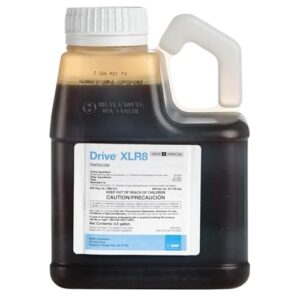
When crabgrass starts taking over, Drive XLR8 by BASF is one of the most reliable tools you can reach for. It’s a liquid, post-emergent herbicide with quinclorac as its active ingredient, and it works fast — hitting crabgrass at multiple growth stages, including mature plants.
It’s rainfast in under an hour and compatible with Bermudagrass and Kentucky Bluegrass. Just avoid using it on St. Augustinegrass or Centipedegrass, and always shake the bottle well before applying.
| Best For | Homeowners, groundskeepers, and golf course managers dealing with crabgrass, foxtail, clover, or dandelion on Bermudagrass or Kentucky Bluegrass lawns. |
|---|---|
| Product Form | Liquid concentrate |
| Grass Compatibility | Warm & cool season |
| Target User | Residential & commercial |
| Seasonal Use | Year-round capable |
| Coverage Scope | Large properties |
| Application Method | Diluted liquid spray |
| Additional Features |
|
- Rainfast in under an hour, so one rain shower won’t undo your work
- Works on crabgrass at multiple growth stages, even mature plants
- Gives you up to 30 days of residual control to keep weeds from bouncing back
- Can’t be used on St. Augustinegrass, Centipedegrass, or Bentgrass — know your turf type before applying
- Results take one to three weeks, so don’t expect overnight results
- Has a strong odor during application and requires gloves and protective clothing
2. Sunday Water Focus Liquid Lawn Fertilizer
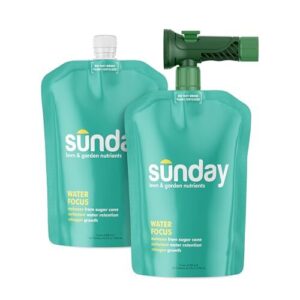
Once you’ve tackled weed control, your lawn still needs steady fuel to push through summer heat. Sunday Water Focus is a liquid fertilizer with an 18-0-3 NPK ratio, designed to feed without burning.
Its slow-release nitrogen promotes steady growth, while potassium builds heat and drought tolerance. The built-in surfactant improves water penetration, and molasses feeds your soil’s microbes.
One pouch covers up to 10,000 sq ft — just connect the hose and apply in 10–15 minutes.
| Best For | Homeowners in hot, dry climates who want an easy, low-risk way to keep their lawn fed and resilient through summer. |
|---|---|
| Product Form | Liquid formula |
| Grass Compatibility | All grass types |
| Target User | All homeowners |
| Seasonal Use | Spring through fall |
| Coverage Scope | Up to 10,000 sq ft |
| Application Method | Hose-end sprayer |
| Additional Features |
|
- The 18-0-3 formula feeds and strengthens without the burn risk you get from heavier fertilizers
- Built-in surfactant and molasses do double duty — better water penetration and healthier soil microbes
- Covers up to 10,000 sq ft in 10–15 minutes, which is hard to beat for convenience
- You’ll need to reapply every 4–6 weeks, so the cost adds up over a full season
- Results can be hit or miss depending on your local weather and rainfall
- Some users have had issues with the sprayer not performing consistently
3. Ultimate Lawn Care Maintenance Guide

If Sunday Water Focus manages the feeding, the Definitive Lawn Care Maintenance Guide ties everything together. At 227 pages for just $4.99, it covers grass selection, mowing technique, watering schedules, and seasonal care plans in plain language written for homeowners — not pros.
It even covers slopes, small gardens, and bare patches. Think of it as your go-to reference when something looks off and you’re not sure what to do next.
| Best For | Homeowners who want a healthy, great-looking lawn without spending a fortune or hiring a pro. |
|---|---|
| Product Form | Print guide |
| Grass Compatibility | All grass types |
| Target User | Residential homeowners |
| Seasonal Use | Year-round guidance |
| Coverage Scope | Various terrains |
| Application Method | Self-guided reading |
| Additional Features |
|
- Covers everything from grass selection to seasonal care in plain, easy-to-follow language
- At $4.99 for 227 pages, it’s an incredible bang for your buck
- Works for all kinds of yards — slopes, small gardens, bare patches, you name it
- Geared toward homeowners, so professional landscapers won’t find much new here
- Doesn’t cover high-end or specialized equipment
- Focused on residential lawns, so large-scale or commercial properties aren’t really in scope
Frequently Asked Questions (FAQs)
Should I mow my lawn during a drought?
Yes, but keep it minimal. During a drought, raise your mower deck to 5–4 inches for cool-season grass. Mow less often — every 2 to 3 weeks — and always leave clippings to retain moisture.
Can I overseed my lawn in summer heat?
Overseeding in summer heat is tricky. Cool-season grasses struggle when soil temperatures exceed 65°F — germination slows, seeds dry out fast. Wait for early fall if you can. Warm-season grasses like Bermuda handle it better.
How do I prevent lawn stress from foot traffic?
Constant foot traffic is like a slow leak — you don’t notice the damage until it’s too late. Redirect heavy traffic with stepping stones and aerate compacted soil yearly to keep roots breathing.
What grass type is most heat and drought resistant?
Bermuda grass and Zoysia top the list. Bermuda’s roots push 5 to 5 meters deep, while Zoysia’s rhizome network locks in moisture. Both stay green through brutal heat with minimal water.
Is it safe to use herbicides in hot weather?
It can be, but timing matters. Avoid applying herbicides when temps exceed 85°F — turf burns faster, drift increases, and stressed weeds resist treatment. Early morning applications are your safest bet.
How do shade-tolerant grasses survive summer heat?
Shade-tolerant grasses boost chlorophyll concentration to capture more available light and store carbohydrates in roots, sustaining growth when photosynthesis slows — making them naturally resilient when summer heat reduces sunlight penetration under tree canopies.
Can dormant brown grass recover after a heatwave?
Yes — brown, dormant grass can absolutely bounce back. Roots stay alive even when the blades go brown. Once temperatures drop and watering resumes, most lawns green up within one to three weeks.
How does soil compaction affect root growth over time?
Soil compaction quietly strangling your roots is worse than you think. Roots can’t push through dense soil, so they stay shallow, miss nutrients, and leave your grass gasping long before summer heat arrives.
When should you overseed a struggling summer lawn?
Avoid overseeding in peak summer heat. For warm-season grasses, late spring to early summer works best when soil hits 65 to 70°F. Cool-season varieties need late summer to early fall.
Can I overseed my lawn during summer?
Overseeding in summer is a gamble. For cool-season grasses, heat above 27°C stalls germination. Warm-season types like Bermuda handle it better in late summer when temperatures start to ease.
Conclusion
Picture your lawn in late August—deep green, tight, and holding steady while your neighbors’ yards fade to straw. That’s what the right summer lawn care strategies look like when followed through.
Not luck. Not endless weekends with a hose. Just deliberate decisions: water deeply, mow high, feed smart, and act before small problems spread.
Your grass is more resilient than you think. Give it the right conditions, and it’ll prove that all season long.
- https://extension.psu.edu/turfgrass-management
- https://www.extension.purdue.edu/extmedia/AY/AY-7.html
- https://www.homesandgardens.cm/advice/how-to-make-a-lawn-green-and-thick
- https://go.redirectingat.com/?id=92X1623321&xcust=homesandgardens_us_9687943796114698339&xs=1&url=https%3A%2F%2Fwww.gettyimages.co.uk%2Fsearch%2Fphotographer%3Fphotographer%3Dredmar&sref=https%3A%2F%2Fwww.homesandgardens.com
- https://www.dtnpf.com/agriculture/web/ag/crops/article/2021/06/11/five-things-watch-spraying-high-heat