This site is supported by our readers. We may earn a commission, at no cost to you, if you purchase through links.
Most apartment dwellers write off their outdoor space as a place for a chair and maybe a potted plant, but a well-chosen raised garden bed changes the math completely.
Damp soil hits weight limits fast, sun moves across your railing in predictable patterns, and the right bed design works with both. Raised garden beds for apartment balconies come in styles built for every constraint—tiered for herbs, mobile for chasing light, trellised for cucumbers climbing toward your ceiling.
Pick the right setup once, and your balcony feeds you all season.
Table Of Contents
Key Takeaways
- Pick a bed style that matches your balcony’s size and sun pattern—tiered for herbs, wheeled for chasing light, or trellised for vines climbing your walls.
- Before you bring a single bag of soil outside, check your balcony’s weight limit, map your sun exposure, and get your landlord’s sign-off in writing.
- Your soil mix makes or breaks everything—combine one-third compost with two-thirds potting mix, match depth to your crops, and always build in solid drainage.
- Harvest regularly, sow greens every two weeks, and keep herbs separated so mint doesn’t bulldoze your whole set-up.
Choose Your Balcony Bed Style
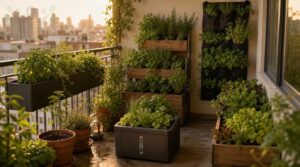
Your balcony’s shape and size should drive every decision you make here. The good news is there’s a bed style built for pretty much every situation — small studio, herb obsession, or sun-chasing setup.
Whether you’re working with a narrow ledge or a sprawling terrace, these small-space sustainable gardening ideas can help you match the right setup to your space.
Here are five styles worth knowing about.
Mini Beds for Studios
Even a studio balcony can become a real growing space. A mini raised bed with a lightweight frame and built-in storage lets you tuck soil, pots, and tools right underneath. Choose compact raised garden beds with adjustable height and fold-away seating to reclaim floor space fast.
Vertical planters and space-saving planters turn small-space gardening into something genuinely rewarding — no sprawling yard needed.
Tiered Beds for Herbs
A tiered raised garden bed takes herb gardening vertical — and that changes everything. Stack three to five cedar or redwood planters at varying heights, and your Herb Tier Arrangement practically runs itself.
Sun-lovers like basil and rosemary claim the top tier; shade-tolerant mint and parsley settle lower.
Thread a vertical watering system along the back, label each tier, and your compact balcony raised garden bed becomes a modular, low-fuss growing machine.
Mobile Beds for Sunlight
Your herbs love the sun — but the sun doesn’t stay put. A Planter with Wheels solves that. Mobile garden containers with a Rotating Bed Frame let you chase sunlight exposure across your balcony all day.
Adjustable Height Legs, Reflective Liner Surfaces, and Shade Canopy Integration give you real control over sunlight exposure. These features ensure optimal growing conditions while adapting to changing light angles.
Models like the LEETOLLA Lift roll smoothly and lock securely in place when it’s time to harvest, combining mobility with stability for practical gardening.
Low-profile Wooden Designs
Not every balcony needs height. A low raised bed with slim timber frames keeps your space open and clean. Recessed rail brackets and smooth butt joints hide the hardware, so your simple wooden box looks intentional.
Protective wood sealant withstands the weather. Integrated water trays catch runoff.
Use a wooden raised vegetable garden with sections or raised beds for herbs — both fit beautifully.
Trellised Beds for Vines
Vines want to climb — let them. A trellised balcony raised garden bed transforms vertical space into your biggest asset. Think cucumbers, peas, and even a raised bed for tomatoes pressed against the wall.
- Trellis material matters: powder-coated steel lasts 7–10 years
- Vine training methods like weaving optimize your height allocation
- Seasonal pruning keeps growth controlled and productive
- Weather protection extends your harvest window
- This vining plant raised bed idea is the ideal space-saving planter for vertical gardening
This approach maximizes productivity while conserving space, making it perfect for compact gardens.
Check Balcony Safety First
Before you drag a single planter onto your balcony, there are a few things worth checking. Skipping this step can mean damaged floors, unhappy landlords, or plants that never see the sun.
Here’s what to sort out first.
Confirm Load Capacity
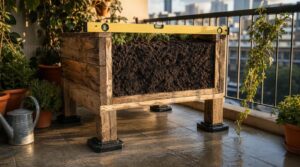
Your balcony has a breaking point — know it before your garden does. Most residential balconies handle 300–400 lb of continuous load, but damp soil alone can quickly reach that limit. Conduct a static capacity calculation before buying anything.
Key load factors include:
| Load Factor | Typical Weight |
|---|---|
| Raised bed frame | 15–30 kg |
| Damp soil (12 in deep) | 60–80 kg |
| Plants + water reservoir | 10–15 kg |
| Safety factor buffer | 20% added |
Spread weight evenly — weight distribution planning across all four feet prevents dangerous point loads. Always check your bed’s material load rating and confirm your balcony’s structural safety with your building’s specifications.
Ask Landlord Approval

Don’t skip this step — get your landlord’s blessing before a single bag of soil touches that balcony.
- Review your Lease Clause for any rental property gardening rules
- Submit a Written Request with load calculations and materials
- Confirm the balcony weight limit with your building manager
- Clarify Liability Insurance and damage responsibility
- Lock in a Restoration Agreement for a renter-friendly exit plan
Map Sun Exposure
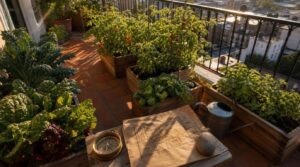
Your plants don’t care about your schedule — they follow the sun’s. Start with a compass orientation guide to confirm if you have a south-facing balcony, which gets the most consistent light. Then use a shadow tracking method at sunrise, noon, and late-afternoon to build a zone sun chart.
Most vegetables need six to eight hours of sunlight daily, though leafy greens tolerate partial shade. Update your seasonal shading map each quarter — sun paths shift more than you’d expect.
Protect Balcony Flooring
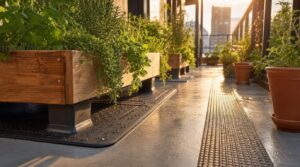
Your floor takes a beating when you garden up high. Lay vinyl floor mats under every planter — they catch drips and make cleanup fast. Use elevated planters to improve air circulation and reduce moisture damage.
Apply a waterproof sealant to bare concrete and add a non-slip coating where you step to enhance safety and durability.
Keep a drainage slope clear so rainwater runoff management stays easy, preventing standing water and further damage.
Plan Water Access
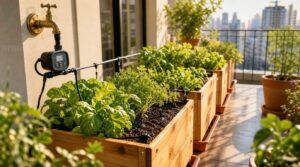
Water is your garden’s lifeline — do not make it a struggle. Installing a wall faucet near your beds saves countless trips inside.
Set up gravity feed lines or a simple drip system with an automatic timer irrigation switch for hands-free watering.
Use drip trays placed under each bed to manage rainwater runoff effectively.
Self-watering models with a built-in water gauge eliminate the guesswork entirely.
Build The Perfect Soil Setup
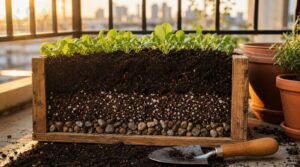
Soil is where your balcony garden either takes off or falls flat. Get this part right and your plants will practically take care of themselves.
Here’s exactly how to build a soil setup that works.
Choose Proper Soil Depth
Depth makes or breaks your balcony raised garden bed. Shallow beds’ benefits are real — a depth of 8 inches accommodates herbs and leafy greens without adding unnecessary weight.
For tomatoes or carrots, opt for 12 inches to support deep root capacity and enhance moisture retention.
Soil type interaction also matters; always pair your depth choice with proper drainage holes to ensure healthy growth.
Mix Compost and Potting Soil
Your soil mix for raised beds sets the stage for everything. Start with one-third compost and two-thirds potting mix — solid Ratio Guidelines that balance Nutrient Timing with good structure.
Aged compost fosters Microbial Balance without burning roots.
Watch Moisture Management as seasons shift; Seasonal Adjustments like topdressing keep things fresh.
Get this right, and your plants practically thrive on their own.
Add Reliable Drainage
Good drainage starts before a single seed goes in. Perforated inserts and a drainage mat layer beneath your mix keep roots breathing. A slatted bottom design paired with elevated leg ventilation moves moisture out fast.
Think of a French drain channel as your bed’s safety valve.
Built-in drainage holes, dual-layer drainage, and adjustable drainage options make drainage optimization almost straightforward.
Use Catchment Trays
Once drainage functions, catchment trays manage excess water to prevent damaging neighboring balconies below.
Plastic vs. metal trays offer trade-offs: plastic remains lightweight, while metal ensures longevity.
Corner drain solutions and adjustable stands accommodate irregular planter arrangements, enhancing flexibility.
Implementing a water reuse system and anti-algae cleaning routine maintains a clean, sustainable environment.
Monitor Moisture Levels
Your plants can’t tell you when they’re thirsty — but a moisture sensor can. Place the probe 1 to 2 inches deep for accurate sensor placement in the root zone. Stick to a monthly calibration routine so readings stay reliable.
Utilize data logging and alerts integration to catch dry spells fast.
Smart irrigation paired with a built-in drainage system and a self-watering gauge makes watering solutions nearly effortless.
Top 7 Balcony Raised Garden Beds
Not all raised beds are built the same, and the right one can make or break your balcony garden. Whether you’re working with a tiny studio ledge or a spacious terrace, there’s something on this list for you.
Here are seven solid options worth your attention.
1. Keter Urban Bloomer Self Watering Raised Garden Bed
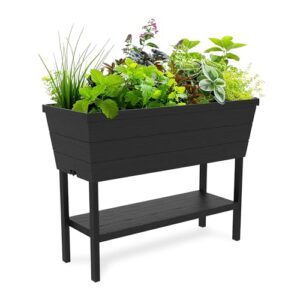
The Keter Urban Bloomer makes balcony gardening surprisingly low-maintenance. Its built-in water reservoir feeds moisture to roots slowly, so you’re not out there with a watering can every morning. The water gauge tells you at a glance when to refill.
At 32.3 × 14.7 × 30.7 inches, it fits most balconies without eating up your floor space.
The UV-protected resin won’t rust or fade, and you can snap it together without tools.
It’s a solid starting point for herbs, greens, and small vegetables.
| Best For | Beginners, busy households, and anyone with limited outdoor space who wants to grow herbs or veggies without a lot of daily upkeep. |
|---|---|
| Height | 30.7 in |
| Drainage System | Reservoir + plug |
| Material | UV-resistant resin |
| Load Capacity | 12.7 gal soil |
| Planting Area | 32.3 x 14.7 in |
| Assembly | Tool-free snap |
| Additional Features |
|
- The self-watering reservoir keeps soil consistently moist, so you’re not watering every day
- Elevated height (~31 in.) means no bending over — easy on your back
- Snaps together without tools and the resin finish won’t rust or fade
- The plastic can warp or soften in really hot climates with intense sun
- Metal legs may rust over time in humid or coastal areas
- The water gauge can stick and give inaccurate readings, so you may need to check manually
2. Leetolla Elevate Wheeled Raised Garden Bed
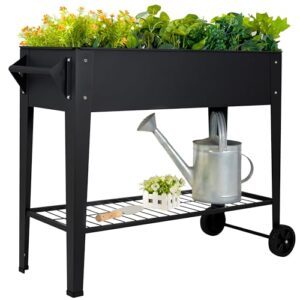
The Leetolla Lift is built for gardeners who refuse to stay in one spot. Its powder-coated steel frame holds up to 400 lb of soil without budging, yet two all-terrain wheels let you chase the sun across your balcony whenever needed.
At 32 inches tall, you can garden upright—no knee pads required.
Five drainage holes plus cross-channels efficiently push excess water out fast, preventing oversaturation.
The removable bottom shelf keeps essential tools within arm’s reach, ensuring convenience during use.
| Best For | Gardeners with back or knee pain, older adults, or anyone who wants the flexibility to move their garden around without breaking a sweat. |
|---|---|
| Height | 32 in |
| Drainage System | 5 holes + 2 channels |
| Material | Powder-coated steel |
| Load Capacity | 400 lb |
| Planting Area | Not specified |
| Assembly | Tool-free, 30–45 min |
| Additional Features |
|
- Stands 32 inches tall so you can plant and tend without crouching or kneeling
- Rolls easily on all-terrain wheels, making it simple to follow sunlight or dodge bad weather
- The built-in bottom shelf keeps your tools close without cluttering up your space
- The wheels can be tough to maneuver for elderly users, especially on uneven ground
- The rust-resistant coating holds up well in most conditions, but coastal or constantly wet environments may still cause corrosion over time
- Panel pieces are on the thinner side, so you’ll want to handle them carefully during assembly
3. Best Choice Mobile Raised Garden Bed
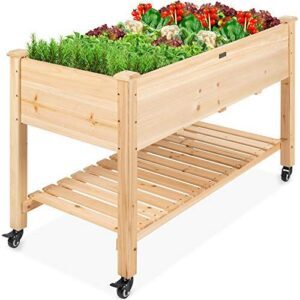
Want a raised bed that moves with your ambition? The Best Choice Mobile Raised Garden Bed rolls on four lockable caster wheels, so you can chase sunlight across your balcony without breaking a sweat.
At 48 × 24 × 32 inches, it provides ample growing space while keeping plants at a convenient waist height. The design prioritizes comfort and accessibility for gardeners.
The included liner protects the fir wood from moisture damage, while four drainage holes ensure healthy root systems. These features combine durability with plant health.
Just note the 100 lb weight limit—keep it light to maintain mobility and structural integrity.
| Best For | Gardeners with limited mobility or back issues who want a flexible, easy-to-move growing setup on a balcony, patio, or small outdoor space. |
|---|---|
| Height | 32 in |
| Drainage System | 4 holes |
| Material | Fir wood |
| Load Capacity | 100 lb |
| Planting Area | 48 x 24 in |
| Assembly | Hardware + wrench |
| Additional Features |
|
- Lockable wheels make it easy to follow the sun or move it out of bad weather without any heavy lifting
- Waist-height frame takes the strain off your back and knees — a real plus if bending down is tough
- The included liner shields the wood from moisture, helping it last longer than most bare-wood planters
- Soft pine needs extra sealing or treatment right away, or it’ll crack and splinter pretty quickly with outdoor exposure
- Water drains straight onto the lower shelf, so anything you store there is going to get wet unless you line it
- Assembly takes some time and really goes smoother with two people — some of the metal brackets are awkward to secure solo
4. Elevated Wood Raised Garden Bed
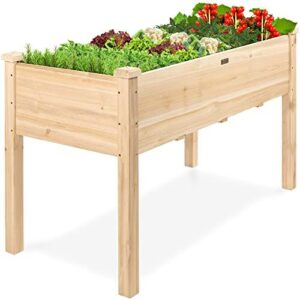
Elevated Wood Raised Garden Bed offers solid wood and serious growing space for your balcony. Standing 30 inches tall, it allows you to garden upright, not hunched over, reducing strain.
Crafted from Chinese fir, its frame naturally manages outdoor moisture, while the built-in liner prevents soil spillage. With dimensions of 48 × 24 inches, it provides ample room for herbs, greens, and other plants.
Seal the wood before use—this ensures durability and maintains its appearance through all seasons.
| Best For | Anyone with limited outdoor space who wants to grow herbs, vegetables, or flowers without the back and knee strain of traditional ground-level gardening. |
|---|---|
| Height | 30 in |
| Drainage System | Integrated holes |
| Material | Chinese fir wood |
| Load Capacity | 200 lb |
| Planting Area | 48 x 24 in |
| Assembly | Mortise-and-tenon |
| Additional Features |
|
- Standing at 30 inches tall, it keeps you upright while you garden — no more hunching or kneeling for extended stretches.
- Chinese fir handles outdoor conditions naturally, and the built-in liner keeps soil where it belongs while helping water drain properly.
- The 48 × 24-inch footprint gives you real growing room — enough for a solid mix of herbs, greens, or flowers all in one spot.
- The wood can split at the joints over time, so sealing it before first use isn’t optional — it’s just smart maintenance.
- The included liner can get brittle in direct sun and may need to be swapped out for a UV-resistant alternative down the road.
- Assembly takes some patience (think 30–40 minutes), and a few units have slightly loose mortise slots that need extra glue or longer screws to feel solid.
5. Best Choice Wooden Raised Garden Bed
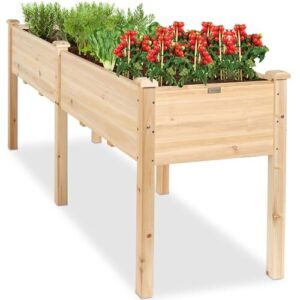
Think big, grow bigger. The Best Choice Wooden Raised Garden Bed offers a massive 72 × 24 × 30-inch growing space—that is, 8.4 cubic feet of planting room, perfect for your balcony.
The 30-inch height ensures comfort during extended gardening sessions, keeping your back happy. Its Chinese fir construction is built to withstand outdoor conditions, ensuring durability season after season.
A built-in divider allows you to create two separate growing zones, ideal for pairing plants like tomatoes on one side and basil on the other. Sealing the wood early guarantees this bed will remain a hardworking staple in your garden for years to come.
| Best For | Gardeners with limited ground space who want a comfortable, back-friendly setup for growing vegetables, herbs, or flowers on a patio or balcony. |
|---|---|
| Height | 30 in |
| Drainage System | 6 holes per side |
| Material | Chinese fir wood |
| Load Capacity | 300 lb |
| Planting Area | 72 x 24 in |
| Assembly | Mortise-and-tenon |
| Additional Features |
|
- The 30-inch height means no more hunching over — your back and knees will thank you after a long session.
- The built-in divider lets you grow two different plants side by side without them competing for the same soil.
- At 8.4 cubic feet of planting space, there’s room for a solid mix of veggies, herbs, or flowers all at once.
- The wood needs regular sealing and weatherproofing, or it’ll start to warp and split — especially along the top rail.
- Assembly can be a bit of a wrestling match; some joints need extra glue or longer screws to feel truly solid.
- The 300 lb weight limit fills up faster than you’d expect once you add soil, so overpacking is a real risk.
6. Best Choice Raised Herb Garden Bed
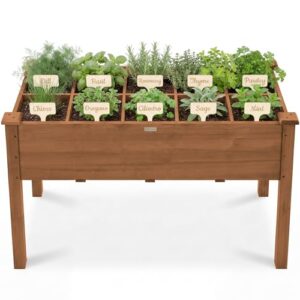
If one big bed feels like overkill, the Best Choice Raised Herb Garden Bed takes a smarter approach. It gives you ten separate pockets—each with its own liner and plant marker—so your basil stays basil and your mint doesn’t bully everything else.
The fir wood frame sits at a comfortable 30 inches high, and lockable casters mean you can chase the sun without any hassle. The lower shelf keeps your tools close.
| Best For | Balcony or patio gardeners who want to grow multiple herbs and veggies without a lot of bending, kneeling, or soil mixing. |
|---|---|
| Height | 30 in |
| Drainage System | Per-pocket holes |
| Material | Fir wood |
| Load Capacity | Not specified |
| Planting Area | 48 x 24 in |
| Assembly | Hardware included |
| Additional Features |
|
- Ten separate pockets with liners and markers keep each plant in its own lane—no more mint taking over the whole garden.
- The 30-inch height is a back-saver, and the lockable casters make it easy to follow the sun or tuck everything away for winter.
- The lower shelf is handy for stashing tools, a watering can, or extra pots right where you need them.
- Assembly can be a headache—some units show up without pre-drilled holes, so you might need extra glue or a drill handy.
- That lower shelf sits right under the drainage holes, so anything you store there is going to get wet.
- A few users noticed a strong wood/varnish smell out of the box, though it usually clears up after a day or two outside.
7. Best Choice Galvanized Raised Garden Bed
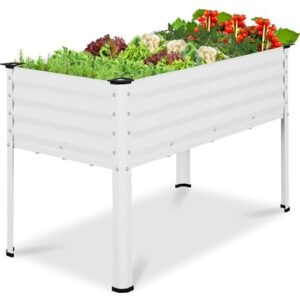
Sometimes you just want something tough enough to handle whatever the weather throws at it. The Best Choice Galvanized Raised Garden Bed delivers exactly that.
Its 48 × 24-inch steel surface provides real growing room, while the 30-inch standing height ensures no more sore knees.
Built to endure, it holds up to 400 pounds of soil, withstands rain and humidity without rusting, and meets rigorous non-toxic safety standards.
At $89.99, it’s built to last a decade or more—a durable, long-term investment for your garden.
| Best For | Gardeners of any age or ability who want a durable, ergonomic raised bed that works year-round without bending, kneeling, or worrying about the weather. |
|---|---|
| Height | 30 in |
| Drainage System | Corner drain system |
| Material | Galvanized steel |
| Load Capacity | 400 lb |
| Planting Area | 48 x 24 in |
| Assembly | Bolt-together |
| Additional Features |
|
- Standing height of 30 inches takes the strain off your back and knees — a game changer if you garden often.
- Galvanized steel construction holds up to rain, humidity, and the elements without rusting out on you.
- The built-in tool holder and large 48 × 24-inch planting area keep everything organized and within reach.
- Assembly can be a bit fussy — the fastener holes need precise alignment, and the greasy screws make the process messier than it should be.
- Once it’s filled with soil, moving it is a real chore given the steel weight and 400-pound load capacity.
- No built-in watering system, so you’ll need to sort out irrigation separately — and possibly add gravel or perlite to keep drainage working properly.
Plant and Maintain Your Harvest

You’ve got the bed, the soil, and the sunlight sorted — now comes the best part. A few smart planting habits will turn your balcony into a steady source of fresh food all season long.
Here’s how to grow, support, and harvest like you mean it.
Grow Salad Greens Continuously
Succession planting is your secret weapon for a nonstop salad bowl. Sow lettuce and spinach seeds every two weeks—just 2 to 3 inches apart—to ensure harvests continue rolling instead of stopping all at once. Focus on cut-and-come-again varieties, harvesting outer leaves inward to encourage regrowth.
Sow lettuce every two weeks and harvest outer leaves first — your salad bowl never empties
Consistent light and moisture are critical. Use a self-watering gauge to maintain optimal conditions in your raised bed, especially in compact balcony spaces. This approach keeps your greens thriving with minimal footprint.
Separate Herbs by Section
Herbs require space to thrive; overcrowding leads to competition. Flavor isolation is real, as mint will bulldoze everything nearby if left unchecked.
Implement barrier partitions in your balcony raised garden bed to create individual lanes for each herb. Tailor sun zoning and water zoning to meet specific plant needs, and use section labeling to maintain organization and readiness for harvest.
Support Cucumbers and Peas
Train cucumbers and peas upward using a sturdy trellis anchored to your balcony raised garden bed. Aim for a support frame height between 1.8 and 2.4 meters so vines never run out of room.
Use adjustable ties to guide growth without bruising stems, and mind your vine spacing so fruits hang freely.
Heavy-duty materials like galvanized steel keep your vertical gardening setup solid all season long.
Add Seasonal Greenhouse Covers
A balcony greenhouse cover is one of the smartest moves for seasonal plant care. Match your material selection to the season — polyethylene film works great for spring greens, while polycarbonate panels offer real insulation options for colder months.
- Spring: clear film covers for baby lettuce
- Summer: shade cloth for weather protection
- Autumn: insulated panels to extend harvests
- Winter: double-layer film as a cold frame
- Transitions: modular panels you can add or remove freely
Smart ventilation strategies — like roll-up sides — prevent overheating.
Harvest Balcony Crops Regularly
Harvest timing makes or breaks your balcony raised bed ideas. Pick leafy greens every one to two weeks using the cut-and-come-again method—your plants keep pushing new growth. Morning harvest keeps everything crisp and flavorful.
For herbs and compact vegetables, snip just above a leaf node to encourage regrowth.
Post-harvest care matters too: rinse, dry, and feed lightly to maintain plant health.
Yield tracking reveals what’s thriving, helping you optimize future harvests.
Frequently Asked Questions (FAQs)
Can you put a raised garden bed on a balcony?
Yes, you can. A compact raised garden bed fits most balconies with smart weight distribution planning and a quick lease clause review. Start small, stay light, and grow bold.
Can I compost directly inside my balcony bed?
You can, but skip raw scraps directly in the bed. Use a bokashi bucket or worm bin nearby instead.
Finished compost aids nutrient enrichment, moisture regulation, and pest deterrence without causing odor or decomposition speed issues that ruin your crops.
A bottomless bucket system can be incorporated into balcony beds for a continuous compost supply.
Which crops grow best in shaded balconies?
Shade-loving lettuces, spinach, and partial-shade kale thrive with just 3–4 hours of light. Low-light radishes, cool-season microgreens, moisture-rich watercress, chard, and herbs like mint handle limited plant sunlight requirements surprisingly well.
How do I winterize my balcony raised bed?
Clear spent plants, add 2–4 inches of mulch insulation, drape frost cloths on cold nights, and check drainage clearance. Seal your frame and let winter cover crops rebuild your soil.
Should I use raised beds for fruit plants?
Raised beds are a major advantage for fruit plants. Better root zone health, easier pest management, and built-in drainage mean stronger harvests.
Your fruit yield boost starts the moment you plant.
How often should I replace balcony bed soil?
Your soil lifespan in balcony beds lasts three to five years. Watch for salinity buildup, root disease signs, or compaction.
Annual compost top-dressing rebuilds nutrients and keeps your renewal schedule on track.
Conclusion
Like a seed that doesn’t care how small the pot is, your balcony doesn’t care how many square feet you’re working with—it just needs the right setup to deliver. Raised garden beds transform overlooked concrete slabs into real growing ground.
You’ve got bed styles, soil know-how, and plant picks. Now the only move left is getting your hands dirty. Your harvest is closer than you think.