This site is supported by our readers. We may earn a commission, at no cost to you, if you purchase through links.
Pick up a tray of seedlings gone yellow and mushy at the stem, and you’re likely holding the answer before you even ask the question. So, do seed starting trays need drainage holes? For most setups, yes. Standing water suffocates roots faster than most gardeners realize, turning a hopeful batch of tomato starts into a slimy, rotting mess within days.
Roots need oxygen as much as they need moisture, and without an exit for excess water, that balance collapses fast. Below, you’ll find exactly when drainage matters, when it doesn’t, and how to set up your trays for stronger, healthier starts.
Table Of Contents
- Key Takeaways
- What Drainage Holes Do
- Yes, Seed Trays Need Drainage Holes
- Why Seedlings Need Airy Roots
- Risks of Trays Without Drainage
- When No-Drainage Trays Work
- Best Bottom-Watering Tray Setup
- Choosing The Right Seed Tray
- How Wet Seed Mix Should Be
- Drainage Tips for Healthier Starts
- Common Seed Tray Drainage Mistakes
- Frequently Asked Questions (FAQs)
- What are common seed starting mistakes?
- Can I leave water in a seedling tray?
- How wet would seeds in a tray be?
- Is it better to start seeds in trays or pots?
- How many drainage holes should a seed tray have?
- What size drainage holes work best for seedlings?
- Can I drill drainage holes into plastic trays myself?
- How does soil blocking compare to trays with holes?
- Conclusion
Key Takeaways
- Drainage holes let excess water escape so roots get the oxygen they need for respiration, while trapped water causes anaerobic conditions that lead to root rot and fungal disease.
- Most seed-starting setups benefit from drainage holes because they forgive overwatering mistakes, making them the safer choice for beginners and most vegetable or herb crops.
- No-drainage trays only work in specific cases, such as bottom-watering reservoirs, self-watering systems, water-loving plants, or short-term humidity control during germination.
- Healthy seedling growth depends on keeping seed mix moist but not soggy, elevating trays for airflow, using sterile mix, and promptly draining any standing water after watering.
What Drainage Holes Do
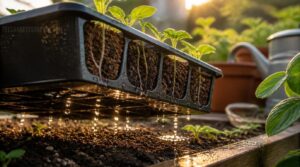
Those little holes at the bottom of your tray are doing more work than you’d think. They shape everything from moisture levels to how well your roots grow. Here’s exactly what they do for your seedlings.
Without proper drainage, excess water pools around your roots and invites rot, which is why these essential seed starting tips for vegetables emphasize choosing trays built for airflow and runoff.
Release Excess Water
Water your seedlings, and gravity takes over: excess moisture needs somewhere to go. Drainage holes handle optimizing water exit, preventing waterlogged soil and root rot.
- Prevents standing water buildup
- Reduces salt buildup from fertilizer
- Helps keep moisture levels steady
Without an exit route, saturated media stays soggy, working against everything your seedlings need to thrive. This is essential because plants release excess water through a natural process to maintain health.
Improve Root Oxygen
Roots need oxygen just as much as water, and drainage holes make that possible. When water drains away, air moves back into the soil, feeding root respiration.
| Factor | Effect on Oxygen |
|---|---|
| Porous substrate | More air pockets |
| Waterlogged soil | Oxygen displaced |
| Root temperature | Affects oxygen uptake |
| Capillary action | Draws water, not air |
Prevent Soggy Seed Mix
Oxygen only reaches roots when water actually leaves the mix, which is where drainage holes earn their keep. Without them, capillary action keeps pulling moisture upward with nowhere to go, creating waterlogged conditions fast.
A well-draining mix, roughly one part perlite to three parts base, should clear within seconds after watering. Skip the moisture meter guesswork; soggy mix invites overwatering and rot before seedlings ever sprout.
Support Stronger Seedlings
Every seedling’s future gets decided underground, long before leaves show up. Good drainage holes give roots the oxygen levels needed for root respiration, which builds sturdy root architecture and better nutrient absorption. That foundation shows up as:
- Stronger stem vigor
- Faster seedling development
- Less transplant shock
- Fuller root development
- Consistent growth timing
Yes, Seed Trays Need Drainage Holes
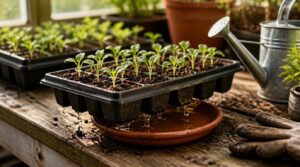
For most seed-starting setups, drainage holes are the way to go. They keep your seedlings safe from soggy roots and give you more room for error as you learn. Here’s why they work so well for so many growers.
Best Choice for Most Seeds
For most crops, drainage-hole trays simply work better. Medium cell sizes balance space and moisture, fitting vegetable seedlings without cramping root growth.
Tomatoes and other taproot crops need deeper cells to develop properly, while lettuce and herb starter trays do fine with shallow ones. Balancing moisture levels stays easier when excess water has somewhere to go, keeping germination steady across nearly any seed starting method you choose.
Safer for Beginners
If you’re new to starting seeds, drainage holes give you room to learn. Beginner mistakes like heavy watering rarely turn fatal when excess water can escape.
You’ll get a feel for moisture management by watching how fast trays drain. That kind of water monitoring builds confidence fast, helping you catch problems before seedlings suffer, setting up early success strategies that stick for seasons to come.
Reduces Overwatering Risk
Overwatering trips up even careful growers, but drainage holes forgive that mistake. Excess water escapes instead of pooling around roots, preventing anaerobic conditions before they start.
Pair this with a morning watering schedule, and you’ll avoid overnight moisture buildup entirely. A simple moisture sensor helps too, showing when seed starting trays actually need water instead of guessing.
Fits Vegetables and Herbs
Basil and lettuce need shallow, wide cells, while tomatoes and peppers demand deeper ones for vegetable root depth. That’s why matching herb cell sizing to the crop matters so much.
Leafy green trays with drainage work well for quick culinary herb starts, letting excess water drain before roots sit soggy. Choosing crop specific trays with proper drainage holes keeps seedlings healthy across your whole garden.
Why Seedlings Need Airy Roots
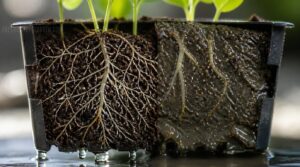
Roots don’t just sit in soil, they breathe. When that airflow gets cut off, seedlings pay the price in ways you’ll notice fast. Here’s what happens below the surface when roots can’t get the oxygen they need.
Roots Need Oxygen
Think of roots as tiny engines: they need oxygen to fuel cellular respiration energy, powering nutrient uptake. Good soil pore structure keeps air pockets available, even in moist mix.
Choosing a well-aerated seed starting mix with proper drainage gives roots the breathing room they need to thrive.
- Stronger root hairs
- Faster seedling growth
- Healthier transplants
Without oxygen, roots slip into anaerobic metabolism risks, triggering hypoxia stress signals. Drainage holes protect soil aeration, keeping your root system health and overall plant health intact.
Waterlogged Roots Weaken
Sit a seedling’s roots in standing water, and they quietly start suffocating. Without drainage holes, waterlogged roots shift to anaerobic respiration, cutting ATP production and letting toxic byproducts build up. Stress hormones like ethylene spike, signaling trouble to the whole plant.
Without drainage, waterlogged roots quietly suffocate, shifting to anaerobic respiration that builds toxins and triggers stress signals throughout the plant
| Effect | Result |
|---|---|
| Low oxygen | Anaerobic respiration |
| Toxin buildup | Weakened cells |
| Ethylene rise | Stress signaling |
| Poor diffusion | Nutrient loss |
Poor Airflow Slows Growth
Waterlogged roots aren’t the only slowdown — poor airflow around your seedlings creates its own drag on growth. Still air thickens the boundary layer hugging each leaf, slowing gas exchange and cutting photosynthetic rate. You’ll also lose transpiration cooling, inviting heat buildup and weaker nutrient transport, while trapped moisture invites fungal diseases in your growing conditions.
Healthy Roots Transplant Better
All that airflow pays off at transplant time. Seedlings grown with good root mass integrity slide out of seed starting trays cleanly, roots intact and ready to grow.
That matters because drainage holes encourage secondary root development along the block’s edges, not just at the bottom. Stronger roots mean better nutrient absorption efficiency and minimizing transplant shock, so post-transplant acclimation happens faster.
Risks of Trays Without Drainage
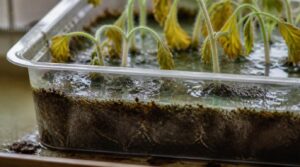
Skip drainage holes, and trouble usually follows close behind. Water that has nowhere to go doesn’t just sit there quietly, it starts causing real problems for your seedlings. Here’s what you’re up against when your trays can’t drain.
Root Rot
Skip drainage holes, and you’re inviting root tissue decay into your seed trays. Trapped water creates anaerobic soil conditions, letting pathogens like Phytophthora and Pythium attack roots. Watch for:
- Mushy, blackened roots
- Wilting despite moist soil
- Yellowing lower leaves
- Stunted, root bound seedlings
Catch these symptoms early, since root rot spreads fast through contaminated moisture.
Fungal Disease
Root rot isn’t the only threat lurking in a tray with no drainage—fungal growth thrives there too. Damp, stagnant seed mix invites spore germination, and mold or mildew can spread across the surface fast.
Look for fuzzy white or gray patches, a musty smell, or discolored seedlings. Improve airflow, avoid overwatering, and toss contaminated mix before it spreads to healthy trays.
Stagnant Water
Skip drainage holes, and water just sits there, going stale in the seed mix. Without exchange with air, oxygen depletion sets in fast, inviting pathogens and even mosquito breeding in the tray.
Trouble signs include:
- Musty odor
- Algae film
- Discolored mix
- Bacterial slime
A bottom watering tray avoids this, since standing water drains after each soak rather than lingering in seed starting trays.
Nutrient Uptake Problems
Ever wonder why seedlings in soggy trays still look hungry? Nutrient uptake depends on healthy root hair efficiency, and waterlogging shuts that down fast.
Standing water disrupts soil pH balance, locking up nutrients roots need. It also throws off nutrient competition effects, letting excess ions crowd out others. Without oxygen, roots can’t power the active transport that pulls minerals in against the gradient.
Moldy Seed-starting Mix
What’s that fuzzy gray film creeping across your seed starting mix? That’s mold, and trays without drainage holes are prime breeding ground. Trapped moisture keeps the surface constantly damp, fueling fungal growth.
Improve airflow with a small fan, switch to sterile mix, and let the top layer dry between waterings. Catch it early, remove affected mix, and replant in clean medium.
When No-Drainage Trays Work
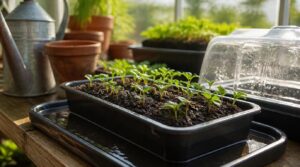
Drainage isn’t always the rule, though. Some setups actually depend on trays that hold water rather than release it. Here’s where skipping the holes makes sense.
Bottom-watering Reservoirs
Here’s a trick many growers overlook: let water rise instead of pour it on top. A bottom-watering reservoir uses capillary action to pull moisture upward into your seed starting mix, keeping moisture levels even without soggy surfaces.
The wicking interface—usually a perforated tray—determines efficiency. Clean reservoirs regularly, since debris slows capillary flow and stresses young seedlings. Watch for consistent nutrient salt distribution, which prevents buildup and helps steady, healthy growth.
Self-watering Setups
A self-watering system built into seed starting trays takes bottom-watering a step further, storing water so you barely need to check it.
- Reservoir capacity, wick materials, and moisture gradients all shape performance.
Capillary action keeps moisture levels steady, freeing you from daily watering while roots draw exactly what they need through natural moisture regulation.
Water-loving Plants
Not every seedling wants dry feet. If you’re starting wetland native perennials like marsh marigold, or bog garden species such as pitcher plants, a no-drainage tray becomes a small water reservoir instead of a hazard.
Aquatic garden species and moisture-loving cousins of waterlogged soil trees, like willow cuttings, thrive here too, since constant moisture retention mimics their natural, saturated habitats.
Short-term Moisture Control
Sometimes you only need a no-drainage tray for a few days. Covering trays during germination traps humidity and keeps surface moisture levels steady, right when seeds need it most.
Once seedlings sprout, switch back to drainage. Capillary action works efficiently short-term, but long-term moisture retention without holes disrupts healthy seedling hydration cycles and slows evaporation rate management.
Best Bottom-Watering Tray Setup
Bottom watering gives you moisture control without soaking the soil surface. But it only works if your tray setup is right. Here’s what you’ll need to put it together.
Inner Tray With Holes
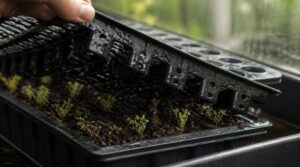
The heart of any bottom-watering setup is an inner tray with holes, usually made from durable, food-safe polypropylene. Hole patterns—grid or staggered—control capillary action, drawing moisture upward into the seed mix.
This design also flushes excess salts, preventing buildup, while smooth hole edges protect tender seedling roots during germination and propagation. Clean regularly to prevent mineral deposits from clogging drainage.
Outer Solid Tray
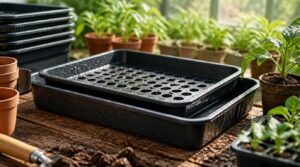
Pair that inner tray with a solid outer tray, and you’ve got a true reservoir. No drainage holes here, just a sturdy, UV-stabilized polypropylene base that resists warping.
Why it works:
- Catches runoff during bottom-watering
- Prevents leaks on shelves or benches
- Stacks cleanly for storage between uses
Durable, leak-proof, and simple, this outer solid tray makes self-watering systems reliable for everyday seed starting.
Add Water Briefly
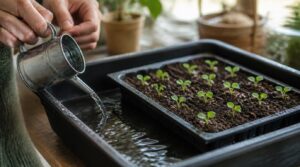
Once your reservoir is set, pour water into the outer tray, not the seedlings. Capillary action pulls moisture upward through the drainage holes fast, often within minutes for lightweight seed starting mix.
| Mix Type | Absorption Speed |
|---|---|
| Peat-based | Fast |
| Coconut coir | Moderate |
| Dense soil | Slow |
Keep reservoir water levels shallow. Avoiding saturation now saves your seedlings from soggy roots later.
Drain After Soaking
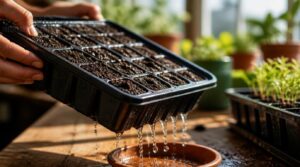
Once the seed mix looks evenly damp, it’s time to drain. Tilt the tray so trapped water flows out, restoring ideal oxygen gaps around each root.
- Prevents medium compaction
- Helps uniform sprout emergence
- Improves nutrient uptake efficiency
- Grips moisture pockets
Good soil moisture control now means healthier germination later, giving every seedling fair footing before light exposure begins.
Avoid Standing Water
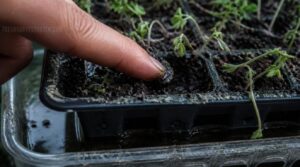
Letting water sit in the outer tray invites trouble. Standing water creates anaerobic soil risks, starving roots of oxygen and inviting rot. It also breeds surface mold and encourages salt buildup on your seed mix.
Check trays daily using simple moisture monitoring techniques—press a finger into the mix. If it’s still soggy after twenty minutes, drain it. Good soil moisture control keeps every seedling thriving.
Choosing The Right Seed Tray
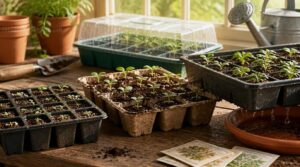
Not every tray suits every seed, and that’s worth knowing before you buy one. The right fit depends on cell size, root depth, and how sturdy you need the tray to be. Here’s what to look for when matching a tray to your crops.
Cell Size Matters
Not all cells are created equal, and size drives everything that happens underground. Smaller cells push roots toward branching instead of depth, speeding germination but limiting Taproot Development Speed.
Larger cells support Root Branching Patterns suited for sturdier stems. Cell count also shapes Nutrient Absorption Efficiency and Seedling Vigor Ratios—matching cell size to your crop keeps growth uniform before transplant.
Deep Cells for Large Roots
Some crops just need room to stretch. Tomatoes, peppers, and squash push down a long taproot, and shallow cells choke that growth fast, causing nutrient competition among crowded roots.
Deep cells give vertical space for roots to develop properly, keeping seedlings from going root bound before transplant. That structural integrity below the surface pays off later, improving transplant survival once seedlings hit the garden.
Small Cells for Quick Starts
Fast crops call for fast trays. Lettuce, herbs, and brassicas thrive in small cells, where cell size optimization speeds germination and early root breakout.
- Higher seedling density per tray
- Quicker turnover for succession planting
- Less soil mix needed upfront
Many small-cell trays use biodegradable materials, easing transplant stress. For rapid turnover crops, this setup keeps your seed trays and drainage holes working efficiently together.
Strong Reusable Trays
Good trays should outlast several growing seasons, not just one. Look for BPA-free plastic with UV stabilization, so sunlight won’t cause cracking or discoloration over time.
Dishwasher-safe models simplify sanitizing between plantings, cutting disease risk for your seedlings. Material durability and thermal resistance matter too, since trays face temperature swings during seed starting. A sturdy tray, paired with reliable drainage holes, helps guarantee years of successful plant propagation.
Matching Crops to Trays
Durability only matters if the tray fits your crop. Standard 72 to 128 cell trays suit most vegetable and herb crops, while tomatoes need bigger cells for early root growth.
Root vegetables need depth for taproot expansion, so choose deep cells. Herb tray selection depends on speed, shallow cells work for basil. For microgreens, dense cell counts fit compact growth, all backed by solid drainage holes.
How Wet Seed Mix Should Be
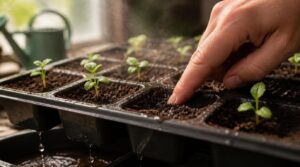
Getting the drainage right only helps if the moisture level inside the tray is right too. Too much water and you’re back to the same soggy problems; too little and seeds struggle to sprout. Here’s how to find that sweet spot from planting to seedling.
Moist, Not Dripping
Squeeze a handful of your growing medium, and it should hold its shape without releasing water. That’s the sweet spot.
- Damp, not soaked texture
- Springs back when pressed
- No surface puddling
- Ensures seed-to-soil contact
- Prevents seed rot
Too wet invites rot and fungal trouble; too dry stalls germination. Good irrigation management means finding that middle ground your seed trays actually need.
Check Daily
Morning visual inspections catch problems before they spread. Look at each tray, check the surface, press a finger into the mix.
Log moisture levels daily to track patterns in your irrigation management. Watch seedling vigor and adjust humidity as needed. This habit prevents pathogen contamination and keeps your seed trays on track for healthy container gardening.
Mist Tiny Seeds
Poppy, lettuce, and other dust-fine seeds don’t tolerate heavy watering cans. Seed displacement happens fast when water hits too hard, pushing seeds into clumps or off the surface entirely.
Use a fine mist instead, whether in a 72 cell tray or 128 cell tray. Gentle watering keeps surface contact intact, while fine media and steady humidity management support germination without disturbing what you just sowed.
Reduce Water After Sprouting
Once seedlings sprout, ease off watering to prevent damping off and root suffocation. Post-sprout moisture needs shift, since roots now handle capillary action better through well-drained soil.
Check seed trays daily instead of soaking on schedule. Whether you’re using a selfwatering system or manual bottom watering, this post-germination drainage habit optimizes soil humidity and protects seedlings before transplant.
Avoid Crusty Surfaces
Crusting happens when the top layer dries faster than the roots below, sealing off moisture and blocking new sprouts. Keep the growing medium evenly damp, not soggy, and use a humidity dome early on to slow surface evaporation.
If a crust forms, smooth it gently with a fingertip rather than scraping. Bottom watering through capillary action helps seed trays stay evenly moist without disturbing tender roots.
Drainage Tips for Healthier Starts
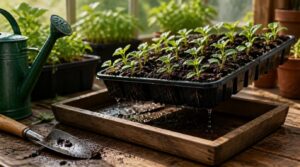
Good drainage is only half the job, and how you manage it day to day makes the real difference. A few small habits can protect your seedlings from disease while keeping roots strong and happy. Here’s what to keep in mind for healthier starts.
Use Sterile Seed Mix
Sterile seed mix is the foundation good drainage builds on. Skip garden soil entirely.
- Prevents damping off and other soilborne pathogens
- Suppresses weed seeds competing for nutrients
- Makes precise nutrient management easier
- Promotes uniform germination rates
- Avoids soil compaction, keeping roots aerated
A peat or coir base with perlite drains fast without waterlogging your growing medium.
Elevate Trays Slightly
A small lift changes everything. Set trays on cork coasters, mesh risers, or thin wood strips for a 5 to 10 millimeter gap underneath.
That space lets water escape instead of pooling at the corners, improves airflow, and keeps the microclimate around your seed mix drier. Less standing moisture means healthier roots and stronger seed starting outcomes overall.
Empty Excess Water
Standing water in saucers or trays invites trouble, so check and empty runoff after every watering session.
Managing runoff paths matters as much as the holes themselves, especially with a 72 cell tray where cells drain fast and pool quickly underneath. Preventing pooling protects your seed starting methods and keeps well-drained soil doing its job, letting capillary action pull moisture upward without waterlogging roots below.
Improve Airflow
Good drainage means nothing if stagnant air surrounds your trays. Space trays two to four inches apart in a staggered layout, so airflow reaches every edge instead of just the outer row.
Point small fans diagonally across seedling tops, never directly at them, for gentle cross-ventilation. Keep vents unobstructed and lift trays slightly. This combination promotes healthy growth, steady vegetative growth, and even air-pruning in air prune trays.
Watch for Algae
Airflow keeps water moving, but algae still creeps in when light and moisture linger too long. A slimy green film or golden diatom coating on your seed trays signals trouble for indoor gardening setups.
Prevent film buildup by shielding trays from direct sun and skipping overfertilization, since nutrient-driven blooms feed algae fast. Sound tray sanitation habits protect well-drained soil health and plant pathology outcomes alike.
Common Seed Tray Drainage Mistakes
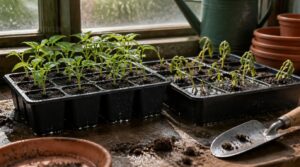
Even good drainage habits can go wrong with a few small missteps. Most of these mistakes creep in quietly, long before you notice wilting or stunted growth. Here’s what to watch for so your seedlings stay on track.
Leaving Trays in Water
Leaving your inner tray sitting in a full reservoir invites trouble fast. Capillary action keeps pulling water upward long after roots need it, causing anaerobic root damage and nutrient dilution.
Whether you’re running a 72 cell tray or a 50 cell tray, drain the outer reservoir after soaking. Otherwise, standing water mold sets in, and overflow goes unmanaged—soggy mixes invite rot before seedlings ever establish.
Using Garden Soil
Grabbing garden soil for seed trays seems convenient, but it’s a common misstep. Garden soil compacts inside small cells, blocking drainage and starving roots of oxygen.
- Compacts quickly, choking root growth
- Carries fungal spores and weed seeds
- Lacks the loamy texture seed mix provides
Stick with sterile, well-drained soil formulated for trays—your seedlings’ roots will thank you before transplant day arrives.
Overcrowding Seedlings
Cramming too many seeds into one cell backfires fast. Crowded stems stretch toward light, causing weak stem elongation, while roots stay stunted and tangled.
| Sign | Cause | Fix |
|---|---|---|
| Yellow leaves | Nutrient depletion | Thin early |
| Damping off | Poor airflow | Space seedlings |
| Root bound | Overcrowded cells | Transplant to 50 cell tray |
Thinning promotes uniform growth and prevents disease before transplant.
Ignoring Root-bound Plants
Skip a checkup and roots keep circling, tightening into a dense mass that chokes the plant from within. That’s when girdling root risks turn serious, cutting off nutrient uptake decline before you notice it.
Stunted shoot growth and delayed flowering follow quietly.
Gently tease the roots apart during transplant, easing transplant shock prevention into your routine instead of skipping it.
Transplanting Too Late
Once seedlings sit too long in seed trays, root establishment delays set in and roots grow root bound, tangled and stressed. Miss the seasonal window timing for your region, and you’re facing real yield reduction risks come harvest.
Late season acclimation only adds stress: hardening off, watering, and transplant shock mitigation all matter more the longer you wait.
Frequently Asked Questions (FAQs)
What are common seed starting mistakes?
Inaccurate soil temperature, poor light duration, root bound cells, and neglecting hardening off top the list. Cheap seed starting trays without well-drained soil also cause damping off, weak stems, and mislabeled seedlings mixing up crops.
Can I leave water in a seedling tray?
Better not to. Standing water breeds anaerobic root conditions and invites nutrient leaching. If bottom-watering, monitor tray weight and drain promptly, keeping humidity domes ventilated so seed trays stay moist, not soaked, for healthy horticultural practices.
How wet would seeds in a tray be?
Your mix should stay moist, not soggy — like a wrung-out sponge. Check tray weight daily, using humidity domes and capillary action from bottom watering to maintain even moisture without waterlogging the media or crusting the surface.
Is it better to start seeds in trays or pots?
Picture dozens of tiny green sprouts lined up like soldiers in neat rows. Trays win for batch size efficiency and space optimization; pots offer deeper root volume capacity. Choose trays for herbs and veggies, pots for larger transplants.
How many drainage holes should a seed tray have?
Most seed trays use one hole per cell, sized around ¼ to 5/8 inch in diameter.
Higher drainage hole density suits well-drained soil lovers, while microgreen cultivation trays often rely on evenly spaced channels instead of individual holes.
What size drainage holes work best for seedlings?
Quarter-inch holes suit most trays under 8 inches, matching well-drained soil needs.
Larger trays and heavy feeders need 1/2 to 3/4 inch holes, preventing soil washout while giving microgreen cultivation and standard nursery supplies proper drainage without clogging.
Can I drill drainage holes into plastic trays myself?
Yes—use a fine drill bit for plastic, start with a pilot hole to prevent cracking, then space holes evenly. Deburr edges afterward for safety. This works well on standard seed trays or a 20 row channel tray.
How does soil blocking compare to trays with holes?
Soil blocking triggers natural air pruning, building stronger root systems, and cuts plastic waste versus trays.
Trays offer easier moisture management and lower upfront equipment costs.
Both suit well-drained soil goals, but blocking demands more hands-on practice.
Conclusion
Wet roots drown; dry roots thrive. That contrast is the whole answer to whether do seed starting trays need drainage holes, and it’s why the question matters before you sow a single seed.
Holes give water somewhere to go, letting roots breathe instead of suffocating in silence. Skip them, and you’re gambling on perfect timing daily. Add them, and you build in forgiveness. Your seedlings won’t just survive—they’ll grow strong roots ready for the garden.
- https://gardenwarehousedirect.com/blogs/gwd-blog/seed-trays-with-or-without-drainage-holes-heres-what-the-experts-say
- https://www.plantingtrays.com/news/should-seed-trays-have-drainage-holes.html
- https://www.vegogarden.com/blogs/academy/easy-guide-to-seed-starting-trays-pros-cons-and-best-practices
- https://www.bootstrapfarmer.com/blogs/how-to-grow-seedlings/planting-seeds-in-cell-plug-trays
- https://carpathen.com/blogs/news/plastic-plant-pots-with-drainage-holes-why-drainage-is-critical-for-healthy-plants