This site is supported by our readers. We may earn a commission, at no cost to you, if you purchase through links.
The first cold nights rarely kill your garden in one blow; they nibble at it, a little more each week. One morning your zinnias slump, your dahlias droop, and you realize summer rules no longer work.
Fall season flower care looks fussier from the outside, but in truth it’s about small, calm adjustments that keep roots strong while the weather swings. When you know when to deadhead, when to water less, and when to cover up, your beds stay colorful longer and slide into winter without drama. That’s what you’re about to learn to do.
Table Of Contents
- Key Takeaways
- Essential Fall Flower Care Practices
- Choosing and Planting Fall Flowers
- Protecting Flowers From Frost and Cold
- Dividing and Transplanting Perennials
- Preparing Flower Beds for Winter
- Frequently Asked Questions (FAQs)
- Should flowers be cut back in the fall?
- How do you take care of fall flowers?
- Should you cut your flowers back in the fall?
- What should be done to perennial plants in the fall?
- Should I water my flowers in the fall?
- Should you deadhead flowers in the fall?
- Which fall flower lasts the longest?
- Should you change your garden to a fall flower?
- When should you plant fall flowers?
- When do fall flowers come out?
- Conclusion
Key Takeaways
- Fall flower care focuses on gentle adjustments like pruning, watering less, and mulching to protect roots as temperatures drop.
- Cleaning up diseased debris and adding compost before winter prevents pests and strengthens soil for spring growth.
- Dividing overcrowded perennials in fall rejuvenates plants, improves air circulation, and ensures stronger growth next season.
- Shielding flowers from frost with row covers, mulch, or by moving tender plants indoors keeps blooms healthy through cold spells.
Essential Fall Flower Care Practices
Taking care of fall flowers is all about giving them what they need as the weather cools. A few simple steps can make a big difference in keeping blooms healthy and lasting longer.
For tips on choosing the right sunny spot blooms for autumn color, check out this guide to fall flowers for sunny locations.
Here’s where to start with the most important care practices for your garden this season.
Deadheading and Pruning Techniques
Start by using simple Deadheading Methods: pinch or snip each spent Flower Stem just above a healthy leaf or bud for cleaner fall blooms and better flower maintenance. Grab clean Gardening Shears or other Pruning Tools for thicker stems, making neat Pruning Cuts rather than tearing tissue, and use light pruning on perennials as part of steady, low‑stress perennial care.
For native plants such as rudbeckia, these native perennial deadheading tips can help you cut back and deadhead perennials for sturdier, more compact plants and extended bloom time.
Adjusting Watering Schedules
After pruning, your next focus is water. Cooler days mean slowing your irrigation schedule, not stopping it.
Check soil moisture a few inches deep and match water frequency to real soil conditions. By using fall rainfall patterns, you can further reduce irrigation while avoiding overwatering.
- Deep soak every 7–10 days for steady root zone moisture
- Water early mornings for better irrigation timing
- Adjust for rainfall response and drought management
Mulching for Temperature Regulation
Once watering is under control, shift focus to mulching. A 2–4 inch Mulch Depth provides strong Soil Insulation and steady Temperature Buffering through chilly nights.
In fall gardening, Winter Mulching keeps roots warmer, slows Freeze Protection cycles, and holds consistent soil temperature—a quiet but powerful layer of frost protection for smooth winter preparation.
Removing Diseased Debris
With mulch in place, your next quiet job is Disease Prevention through smart Debris Removal and Fall Cleanup. Think of Garden Sanitation as shutting the door on plant disease, pests, and weeds before spring. In early fall, walk each bed and:
- Remove spotted leaves, mushy stems, and mildewed blooms.
- Pull sick annuals, roots and all.
- Bag diseased debris; don’t compost it.
- Finish with tool cleaning for solid Pathogen Control and pest prevention supported by good weed control.
Choosing and Planting Fall Flowers
Choosing the right flowers for fall isn’t just about color—it’s about finding plants that can handle cooler weather. With the right mix of hardy blooms and smart planting, your garden can keep thriving long after summer fades.
For more ideas on resilient, colorful picks, check out this handy guide to the best fall garden flowers for cooler climates.
Here’s what to look for when picking and planting your fall flowers.
Selecting Cold-Hardy Species
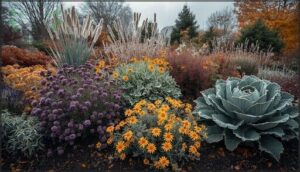
Think of Cold Hardy Plants as your insurance policy against winter kill. For reliable Fall Bloomers and Winter Interest, look for Hardy Perennials rated at least one zone colder than yours, with clear Frost Tolerance on the tag.
Prioritize native perennials with strong roots and sturdy stems, then support plant health with consistent fall perennial care and other cold hardy plants in the same bed.
Best Annuals and Perennials for Fall

Fall gardening shines brightest when you mix Fall Bloomers and Cold Hardy favorites. Pansies, ornamental kale, and snapdragons bring strong Seasonal Colors, while asters, sedum, and black-eyed Susans keep perennial beds lively.
Blend these annuals and perennials into Flower Arrangements or Garden Designs for enduring beauty and low-effort seasonal plant care with fall flowers.
Understanding Plant Hardiness Zones

Zone Mapping is simply your winter safety net: it tells you the average cold your garden can expect, not a worst-case record.
Use those Hardiness Levels with your fall gardening tips and Seasonal Plant Care, because shifting Climate Patterns, Temperature Fluctuations, and small Geographic Variations mean two “zone 6” yards can need slightly different gardening tips and Seasonal Gardening Tasks for reliable plant care.
Planting Bulbs for Spring Blooms

Ever dream of waking to color after winter’s gray? That starts with smart Bulb Selection and careful Soil Preparation in fall. When you plant bulbs like tulips, daffodils, or crocuses, keep your Planting Depth right and time it before frost.
Plant tulip, daffodil, and crocus bulbs in fall to awaken spring with color after winter’s gray
For lasting Spring Blooms, focus on:
- Balanced Garden Layout
- Proper Fall Garden Preparation
- Strategic Bloom Timing
- Reliable Fall Gardening Tips
Protecting Flowers From Frost and Cold

As temperatures start to dip, your flowers will need a little extra care to handle the chill. A bit of protection now can keep blooms going strong even after frost sets in.
Here are a few simple ways to shield your plants when the cold moves in.
Using Row Covers and Cold Frames
Surprising how simple fabric can save your cool-season flowers, isn’t it? With the right Row Cover Materials, you get Frost Protection Methods that breathe, let rain through, and add a few precious degrees of warmth, perfect for fall gardening tips and Winter Gardening Strategies.
Pair low row covers with smart Cold Frame Designs for reliable Season Extension Techniques when winterizing plants and using cold frames.
Bringing Sensitive Plants Indoors
Before cold nights settle in, give delicate blooms like geraniums and hibiscus a gentle move indoors. Ease the Temperature Acclimation by bringing them in gradually, checking for pests first.
Good Indoor Lighting, steady Soil Moisture, and mindful Humidity Management keep these indoor plants thriving through winter—a smart plant protection step when winterizing plants in fall.
Supporting Plants Against Wind Damage
Once you’ve tucked tender plants indoors for winter, turn to the fall blooms still facing the wind outside. Staking Stems on dahlias or asters to individual canes, using loose figure-eight ties, keeps each plant upright without bruising.
Trellis Systems support climbers, while mesh or burlap Windbreak Barriers slow cold wind, reducing stress and even disease spread on shaken, damaged foliage.
Applying Mulch Before First Frost
After you’ve dealt with wind, think of mulch as a warm blanket for your perennials in Fall. Aim for a Mulch Depth of about 2–3 inches over cooled soil, using organic Mulch Materials like shredded bark or straw for Winter Insulation, Frost Protection, and steadier Soil Temperature during winter preparation and thaw.
- Check forecast for regular frosts.
- Wait until plants start going dormant.
- Clear weeds and loosen soil surface.
- Spread mulch evenly, not touching stems.
- Top up thin spots mid-winter if needed.
Dividing and Transplanting Perennials
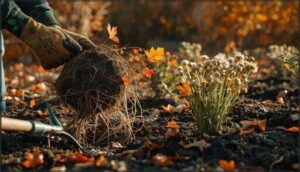
As summer fades, many perennials start to crowd each other, competing for nutrients and space. Fall is the best time to divide and replant them so they can settle in before winter.
Here’s how to handle your perennials for healthier growth next season.
Identifying Overcrowded Plants
Crowd control starts with noticing subtle growth signs—shorter stems, smaller blooms, and tired foliage. When perennials grow so tight that light and air can’t reach the center, it’s time for plant division. Watch for uneven watering needs too; water stress and airflow issues hint that spacing has vanished from your fall checklist.
| Problem Area | Visible Sign |
|---|---|
| Plant Spacing | Overlapping leaves, no soil gaps |
| Growth Signs | Short stems, fewer blooms |
| Water Stress | Wilting between waterings |
| Airflow Issues | Mildew or yellowing inner leaves |
Step-by-Step Division Techniques
Once you’ve spotted overcrowding, you’re ready for hands-on plant division and real Plant Rejuvenation.
Start with Soil Preparation, water the clump well the day before, then Cut Back tall stems so less foliage strains the roots.
Use your Division Tools—a sharp spade, fork, or knife—for careful Crown Management and Root Separation, then Divide cleanly so each perennial division is strong enough to Transplant.
Replanting for Optimal Growth
Once your perennials are divided, replant with careful Root System Care and smart Soil Preparation. Firm the crowns level with the soil and allow space for mature growth.
For best results in fall plant maintenance:
- Practice mindful Plant Spacing for airflow.
- Follow deep Watering Techniques.
- Finish with protective Mulch Application for steady, seasonal gardening in containers or beds.
Sharing or Relocating Divided Plants
In Fall, think of divisions as small gifts for your Garden and others. Use cool, overcast days for Division Timing, finish Soil Preparation, then handle Perennials gently with light Root Trimming.
For safe Plant Care, choose simple Transport Methods like pots or damp-wrapped roots, add clear Plant Labeling, and share only healthy, non‑invasive plants to support mindful Seasonal Gardening.
Preparing Flower Beds for Winter

Once your flowers have finished blooming, it’s time to give the beds a little attention before winter sets in. Preparing them now saves you trouble come spring and helps protect the soil over the colder months.
Here’s where to focus your effort as you get everything ready for the season ahead.
Cleaning Up Spent Plants and Foliage
Think of Fall Cleanup Tips as your garden’s insurance policy. Start your Seasonal Garden Cleanup by cutting back tired stems, raking out dead leaves, and clearing disease-prone debris.
Good Garden Sanitation and mindful Foliage Disposal prevent pests from overwintering. Regular Debris Removal in your Perennial Garden Maintenance keeps soil breathable and preps beds for winter mulching later.
Amending Soil With Compost
Ever wonder why soil seems tired after a long season? Compost perks it up. It boosts Soil Structure, adds Organic Matter, and restores Microbe Balance for strong roots. To amend effectively:
- Spread 2 inches of compost.
- Mix it into topsoil.
- Water with Compost Tea.
- Let microbes rest before winter settles in.
Storing Seeds From Mature Flowers
Saving seeds is like bottling up next season’s promise. Use these Seed Harvesting Tips: gather dry, brown seed heads on a sunny afternoon, then use Seed Drying Methods indoors for a few days.
Store in labeled paper envelopes—the best Storage Container Options—inside airtight jars with desiccants for reliable Humidity Control Techniques and lasting viability.
Preventing Pest and Disease Issues
Strong Garden Sanitation now is your best insurance against spring outbreaks of Plant Disease and Pest Control headaches like Aster Yellows, aphids, and mildew. Use layered Pest Control Methods: clean up fallen leaves, remove infected stems, then add Fall Fungicides or Organic Sprays only as needed for careful disease management and long-term pest and disease management.
- Rake and remove all diseased leaves and plant litter from flower beds.
- Cut back peonies, asters, and mums, discarding any suspect or spotted stems.
- Avoid overhead watering; keep foliage dry to limit moisture-loving disease.
- Use targeted Organic Sprays like neem or Bt only on problem areas.
- Rotate plants and space new ones well to improve airflow and Disease Prevention.
Frequently Asked Questions (FAQs)
Should flowers be cut back in the fall?
You should cut some perennials back in fall, but not all, and that’s where Garden Planning and Preparation comes in. The Benefits of Cutting include removing diseased foliage, reducing pests, and tidying beds for Winter Garden Preparation, yet there are strong Reasons to Delay.
For instance, seed heads on coneflowers feed birds, and standing stems shelter pollinators, so you’ll often leave those up while you Cut Back hostas, bee balm, or daylilies that turn mushy or mildew-prone.
Climate Considerations and Specific Plant Needs matter just as much as timing, so think about your winter wetness, typical snow load, and which perennials collapse or stay evergreen before you grab your tools and start snipping.
How do you take care of fall flowers?
Some say fall flowers fade fast, but with steady watering, balanced flower fertilization, and careful garden sanitation, you can extend blooms.
Maintain even soil temperature, manage plant maintenance for cooler weather, and prepare roots for winter dormancy.
Should you cut your flowers back in the fall?
It depends on your garden’s balance of beauty and habitat. Fall Pruning Tips suggest Cutting Back Perennials after frost for Winter Flower Care and winter kill prevention, while others benefit from leaving deadheaded stems for Frost Protection Methods and Seasonal Garden Maintenance.
What should be done to perennial plants in the fall?
In fall, focus Perennial Care on gentle Fall Pruning, dividing crowded perennials, and Soil Preparation.
Then finish with Winter Mulching for Root Protection, dormancy preparation, and winter kill prevention so plants re-sprout strongly next spring.
Should I water my flowers in the fall?
Yes, you should still water your flowers in fall. Consistent Fall Water Needs maintain Soil Moisture and Root Hydration, supporting Soil Health and Fertilization.
Adjust Watering Frequency using Horticultural Techniques for fall to guarantee hardy growth and Frost Protection.
Should you deadhead flowers in the fall?
You should deadhead some fall flowers, but not all. Use light Fall Deadheading for messy blooms or aggressive self‑seeders as part of Garden Cleanup, and leave plenty of Seed Heads for Wildlife Support, winter interest, and natural Frost Protection in your cool‑season gardening beds.
Which fall flower lasts the longest?
For the Longest Blooming cool-season flowers in your fall flower gardening, pansies and violas usually win. These Cold Hardy, low-maintenance flowers can give weeks of Seasonal Colors and strong Bloom Duration, especially with early fall planting for a rich fall color palette.
Should you change your garden to a fall flower?
Think of your garden as a living painting—switching to fall flowers restores its color and rhythm.
Fall planting offers Seasonal Color, Flower Longevity, and fresh Autumn Landscaping beauty, transforming tired beds into a rejuvenated, vibrant fall garden.
When should you plant fall flowers?
Plant fall flowers six to eight weeks before the first frost, when soil temperature stays near 55–65°F.
In Saxony’s Zone 6b–7a, that’s mid‑September to mid‑October—perfect for cool‑season annuals and fall garden planting.
When do fall flowers come out?
Autumn flowers greet the cooler air as nights lengthen and days shorten. Bloom Triggers often depend on Day Length, Regional Timing, and Frost Dates, with Species Variations bringing colorful fall blooms from September through late October.
Conclusion
What if this fall, instead of watching your flowers fade, you guided them gently into rest? By deadheading, watering wisely, and mulching on time, you protect roots and stretch bloom time.
Thoughtful fall season flower care also means clearing disease, dividing crowded perennials, and shielding tender plants from frost. Each small task is like tucking the garden in, so spring growth wakes up stronger and steadier.
You’re not just saving blooms; you’re learning the garden.
- https://extension.missouri.edu/publications/g6202
- https://extension.umn.edu/planting-and-growing-guides/planting-vegetables-midsummer-fall-harvest
- https://extension.psu.edu/season-extenders-and-growing-fall-vegetables
- https://extension.illinois.edu/blogs/know-how-know-more/2016-07-11-time-fall-gardening
- https://www.realsimple.com/deadheading-vs-pruning-11747658