
This site is supported by our readers. We may earn a commission, at no cost to you, if you purchase through links.

A jar of store-bought pesto sits in most refrigerators right now, quietly underperforming. It gets the job done, sure, but it tastes like a memory of something better—faint, flat, nothing like the bright green sauce that clings to pasta in the way only fresh-made pesto can. The gap between the two isn’t technique or talent. It’s ingredients and about fifteen minutes of your time.
Growing your own herbs closes that gap fast. Basil pulled from the garden on a warm morning carries a fragrance that store shelves can’t bottle. Pair it with toasted nuts, good olive oil, and the right cheese, and your delicious garden herb pesto recipe becomes something people ask you about at the table.
Table Of Contents
- Key Takeaways
- Fresh Garden Herb Pesto Ingredients
- Tools for Homemade Pesto
- Step-by-Step Pesto Recipe
- Pesto Variations and Substitutions
- Storing and Serving Pesto
- Frequently Asked Questions (FAQs)
- Can I make pesto without a food processor?
- How long does homemade pesto stay fresh?
- What causes pesto to turn brown overnight?
- Can I substitute spinach for fresh basil?
- Should I toast pine nuts before adding them?
- How long does pesto last at room temperature?
- Can pesto be made without a machine?
- What pasta shapes pair best with pesto?
- Is homemade pesto healthier than store-bought?
- Can pesto be used as a marinade?
- Conclusion
Key Takeaways
- Fresh basil picked right before flowering—especially Genovese or sweet varieties—delivers the bright, fragrant flavor that store-bought pesto simply cannot replicate.
- Your choice of tool shapes the final texture: a food processor produces silky, sauce-ready pesto, while a mortar and pestle builds deeper, rustic flavor worth the extra few minutes.
- Nearly every ingredient can be swapped—pine nuts, Parmesan, and even basil itself can be replaced with seeds, nutritional yeast, or greens like arugula and spinach without losing what makes pesto great.
- A thin layer of olive oil on top, a squeeze of lemon, or vacuum sealing are your best defenses against browning, keeping homemade pesto fresh in the fridge for up to seven days.
Fresh Garden Herb Pesto Ingredients
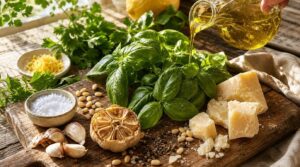
Good pesto starts with knowing what goes into it. Every ingredient plays a real role — from the herbs you pick to the oil you pour.
Making it yourself means you’re in control — this basil pesto recipe from scratch walks you through getting every element just right.
Here’s what you’ll need to pull it all together.
Basil and Mixed Herbs
Fresh basil is the heart of any great garden pesto. Genovese and sweet basil varieties bring the classic flavor you want — harvest leaves from the top third of the plant just before flowering for peak aroma.
Mixed herb pesto opens the door to creativity: blend in parsley, arugula, or spinach to build layers.
Your homemade pesto starts right here, in the garden.
Nuts, Seeds, and Swaps
Nuts give pesto its creamy backbone — and you’ve got real options here.
- Pine nut alternatives like cashews create a silky cashew cream base that blends beautifully.
- Walnut texture variance adds a slightly chunkier, earthier bite.
- Sunflower seed crunch keeps things budget-friendly — perfect seed-based pesto for a nut allergy.
- Budget seed swaps like pumpkin seeds work just as well.
Parmesan and Cheese Alternatives
Cheese pulls it all together — but Parmesan cheese isn’t your only path. Nutritional yeast brings that same savory, umami punch for vegan pesto, while Cashew Parmesan blends cashews with yeast for creamy richness. Hemp cheese adds a grassy, crumbly finish, and almond cheese or white miso contribute nutty, fermented depth. These cheese alternatives ensure pesto is accessible to everyone.
For a dairy-based substitute with a similar hard granular texture, consider Grana Padano.
Olive Oil and Seasonings
Once your cheese is in, the oil shines. Cold-pressed quality extra-virgin olive oil — stored in dark bottles for light protection — gives your pesto that rich, flavorful oil infusion. Drizzle in ¾ cup slowly for smooth olive oil emulsification.
Add ½ tsp salt, balance a hit of pepper seasoning for pepper heat balance, and a squeeze of lemon. Garlic does the rest.
Best Herbs From Garden
Your garden is already halfway to pesto. The best picks combine bold flavor profiles with easy growing — no green thumb required.
Here are five essential herbs to cultivate:
- Fresh basil — full sun, morning harvest for peak fragrance
- Fresh parsley — partial sun, cut often to keep it coming
- Fresh chives — mild onion bite, low maintenance
- Oregano — drought-tolerant, Mediterranean warmth
- Rosemary — loves well-drained soil, holds up beautifully to garlic
Garden-to-table cooking starts with knowing when to harvest fresh herbs — just before flowering hits peak flavor.
For a full breakdown of timing by season, seasonal garden harvesting tips can help you get every crop at its nutritional peak.
Tools for Homemade Pesto
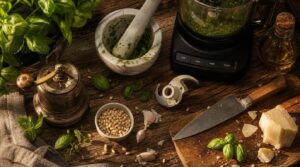
The tool you pick shapes everything — texture, flavor, even how long it takes. You don’t need a fancy kitchen setup to make great pesto, but knowing your options helps you choose what works best for you.
Here’s a look at the methods and techniques that make the biggest difference.
Food Processor Method
A food processor turns homemade pesto into a five-minute win.
Motor wattage matters — aim for at least 600 watts so blade speed stays consistent through nuts and herbs. Use the pulse timing function in short bursts to control texture.
Then, with the processor running, start your oil drizzle slowly through the pour spout.
A bowl capacity of 8–10 cups accommodates a full garden pesto batch easily.
Mortar and Pestle Method
If you want pesto with real depth, the mortar and pestle is your best friend. Stone selection matters — granite or marble gives you the grinding resistance you need.
Follow these steps:
- Grind garlic and salt first
- Add nuts using circular grinding technique
- Work in herbs for aromatic preservation
- Fold in cheese slowly
- Drizzle oil for temperature management
Patina development on your mortar means it’s well-seasoned — a good sign.
Toasting Nuts Properly
Toasted nuts make pesto go from flat to fragrant. Pine nuts (also called piñons) are delicate — give them just 3 to 5 minutes in a dry skillet over medium heat. Spread them in an even single layer and watch for golden color and a nutty aroma.
For oven-toasting substitutions like walnuts or seeds, 325°F for 8 minutes works well.
Trust your nose to prevent burning.
Choosing The Right Texture
Your kitchen tool shapes everything. A food processor creates a smooth, saucy pesto where oil viscosity coats every pasta strand evenly. Conversely, a mortar and pestle preserves herb fiber integrity and retains rustic nut chunkiness, while hand-crushing amplifies bold cheese grit and garlic textures.
Your kitchen tool shapes everything, from silky processor-smooth pesto to rustic mortar-ground texture
For sauce consistency adjustment, pulse less to achieve a chunky herb pesto or more for a silky finish.
Let the dish decide your kitchen tool selection.
Step-by-Step Pesto Recipe
Making pesto at home is easier than you’d think. The whole process comes together in just a few simple steps, and once you’ve done it once, you’ll never reach for the store-bought jar again.
Here’s exactly how to make it.
Wash and Dry Herbs
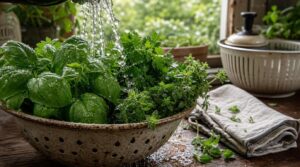
Clean herbs make all the difference. Start with a cool water rinse, gently swirling leaves for about 15 seconds to shake loose any dirt or tiny insects.
- Pat dry with a clean towel or use salad spinner drying for speed.
- Air-dry on a rack for moisture-free storage prep.
- Remove thick stems and any brown edges — bruise avoidance handling keeps bitterness out.
- Use immediately for the freshest garden-to-table cooking results.
Pulse Garlic and Nuts
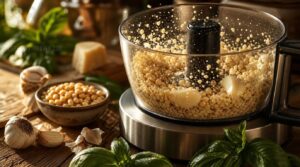
Once your herbs are dry and ready, it’s time to build the flavor base. Add 2 to 3 garlic cloves to your food processor first — crushing them beforehand boosts garlic Allicin release for a deeper, more even flavor.
Toss in ⅓ cup of pine nuts or any nut alternative like walnuts. Pulse in short bursts for coarse texture control and to prevent bitter notes.
Add Herbs and Cheese
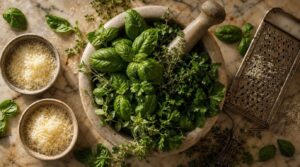
Now add 2 cups of fresh basil leaves and any mixed fresh herbs you’re using. Pack them in gently — herb freshness tips matter here, so use leaves rinsed and fully dried.
Add ¼ cup each of Parmesan and Romano cheeses for a real cheese umami boost. Finely grated cheeses blend faster and distribute more evenly, keeping your herb pesto sauce smooth and balanced.
Drizzle Olive Oil Slowly
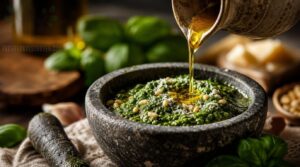
With your herbs and cheese blended in, it’s time for the most satisfying part of garden-to-table cooking — the slow oil pour.
Keep these Oil Flow Control tips in mind:
- Stream Consistency — drizzle in a thin, steady stream, never dump
- Drip Height — pour from a few inches above for smoother incorporation
- Emulsion Timing — keep the processor running the whole time
- Temperature Impact — use room-temperature olive oil for better blending
- Total amount — aim for ¾ to 1 cup for a balanced herb pesto sauce
That slow drizzle is what turns garden pesto into something silky and that homemade pesto lovers crave.
Taste and Adjust Seasoning
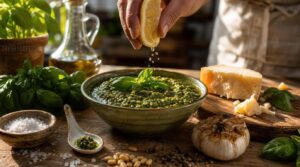
Now taste your pesto before calling it done. Start with Salt Increment adjustments — just ⅛ teaspoon at a time. Squeeze in lemon juice for Acidity Balance to brighten the flavor and soften any bitterness. Check the Garlic Strength and Cheese Ratio, then finish with black pepper.
Herb intensity and garlic aroma settle as it rests, so taste testing tips matter most here.
Pesto Variations and Substitutions
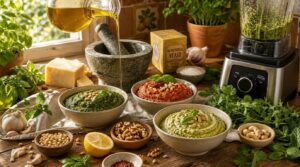
The beauty of pesto is how easily it bends to what you have on hand. Whether you’re working around allergies, going dairy-free, or just cleaning out the garden, there’s a version that works for you.
Here are some of the best swaps and twists to try.
Nut-free Pesto Options
Nuts aren’t the only game in town. For a great nut-free pesto, try seed-based pesto options like sunflower or pumpkin seeds — pumpkin seeds even boost your garden pesto with about 7 grams of protein per quarter cup.
Legume bases like white beans add emulsion stability and creaminess. A squeeze of lemon takes care of citrus brightening and color preservation beautifully.
These protein-rich swaps and nut substitution ideas work surprisingly well.
Vegan Pesto Swaps
Going fully dairy-free doesn’t mean sacrificing richness. Swap Parmesan with nutritional yeast for deep umami flavor, or blend in silken tofu cream for a smooth, plant-based sauce.
A tablespoon of aquafaba emulsion keeps things creamy without curdling, while white bean protein adds body just like cheese would.
Finish with fresh mint and chives for brightness — your vegan pesto will genuinely surprise you.
Mixed Herb Pesto Ideas
Most pestos start with basil alone — but your garden probably has so much more to offer. Try blending cilantro with a lemon zest boost for citrusy brightness, or add fresh mint for cool contrast. A smoky paprika twist and Mediterranean sea salt finish the pesto beautifully.
This is garden to table cooking at its best — a simple DIY herb pesto that makes every herb count.
Greens Beyond Basil
Basil isn’t the only green that belongs in your garden pesto.
Kale Base gives your herb sauce a bold, earthy backbone.
Arugula Brightness adds peppery citrus lift.
Spinach Creaminess blends smoothly and mildly.
Mustard Greens bring sharp, lively heat, while Swiss Chard offers gentle sweetness.
These fresh greens open up endless pesto variations — perfect for preserving fresh herbs all season long.
Roasted Garlic Variation
Roasting garlic transforms your fresh garden pesto into something quieter and deeper. Wrap 3–4 cloves garlic in foil and roast at 400°F for 35–45 minutes.
Longer roasting times mean sweeter, mellower flavor — pure sweetness control. The softened cloves melt into a creamy emulsion, improving aroma development.
This gives your herb sauce warm color impact without sharpness.
Storing and Serving Pesto
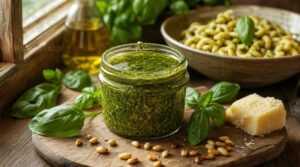
You made a beautiful batch of pesto — now let’s make sure it stays that way.
How you store it matters just as much as how you make it. Here’s what you need to know to keep it fresh and get it on the table.
Refrigerating Fresh Pesto
Fresh pesto keeps best between 35 and 40°F — so tuck it toward the back of your fridge, never the door.
Spoon it into an airtight container, drizzle a thin layer of olive oil on top, and press plastic wrap directly onto the surface.
Add date labels for Portion Control, and use a thermometer for Thermometer Monitoring.
Enjoy within three to five days.
Freezing Pesto Cubes
Want to make pesto ahead and skip the weeknight scramble? Spoon it into ice cube trays and freeze. Each cube offers tidy portion control (about 1 to 1.5 ounces), ready when needed. Use the Flash-Freeze Technique: freeze cubes solid, then transfer to a freezer bag with Vacuum-Seal Storage for up to three months.
- Pull out exactly what you need — no waste, no guilt
- Preserve herbs in ice cube trays with a drizzle of oil for color preservation tips that keep your pesto vibrant
- Thawing without refreezing is simple: move a cube to the fridge a few hours ahead
Preventing Browning
Even frozen pesto can brown quickly once exposed to air. A thin acidic coating—such as half a teaspoon of lemon juice—prevents oxidation before sealing. Antioxidant dusting with powdered vitamin C is also effective, while vacuum sealing removes trapped air entirely for long-term storage.
| Method | How It Works | Best For |
|---|---|---|
| Acidic coating | Lemon juice slows enzyme activity | Fresh batches |
| Vacuum sealing | Removes air exposure | Long-term storage |
| Oil surface layer | Blocks oxygen contact | Refrigerated pesto |
Tossing Pesto With Pasta
Once your pesto is sealed and stored, the real fun begins. Tossing homemade pesto with pasta is where garden pesto truly shines.
Reserve ¼ cup of pasta water — that starchy liquid is your secret emulsion technique. It binds the oil and cheese into a silky coating.
Toss your pesto pasta off the heat, add pasta water slowly, and taste for flavor adjustments before serving.
Sandwiches, Pizza, and Dips
Spread it as a sandwich spread on toasted bread — it acts as a bread moisture barrier, keeping fillings from making things soggy. Layer mozzarella and chicken for a Pesto Panini Melt.
Top a flatbread for a Pesto Pizza Twist.
Thin it with yogurt for a Pesto Veggie Dip or use it as a pesto crunch topping on crackers.
Frequently Asked Questions (FAQs)
Can I make pesto without a food processor?
Think of a mortar and pestle as your original food processor. You can absolutely make DIY pesto without one — use the knife-chop method, bowl-whisk emulsify technique, or ambient temperature mixing for a rustic flavor boost.
How long does homemade pesto stay fresh?
Homemade pesto stays fresh for 5 to 7 days refrigerated. Shelf life depends on air exposure and temperature impact.
Add an oil layer on top to slow flavor degradation and preserve freshness.
What causes pesto to turn brown overnight?
Overnight browning is practically pesto’s arch-nemesis. Enzyme browning starts the moment crushed basil meets air — oxygen exposure triggers polyphenol oxidase instantly. Light degradation, fat oxidation, and temperature acceleration all pile on, accelerating discoloration.
To combat this, a squeeze of lemon helps prevent oxidation. Smart pesto storage and freezing pesto portions are key strategies to lock in that vivid green, preserving freshness and vibrancy.
Can I substitute spinach for fresh basil?
Yes, spinach works as a fresh basil swap. It’s milder and smoother, so boost the flavor balance with extra garlic, lemon, and herb seasoning blend to keep your healthy greens pesto tasting bright.
Should I toast pine nuts before adding them?
A little heat goes a long way. Toast your pine nuts for 3–5 minutes until golden — it deepens flavor enhancement, boosts aroma development, and gives your homemade pesto a richer, nuttier texture impact overall.
How long does pesto last at room temperature?
Fresh pesto is safe at room temperature for about 2 hours. Beyond that temperature threshold, microbial growth kicks in fast.
Watch for spoilage signs like sourness or browning — refrigerate right away to protect its shelf life.
Can pesto be made without a machine?
Absolutely — a mortar and pestle is the original machine.
Use the hand-crush technique to grind garlic and nuts first, then work in herbs.
Patience-driven blending takes time, but the texture is worth it.
What pasta shapes pair best with pesto?
Think of pasta shapes like vessels — some hold pesto better than others.
Ridged pastas, hollow shells, spiral twists, and chunky shapes like penne grip this Italian sauce beautifully when tossed with pasta and Parmesan.
Is homemade pesto healthier than store-bought?
Yes, homemade pesto usually wins. You control Sodium Levels, Additive Control, and Fat Quality. Pack in extra greens for a Fiber Boost, and tweak Protein Options to fit your goals.
Can pesto be used as a marinade?
Pesto is like a flavor jacket for proteins — it wraps them in herbs, garlic, and oil before they ever hit the heat. Use it as a pesto marinade for chicken, fish, or vegetables, keeping marinating duration between 30 minutes and 4 hours. The oil locks in moisture, garlic drives flavor absorption deep into the surface, and a squeeze of lemon gives you that acidity balance to brighten everything up.
When it cooks, pesto forms a gorgeous surface crust that’s packed with toasty, herby depth. Just remember the safety considerations: always refrigerate while marinating and never reuse leftover marinade on cooked food.
Your garden pesto and homemade pesto pull double duty — they’re a topping and a marinade in one jar. That’s just one of many smart pesto uses worth keeping in your back pocket.
Conclusion
Funny, isn’t it—the most impressive thing on your dinner table this week will come from a handful of leaves and fifteen minutes of effort. No culinary degree required.
Your delicious garden herb pesto recipe proves the best food rarely needs a complicated backstory. Grow the herbs, trust the process, and keep good olive oil nearby.
Once you’ve tasted what fresh really means, that jar in the fridge won’t stand a chance.
- https://www.katieoglesby.com/blog/garden-to-table-recipe-garden-pesto
- https://www.spiceupthecurry.com/parsley-cilantro-pesto-pasta-recipe/
- https://itsavegworldafterall.com/mint-basil-pesto/
- https://www.plantedplaces.com/blogs/recipes/pesto?srsltid=AfmBOood5q-DGK-1y9DAJHe6gIgxVcU09KxJ1-pMmXkXWGzDbiltB47_
- https://www.101cookbooks.com/archives/five-herb-pesto-recipe.html