This site is supported by our readers. We may earn a commission, at no cost to you, if you purchase through links.
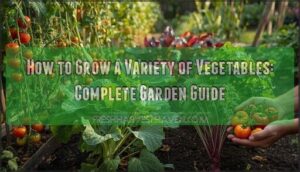
Most home gardeners stick to the same five vegetables year after year—tomatoes, lettuce, peppers, cucumbers, and beans—missing out on dozens of crops that thrive just as easily in backyard plots.
Growing a variety of vegetables transforms your garden from a predictable patch into a diverse ecosystem that feeds your family longer, resists pests better, and keeps the soil healthier season after season.
The secret isn’t more work or exotic techniques. It’s understanding which crops match your climate, how to time plantings for continuous harvests, and which soil preparations set different vegetable families up for success. Once you grasp these fundamentals, you’ll wonder why you ever limited yourself to that handful of standbys.
Table Of Contents
Key Takeaways
- Growing beyond the standard five vegetables (tomatoes, lettuce, peppers, cucumbers, beans) transforms your garden into a diverse ecosystem that produces longer harvests, naturally resists pests, and builds healthier soil with less effort than monoculture planting.
- Success starts with matching crops to your USDA Hardiness Zone and frost dates—78% of gardeners report higher yields when they align plantings with local climate instead of following generic guides, and timing cool-season versus warm-season crops correctly can make or break your entire season.
- Sustainable practices like adding one inch of compost annually, using drip irrigation with mulch (cutting water use 30-50%), and rotating crops every 3-4 years slash disease pressure by 30-60% while building soil fertility without synthetic inputs.
- Smart space-maximization techniques—block planting at 25-30cm spacing, vertical trellising for climbers, and succession planting every two weeks—can double your harvest in the same footprint while extending your growing season weeks beyond standard calendars.
Planning Your Vegetable Garden
Before you plant a single seed, you need a solid plan—and that starts with the fundamentals. The right location, size, and garden type can make the difference between a thriving harvest and a frustrating season.
Let’s break down the three essential decisions that’ll set your vegetable garden up for success.
Selecting an Ideal Garden Location
Before you break ground, scout for a spot that gets at least 6 hours of direct sunlight—your tomatoes and peppers won’t settle for less. Check drainage solutions by observing how water behaves after rain, and don’t ignore wind protection from nearby structures.
Solid soil preparation starts with soil testing and garden planning; a smart garden layout locates your plot within easy reach of water access.
Determining The Right Garden Size
Once you’ve nailed your location, let’s talk garden space. A manageable 100–200 square feet gives beginners room to master soil depth, plant density, and crop yield without burnout. For a family of four, aim for 400–600 square feet with smart garden planning and design. Use a garden planner to map raised garden beds—usually 4×8 feet—and pathways. Your garden layout should balance ambition with the 2–3 hours weekly you’ll realistically spend tending it.
- Start small: 100–200 sq ft teaches fundamentals before expanding
- Family gardens: 400–600 sq ft assists diverse crops and succession planting
- Raised garden beds: 4×8-foot dimensions improve accessibility and yield
- Plan for paths: Reserve 20–30% of space to protect soil and reduce compaction
Choosing a Garden Type (Beds, Rows, Containers)
Your garden design hinges on three proven systems. Raised beds boost yield by 20–40% and warm soil 2–3 weeks earlier—perfect for short seasons. Traditional rows scale beautifully for larger plots, cutting labor by up to 40% with proper spacing. Container gardening delivers 60–80% of ground-grown harvests while saving water in tight spaces.
Match your method to your climate, available square footage, and maintenance schedule.
Preparing Soil for Vegetable Growth
Great soil is the foundation of any thriving vegetable garden—it’s where your plants get the nutrients, water, and support they need to grow strong and produce well. You can’t just throw seeds into hard-packed dirt and hope for the best.
Here’s how to build soil that sets your garden up for success from the start.
Incorporating Organic Matter and Compost
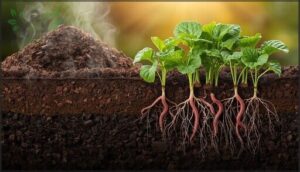
Think of compost as the foundation of soil health—adding just one inch to your beds can boost organic matter by 0.5% in a single year. This simple soil amendment doubles microbial activity within weeks, transforming tired ground into a thriving ecosystem.
Mulching strategies and green manures further amplify these compost benefits, making organic gardening both sustainable and wildly productive.
Ensuring Proper Drainage and Structure
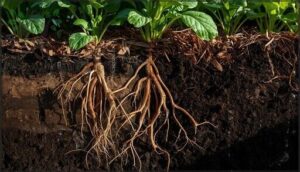
Without proper drainage, even nutrient-rich soil suffocates roots and invites rot. Testing water infiltration—watching how quickly a saturated bed drains in 30 minutes—predicts transplant success by 25% and guides your next move.
Boost drainage and soil quality with these proven methods:
- Raised beds with 6–12 inches of depth dramatically improve root depth and aeration in heavy clay.
- Mix in coarse sand or perlite at 10–20% to boost water infiltration without losing nutrients.
- Mulch 2–3 inches deep to prevent crusting and maintain soil stabilization year-round.
Strategic garden design and planning, from drainage systems to thoughtful soil preparation and management, transforms challenging ground into thriving beds with minimal garden maintenance.
Choosing Vegetables to Grow
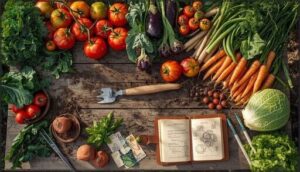
Picking the right vegetables isn’t just about what sounds good—it’s about setting yourself up to actually succeed. You want crops that’ll thrive in your conditions, fit your available space, and end up on your dinner table instead of rotting in the garden.
Let’s break down how to choose vegetables that work with your garden, not against it.
Selecting Easy-to-Grow Varieties
Start with varieties that practically grow themselves—radishes sprint to harvest in just 25 days, while bush beans deliver 5–7 pounds per row with minimal fuss. Your seed selection shapes your entire growing season, so choose crops that forgive beginner mistakes and reward attention.
| Vegetable | Days to Harvest | Space Efficiency |
|---|---|---|
| Radishes | 25–30 days | High (6-inch spacing) |
| Green Beans | 50–60 days | 60–70 plants/100 sq ft |
| Lettuce | 30–45 days | 1–2 lbs per week |
| Zucchini | 40–50 days | High weekly yield |
| Swiss Chard | 50+ days | 6–8 week harvest |
These reliable performers transform vegetable gardening from intimidating to instinctive.
Matching Crops to Your Climate
Your local climate zones dictate success more than any other factor—78% of home gardeners report higher yields when matching crops to their USDA Hardiness Zone rather than following generic planting guides. This seasonal planning transforms your vegetable garden from guesswork into predictable harvests.
Matching vegetables to your USDA Hardiness Zone boosts yields for 78% of gardeners, turning guesswork into reliable harvests
- Cool-season crops like broccoli thrive in 40–65°F windows, losing 12–25% success outside that range
- Heat-tolerant varieties boost pepper and tomato yields by 20–40% during summer stress
- Microclimates within your garden create zones yielding up to twice as much for heat-loving crops
- Frost protection with row covers extends cool-season growing by 14–21 days
- Regional climate bands affect vegetable gardening outcomes by an average 25% across major crops
Check your frost-free days—they range from 180 days in colder zones to 300+ in mild climates, completely reshaping your crop selection strategy. Short-duration cultivars enable 2–3 successive plantings in mild-winter areas, while gardening for beginners benefits most from climate-adapted varieties that forgive temperature swings. Your garden planner should map sun exposure too, since optimizing light raises yields 15–25% for sun-lovers like peppers compared to shadier spots. Effective research output development is essential for understanding these climate factors and their impact on gardening success.
Considering Family Preferences and Space
Your family’s tastes and available square footage should drive crop selection—72% of households base vegetable gardening decisions on what everyone actually eats.
For small space gardening, prioritize high-turnover leafy greens in 30% of beds, then add family favorites like tomatoes.
Container gardening tips suggest placing herbs nearest your kitchen for accessibility, while a garden planner helps track household preferences season to season.
Planting Vegetables for Success
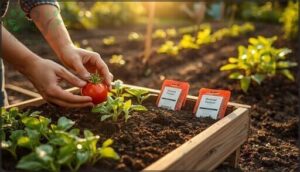
Getting plants in the ground at the right time can make or break your entire growing season. You can’t treat tomatoes the same way you handle lettuce—each crop has its own sweet spot for planting, whether you’re starting from seed or using transplants.
Let’s walk through the timing, methods, and quality considerations that’ll set your garden up for real success.
Timing Cool-Season Vs. Warm-Season Crops
Your vegetable gardening success hinges on one thing: planting at the right moment. Cool-season crops like lettuce and kale thrive when soil temps hover between 45°F and 75°F—perfect for early spring or fall planting. Warm-season favorites like tomatoes and peppers need soil above 60°F to germinate properly.
Check your frost dates, plan succession planting every two weeks, and you’ll harvest continuously all season long.
Sowing Seeds Vs. Transplanting Seedlings
Direct sowing works beautifully for root vegetables and beans, offering survival rates around 60-75% when soil temperature hits that sweet spot above 50°F.
Transplants, though, give you a head start with warm-season crops like tomatoes—expect 70-90% success rates if you harden them off properly for 7-14 days. This simple step slashes transplant shock down to just 5-15%, protecting your seedling investment.
Using High-Quality Seeds and Starts
Your success starts at the seed rack. Fresh seeds deliver germination rates above 90%, while old packets often drop 20-40% in viability—especially tomatoes past three years.
Here’s how to choose winners:
- Buy from suppliers who share germination test results and phytosanitary certificates
- Store seeds cool and dry; humidity above 60% cuts germination 5-15% annually
- Consider fungicidal seed treatment to reduce damping-off by 40-70%
- Match varieties to your climate for 5-20% higher yields than non-local types
Essential Garden Maintenance Practices
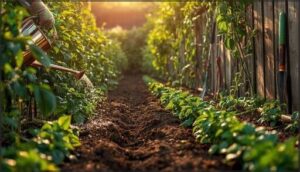
Getting your vegetables in the ground is just the beginning—the real work starts once they’re growing. Your garden needs consistent care to stay productive and healthy throughout the season.
Let’s look at the key maintenance practices that’ll keep your plants thriving from spring planting to fall harvest.
Watering and Fertilizing Strategies
Consistently, your plants need about 1 inch of water weekly—drip irrigation delivers this most efficiently, cutting water use by 30-50% while keeping soil moisture right where roots thrive. Pair that with a 2-3 inch layer of mulch to slash evaporation by up to 70%. Fertilization timing matters just as much: split nitrogen applications across the season prevent nutrient waste and boost uptake by 20-35%.
| Method | Key Benefit |
|---|---|
| Drip Irrigation | 90-95% efficiency, targeted delivery |
| Mulching | Reduces evaporation 50-70% |
| Split Fertilizer Applications | Improves nutrient use 20-35% |
Effective Weed and Pest Control
Healthy plants start with smart defenses. Integrated strategies cut pest losses by 28-54% in field trials—use action thresholds and beneficial insects to reduce pesticide use by 25-60%.
Weed barriers like mulch slash emergence by 85-95%, while companion planting attracts predators that lower aphid populations by 60-75%.
Scout weekly, act early, and let nature do some heavy lifting for you.
Using Mulch and Crop Rotation
Mulch benefits go beyond pest control—a 2–3 inch layer suppresses weeds by 20–40% and keeps soil moisture 50–70% higher than bare ground.
Pair it with crop rotation to slash disease pressure by 30–60% and boost nutrient cycling. Rotating vegetables annually rebuilds soil health, cuts pest buildup, and makes your sustainable gardening strategy nearly foolproof.
Advanced Vegetable Gardening Techniques
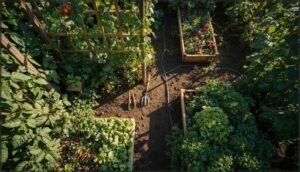
Once you’ve got the basics down, it’s time to push your garden beyond the ordinary. These techniques help you grow more food in less space, make better use of vertical areas, and create a garden that works smarter, not harder.
Let’s look at three methods that’ll transform how you think about planting.
Block and Vertical Planting Methods
When you’re ready to break free from conventional rows, block layouts and vertical gardening techniques can double your harvest in the same footprint. Space plants 25–30 cm apart in grids—you’ll squeeze in 20–40% more vegetables.
Train tomatoes, beans, and cucumbers upward on trellises; climbing crops can yield 30–100% more per square meter. It’s intensive cropping that maximizes every inch while supporting crop diversification and succession crops.
Growing in Containers and Small Spaces
Container gardens liberate you from every constraint—no yard, no problem. Choose 5–7-gallon pots for tomatoes and peppers; they’ll deliver 2–4 pounds per plant. Vertical gardening on trellises triples productive area for beans and cucumbers, while microclimate control on balconies extends harvests by weeks. Self-watering containers slash watering frequency by 25–40%, making sustainable container gardening brilliantly efficient for urban spaces.
Incorporating Perennials and Companion Planting
Perennial selection transforms your garden into a self-renewing ecosystem. Deep-rooted varieties like chives and sorrel yield 1.2–2.8 kg/m² year-round while slashing irrigation needs by 10–30%. Companion planting adds another layer of resilience:
- Basil with tomatoes boosts yields 5–18%
- Cucumbers paired with radish and dill cut pests 12–22%
- Legume intercropping fixes 40–80 kg nitrogen annually
- Diverse beds attract 25–70% more beneficial insects
- Crop rotation every 3–4 years prevents disease buildup
You’re building permaculture intelligence into every square foot.
Sustainable Soil and Water Management
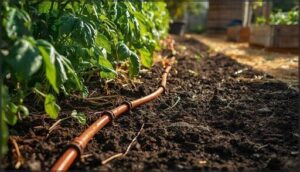
Your garden’s long-term success depends on how well you manage two fundamental resources: soil and water. Smart practices can actually improve your soil over time while cutting your water use nearly in half.
Let’s look at three proven methods that protect your garden’s foundation and conserve resources season after season.
Using Cover Crops and Green Manures
You can feed the soil while it rests—that’s the genius of cover crops and green manures. Plant nitrogen-fixing legumes like clover or vetch between vegetable seasons to boost soil fertility and organic matter by up to 1.5 percentage points.
These sustainable gardening practices improve crop rotation, suppress weeds naturally, and support organic gardening goals without synthetic inputs.
Practicing No-Till and Reduced-Till Methods
Letting the soil rest undisturbed is one of the smartest sustainable farming practices you can adopt. No-till and reduced-till systems cut erosion by 40–72% while building organic matter management naturally—your garden becomes stronger each season.
These organic gardening methods deliver real benefits:
- Soil carbon increases by 0.2–0.4% yearly
- Field prep time drops 30–50%
- Fuel use falls 40–60% per season
Crop rotation strategies work beautifully with minimal tillage systems, and you’ll spend far less time wrestling with equipment while your soil structure improves steadily.
Implementing Drip Irrigation and Mulching
Drip irrigation paired with mulch benefits transforms water efficiency in your vegetable garden—cutting usage by 30–50% while keeping soil moisture exactly where plants need it.
You’ll water less often, suppress weeds by up to 90%, and watch organic matter build steadily.
Smart irrigation scheduling with moisture sensors boosts efficiency another 20–40%, making this combination essential for organic gardening success.
Frequently Asked Questions (FAQs)
How do I save seeds from my harvest?
Harvest seeds when fruit fully ripens on the plant, then clean and dry them to 6–8% moisture. Store in airtight containers at 32–41°F to maintain seed viability for years.
What are common nutrient deficiency symptoms in vegetables?
Pale or yellowing leaves often signal nitrogen deficiency, while purplish foliage suggests phosphorus issues. Potassium deficiency causes leaf edge browning.
Regular soil testing and proper fertilizer types prevent these nutrient defects in your vegetable garden.
When should I prune or trim vegetable plants?
Pruning techniques transform your vegetable garden’s health and yield. Trim indeterminate tomatoes at early flowering to boost airflow and slash disease risk by 15-20%.
For peppers, prune at the five-leaf stage for stronger fruit production.
How do I extend my growing season?
Don’t put all your eggs in one basket—stagger plantings and use row covers to extend your season.
Climate adaptation, soil modification, and smart crop scheduling keep harvests rolling weeks longer than standard calendars suggest.
What should I do with my garden over winter?
Plant cool-season crops like kale and spinach under row covers for frost protection. Use cold frames to extend harvests. Apply mulch for snow management, prune perennials, and monitor for winter pests through seasonal maintenance.
Conclusion
A gardener in Vermont who once planted only tomatoes now harvests kale through November, snap peas in April, and three successions of beans between May and September. That transformation didn’t require special skills—just the confidence to experiment beyond familiar crops.
Growing a variety of vegetables means you’ll eat better, work less against pests and diseases, and discover flavors no grocery store can match. Your garden’s potential extends far beyond those original five standbys.