This site is supported by our readers. We may earn a commission, at no cost to you, if you purchase through links.
The smell of crushed basil can transport you faster than any plane ticket. That’s the power of an herb garden—fresh flavor, right at your fingertips, any time of year. Once you’ve clipped your own rosemary sprig for roasted potatoes, store-bought bunches start to feel like a compromise.
Growing herbs isn’t just about saving trips to the market; it’s about cultivating control over your food’s freshness and your cooking’s soul. Whether you’re tending pots on a balcony or rows in the backyard, this herb garden planting guide will help you grow a kitchen’s worth of fragrance from the soil up.
Table Of Contents
- Key Takeaways
- Benefits of Growing an Herb Garden
- Choosing The Best Herbs to Grow
- Planning Your Herb Garden Layout
- Selecting The Right Location
- Preparing Soil and Containers
- When and How to Plant Herbs
- Essential Herb Garden Care Tips
- Managing Pests and Diseases in Herbs
- Harvesting Herbs for Maximum Flavor
- Preserving and Storing Fresh Herbs
- Frequently Asked Questions (FAQs)
- What is the best layout for an herb garden?
- Which herbs should not be planted together?
- What time of year should I plant an herb garden?
- What herbs grow well together chart?
- Can herbs survive winter temperatures outdoors?
- How much does herb gardening typically cost?
- Which herbs grow fastest from seed?
- Do herbs need special lighting indoors?
- What causes herbs to lose their flavor?
- How to companion plant herbs with vegetables?
- Conclusion
Key Takeaways
- Growing herbs at home enhances flavor, boosts nutrition, and cuts grocery costs while keeping fresh ingredients within reach year-round.
- Choosing between annual and perennial herbs, and matching them to space, light, and climate, ensures steady harvests and easier garden care.
- Well-draining soil, proper containers, and smart watering, pruning, and fertilizing routines create healthy, productive plants.
- Harvesting at peak flavor and preserving by drying, freezing, or storing properly extends herb use long after the growing season.
Benefits of Growing an Herb Garden
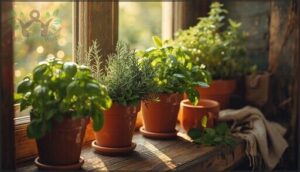
Growing your own herbs isn’t just about pretty pots on the windowsill—it’s about fresh flavor at your fingertips. A small herb garden can change the way you cook, save, and enjoy your meals year-round. Here’s why planting one is more rewarding than you might think.
If you’re new to gardening, this guide on the best herbs for beginners can help you start with easy, flavorful plants.
Growing your own herbs turns simple windowsill pots into year-round fresh flavor for every meal
Enhancing Flavor and Nutrition
Flavor and nutrition go hand in hand when you dig into homegrown produce. Fresh culinary herbs don’t just add fresh flavor—they bring powerful Herb Antioxidants that support health while helping you Reduce Sodium naturally. In fact, a behavioural study found that using herbs and spices can greatly reduce daily sodium intake, as shown in these.
To make the most of herb benefits and Nutrient Retention, consider these simple Flavor Pairings:
- Basil with tomatoes
- Rosemary with roasted meats
- Thyme with vegetables
They improve every meal.
Cost Savings and Accessibility
Once you’ve tasted what your herbs can do, the next win shows up in your wallet. When you grow your own basil, parsley, thyme, or mint from seed, a single low-cost packet can replace many store-bought bunches and steadily Lower Grocery Bills, making herb gardening for beginners genuinely beginner-friendly and budget smart.
An Affordable Setup is all you need: a few plastic pots, a bag of potting mix, and some seed packets already count as Small Space Solutions for gardening beginners on a balcony or windowsill. Even a bright kitchen ledge is enough to support year-round windowsill herb gardens with the right containers, soil, and light.
If bending, kneeling, or long walks across the yard aren’t your idea of fun, you can keep your homegrown produce close with Mobility-Friendly options like raised beds at chair height, containers on tables, or compact kits right by the kitchen door so care stays simple and comfortably within reach.
Freshness and Year-Round Supply
Keeping your herbs close means you’ll never run out of fresh flavor, even in winter. With Continuous Harvest planning and Cut-and-Come Again favorites like basil and parsley, you can grow your own supply week after week.
Indoor herb growing stretches the season further; a sunny window holds handy pots of thyme or chives so container gardening keeps fresh green life—and taste—going year-round.
Choosing The Best Herbs to Grow
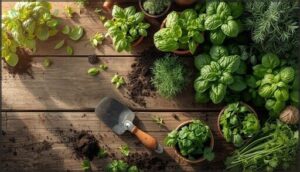
Choosing which herbs to grow starts with knowing how they fit your space, cooking style, and climate. Some plants thrive year after year, while others are quick growers made for one season.
Let’s look at a few types and see which ones deserve a spot in your garden.
Annual Vs. Perennial Herbs
Regarding annual vs perennial herbs, your approach to planting and growing herbs changes completely depending on which type you choose. Annuals like basil and cilantro complete their growth cycle in one season. Perennials like thyme and rosemary return for years — but check your hardiness zones first.
- Annuals: Higher replanting frequency, abundant single-season harvests
- Perennials: Low replanting effort, multi-year harvests
- Harvest strategies differ: Cut annuals heavily before frost; harvest perennials lightly late-season
- Planning matters: Perennials need permanent spots in your herb garden
Easiest Herbs for Beginners
Every beginner’s guide to planting and growing herbs should start with a few Low-Effort Herbs. Sweet basil, mint, and chives are beginner-friendly favorites that thrive with minimal care.
For Indoor Beginner Herbs, thyme and lemon balm handle typical home light well.
Avoid Common Beginner Mistakes like overwatering—these easy plants reward restraint. A small, simple herb garden can teach you everything you need.
Selecting Herbs for Cooking Preferences
Think of your kitchen garden as a spice rack you grow. If you love Italian Cuisine Pairings, focus on basil, oregano, rosemary, and thyme for rich tomato dishes, roasted meats, and cozy pasta nights.
For bright, fresh flavor with Mexican or Southeast Asian Cooking Methods, lean into cilantro, mint, and Thai basil that shine added at the end.
Prefer gentle Flavor Intensity with flexible Ingredient Matches? Grow parsley, chives, and dill, which work across eggs, fish, potatoes, and most everyday culinary ingredients.
As you’re choosing the Best Herbs to Grow, balance Fresh vs dried: woody herbs like rosemary and thyme still taste great dried, while basil and cilantro really earn their space when you’re growing culinary herbs for fresh use.
Planning Your Herb Garden Layout
Before you start planting, it helps to think about how your herb garden will fit your space and lifestyle. The layout you choose affects how your herbs grow, how often you harvest, and even how easy they’re to maintain.
Let’s look at a few ways to set it up so it works best for you.
Indoor Vs. Outdoor Herb Gardens
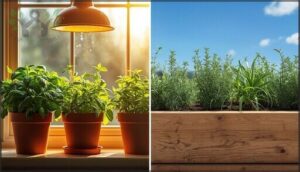
Ever wonder whether your herbs are happier inside or out? Indoor herb cultivation keeps tender plants safe and productive year-round—even offering Winter Harvests with Grow Lights. Outdoor herb gardening, especially in raised beds, delivers bigger Plant Yield but more Pest Differences. Daily care also shifts:
- Rotate pots on a sunny windowsill
- Monitor moisture closely
- Control indoor mites
- Weed outdoor plots regularly
Container Vs. In-Ground Planting
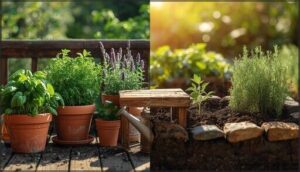
Choosing between container vs inground planting comes down to balance—freedom or foundation. Container gardening gives you full Soil Control, easy Watering Needs management, and big Mobility Benefits for rotating sunlight or escaping frost.
In-ground beds, however, win for Root Space and Longevity, letting deep-rooted herbs like rosemary stretch naturally.
Raised beds strike a smart middle ground, blending drainage, stability, and accessible herb gardening.
Companion Planting for Herbs
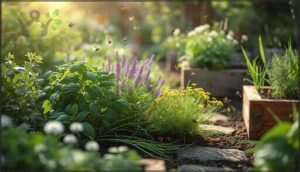
Strong companions turn your herb bed into a quiet Pest Repellent system and a steady magnet for Beneficial Attractors. Group basil, garlic, or chives near veggies for low-effort pest management and organic gardening that leans on scent, not sprays.
For pollinator attraction, tuck in yarrow, chamomile, or dill among culinary herbs.
Just remember Incompatible Combos like fennel and mint, which belong in their own corners of your garden design.
Selecting The Right Location
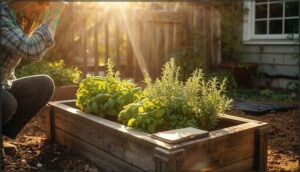
Before you pick your pots or map out your beds, you need to decide exactly where your herbs will live. The right spot affects everything from how fast basil grows to how often you actually use your thyme.
In the next section, you’ll walk through the key things to look for so you can choose the best location with confidence.
Sunlight Requirements for Herbs
Your herbs don’t just need sun; they need the right kind of sun in the right dose for strong flavor and steady growth. Most common culinary herbs are happiest with full sun, about 6–8 hours of direct light in a sunny location, while leafy, Shade Tolerant types like mint, chives, and parsley manage well with only 3–6 hours.
Indoors, south- or west-facing windows usually meet Sunlight Requirements for Herbs, but north windows often fall short, so you may need to supplement. Watch for Light Stress Signs such as leggy, pale stems when light is too low, or scorched, crispy patches when it’s too intense, because sunlight and herb growth are tightly linked.
Group classic Full Sun Herbs like basil, rosemary, and thyme together, and keep the gentler, Shade Tolerant herbs where light is softer to keep your whole collection thriving.
Space and Accessibility
Once you’ve sorted out the light, think about how you’ll actually move through your garden. Paths of at least 90–120 cm wide keep things comfortable, whether you’re pushing a wheelbarrow or rolling a cart.
Raised beds at 60–76 cm height save your back, and vertical gardens reclaim wall space brilliantly for small space containers on patios.
Keep your kitchen garden close — container plants on a sunny windowsill mean herbs within arm’s reach every time.
Microclimates and Climate Considerations
You’ve got paths and access sorted; now think about the “mini climates” hiding in your space. A hard, sunny windowsill, sheltered Urban Balconies, or low Frost Pockets all change sunlight requirements, water needs, and climate suitability for each herb. Use Windbreak Benefits, smart overwintering, and seasonal planting to match rosemary, basil, or chives to the exact nook where they’ll quietly thrive.
- Notice where frost lingers longest.
- Watch which wall bakes hottest at noon.
- Track windy corners that dry pots fast.
- Compare ground beds to warmer raised spots.
- Adjust which herbs live where each season.
Preparing Soil and Containers
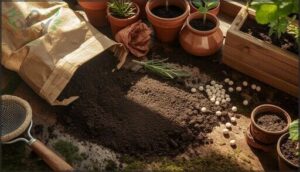
Before you start planting, it’s worth getting your soil and containers ready for the job. Good prep makes all the difference in how your herbs grow and taste.
Here’s what you’ll want to set up first.
Creating a Well-Draining Soil Mix
Good herbs start with good drainage. A well-draining soil mix blends structure and breathability so roots never sit in soggy soil. Combine 50–60% compost or potting soil with 40–50% Drainage Ingredients like perlite or coarse sand—each improves Soil Structure differently.
For Herb-Specific Mixes, adjust Soil Composition using these Drainage Solutions:
| Material | Function |
|---|---|
| Perlite | Provides airflow and lightweight soil drainage |
| Coarse sand | Increases grit for Mediterranean soil types for herbs |
| Pumice | Adds long‑lasting porosity and balances moisture |
Adding Compost and Organic Matter
Once your soil mix drains well, boost its life with compost and other Organic Matter Types. Aim for Compost Rates of about one to three inches worked into the top layer for nutrient-rich soil.
Compost also acts as a Soil pH Buffer and promotes Microbial Benefits, feeding roots steadily. This balanced Soil Composition results in fertile soil ready for planting—man, soil preparation matters.
Choosing Container Size and Material
Picking the right container is where Container Herb Gardening either thrives or stumbles. Container Depth matters more than most beginners expect — most herbs need at least 6 inches, while woody rosemary wants 12. Your Herb-Pot Match also depends on Potting Material:
- Terracotta suits rosemary and thyme — dries fast, great airflow
- Plastic pots keep moisture longer, perfect for basil and mint
- Glazed ceramic balances retention and stability for top-heavy herbs
- Fabric bags air-prune roots beautifully, preventing circling
- Wooden planters insulate well but need sealing against rot
Always prioritize Drainage Needs — no holes means root rot.
When and How to Plant Herbs
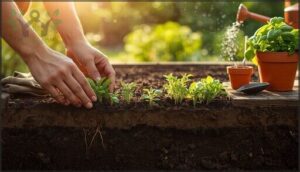
Timing and technique matter just as much as which herbs you choose, but they’re easier to master than they look.
In this section, you’ll see simple options for getting started from seeds, store-bought seedlings, or cuttings you’ve been given. You’ll also get a clear sense of how close to plant each herb, how deep to set it, and what watering should look like right after planting.
Starting From Seeds, Seedlings, or Cuttings
Think of plant propagation as choosing your favorite doorway into the garden: seeds, starter plants, or cuttings.
For precise Seed Germination and seed starting, you’ll use Indoor Starting with warm soil and steady light so those tiny seeds wake up strong.
Starter plants (seedlings) give you a head start, but you’ll still need to focus on Hardening Seedlings so their roots adjust gradually outdoors.
Cuttings let you clone a plant you already love, rooting fresh stems in water or a light mix for fast, reliable new growth.
Proper Spacing and Planting Depth
Across your herb garden design and layout, Ideal Plant Spacing protects airflow, leaf health, and overall vigor, so don’t cram seedlings shoulder to shoulder. Aim for 15–30 cm between most herbs in a loose, well-draining soil mix, giving mint and larger woody types even wider Container Dimensions.
Follow simple Seed Depth Guidelines from seed starting: plant most herb seeds about two to three times their diameter in prepared soil, keeping soil preparation shallow but firm so roots anchor quickly when you’re planting and caring for herbs.
Watering After Planting
That first drink sets the tone. Give your newly planted herbs an Initial Deep Watering — moisten the soil 4 to 6 inches down so roots settle in comfortably. Use Gentle Watering Tools like a fine-rose can to avoid disturbing young roots.
During the First Week Frequency, check daily and water every one to three days. A simple Soil Moisture Check — finger pressed two inches in — keeps root rot from sneaking up on you.
Essential Herb Garden Care Tips
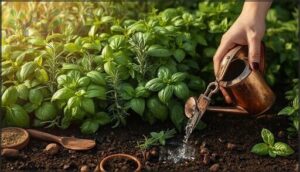
Once your herbs are planted, a little steady care keeps them thriving. The right balance of water, nutrients, and pruning makes all the difference.
Here’s how to give your garden what it needs to stay healthy and productive.
Watering and Moisture Management
Ever notice how herbs wilt just when you look away? Smart watering strategies for herbs prevent that. Follow three rules:
- Practice Morning Watering so roots drink deeply before heat hits.
- Do quick Soil Checks—moist but never soggy avoids root rot.
- Respect Drainage Importance and add Mulch for cooler, damp soil.
Together, these watering techniques match real soil and watering needs for herbs in well-draining soil.
Fertilizing for Healthy Growth
Healthy herbs don’t need a buffet; they need steady, nutrient-rich soil matched to their real Nutrient Needs and your ongoing herb garden care.
Focus on gentle Fertilizer Types like organic, slow‑release, or diluted fish emulsion if your soil test shows low soil fertility, and skip feeding if Soil Testing says levels are fine.
As a rule of thumb, use light Application Timing in early spring and mid‑summer only, then let the soil and plant care—not endless products—do the heavy lifting over time.
Pruning to Encourage Bushiness
Once your soil and feeding routine are balanced, pruning plants becomes your next secret to lush growth. Don’t just snip randomly—follow a steady Pruning Schedule. Use gentle Pinching Techniques above leaf nodes to shape cut‑and‑come‑again varieties.
For effective plant maintenance:
- Trim mornings.
- Avoid cutting over one‑third.
- Remove flower buds for Managing Flowering.
- Clean tools.
- Tailor Herb‑Specific Pr practices.
Managing Pests and Diseases in Herbs
Even the healthiest herb garden can face a few uninvited guests. From pesky bugs to stubborn leaf spots, every grower faces these challenges sooner or later.
Here’s what to watch for and how to keep your herbs thriving naturally.
Common Herb Garden Pests
Pests are one of the most common herb garden problems you’ll face, so it pays to know your enemies. Aphid damage shows up as curled, yellowing tips and sticky honeydew on basil, mint, or parsley, while chewing pests like slugs, snails, and parsleyworms leave ragged holes and missing leaflets. Webbing mites (spider mites) and tiny whiteflies cause stippling, webbing, and leaf drop, especially in dry or indoor pest conditions, so early pest and insect management is key for disease prevention and overall pest control.
| Pest Type | What You’ll Notice |
|---|---|
| Aphids | Curled growth, sticky leaves, sooty mold risk |
| Chewing pests | Irregular holes, shredded edges, defoliated seedlings |
| Webbing mites | Fine webbing, pale speckling, stressed foliage |
| Whiteflies/thrips | Tiny fliers, silvery streaks, browned or dropping leaves |
Organic Pest Control Methods
Once you can spot pests, you’re ready to practice gentle, garden-safe pest control on your organic herbs. Start with Handpicking Pests, knocking aphids or beetles into soapy water, and use Physical Barriers like insect netting or mesh cloches to keep moths and beetles off tender tips.
Layer in Beneficial Insects, then reserve Organic Sprays like insecticidal soap or neem oil as your last step in pest and insect management.
Preventing and Treating Diseases
You’ve handled pests; now you’ll keep diseases in check with smart Sanitation Habits, thoughtful Watering Practices, and steady Airflow Management. Clear dead leaves weekly, disinfect tools, and avoid reusing dirty pots to sidestep root rot and mildew.
Water at the base in the morning and let the top soil dry slightly between soakings as your core watering strategies for herbs.
Choose disease resistance where you can, then use neem oil and other Infection Treatment steps only after you remove infected leaves and isolate sick plants.
Harvesting Herbs for Maximum Flavor
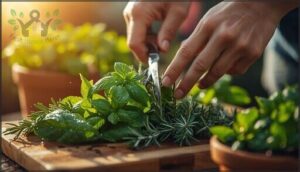
Harvesting herbs at the right time makes all the difference in flavor and fragrance. It’s a simple process, but timing and technique both matter.
Here’s how to know when and how to pick your herbs for the best results.
Best Time to Harvest
Timing is everything for harvesting herbs. For peak flavor, aim for a Morning Harvest after dew dries but before midday heat kicks in — that’s when essential oils are most concentrated in the leaves. Growth Stage matters too: harvest leafy herbs like basil just before flower buds open.
Seasonal Timing, Weather Impact, and Harvest Frequency all shape quality, so pick on dry mornings regularly for the best results with cut-and-come-again varieties.
How to Harvest Without Damaging Plants
Use clean, sharp tools to make precise cuts that protect plant health and speed regrowth. Aim your cutting locations just above leaf nodes, leaving enough foliage for photosynthesis. Harvest only safe quantities—never more than one-third at a time.
Practice gentle handling by supporting stems while snipping. These harvesting techniques keep cut-and-come-again varieties thriving, ensuring strong herb care and maintenance in caring for herb gardens.
Encouraging Continued Growth
Keep herbs thriving by syncing harvesting with natural growth rhythms. Regular cutting—your Harvesting Frequency—stimulates new shoots and flavor-rich leaves. Balance Nutrient Timing and Light Exposure for steady regrowth, and always adjust watering as conditions shift. Protect perennials through Winter Protection and consistent herb care and maintenance:
- Harvest weekly in peak season
- Feed every few weeks
- Fully use sunlight hours
- Shield from pests early
Preserving and Storing Fresh Herbs
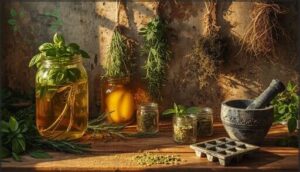
Once you’ve harvested your herbs, the next step is keeping that bright flavor alive. There are a few reliable ways to make sure they last well beyond the garden.
Here’s how to preserve your herbs so you can enjoy them any time of year.
Drying Herbs for Long-Term Storage
Think of drying herbs as pressing “pause” on peak flavor so you can hit “play” all year. Start with smart herb selection: woody herbs like Rosmarinus (rosemary), thyme, oregano, and sage hold their flavor best during drying and long-term preservation.
For air drying, tie small bundles, slip them into a ventilated paper bag, and hang them in a dark, dry room with good airflow. Continue until dryness indicators are clear: leaves feel crisp, stems snap, and nothing bends or feels rubbery.
When you want faster heat drying, use your oven on its lowest setting. Spread herbs in a single layer and dry just until they’re brittle, not browned, so you’re preserving them without cooking.
Finish strong by storing herbs whole in airtight glass jars, kept cool and dark. Grind only what you need at the stove, which keeps storage efficient and your drying payoff high for years of reliable flavor and aroma.
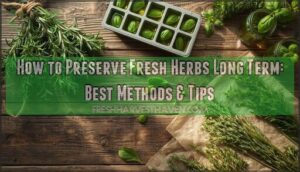
Freezing Herbs for Freshness
Freezing turns Herb Harvesting and Storage into a long game of flavor chess, letting your fresh herbs outlast the season with ease. Start with good Preparation Steps: wash, dry thoroughly, strip woody stems, and trim off any yellowed leaves to support strong herb preservation and cleaner Texture Changes.
Then choose your Freezing Methods: dry-freeze chopped parsley or dill on a tray, pack cubes with water or oil, or use dry containers when you want control over fat. Blanching Benefits really show with basil and other tender herbs, where a quick dip in boiling water followed by an ice bath helps lock in color and flavor while slowing enzyme action.
Because freezing softens plant cells, expect Texture Changes; those thawed herbs shine in soups, stews, and sauces rather than as raw garnishes. For best results, freeze soon after harvesting, label and date everything, and aim to use most frozen herbs within 3–6 months for peak quality while storing herbs in airtight bags or containers.
Storing Fresh Herbs in The Kitchen
Want your harvest to actually survive the kitchen chaos? Fridge Storage works best for most herbs: tuck woody sprigs into Herb Containers with damp towel Moisture Control, and stand tender bunches in a jar with 2–3 cm of water.
For basil, rely on Countertop Methods instead, loosely covered and out of direct sun. Pair this with light herb drying and you’ve built real, low-effort herb preservation while harvesting and storing fresh herbs.
Frequently Asked Questions (FAQs)
What is the best layout for an herb garden?
An ideal herb garden blends Sunlight Zoning, Height Layering, and Water Needs grouping in accessible beds or pots, ensuring tall herbs don’t shade smaller ones while Garden Access paths allow easy harvesting and watering setup.
Which herbs should not be planted together?
Some herb pairs fight more than they flourish. Avoid Allelopathic conflicts like fennel or rue near most herbs, Conflicting water needs like cilantro with rosemary, and Aggressive spreaders like mint mixed into dense companion planting across plant family, herb types, and growth cycles in Herb Plant Families and Needs.
What time of year should I plant an herb garden?
Think of your herb garden like a calendar in leaves: lean into Spring Planting after your last frost, use Fall Sowing for cool lovers, rely on Indoor Timing for Year-Round harvests, and always match annual herbs, biennial herbs, perennial herbs, and tender perennial herbs to your Climate Zones and climate considerations for herbs.
What herbs grow well together chart?
Mediterranean pairings like rosemary, thyme, sage, lavender, and savory thrive together in sunny, lean soil, while moisture lovers such as basil, parsley, cilantro, dill, and chives prefer richer, evenly moist beds.
Invasive herbs, especially mint and lemon balm, belong in separate container mixes so they don’t bully neighbors in your herb garden, no matter the herb types and growth cycles or herb cultivation methods.
Follow herb gardening basics by checking each plant family’s needs and watching bad companions lists so your “what herbs grow well together” chart actually reflects real-life growth.
Can herbs survive winter temperatures outdoors?
Yes — but it depends on the herb. Perennial herbs like thyme and chives handle deep freezes, while annual herbs like basil won’t survive frost.
Cold hardiness, microclimate impact, and potted herb care all play a role.
How much does herb gardening typically cost?
Setting up an herb garden costs $50–$150 for seeds, pots, soil, and containers. Ongoing expenses stay low — just $3–$12 per herb yearly — making it one of gardening’s smartest long-term investments.
Which herbs grow fastest from seed?
For the quickest germination and a rapid harvest, start basil, cilantro, dill, and chives from seeds. They sprout fast and reach snipping size within about 3–4 weeks, especially in warm seasonals or high-light container speed setups.
These conditions really favor herb gardening and efficient herb cultivation through starting herbs from seed and propagation.
Do herbs need special lighting indoors?
Back in the candle-lit days, herbs leaned toward windows for sunlight—but modern Indoor Herb Gardening calls for smarter Herb Lighting Tips.
LED Grow Lights, balanced Artificial Lighting, and Natural Light Alternatives keep containers lush under proper Indoor Light Needs.
What causes herbs to lose their flavor?
Herbs lose flavor when Heat Damage and harsh Drying Methods drive off essential oils, Light Exposure and Oxidation Effects break aromas down, Water Stress causes slowed growth and yellowing leaves, flowering shifts energy from foliage, and poor pest and disease management in herbs or sloppy harvesting and preserving finish the fade.
How to companion plant herbs with vegetables?
Companion plant herbs by tucking Pest Repellent Herbs like basil, chives, oregano, and garlic between vegetables in your vegetable garden.
Use aromatic plants for Attracting Pollinators and leverage smart Growth Relationships that boost flavor and resilience in food gardening.
Conclusion
Like a living spice rack rooted in soil, your herb garden turns everyday cooking into something intentional and alive. You now understand how to choose varieties, arrange beds or containers, and match light, water, and soil to each plant.
Follow pruning, harvesting, and preserving steps, and your herbs will answer with steady, fragrant growth. This herb garden planting guide is your map; the next cut of basil or thyme is your proof on the plate.
- https://extension.wvu.edu/lawn-gardening-pests/gardening/gardening-101/herb-gardening-for-beginners
- https://cmg.extension.colostate.edu/Gardennotes/731.pdf
- https://pmc.ncbi.nlm.nih.gov/articles/PMC4877453/
- https://pubmed.ncbi.nlm.nih.gov/21118053/
- https://www.newfoodmagazine.com/news/19769/behavioural-study-shows-spices-and-herbs-can-cut-sodium-by-boosting-flavour/