This site is supported by our readers. We may earn a commission, at no cost to you, if you purchase through links.
Squash vines can collapse in days once squash bugs move in. Their feeding drains the life from leaves and leaves behind scorched patches that spread fast. Gardeners who rely on chemicals often find the pests return anyway, tougher than before.
Natural remedies for squash bugs take a steadier hand—working with what’s already in your yard instead of fighting against it. A bucket of soapy water, a dusting of diatomaceous earth, the sharp scent of garlic—small steps that stack up to a lasting fix.
Once you learn their patterns, the balance shifts back to your side of the garden.
Table Of Contents
- Key Takeaways
- Identifying Squash Bugs and Their Damage
- Effective Natural Remedies for Squash Bugs
- Prevention and Maintenance Strategies
- Companion Planting and Natural Predators
- Top 9 Natural Products for Squash Bug Control
- 1. Natural Peppermint Bug Repellent Spray
- 2. Nature’s Dome Pest Killer Spray
- 3. Ultrasonic Pest Repellent Device
- 4. Lonyeon Electric Fogger Machine
- 5. Dawn Ultra Dish Soap Refill
- 6. Southern Ag Natural Pyrethrin Insecticide
- 7. Harris Diatomaceous Earth Powder
- 8. Duck Brand Duct Tape
- 9. Handcraft Peppermint Essential Oil
- Frequently Asked Questions (FAQs)
- What can I put on my squash plants to keep bugs away?
- What is the best organic insecticide for squash bugs?
- How do farmers get rid of squash bugs?
- Does vinegar kill squash bugs?
- How do you get rid of squash bugs naturally?
- What plants repel squash bugs?
- How do you get rid of squash bugs at night?
- How do I protect my squash plants from pests?
- Does neem oil kill squash bugs?
- What time of year do squash bugs appear?
- Conclusion
Key Takeaways
- Squash bugs and their eggs stay on the undersides of squash leaves, where they cause fast wilting, scorched patches, and can collapse vines if you don’t act early.
- The core natural controls are handpicking adults, removing or taping off egg clusters every few days, and dropping bugs into soapy water.
- Support methods like neem oil, soapy sprays, diatomaceous earth, garlic or peppermint mixes, and clean garden habits work best when you apply them often and hit leaf undersides and soil around stems.
- Long-term prevention depends on weekly scouting, row covers, cleanup and crop rotation, plus using companion plants, trap crops, and natural predators to keep squash bug numbers low.
Identifying Squash Bugs and Their Damage
You can stay ahead of squash bugs once you know what they look like and how their feeding shows up on your plants.
For extra tips on spotting early damage and removing eggs safely, check out this guide to keeping squash bugs out of your garden.
In this next section, you’ll get a clear picture of the bugs, their eggs and young stages, and the damage they leave behind. That way, as you move into the control methods, you’ll already know exactly what you’re targeting.
Physical Characteristics of Squash Bugs
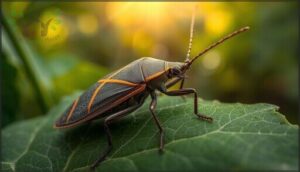
Think of adult squash bugs as flat, shield‑shaped sap suckers you can spot at a glance. These pests are widespread across North America wherever squash and pumpkins are grown, as outlined in this squash bug identification guide.
They show clear Body Size Variations, usually about 5/8 inch long, with slim bodies that look one‑third as wide. Their Color Patterns are dark gray to brown with orange striping along the sides and an X made by Wing Structures across the back. Long Antennae Length and quick legs help them dart under leaves, while a tough shell and strong odor stand out in any Texture Analysis. When you see clusters of these dark bodies resting low on vines, you’re looking at adult squash bugs, not harmless nymphs or eggs.
- Note Body Size Variations and slim, oblong shape on leaves.
- Look for Color Patterns, side stripes, and X‑shaped Wing Structures.
- Check Antennae Length, firm body feel, and odor for fast Texture Analysis.
Recognizing Squash Bug Eggs and Nymphs
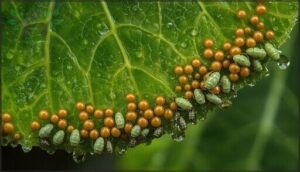
Adult bugs are easy to spot. Egg Identification and Nymph Stages take a closer Garden Inspection.
Look under squash leaves for tight V‑shaped clusters of bronze Squash Bug Eggs about 1/16 inch long. Nymphs start tiny, pale green with dark legs, then shift through gray Nymph Stages.
Watch these groups to track the Squash Bug Lifecycle and guide your Squash Bug Management with Natural Remedies and Identifying and Removing Squash Bug Eggs. For longer-term, eco-friendly control, you can also rely on natural enemies of squash bugs that prey on their eggs and nymphs.
Signs and Symptoms of Plant Damage
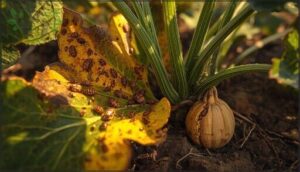
You’ve spotted the eggs and nymphs—now watch your plants for telltale damage. Squash Bugs leave marks that spread fast. Look for these signs of a Squash Bug Infestation before it turns into Plant Collapse:
- Leaf Discoloration and necrotic spots
- Wilting plants under full sun
- Scorched, brittle leaves
- Rough, sunken fruit damage
Keep Natural Pest Control steady to stop the spread.
Differentiating Squash Bugs From Similar Pests
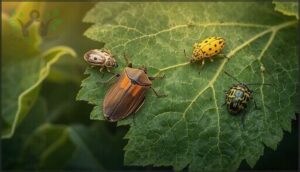
When wilting starts, don’t mistake the wrong insect. Squash Bugs are flat, brown, and cling to leaves, while stink bugs are rounder with a stronger odor. Cucumber beetles chew holes instead of sucking sap.
Use Pest Identification and Bug Anatomy checks before trying Natural Pest Control—correct Insect Classification keeps your Garden Pest Control effective and organic.
Effective Natural Remedies for Squash Bugs

You don’t have to use harsh chemicals to get squash bugs under control. There are several simple, natural methods that work well in a home garden when you use them consistently.
In the next section, you’ll see specific remedies you can use right away and how they fit into your routine.
Handpicking and Removing Eggs
You don’t need fancy gear for strong Garden Pest Management. Handpick squash bugs as part of your regular Bug Inspection and Squash Plant Care, and focus on early eggs and adult squash bugs to stop a squash bug infestation fast using simple Manual Control Methods and natural remedies with these Egg Removal Tips.
- Check every leaf underside every 1–3 days and crush or tear out egg clusters.
- Drop adults and nymphs into a container of water (add soap if you like) so they can’t crawl back out.
- Press tape over eggs, peel it away, then fold and toss the tape so no eggs hatch near your beds.
Soapy Water and Insecticidal Soap Sprays
Soapy water is one of the simplest natural remedies you can use for squash bugs. For strong Soap Spray Efficacy and Insecticidal Soap Safety, mix about 1 tablespoon of pure liquid soap per quart of water, test one leaf, then drench bugs directly on leaf undersides during cool early morning or evening for safer Bug Spray Timing and better results.
| Focus | Spray Application Tips |
|---|---|
| Soap Concentrate Ratios | Start weak, then slowly increase if bugs survive. |
| Organic pest control | Use insecticidal soap, not harsh detergents. |
| Coverage on squash bugs | Spray until insects are fully wet and stop moving. |
Neem Oil Treatments
Neem oil gives you strong Organic Control when you want Natural Methods that go beyond simple soap.
For Foliar Treatment, mix a 0.5–1% Oil Concentration with water plus a little Insecticidal Soap, then Spray Application on stems and leaf undersides.
This boosts Neem Oil Benefits against Squash Bugs and helps slow Bug Resistance in your patch.
Applying Diatomaceous Earth
Think of Diatomaceous Earth as a dry moat around your squash. You use it as Soil Treatment and Pest Control in tight bands where Squash Bugs walk, not all over the bed, so you keep Organic Methods and Garden Safety in balance and still get strong Organic Control from Natural Squash Bug Control Methods.
- Dust a 5–10 cm ring around each plant base.
- Lightly coat lower stems and soil under the canopy.
- Focus on plants with wilting or visible egg clusters.
- Reapply after rain or heavy watering once surfaces dry.
Homemade Garlic and Vinegar Sprays
Garlic Spray Recipes give you strong natural pest control without chemicals. For a simple DIY insecticide mix, blend 1–2 heads of garlic with water, strain, then dilute and add a little soap for better cling. Use these natural insect repellents as part of organic pest management and organic gardening tips for steady natural remedies for garden pests. Garlic spray works best when you hit leaf undersides often.
Vinegar Spray Benefits come when you mix equal parts vinegar and water, then test on a few leaves first. Vinegar sprays also work best when applied to the undersides of leaves frequently.
Prevention and Maintenance Strategies

Stopping squash bugs before they take hold is the best defense you’ve got. A few simple routines can keep your plants healthy and your garden clear of trouble.
Stopping squash bugs early with a few simple routines is your strongest defense for a healthy, trouble-free garden
Here’s how to stay ahead of them all season long.
Regular Garden Monitoring and Inspection
Walk your garden at least once a week — more if you’ve already spotted adults or eggs. Focus your leaf damage assessment on the undersides of leaves, especially where veins meet. That’s where squash bugs hide and lay.
These simple pest scouting methods double as infestation prevention strategies, helping you catch problems before they spiral into full-blown garden pest chaos.
Row Covers and Physical Barriers
Once you’ve checked your leaves, seal your work with simple protection. Use lightweight Row Covers made from breathable polypropylene to block squash bugs before they reach young plants. Secure edges tight with soil or boards during Barrier Installation.
Add Garden Mesh or boards as extra Physical Barriers and Squash Bug Traps for steady Crop Protection.
Garden Cleanup and Debris Removal
After setting up barriers, keep bugs from coming back with strong garden hygiene. Focus on EndofSeason Garden Cleanup and Debris Removal.
- Pull old squash vines.
- Rake dried leaves.
- Remove weeds.
- Thin heavy mulch.
- Discard clutter near beds.
These preventative measures build a clean garden and improve long‑term garden maintenance through good Weed Control and Mulch Management.
Crop Rotation and Resistant Squash Varieties
You cleaned up the old bed; now use Crop Planning to keep bugs guessing. Use crop rotation to move cucurbits 50–100 feet away for two to three years and note this in simple Garden Mapping.
Focus on resistant squash varieties like pest-resistant varieties of Cucurbita moschata when you do Squash Variety Selection for Pest Resistance. Use zucchini or other companion plants as small trap rows.
Over time, simple Rotation Strategies plus ongoing Squash Breeding efforts in your region will give you stronger resistant squash varieties without chemicals.
Companion Planting and Natural Predators

You don’t have to rely only on sprays to keep squash bugs away. Some plants and insects can do the work for you if you invite them in.
Here are simple ways to use nature to protect your squash patch.
Repellent Companion Plants (Marigolds, Nasturtiums, Herbs)
Think of companion planting as building a quiet fence around your squash. Marigolds along the edges give you Marigold Benefits and create Aromatic Borders that confuse squash bugs.
Nasturtium Barriers work like soft trap crops at bed corners, drawing pests to their leaves instead.
Herb Repellents such as basil, thyme, and oregano fill gaps so your companion plants act as one steady natural repellent wall.
Attracting Beneficial Insects and Predators
Beneficial Insect Habitats are your quiet backup army. You plant companion plants and simple flowers like dill, parsley, and sunflowers to boost Pollinator Support and feed beneficial insects and other natural predators.
Predator Attraction Methods and Natural Enemy Conservation go together here. You give predatory insects and parasitoid flies nectar, water, and light cover, and you get strong Biological Control Strategies in return.
Using Trap Crops to Divert Squash Bugs
Trap Crop Selection works best when you plant Blue Hubbard squash as a companion crop. It draws squash bugs away through natural Pest Diversion.
Use Crop Bordering or a ring of trap crop plants as Squash Bug Barriers. These Garden Layout Strategies guide bugs to the edges, where row covers and light control keep your main plants safe.
Top 9 Natural Products for Squash Bug Control
Ready-made products make squash bug control simple. You can grab these from stores or online. Here are nine natural ones that get results.
1. Natural Peppermint Bug Repellent Spray
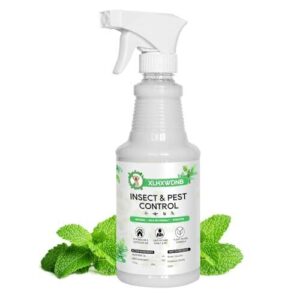
You want one simple spray you can grab when squash bugs start to show up on your vines. A natural peppermint bug repellent spray is a good first line of defense.
It uses peppermint oil and other plant-based ingredients to overwhelm insect scent receptors so bugs don’t settle on your plants or cross treated areas.
Spray stems, leaf tops, and undersides in the early morning or evening. Reapply every few days and after rain to keep that mint barrier working.
| Best For | People looking for a natural, pet-safe way to keep ants, spiders, and roaches away from their home and garden. |
|---|---|
| Form | Spray |
| Safe for Pets | Yes |
| Indoor Use | Yes |
| Outdoor Use | Yes |
| Chemical Free | Yes |
| Ready to Use | Yes |
| Additional Features |
|
- Plant-based formula with peppermint oil and geraniol that’s safe for pets and family.
- Works indoors and outdoors, ideal for kitchens, bathrooms, and patios.
- Refreshing mint scent leaves areas smelling clean while repelling insects.
- Strong scent may be overpowering for some.
- Needs frequent reapplication to stay effective.
- Price may feel high for the limited lasting power.
2. Nature’s Dome Pest Killer Spray
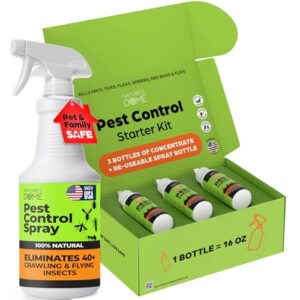
Need something a bit stronger when squash bugs dig in? Nature’s Dome Pest Killer Spray gives you that extra punch without harsh chemicals.
It uses plant-based oils like geraniol, cottonseed, and cinnamon to kill and repel over 40 insect species, including sap suckers on squash.
You can spray it around beds, along foundations, and directly on foliage after spot-testing a few leaves. Apply in the cool of the day and repeat every few days or after rain for steady protection.
| Best For | Homeowners and gardeners who want a safe, eco-friendly way to tackle common pests without using harsh chemicals. |
|---|---|
| Form | Spray |
| Safe for Pets | Yes |
| Indoor Use | Yes |
| Outdoor Use | Yes |
| Chemical Free | Yes |
| Ready to Use | Yes |
| Additional Features |
|
- Plant-based formula that’s safe for kids, pets, and the planet.
- Fresh citrus scent instead of harsh chemical fumes.
- Effective against ants, spiders, flies, and more, both indoors and outdoors.
- Needs frequent reapplication to keep pests away.
- May struggle with tougher insects like roaches.
- Spray bottle could work more smoothly.
3. Ultrasonic Pest Repellent Device

Think of this as background noise that pests hear but you don’t. The SUCGLES plug‑in unit uses shifting ultrasonic waves between about 10 and 65 kHz to stress mice, roaches, ants, spiders, and mosquitoes so they avoid the room.
It draws only 3–5 watts and one device covers roughly a single indoor space, not the whole house.
Use it as a clean, chemical‑free layer of defense indoors, then rely on hands‑on methods outside for squash bugs.
| Best For | Anyone who wants an easy, plug‑in way to keep pests like mice, roaches, and mosquitoes out of indoor spaces without chemicals or traps. |
|---|---|
| Form | Plugin Device |
| Safe for Pets | Yes |
| Indoor Use | Yes |
| Outdoor Use | No |
| Chemical Free | Yes |
| Ready to Use | Yes |
| Additional Features |
|
- Covers most small rooms with low energy use.
- Works silently and safely around kids and pets.
- No maintenance or batteries needed.
- Takes several weeks to see results.
- Results can vary depending on pests and layout.
- May not handle serious infestations without extra help.
4. Lonyeon Electric Fogger Machine
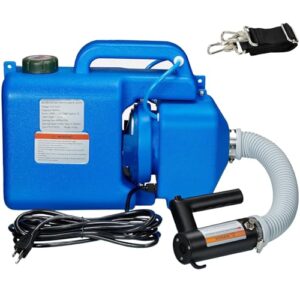
Think of the Lonyeon Electric Fogger Machine as your “big gun” when hand sprayers start to feel slow and fussy. The 8‑liter tank lets you mix enough natural spray, like neem or soap solutions labeled for fogging, to treat several squash beds in one go.
You get a fine, cool mist that reaches 8–10 meters, so you can sweep under leaves and around vine bases where squash bugs hide.
Use the backpack straps, set a low flow, wear a mask and ear protection, then move slowly down each row for even coverage.
| Best For | Gardeners or homeowners who need a powerful sprayer for large spaces and want fine mist coverage for pest control, disinfection, or cooling. |
|---|---|
| Form | Fogger Machine |
| Safe for Pets | No |
| Indoor Use | Yes |
| Outdoor Use | Yes |
| Chemical Free | No |
| Ready to Use | No |
| Additional Features |
|
- 8L tank covers large areas without frequent refills.
- Adjustable flow and long hose make it easy to control coverage.
- Backpack strap and ON/OFF handle switch add comfort and convenience.
- Can get noisy and may require ear protection.
- Some users report overheating or short product lifespan.
- May feel heavy or uncomfortable during long use.
5. Dawn Ultra Dish Soap Refill

Fogging covers a lot of ground fast, but you still need a simple “grab and go” fix for single plants. Dawn Ultra Dish Soap Refill works well for that.
It’s a concentrated liquid, so you only need about 1 tablespoon in a quart of water to make a soapy spray that coats squash bugs and breaks down their waxy shell.
Use a hand sprayer, hit bugs and nymphs directly, then rinse leaves with clear water after they dry to limit leaf burn.
| Best For | People who want a powerful, concentrated soap that cuts through grease fast and works great for everyday dishwashing or quick homemade cleaning sprays. |
|---|---|
| Form | Liquid |
| Safe for Pets | No |
| Indoor Use | Yes |
| Outdoor Use | No |
| Chemical Free | No |
| Ready to Use | Yes |
| Additional Features |
|
- Cuts through tough grease with 3X more power per drop.
- Concentrated formula lasts longer and needs less product.
- Mild on hands and has a refreshing original scent.
- Not suitable for dishwashers.
- Large refill size can be heavy and hard to pour.
- Some users say the new formula needs more soap to clean effectively.
6. Southern Ag Natural Pyrethrin Insecticide
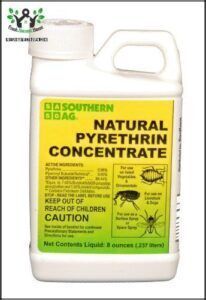
When you want more than soap but still want a plant-based option, reach for Southern Ag Natural Pyrethrin Insecticide. It’s an organic concentrate made from chrysanthemum relatives and packs 0.96% pyrethrins with 9.6% piperonyl butoxide to boost knockdown on pests.
You can mix small amounts in water and spray squash leaves to hit squash bugs, nymphs, and other insects on contact. Use a pump sprayer, coat upper and lower leaf surfaces, and follow the label for exact rates and safety gear. Let sprays dry before kids or pets return to the area.
| Best For | Gardeners and pet owners who want an organic, plant-based way to control a wide range of insects without harsh chemicals. |
|---|---|
| Form | Concentrate |
| Safe for Pets | No |
| Indoor Use | Yes |
| Outdoor Use | Yes |
| Chemical Free | No |
| Ready to Use | No |
| Additional Features |
|
- Made from natural chrysanthemum relatives for an organic approach.
- Works on everything from vegetables and ornamentals to pets and livestock.
- Concentrated formula offers flexible mixing for different uses.
- Must follow mixing and safety directions carefully.
- Needs reapplication since natural pyrethrins break down quickly in sunlight.
- Requires downloading and reading the label and SDS for proper use.
7. Harris Diatomaceous Earth Powder
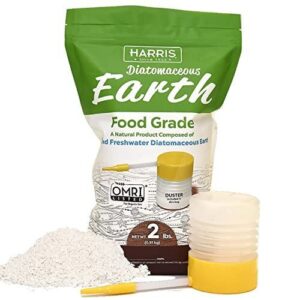
If you like tools that keep working after you spray, Harris Diatomaceous Earth Powder is a good one to add to your kit. It’s a food‑grade, OMRI‑listed, 100% freshwater powder that kills bugs by scratching their shells and drying them out as they crawl through it.
You just use the included duster to puff a thin ring around squash stems and across the soil where nymphs walk. Keep the layer dry, reapply after rain, and avoid breathing in the dust as you work.
| Best For | Gardeners, pet owners, and eco-conscious households looking for a natural, chemical-free way to control pests safely. |
|---|---|
| Form | Powder |
| Safe for Pets | Yes |
| Indoor Use | Yes |
| Outdoor Use | Yes |
| Chemical Free | Yes |
| Ready to Use | No |
| Additional Features |
|
- Made from pure freshwater diatomaceous earth with no additives or fillers.
- Comes with a powder duster for easy and precise application.
- Supports a good cause by donating 10% of profits to the Etowah Valley Humane Society.
- Can be irritating if inhaled during use.
- Needs reapplication after rain or heavy moisture.
- Not specifically recommended for people with respiratory sensitivities or certain health conditions.
8. Duck Brand Duct Tape
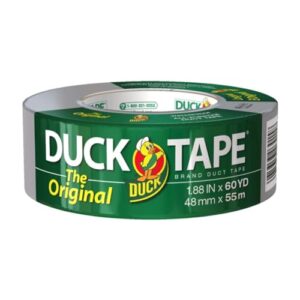
After a dry powder that waits for bugs, it’s nice to have a tool that works in your hand right away. Duck Brand duct tape is great for lifting squash bug eggs off leaves without chemicals.
The 1.88‑inch width covers whole egg clusters in one press. You just tear a small piece, press the sticky side against the underside of the leaf, then peel. Eggs and tiny nymphs stick to the strong rubber adhesive. Fold the tape onto itself and toss it so nothing crawls back out.
| Best For | Gardeners, DIYers, or homeowners who want a quick, chemical-free fix for small repairs or pest control tasks. |
|---|---|
| Form | Tape |
| Safe for Pets | N/A |
| Indoor Use | Yes |
| Outdoor Use | Yes |
| Chemical Free | No |
| Ready to Use | Yes |
| Additional Features |
|
- Strong adhesive sticks well to many surfaces, even uneven ones.
- Tears easily by hand, making it simple to use outdoors.
- Works indoors or outdoors for fast, temporary fixes.
- Not meant for long-term or heavy-duty repairs.
- Adhesive can weaken in heat or sunlight.
- May not hold well on some materials without testing first.
9. Handcraft Peppermint Essential Oil

Sometimes the simplest scents do the hardest work. Handcraft Peppermint Essential Oil is pure Mentha piperita in a 4‑ounce amber glass bottle with a dropper for easy measuring.
Mix a few drops with water and a touch of mild soap to make a mint spray that keeps squash bugs at bay. The menthol scent drives them off fast, but test a small leaf first.
Reapply after rain since oils fade once they dry. Keep it cool and tightly sealed.
| Best For | People who love refreshing, natural scents and enjoy using essential oils for aromatherapy, DIY projects, or natural home care. |
|---|---|
| Form | Liquid |
| Safe for Pets | No |
| Indoor Use | Yes |
| Outdoor Use | Yes |
| Chemical Free | Yes |
| Ready to Use | No |
| Additional Features |
|
- 100% pure peppermint oil with no additives.
- Comes in a UV-protective amber glass bottle with a dropper.
- Works well for diffusers, massages, and homemade skincare.
- No clear guidance on safe dilution or skin sensitivity.
- Not suitable for ingestion.
- Quality guarantee details aren’t fully explained.
Frequently Asked Questions (FAQs)
What can I put on my squash plants to keep bugs away?
You can spray your squash with neem oil mixed with water and a little mild soap, or use a soapy water spray on leaves and bugs.
Dust food‑grade diatomaceous earth around stems, and mist peppermint or garlic‑chili‑vinegar repellent on foliage.
What is the best organic insecticide for squash bugs?
Bug for bug, pyrethrin-based sprays hit squash bugs the hardest and work as your strongest organic “rescue” insecticide.
Neem oil is your best all-around choice for steady control, with insecticidal soap and diatomaceous earth as gentler helpers.
How do farmers get rid of squash bugs?
Farmers usually combine tactics. They handpick adults and crush egg clusters under leaves, sometimes using boards overnight to trap bugs, then dump everything in soapy water.
They also spray neem or insecticidal soap and dust diatomaceous earth around stems.
Does vinegar kill squash bugs?
Once in a blue moon, vinegar helps, but it’s not a silver bullet for squash bugs.
It can kill some bugs on direct contact in a strong mix, yet it barely affects eggs, often burns squash leaves, and works only where you hit.
How do you get rid of squash bugs naturally?
You get rid of squash bugs naturally by handpicking adults at dawn or dusk and dropping them into soapy water, then removing or taping off egg clusters under leaves every few days, and backing that up with neem oil and diatomaceous earth on soil and foliage.
What plants repel squash bugs?
Who knew flowers could stand guard for your squash? Plant marigolds, nasturtiums, petunias, dahlias, and sunflowers in borders, then tuck in herbs like basil, mint, catnip, and lavender plus low radish rows to confuse and repel squash bugs.
How do you get rid of squash bugs at night?
Squash bugs hide under leaves at night. Use a headlamp to spot them. Grab with gloved hands and drop into soapy water.
Spray soapy mix on undersides. Dust diatomaceous earth around bases.
Flip boards in morning to crush hidden bugs.
How do I protect my squash plants from pests?
Think of your garden as a guarded gate—check leaves often, remove eggs, and keep soil clean.
Use row covers early, rotate crops yearly, and plant companion herbs like mint or marigold to confuse pests naturally.
Does neem oil kill squash bugs?
Neem oil does kill squash bugs, but it works slowly and not perfectly. It does best on eggs and soft nymphs when you spray the undersides of leaves and coat them well. Adults often need handpicking too.
What time of year do squash bugs appear?
Like clockwork, overwintered adults slip back into your garden in late spring once nights stay above about 58°F. Numbers build fast through June and peak from mid‑summer into early fall as eggs hatch and nymphs mature.
Conclusion
Employ foreshadowing to provide a visual representation of ideas. Picture your squash vines standing firm while pests move on to easier meals.
Each small habit you keep now—morning checks, clean beds, sharp plant choices—builds that future bed by bed. Your tools are simple and close at hand. Use them often. Stay observant.
With natural remedies for squash bugs in place, your garden can move from crisis zone to steady, predictable harvest, season after season ahead.
- https://growcycle.com/learn/pest-control/organic-and-natural-pest-solutions/how-to-get-rid-of-squash-bugs-fast
- https://www.saferbrand.com/articles/how-to-kill-squash-bugs
- https://southern.sare.org/news/using-row-covers-to-protect-squash-from-insect-pests/
- https://www.seedtospoon.net/top-5-companion-plants-for-summer-squash-a-bonus-tip-to-help-battle-squash-bugs/
- https://tendingmygarden.com/squash-bugs-tactics-for-winning-the-war/