This site is supported by our readers. We may earn a commission, at no cost to you, if you purchase through links.
A single night below freezing can wipe out weeks of careful gardening—turning vibrant tomatoes into blackened mush and reducing prized perennials to wilted stems by morning. The difference between thriving plants and total loss often comes down to a few degrees and the right protective measures in place before temperatures plummet.
Yet many gardeners wait until frost warnings flash across their phones, scrambling to save what they can instead of building resilience into their landscape from the start. Seasonal frost damage prevention isn’t about reacting to every cold snap; it’s about understanding which plants face real risk, recognizing the warning signs in your specific microclimate, and deploying smart strategies that keep your garden productive through unpredictable weather.
Table Of Contents
- Key Takeaways
- What Temperatures Cause Frost Damage
- Identifying Plants at Risk of Frost
- Essential Frost Protection Techniques
- Designing a Frost-Resistant Garden
- Top 10 Tools for Frost Damage Prevention
- 1. Mini Wooden Greenhouse Cold Frame
- 2. Floating Row Garden Covers
- 3. Premium Outdoor Greenhouse Kit
- 4. Beach Windscreen Privacy Screen Barrier
- 5. Small Bubble Cushioning Wrap Roll
- 6. Reflective Insulation Foam Barrier Sheet
- 7. Polycarbonate Greenhouse Roof Panels Set
- 8. Durable Garden Netting Plant Cover
- 9. Clear Greenhouse Plastic Sheeting Film
- 10. Pressure Treated Southern Yellow Pine Lumber
- Frequently Asked Questions (FAQs)
- When do you need frost protection for plants?
- What plants need frost protection?
- How do you protect plants from frost?
- How do you prevent fall frost damage?
- Can frost damage plants through containers or pots?
- Do native plants need frost protection too?
- When should frost covers be removed each morning?
- How does wind speed affect frost formation risk?
- Are there natural frost indicators to watch for?
- Conclusion
Key Takeaways
- Frost damage severity depends on both temperature and exposure duration—28°F for thirty minutes kills 10% of blooms while 24°F destroys 90%, making timing as critical as the cold itself.
- Layering protection methods creates the most resilient defense: combine row covers (2-10°F boost), mulch for soil insulation, strategic watering before frost, and thermal mass placement near vulnerable plants.
- Site selection and garden design prevent more damage than emergency measures—south-facing slopes with good cold-air drainage stay 5-10°F warmer than low-lying frost pockets where dense air pools.
- Container plants face higher freeze risk than in-ground plantings because exposed pot walls let roots freeze at 25°F before foliage shows damage, requiring earlier intervention with wraps or indoor relocation.
What Temperatures Cause Frost Damage
Understanding the temperature thresholds that trigger frost damage is your first line of defense in protecting your garden. The difference between a light chill and a damaging freeze can mean the difference between a thriving landscape and significant plant loss.
Let’s break down the critical temperature ranges and what they mean for your plants.
Difference Between Frost and Freeze
Frost forms when surface temperatures drop to 0 °C or below on clear, calm nights, creating ice crystals on exposed plant tissues—but the air around your garden may stay slightly warmer. A freeze, by contrast, means the entire air mass falls to 0 °C or lower, often driven by cold fronts.
Freeze damage is usually more extensive because sustained sub-zero conditions allow deeper tissue freezing and cell rupture. Understanding the differences between frost and freeze is vital for effective plant protection methods.
Light Frost Vs. Hard Frost Effects
Once you understand the frost-versus-freeze distinction, you’ll want to know what different cold thresholds mean for your landscape. A light frost—roughly 29 to 32 °F—usually injures only tender foliage, leaving deeper tissues intact for regrowth. Hard frost, at or below 28 °F, is far more destructive:
- It kills most non-dormant, frost-sensitive plants outright.
- Warm-season vegetables collapse within 24 hours.
- Flower buds and shoots suffer systemic damage.
Cold acclimation and plant hardiness ratings guide winter protection decisions and frost damage prevention strategies. Understanding frost damage risks is essential for protecting your garden from freezing temperatures.
How Temperature and Duration Impact Plants
The severity of freeze damage doesn’t hinge on minimum temperature alone—exposure time matters just as much. For deciduous fruit at full bloom, 28 °F for 30 minutes kills roughly 10% of buds, while 24 °F at the same duration destroys about 90%. Cold acclimation further complicates the picture: plants hardened by steady cool weather withstand lower soil temperature extremes than those hit by sudden temperature fluctuations after warm spells.
Freeze damage depends as much on exposure time as temperature—28°F for thirty minutes kills 10% of blooms, while 24°F destroys 90%
| Temperature | Duration | Typical Injury |
|---|---|---|
| 28 °F | 30 minutes | 10% bud kill (bloom stage) |
| 24 °F | 30 minutes | 90% bud kill (bloom stage) |
| 32–29 °F | Several hours | Tender foliage damage |
| Below 28 °F | Extended night | Systemic tissue collapse |
| 5–10 °C pre-chill | Days to weeks | Increased frost tolerance |
Young tissues—expanding leaves, developing buds—succumb faster than mature stems at identical thresholds. That’s why frost-hardy perennials breeze through spring cold snaps while frost-sensitive annuals blacken overnight. Plant hardiness ratings offer a baseline, but real-world frost damage hinges on how long freezing persists and whether your garden enjoyed gradual cold acclimation or faced abrupt freeze events.
Identifying Plants at Risk of Frost

Not every plant in your garden faces the same threat when cold weather rolls in. Some species shrug off a light freeze, while others collapse at the first brush of frost.
Knowing which plants need immediate protection—and which can wait lets you prioritize your efforts and save what matters most.
Frost-Sensitive Vs. Hardy Plants
Your garden’s survival depends on knowing which plants can handle the cold and which can’t. Plant hardiness separates winners from casualties when temperatures drop. Frost tolerance hinges on a few key thresholds that determine freeze resistance:
- Tender plants fail below 5°C, showing zero cold acclimation
- Half-hardy species tolerate brief exposure near 0°C before injury
- Frost hardy varieties withstand temperatures down to -5°C
- Fully hardy perennials survive near -15°C in appropriate hardiness zones
- Stage matters—blooming tissues lose winter protection even on hardy plants
Cool-Season Vegetable Tolerances
Cool-weather crops offer built-in frost hardiness that tender vegetables lack, making vegetable selection critical for seasonal gardening tips. Lettuce, spinach, and chard tolerate light frosts near 28–32°F after cold acclimation, while cabbage, kale, and Brussels sprouts withstand hard freezes below 25°F.
Crop resilience increases with hardening—broccoli survives 20°F, enabling winter harvesting when frost damage would devastate peas or beans.
Vulnerable Annuals and Perennials
Warm-season annuals like impatiens, coleus, and begonias die at 32°F, while petunias survive closer to 35°F with limited frost tolerance. Marigolds and zinnias also lack cold acclimation, requiring frost protection when temperatures dip below freezing.
In contrast, hardy perennials—hostas, coneflowers, yarrow—thrive through repeated frosts, offering plant hardiness and winter protection that frost-sensitive tender vegetables and annuals can’t match.
Assessing Container and Root Crop Risk
Container risk runs deeper than you think. Exposed pots freeze faster than in-ground soil, threatening roots at temperatures as warm as 25°F—well before foliage shows damage.
- Smaller containers freeze quickest, killing roots while leaves appear fine
- Potatoes tolerate no frost; carrots and beets handle brief dips to 28°F
- Grouping pots together slows heat loss during cold snaps
- Row covers and container wraps defend against soil temperature swings and frost damage
Essential Frost Protection Techniques
Once you know which plants need protection, the next step is choosing the right method to shield them when frost threatens. The techniques below range from simple fabric covers to more permanent structures, each offering different levels of insulation and ease of use. Your choice will depend on what you’re growing, how severe your frost risk is, and how much time you want to invest in setup.
Covering Plants With Row Covers or Blankets

Draping your crops with row covers or frost blankets is like tucking them under a warm quilt on a cold night—it traps soil heat and raises air temperatures by 2–10 °F, depending on fabric weight.
You’ll want to secure lightweight to heavyweight frost cloth along all edges with rocks or stakes, then remove it once daytime temperatures climb above 60 °F to prevent overheating and preserve plant vigor.
Using Mulch for Soil Insulation
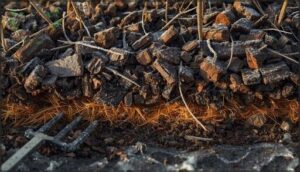
Mulch acts as a thermal blanket, reducing daily soil temperature swings by up to 36 °F and keeping root zones stable through freeze–thaw cycles. Here’s how to optimize soil insulation and frost protection this winter:
- Apply 3–4 inches of hardwood bark or straw after the first killing frost.
- Choose organic materials like wood chips to retain soil moisture and moderate temperature.
- Layer thicker mulch (up to 6 inches) in exposed beds for greater insulation.
- Avoid plastic alone—combine it with organic mulch for better winterization and freeze prevention.
Employing Cold Frames and Cloches
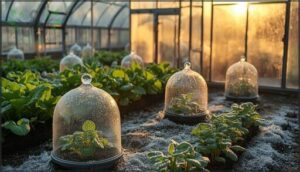
Cold frames and cloches raise nighttime air temperatures by 5–10 °F, shielding frost-sensitive crops from freeze damage while extending your growing season by one to three months. These unheated structures offer reliable winter gardening protection when you monitor interior warmth and vent during sunny days.
| Structure | Best Use |
|---|---|
| Cold frames | Hardy greens, season extension across entire beds |
| Cloches | Individual seedlings, short-term frost protection |
| Insulated covers | Sub-freezing nights, boosting cold frame design performance |
Watering and Irrigation Strategies

Beyond static covers, strategic irrigation before and during frost nights can save your plants. Moist soil holds two to four times more heat than dry ground, releasing warmth overnight when you need it most. For active protection during a freeze, overhead sprinklers release 144 BTU per pound of water as it freezes, keeping tissues near 32 °F.
- Start watering when air hits 34 °F and run continuously until ice melts
- Apply 0.1–0.25 inches per hour for low crops; orchards need roughly 2,000 gallons per acre hourly
- Drip systems won’t work—you need overhead coverage wetting every leaf
Bringing Containers Indoors

When frost threatens, moving potted tropicals and tender perennials inside becomes your best defense. Watch for nights dipping below 50 °F—that’s your cue to begin plant acclimation through a gradual indoor shift.
Frost timing and winterization planning protect your investment—bring containers in before forecast lows hit 32 °F, and you’ll dodge frost damage entirely.
Once indoors, container care means bright windows (at least 6 hours daily), moderate watering only when the top inch dries, and temps around 55–65 °F to prevent cold shock and maintain winter storage health.
| Container Type | Indoor Lighting & Placement |
|---|---|
| Tropicals & houseplants | Bright south window or grow lights 12–14 hrs/day |
| Semi-dormant woody perennials | Cool garage (35–45 °F), low light tolerated |
| Tender annuals (geraniums, coleus) | Warm room (60–80 °F day), bright indirect light |
| Bulbs & tuberous plants | Dark basement above freezing, minimal water |
| Rosemary & borderline-hardy herbs | Protected porch or sunny indoor spot, 50–60 °F |
Designing a Frost-Resistant Garden
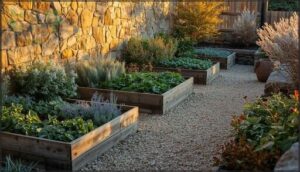
You can build frost resistance right into your garden’s design by choosing the right location and layout from the start. Smart placement utilizes natural warmth, while features like thermal mass and raised beds create microclimates that extend your growing season.
Let’s look at the key design strategies that’ll give your plants the best chance against freezing temperatures.
Site Selection and Microclimate Advantages
Choosing the right spot can slash frost damage by half or more. Look for gentle slopes where cold air drains away—elevation effects mean just ten meters higher can buy you a full degree of warmth.
South-facing sites capture extra solar radiation, while proximity to water bodies or urban microclimates moderates swings.
Wind patterns matter too: sheltered pockets stay warmer, but don’t trap cold air.
Leveraging Structures and Thermal Mass
Structures like cold frames and greenhouses trap rising ground heat, keeping your plants several degrees warmer during radiation frost. Add thermal mass—water barrels near walls, stone pathways, or concrete slabs—and you’ll buffer those swings even more.
Black barrels positioned two to three feet from south-facing surfaces can raise nighttime temps by about five degrees, turning marginal frost into survivable conditions.
Raised Beds and Mulching Benefits
When you raise your beds, you’re banking on earlier spring warming and steadier soil temperature control—raised structures heat up two to four degrees faster and hold that warmth longer into fall nights.
Layer two to three inches of mulch on top, and you’ll insulate roots against frost heave while dampening freeze-thaw cycles that stress perennials and root crops, boosting winter survival by twenty percent.
Planning for Drainage and Airflow
Before you finalize your garden layout, walk the site at dawn on a clear, cold morning to watch cold air pool in low dips—these frost pockets can stay five degrees colder than higher ground.
Install drainage paths that shed excess water and leave gaps in fences so dense air flows downslope, turning airflow patterns and soil water dynamics into powerful allies for frost damage prevention.
Top 10 Tools for Frost Damage Prevention
The right tools can make all the difference when you’re defending your garden against freezing temperatures. From simple covers to engineered structures, each option offers a specific level of protection based on your plants’ needs and your local climate.
Here’s a look at ten essential frost protection tools that’ll help you shield vulnerable plants through winter’s coldest nights.
1. Mini Wooden Greenhouse Cold Frame
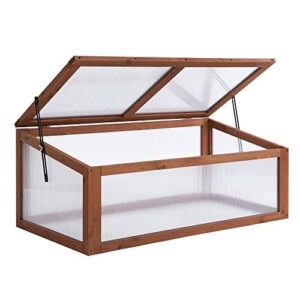
A mini wooden greenhouse cold frame gives you an affordable frost protection strategy that works when temperatures dip overnight. These wooden construction designs trap solar heat in their low profile, raising nighttime air temperatures 5–10°F above outside readings during clear frost events.
You’ll extend your growing season 3–5 weeks in both spring and fall, protecting cool-season crops and hardening off seedlings.
With transparent polycarbonate panels and proper venting during sunny days, cold frames deliver reliable season extension without fuel costs or complex greenhouse and cold frame management.
Best For: Gardeners who want to protect cool-season vegetables and extend their harvest window by a few weeks without investing in a full greenhouse setup.
- Raises nighttime temperatures 5–10°F during frost events, which can keep tender plants alive through light freezes and push your growing season 3–5 weeks longer in spring and fall.
- Transparent polycarbonate panels let in plenty of sunlight while the slanted top sheds rain and snow, so your plants get the light they need without getting waterlogged.
- Lightweight and portable at under 10 pounds, making it easy to move around your garden or bring indoors when you need flexibility.
- Mixed reviews on sturdiness—some users say the wood feels flimsy and may need extra bracing in windy conditions.
- Condensation can build up between the polycarbonate layers and cloud the panels over time, reducing visibility and potentially trapping moisture.
- The wood frame might need a coat of varnish or sealant to hold up through multiple seasons of weather exposure.
2. Floating Row Garden Covers
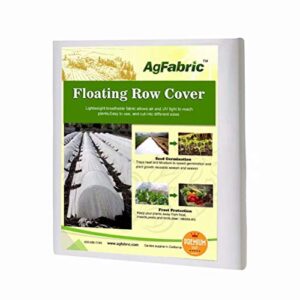
Floating row covers deliver 2–6°F of frost protection by trapping soil heat and blocking radiant heat loss during clear, calm nights. You’ll get lightweight 0.55 oz polypropylene fabric that allows 70–85% light transmission while shielding tender crops from temperatures a few degrees below freezing.
These row cover materials extend your growing season 1–2 weeks and double as insect barriers, cutting pest pressure without chemicals.
Secure all edges with soil or pins—even small gaps ruin frost damage prevention by letting cold air infiltrate your protected beds.
Best For: Home gardeners who need lightweight frost protection for spring and fall crops while keeping insects off tender plants without using pesticides.
- Provides 2–6°F of frost protection and extends harvest dates by 1–2 weeks, letting you plant earlier and grow later into the season
- Blocks cabbage moths, flea beetles, and whiteflies while allowing 70–85% light and air through, so plants stay healthy without spraying
- Reusable for multiple seasons and reduces watering needs by cutting evaporation from the soil surface
- Tears easily around sharp edges or stakes, especially the lightweight 0.55 oz fabric, so you need to handle it gently
- Must be removed or vented when temps hit 86°F or higher to prevent blossom drop on tomatoes and peppers
- Requires careful edge sealing with soil or pins—any gaps let cold air in and kill the frost protection
3. Premium Outdoor Greenhouse Kit
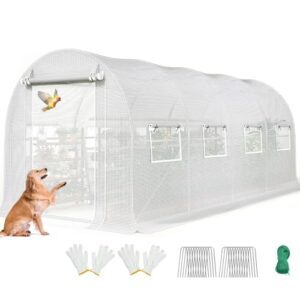
A premium outdoor greenhouse kit transforms your garden into a climate-controlled refuge, where frost damage becomes a footnote rather than a catastrophe. You’ll achieve 2–20°F temperature gains above ambient through multi-wall polycarbonate panels that insulate while transmitting 85% of available light.
Strategic thermal mass—water drums or stone—stores daytime solar heat and releases it overnight, moderating the wild swings that kill tender plants.
Kit assembly takes a weekend, but you’ll extend your growing season by 8 weeks and protect vulnerable crops from hard freezes that would otherwise blacken foliage and destroy months of work.
Best For: Serious gardeners in cold climates who want to grow year-round and protect delicate plants from frost without running expensive heaters all winter.
- Polycarbonate panels give you 200x the impact strength of glass and handle heavy snow loads up to 100 pounds per square foot, so hail and winter storms won’t wreck your setup.
- You get 8 weeks of extra growing time with passive solar heating alone—daytime temps can run 20°F warmer than outside, which keeps frost off your plants during those unpredictable spring and fall cold snaps.
- The insulated design with thermal mass options lets you maintain above-freezing soil temps even when it’s cold outside, so you can harvest greens and hardy veggies through winter.
- Premium kits with thick multi-wall polycarbonate and reinforced frames cost significantly more upfront than basic polyethylene tent-style greenhouses.
- Assembly takes a full weekend and requires careful attention to instructions—mistakes with panel installation or frame alignment can compromise the structure’s weather resistance.
- Without supplemental heating in extreme cold, nighttime temps may still drop close to outdoor levels, limiting which crops you can grow in the dead of winter.
4. Beach Windscreen Privacy Screen Barrier
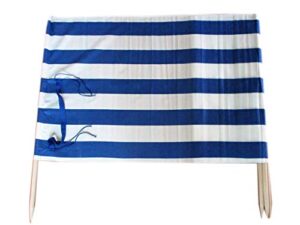
When coastal winds sweep through your garden, a beach windscreen privacy screen barrier becomes an unexpected frost protection ally. You’ll achieve 40–80% wind reduction within three to five times the barrier height, which translates to 0.5–2°F nighttime temperature gains in sheltered zones—enough to save marginally hardy plants.
Position the microfiber screen perpendicular to prevailing winds, two to five barrier heights upwind of frost-sensitive beds. Combine with row covers or mulch for compound frost mitigation, and you’ll extend your coastal gardening season while managing microclimate stress that amplifies freeze damage.
Best For: Coastal gardeners who need affordable wind protection to create sheltered microclimates that reduce frost risk for marginally hardy plants and container gardens.
- Reduces wind speed by 40–80% and raises nighttime temperatures 0.5–2°F in sheltered zones, enough to prevent frost damage on borderline-hardy plants.
- Lightweight microfiber design with included stakes and mallet makes repositioning easy as wind direction shifts throughout the season.
- At 13 feet long and 30 inches high, it creates an effective protection zone extending 6–10 feet downwind for low-growing beds and containers.
- Thin microfiber fabric may not withstand multiple seasons of UV exposure or heavy wind loads compared to commercial HDPE windbreak screens.
- Some users report broken stakes on first use, suggesting the anchoring system may need reinforcement for reliable frost-season deployment.
- Limited height (30 inches) means shorter shelter depth than taller barriers, requiring closer placement to protected plants and potentially multiple screens for larger garden areas.
5. Small Bubble Cushioning Wrap Roll
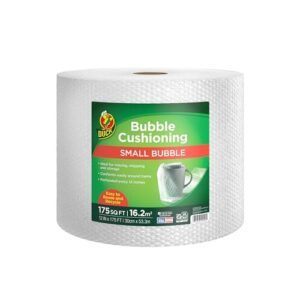
Standard packaging bubble wrap offers a low-cost thermal barrier for winter gardening frost protection. Wrap your containers in several layers to insulate root zones, achieving roughly R-1.3 per 3/8-inch thickness—enough to buffer short cold snaps.
Greenhouse insulation with UV-stabilized rolls cuts heat loss and extends your growing season by weeks.
However, don’t leave bubble wrap tight against foliage for days; trapped moisture invites rot. Remove wraps during mild stretches, and combine with row covers and mulch for reliable frost damage prevention across your beds.
Best For: Gardeners who need affordable, reusable insulation to protect potted plants and small greenhouses from light frosts without investing in permanent structures.
- Provides decent thermal resistance (R-1.3 per layer) to buffer root zones and greenhouse interiors during cold snaps, extending your growing season by several weeks
- Lightweight, flexible, and easy to cut and wrap around irregular containers or greenhouse frames without special tools
- Perforated every 12 inches for quick tearing, and fully reusable across multiple seasons if you remove it between freeze events
- Trapping moisture against foliage for extended periods can cause rot and fungal issues—you’ll need to remove wraps during warmer days
- Standard packaging bubble wrap degrades faster outdoors than UV-stabilized greenhouse versions, limiting long-term durability
- The 175-foot roll can be bulky to store, and perforations don’t always tear cleanly without scissors
6. Reflective Insulation Foam Barrier Sheet
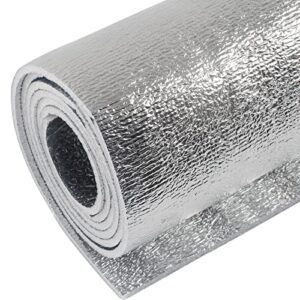
Reflective insulation foam barrier sheets take frost protection a step further than bubble wrap. These double-layer foil products reflect up to 97% of radiant heat back toward your plants, delivering R-values around R-5 per inch—critical when hard frosts threaten.
Line greenhouse walls or wrap cold frames to slash overnight heat loss by nearly 18%. The closed-cell foam core doubles as a vapor barrier, preventing condensation that can freeze and worsen damage.
Install with spray adhesive or nails, and you’ll create a durable thermal shield that keeps root zones stable through prolonged cold snaps.
Best For: Greenhouse owners and gardeners in cold climates who need serious thermal protection during hard frosts and want to cut heating costs without constant maintenance.
- Reflects up to 97% of radiant heat back toward plants, keeping temperatures stable through prolonged cold snaps and hard freezes
- Cuts overnight heat loss by roughly 18% and can save hundreds of gallons of fuel annually in greenhouse applications
- Works as both insulation and vapor barrier, preventing condensation and ice buildup that can damage plants and structures
- Often arrives folded and creased instead of rolled, making installation trickier and less neat
- Aluminum foil layer can peel or degrade over time, reducing reflective performance
- Requires additional materials like spray adhesive, nails, or glue for proper installation, adding to overall cost and effort
7. Polycarbonate Greenhouse Roof Panels Set
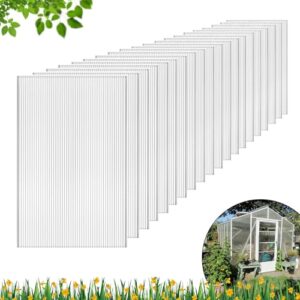
Twin-wall polycarbonate greenhouse roof panels deliver R-values around 1.72—roughly 80% better insulation than single-pane glass—so your cold frames and greenhouse designs hold heat through hard frosts.
These 4′ × 2′ clear sheets transmit 80% of daylight while shatterproof panels regulate climate control from -44°C to 120°C. Install them over hoops or frames to cut heating costs by up to 35%, stabilize night temperatures, and shield tender crops from freeze cycles.
Panel thickness matters: 8 mm twin-wall construction provides the sweet spot between light transmission and frost protection methods that actually work.
Best For: Hobby greenhouse growers and cold-frame builders in moderate to cold climates who need durable, lightweight panels that balance strong insulation with high light transmission for year-round plant protection.
- R-value of 1.72 delivers 80% better insulation than single-pane glass, cutting heating costs by up to 35% while stabilizing temperatures through hard frosts and freeze cycles.
- 80% light transmission supports healthy plant growth even in winter, and the twin-wall design regulates temperature from -44°C to 120°C without sacrificing clarity.
- Shatterproof and impact-resistant construction stands up to hail, wind, and snow loads, with easy cutting and installation over hoops or frames for quick DIY greenhouse builds.
- Not UV-resistant, so panels may yellow, lose clarity, and degrade faster than UV-coated alternatives—potentially limiting lifespan compared to treated multi-wall products.
- Some customers report panels arriving smaller or thinner than advertised, which may require extra support structures or installation adjustments.
- Twin-wall 8 mm thickness offers moderate insulation but falls short of triple-wall or five-wall panels (R-values 2.60–2.94) needed for extreme cold or commercial four-season growing.
8. Durable Garden Netting Plant Cover
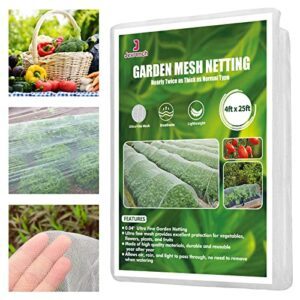
When rigid panels feel like overkill for tender seedbeds, ultra-fine polyethylene garden netting delivers light frost protection without the weight. Quality mesh materials—0.8 mm openings in UV-stabilized PE—allow sunlight, rain, and air to pass through while cutting radiative heat loss by up to 1.5°C on calm nights, shielding blossoms from ice deposition.
You’ll get three to five seasons from reusable netting that folds flat for storage, making it a practical weather barrier for orchards, vegetable rows, and container groupings facing light freezes down to −2°C.
Best For: Gardeners and orchardists who need lightweight, multi-season protection for tender plants, seedbeds, and fruit trees against light frosts (down to −2°C), pests, and wind without blocking sunlight or airflow.
- Reduces radiative heat loss by 1.5–2°C during frost events while allowing 85% light transmission, rain, and ventilation—protecting blossoms without stunting growth.
- Reusable for 3–5 years (up to 10 with proper care), folds flat for easy storage, and can be cut to custom sizes for vegetable beds, orchards, or containers.
- Multi-purpose barrier that cuts frost damage by up to 80% in trials while also blocking pests and reducing wind stress, eliminating the need for chemical sprays.
- Requires secure anchoring with pegs or buried edges to prevent wind uplift, and may not hold up in extremely windy areas or heavy weather.
- Protects only against light frosts and radiative cooling—not a solution for hard freezes below −3°C or prolonged cold snaps.
- Some users report the material can rip or tear with rough handling, and the fine mesh can be difficult to see through in bright sunlight.
9. Clear Greenhouse Plastic Sheeting Film
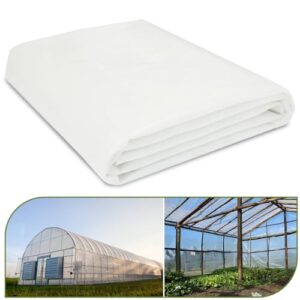
Six-mil polyethylene greenhouse plastic sheeting film delivers a proven blend of frost protection and light transmission that you can count on when temperatures dive. Expect 85–90% sunlight penetration through UV-stabilized materials that resist brittleness for four seasons, giving row covers and cold frames the thermal insulation they need without sacrificing plant growth.
Film thickness matters—quality greenhouse materials with tear-resistant construction shed water, prevent condensation drip, and raise nighttime temperatures enough to dodge frost damage without daily setup hassles.
Best For: Gardeners and small-scale growers who need affordable, multi-season frost protection and light transmission for greenhouses, hoop houses, or cold frames in moderate climates.
- Delivers 85–90% light transmission so plants get plenty of sunlight even during shorter winter days, supporting healthy growth and extending your growing season.
- Four-year UV-resistant lifespan means you won’t be replacing covers every spring—the film holds up through multiple seasons of sun, wind, and weather.
- Anti-drip surface prevents condensation from burning seedlings and reduces humidity-related issues like mold or fungal diseases inside your greenhouse.
- Some buyers report the actual thickness feels thinner than advertised 6 mil, which can lead to earlier tears or durability concerns if you’re not careful during installation.
- Offers minimal thermal insulation (around R-0.85) compared to bubble or multi-layer films, so you may still need supplemental heat in very cold climates.
- Not completely crystal-clear—expect a slightly hazy appearance that, while functional, won’t give you perfectly transparent views into your greenhouse.
10. Pressure Treated Southern Yellow Pine Lumber
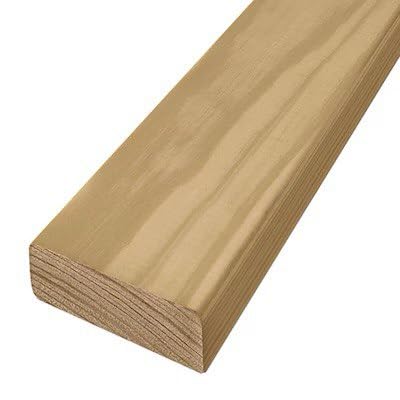
Premium pressure-treated Southern Yellow Pine lumber brings outdoor durability to garden framing projects that face freeze–thaw stress season after season. ACQ preservatives penetrate the wood’s high sapwood ratio, resisting decay organisms active during wet transitional periods.
You’ll build frost-resistant cold frames, raised beds, and greenhouse bases that won’t rot when soil moisture cycles through winter, extending service life beyond untreated boards.
Pair this lumber selection with proper drainage and corrosion-resistant fasteners for frost protection structures that support your seasonal gardening goals and prevent frost damage to tender crops year after year.
Best For: Gardeners building outdoor structures like cold frames, raised beds, or greenhouse bases in cold climates where freeze–thaw cycles and soil moisture threaten untreated wood.
- Deep preservative penetration resists rot and decay through repeated freeze–thaw cycles, extending service life to 20 years with proper maintenance.
- Low thermal conductivity helps retain heat in greenhouse frames and cold-protection structures during light frosts.
- Cost-effective alternative to naturally rot-resistant woods like cedar, delivering long-term durability in harsh outdoor conditions.
- Preservative chemicals can leach into garden soil over time, requiring barriers between wood and planting areas for edible crops.
- May need additional sealing or finishing to prevent warping and checking from moisture cycling in extreme weather.
- Not suitable for heavy structural loads—best used for light-duty outdoor frames and smaller garden projects.
Frequently Asked Questions (FAQs)
When do you need frost protection for plants?
You need frost protection when nighttime temperatures drop to 32°F or below—even a brief cold snap can spell disaster for tender plants.
Start covering frost-sensitive varieties before that freeze damage threshold hits.
What plants need frost protection?
Warm-season crops like tomatoes, peppers, and basil need frost protection below 32°F. Container plants and tropical ornamentals require winter protection too.
Frost-hardy plants such as kale tolerate cold acclimation, while frost tolerance varies by plant hardiness and species.
How do you protect plants from frost?
Think of your garden as a sleeping fortress—you’ll shield it best with row covers, cold frames, mulch for plant insulation, and thermal mass near tender crops, then watch frost alerts to time your frost protection methods perfectly.
How do you prevent fall frost damage?
You can prevent fall frost damage by covering plants with row covers, adding soil insulation like mulch, watering before cold nights, using cold frames, and monitoring frost alerts to time your frost protection strategies effectively.
Can frost damage plants through containers or pots?
Frost absolutely damages container plants because pot walls expose roots on all sides, letting them freeze faster than in-ground plantings.
Root hardiness is lower than shoot tolerance, so container insulation and winter protection matter more than you’d expect.
Do native plants need frost protection too?
Yes. Native plant hardiness varies by species and microclimate effects—even frost-hardy plants need winter care strategies when newly planted, in containers, or exposed to extreme cold beyond their typical frost tolerance.
When should frost covers be removed each morning?
Once overnight protection strategies have done their job and morning air climbs past freezing—usually between 8 and 10 a.m.—pull off frost covers to prevent solar radiation effects from overheating your plants.
How does wind speed affect frost formation risk?
Calm night risks increase dramatically when wind speeds drop below 5 mph, allowing cold air to settle and radiative cooling to intensify.
Light breezes mix warmer air downward, while strong advective freeze conditions erase protective microclimates entirely.
Are there natural frost indicators to watch for?
Watch for dew forming on grass as evening temperatures drop—when air nears the dew point on clear, calm nights, you’re seeing moisture that may freeze into damaging frost by morning.
Conclusion
An ounce of prevention is worth a pound of cure when protecting your garden from frost. Seasonal frost damage prevention hinges on recognizing risks early, layering protection methods, and building resilience through thoughtful design.
Your plants won’t survive every freeze, but with cold frames staged, mulch applied, and covers within reach, you’ll salvage far more than you lose. The gardeners who thrive through unpredictable weather aren’t luckier—they’re simply better prepared before temperatures drop.
- https://www.sciencedirect.com/science/article/abs/pii/S0168169925001334
- https://axaxl.com/-/media/axaxl/files/pdfs/campaign/reinsurance-outlook/downloads/climate-risk/axa-xl_climate-change-and-the-risk-of-spring-frost-in-agriculture_dec2021_digital.pdf?rev=10472b10a7cc4d4da54d509586be1d36&sc_lang=pt&hash=8E2C61852536806F4AD81B317872F8AD
- https://www.infarmbureau.org/news/news-article/2025/03/26/afbf-analysis-shows-that-in-2024-farmers-lost-20.3-billion-to-weather-disasters
- https://stories.tamu.edu/news/2021/03/02/agricultural-losses-from-winter-storm-exceed-600-million/
- https://www.ncei.noaa.gov/access/metadata/landing-page/bin/iso?id=gov.noaa.ncdc%3AC00529