
This site is supported by our readers. We may earn a commission, at no cost to you, if you purchase through links.

white coating on your squash leaves isn’t dust—it’s a fungal colony already reproducing. powdery mildew (caused by several Erysiphales species) spreads through airborne spores that don’t even need standing water to germinate, which makes it faster and sneakier than most garden diseases. One infected plant on a humid afternoon can seed an entire bed by morning.
The good news: caught at the right stage, this disease is manageable without harsh chemicals. Timing, technique, and a few well‑chosen treatments make the difference between losing your crop and saving it.
Table Of Contents
- Key Takeaways
- Recognizing Powdery Mildew on Plants
- Causes and Spread of Powdery Mildew
- Immediate Steps for Infected Plants
- Effective Powdery Mildew Treatments
- Top Products for Treating Powdery Mildew
- Frequently Asked Questions (FAQs)
- How do you treat powdery mildew?
- Which fungicide is best for powdery mildew?
- Can powdery mildew be prevented?
- What is powdery mildew on plants?
- Can you get rid of powdery mildew without pruning?
- How do you get rid of powdery mildew on houseplants?
- Does powdery mildew kill plants?
- How do you get rid of powdery mildew on trees?
- Can fungicides treat powdery mildew?
- How do I prevent powdery mildew on my plants?
- Conclusion
Key Takeaways
- Powdery mildew spreads through airborne spores that germinate without standing water, making early detection — those first small, flour-like patches — your best defense before it jumps to neighboring plants.
- Organic treatments like potassium bicarbonate, sulfur sprays, and neem oil can stop the fungus without harsh chemicals, but you need to rotate between them to prevent resistance buildup.
- Stressed plants — from overwatering, excess nitrogen, or poor airflow — are far more vulnerable, so fixing growing conditions is not optional; it is part of the treatment.
- Never compost mildew‑affected leaves or skip tool sterilization between cuts, because spores survive and will reinfect your garden the following season.
Recognizing Powdery Mildew on Plants
Catching powdery mildew early is half the battle.
Spot those white fuzzy patches before they spread — treating powdery mildew on zucchini gets a whole lot harder once it jumps to neighboring plants.
The good news is that this fungus leaves behind some pretty clear clues if you know what to look for.
Here’s what to watch for, from the first faint signs to a full-blown infection.
Common Visual Symptoms

Powdery mildew announces itself clearly. You’ll notice white or gray leaf powder coating first — small circular patches that look like someone dusted flour across the foliage.
From there, yellow spotting spreads beneath the powder, leaf curling follows on new growth, and stem blotches appear on shoots.
In severe cases, young fruit shows cracking as the fungal disease pushes through expanding skin.
The disease spreads via wind-borne fungal spores that don’t require free water for germination.
Early Vs. Advanced Signs

Catching this fungal disease early makes all the difference. Here’s how the two stages compare:
- Timing Appearance – Small dusty spots show up 7–10 days after infection
- Leaf Spot Progression – Early patches stay isolated; later-stage mildew merges into solid mats
- Growth Stunting – New shoots shorten subtly early on, then emerge weak and coated
- Flower Bud Impact – Buds still open early; later-stage infections produce misshapen blooms
- Yield Reduction – Light infections spare harvests; late-stage spread cuts fruit and seed set considerably
The pathogen thrives best within its optimal temperature range.
Plants Most Susceptible

Not every plant faces the same level of risk. Cucumbers, squash, and melons — the cucurbit family — rank among the most humidity-sensitive crops you’ll grow. Roses, phlox, and zinnias aren’t far behind.
shade-loving plants in crowded beds face compounded pressure, since poor airflow and low light invite fungal disease quickly.
young growth susceptibility is real too: tender new leaves are almost always the first to show powdery mildew.
Causes and Spread of Powdery Mildew

Powdery mildew doesn’t just appear out of nowhere — it needs the right conditions to take hold and spread.
Once you understand what’s driving it, you’re already ahead of the problem.
Here’s what’s actually working against you.
Favorable Environmental Conditions
Think of this fungal disease as having a comfort zone — and it’s surprisingly specific. Humidity levels between 40 and 70 percent, paired with a temperature range of 59 to 82°F, create near‑perfect conditions for powdery mildew.
Once those conditions align, starting a preventive fungal spray schedule for tomatoes every 7–14 days can stop powdery mildew before it ever takes hold.
Powdery mildew thrives in a surprisingly narrow comfort zone: moderate humidity and mild temperatures are all it needs
Limited light exposure and poor air circulation make things worse. Dense plant spacing traps humid air right where the fungus thrives.
How Fungal Spores Travel
Spores from this fungal disease don’t wait for an invitation — they ride the wind straight to your plants. Windborne dispersal is the primary route, but that’s not the whole story of plant pathology in your garden.
Watch for these infection pathways:
- Greenhouse airflow circulates conidia across entire benches rapidly
- Splash irrigation knocks spores onto nearby healthy leaves
- Insect vectors like thrips and bees carry spores between blooms
- Mechanical contact via unwashed pruning shears transfers live spores
- Wind gusts release larger spore bursts than gentle breezes
Plant Stress Factors
Stressed plants don’t fight back well.
Water stress from irregular watering weakens roots and thins leaves, making them easy targets.
Nutrient imbalance — especially excess nitrogen — produces soft, lush growth that mildew colonizes fast.
Temperature extremes wear plants down, while crowding and poor airflow trap humid air around already-struggling foliage.
Physical damage from wind or rough handling opens the door even wider.
Immediate Steps for Infected Plants

Once you spot powdery mildew, moving fast makes all the difference.
The right first steps can stop the fungus from spreading to healthy plants nearby. Here’s exactly what to do right away.
Isolating and Pruning Affected Areas
Once you spot powdery mildew, act fast — hesitation lets it spread. Move potted plants at least 6 to 10 feet away following isolation distance guidelines.
Then prune:
- Cut infected leaves at the base
- Remove affected shoots back to healthy tissue
- Seal all cuttings in spore containment bags immediately
Airflow enhancement techniques, like spacing plants apart, help keep fungal disease management from becoming a losing battle.
Cleaning Tools and Garden Debris
Your tools carry spores just as easily as the wind does. After pruning, blade sterilization isn’t optional — wipe pruner blades with 70% isopropyl alcohol between every cut for instant disinfection.
For shovels, a 10% bleach solution works fast.
These gardening tips matter for soil contamination prevention too.
Burn infected debris when possible, and never compost mildew-affected leaves — spores survive and return next season.
Reducing Plant Stress
A stressed plant can’t fight back. Here’s how to steady it fast:
- Optimized Watering — Water deeply at soil level each morning; consistent moisture prevents wilting that weakens tissues.
- Balanced Fertilization — Avoid excess nitrogen; adequate potassium and micronutrients strengthen cell walls.
- Light Management and Canopy Spacing — Prune dense growth to improve airflow and sun exposure.
- Mulch Benefits for Soil Health — Apply 5–8 cm of organic mulch to stabilize root moisture.
Effective Powdery Mildew Treatments

Once you’ve removed the worst of the infection, it’s time to fight back with targeted treatments.
There’s no single fix — the right approach depends on how bad things are and what you have on hand.
Here are the most effective options, from organic fungicides to simple kitchen remedies.
Organic Fungicide Options
Organic fungicides give you real control without synthetic chemicals. Each option targets powdery mildew differently, so matching the right product to your situation matters.
| Organic Treatment | How It Works |
|---|---|
| Sulfur Sprays | Disrupts fungal respiration; apply every 7–14 days below 30°C |
| Neem Oil | Coats and suffocates spores; spray every 7–10 days |
| Bacillus Biofungicide | Beneficial bacteria colonize leaves, suppressing mildew by up to 90% |
| Potassium Bicarbonate | Collapses fungal colonies on contact within hours |
| Copper Hydroxide | Releases copper ions that block spore germination |
Homemade Remedies (Milk, Vinegar, Bicarbonate)
You don’t always need to reach for a bottle of commercial fungicide.
Mix one tablespoon of baking soda with a half teaspoon of liquid soap per gallon of water — that baking soda pH adjustment makes leaves hostile to powdery mildew.
For milk spray, one part whole milk to two parts water works well; time milk spray applications during mild morning sun for best results.
Vinegar dilution ratios around one tablespoon per 32 ounces also help knock back active spores.
Add a few drops of neem oil as a sticky oil additive so your DIY sprayer tips actually coat the leaf surface properly.
Proper Fungicide Application Techniques
When homemade sprays aren’t enough, fungicides step in — but timing matters. Start spraying when you spot one infected leaf per 50 examined.
Spray every 7 days during cool, damp stretches keeps infection from getting ahead of you. For coverage uniformity, hit both leaf surfaces until foliage drips.
Rotate fungicide groups each application — resistance rotation isn’t optional in serious plant disease management.
Top Products for Treating Powdery Mildew
Once you’ve got a handle on what’s attacking your plants, having the right products on hand makes all the difference.
Some tools and treatments work better than others — and a few stand out for their reliability and ease of use. Here are the top picks worth keeping in your garden arsenal.
1. Swan Hydrogen Peroxide Topical Solution
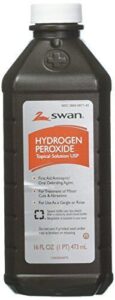
Swan Hydrogen Peroxide Topical Solution pulls double duty in the garden. You likely already have a bottle in your medicine cabinet — and that same 3% hydrogen peroxide works against powdery mildew.
Dilute one part solution with three parts water, then spray it directly on affected foliage. The oxidizing action breaks down fungal cells on contact.
Apply every two to three days until the mildew clears, then drop to weekly for prevention. Don’t use it undiluted — full strength can burn your leaves.
| Best For | Anyone who needs a simple, no-fuss antiseptic on hand for minor cuts, scrapes, and basic first aid at home. |
|---|---|
| Primary Use | Antiseptic / Fungicide |
| Container Size | 16 oz bottle |
| Dilution Required | Yes, 1:3 with water |
| Organic / Natural | No synthetic additives |
| Application Method | Spray on foliage |
| Versatility | First aid and garden |
| Additional Features |
|
- Straightforward 3% hydrogen peroxide formula that gets the job done for minor wounds and abrasions
- Versatile — can also be used for ear cleaning when a doctor recommends it
- Comes in a generous 16oz bottle so you’re not running out anytime soon
- A bit pricey compared to what you’d find at other retailers for the same thing
- Some buyers got hit with packaging or shipping issues on delivery
- The bottle can look bigger in product photos than it actually is — so don’t be surprised when it arrives
2. Chapin Battery Powered Garden Sprayer
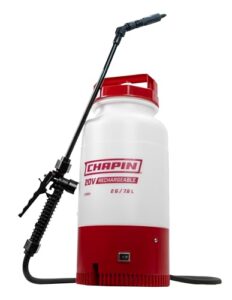
Once you have your treatment mixed, you need to apply it well.
The Chapin 27504 is a 2-gallon, 20V battery-powered sprayer that takes the grunt work out of that job. No manual pumping — the electric pump runs steadily for up to 1.75 hours on a charge. The adjustable nozzle switches from fine mist to a focused stream, so you can coat both leaf surfaces evenly. At just over 6 pounds empty, it won’t wear out your arm mid‑treatment.
| Best For | Homeowners with medium to large yards who want to skip the manual pumping and get through fertilizing or pest control without wearing out their arm. |
|---|---|
| Primary Use | Garden Sprayer |
| Container Size | 2 gallon tank |
| Dilution Required | No, ready to fill |
| Organic / Natural | Not applicable |
| Application Method | Battery-powered spray |
| Versatility | Fertilizer and pest control |
| Additional Features |
|
- Battery-powered pump means no hand-pumping — just pull the trigger and spray
- Adjustable nozzle handles everything from a fine mist to a focused stream
- Lightweight at 6.3 lbs, so it’s easy to carry around the yard for up to 1.75 hours
- Some users have run into leaking tanks and loose seals, which can be a headache
- Battery life doesn’t always live up to the 1.75-hour claim in real-world use
- Only comes with a 1-year warranty, which feels short given the reliability concerns some users have flagged
3. Safer Garden Fungicide Concentrate
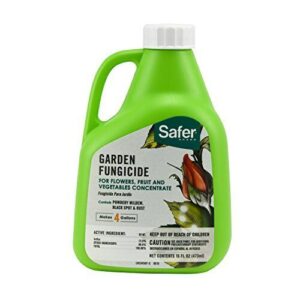
If you want a proven, organic option, Safer Garden Fungicide Concentrate is worth keeping on your shelf. Its active ingredient is sulfur at 12%, which creates an environment where fungal spores simply can’t survive. Mix 2 fluid ounces per gallon of water for powdery mildew, apply every 7 days, and one 16 oz. bottle stretches to 4 gallons of ready‑to‑use spray.
It’s OMRI listed, so it’s safe for organic gardens. Just don’t spray when temperatures climb above 85°F.
| Best For | Organic gardeners dealing with common fungal diseases like powdery mildew or black spot on roses, vegetables, and ornamentals. |
|---|---|
| Primary Use | Organic Fungicide |
| Container Size | 16 oz bottle |
| Dilution Required | Yes, 2 oz per gallon |
| Organic / Natural | OMRI listed organic |
| Application Method | Spray every 7 days |
| Versatility | Vegetables and ornamentals |
| Additional Features |
|
- Sulfur-based formula actually works — fungal spores can’t survive in the environment it creates
- One 16 oz. bottle makes 4 gallons, so it goes a long way
- OMRI listed and safe for organic gardens, including veggies and edible plants
- You’ll need to reapply every 7 days to keep fungal issues in check
- Can’t use it when temps are above 85°F, which limits summer application windows
- Pricier than some conventional fungicides, and it’s not always easy to find in stores
4. Seven Minerals Castile Soap

Seven Minerals Castile Soap gives you a gentle but effective tool against powdery mildew.
Mix 1 teaspoon per gallon of water, or pair it with a baking soda solution — 1 tablespoon baking soda plus 1 teaspoon soap per gallon.
That combo raises leaf surface pH and makes it hard for fungal spores to survive.
Spray tops and undersides of leaves every 3 to 6 days.
It’s vegan, EWG verified, and safe around kids and pets.
| Best For | Gardeners and eco-conscious households looking for a safe, multi-purpose cleaner that’s gentle on skin and effective against plant fungal issues. |
|---|---|
| Primary Use | Multipurpose Cleaner |
| Container Size | 32 oz bottle |
| Dilution Required | Yes, varies by use |
| Organic / Natural | Vegan, non-GMO |
| Application Method | Spray or wash |
| Versatility | Multi-surface cleaning |
| Additional Features |
|
- Works as a versatile cleaner — body wash, dish soap, laundry, pet shampoo, and even a garden spray for powdery mildew
- EWG verified, vegan, and made with organic oils including Castor Oil, so it’s safe around kids, pets, and sensitive skin
- No palm oil and eco-friendly sourcing means you’re not trading clean plants for environmental damage
- Can feel more drying than other castile soaps like Dr. Bronner’s, so sensitive skin folks should patch test first
- The gel-like texture throws some people off if they’re used to a thinner liquid soap
- Struggles with heavy-duty makeup removal, so it’s not the best fit for cleaning beauty tools
Frequently Asked Questions (FAQs)
How do you treat powdery mildew?
You can treat powdery mildew by pruning infected areas, improving air circulation, and applying organic sprays like baking soda solution or diluted hydrogen peroxide every few days until the fungus clears.
Which fungicide is best for powdery mildew?
Sulfur fungicides top the list for contact control, while myclobutanil and propiconazole offer systemic protection. For dual-mode action, Luna Experience combines fluopyram and tebuconazole — especially effective on grapes and ornamentals.
Can powdery mildew be prevented?
Yes, an ounce of prevention is worth a pound of cure. Space plants 12–18 inches apart, choose resistant varieties, water at the base each morning, and keep humidity below 70 percent.
What is powdery mildew on plants?
Powdery mildew is a fungal disease that coats leaves, stems, and buds with a chalky white powder.
It feeds on plant tissue, stunting growth and reducing yields if you don’t act fast.
Can you get rid of powdery mildew without pruning?
You can, though it’s an uphill battle. Sprays like baking soda, potassium bicarbonate, or milk solution tackle spores directly. Without removing infected tissue, though, reinfection stays likely — so treat consistently.
How do you get rid of powdery mildew on houseplants?
Start by isolating infected plants and pruning mildew-covered leaves. Then spray with a baking soda solution — 1 tablespoon per gallon of water — weekly.
Keep humidity below 50% and improve airflow around your plants.
Does powdery mildew kill plants?
An ounce of prevention is worth a pound of cure.
Powdery mildew rarely kills healthy plants outright, but it steadily drains their energy, cuts photosynthesis, and can push already-stressed plants toward serious decline.
How do you get rid of powdery mildew on trees?
Getting rid of powdery mildew on trees takes a layered approach. Prune infected shoots, improve airflow, and apply potassium bicarbonate or sulfur-based sprays before symptoms spread across the canopy.
Can fungicides treat powdery mildew?
Yes, fungicides can bring powdery mildew under control. Systemic options like DMIs penetrate plant tissue directly, while contact types like sulfur stop spores on the surface before they take hold.
How do I prevent powdery mildew on my plants?
Prevention starts with good airflow and smart watering. Space plants 30 to 60 centimeters apart, water at soil level in the morning, and choose mildew-resistant varieties whenever possible.
Conclusion
Next season, your squash leaves will either wear familiar white haze—or they won’t. That outcome is already being shaped by what you do today.
Treating powdery mildew on plants isn’t a one-time fix; it’s a habit of observation, quick action, and consistent care. Catch it early, apply the right treatment, and remove the conditions that let it return. The plants you save this year will be stronger for it.