This site is supported by our readers. We may earn a commission, at no cost to you, if you purchase through links.

Most gardeners write off shaded spots as problem areas—places where grass won’t grow and color feels impossible. But shade is an opportunity in disguise. The plants that thrive without full sun often produce the richest foliage, the most intricate textures, and blooms that last well into summer without scorching.
Astilbe, hostas, ferns, bleeding heart—these aren’t consolation prizes. They’re the backbone of some of the most beautiful gardens you’ll find.
Knowing which summer garden shade-loving plants suit your soil, zone, and light conditions turns a dim corner into the strongest feature in your yard.
Table Of Contents
- Key Takeaways
- Best Shade-Loving Plants for Summer Gardens
- Flowering Annuals for Summer Shade
- Groundcovers for Cool Shaded Beds
- Growing Conditions for Shade Plants
- Designing a Summer Shade Garden
- Top 3 Summer Shade Garden Products
- Frequently Asked Questions (FAQs)
- What summer plants do well in shade?
- What plants do well in hot shade?
- What summer plants like shade?
- What are the best low maintenance shade plants?
- What garden plants are shade tolerant?
- What companion plants pair well with shade lovers?
- How do I transition sun plants to shade?
- Which shade plants attract pollinators in summer months?
- How often should I divide established shade perennials?
- Can shade plants survive extended drought periods?
- Conclusion
Key Takeaways
- Shade-tolerant perennials like astilbe (Astilbe spp.), hostas, ferns, and bleeding heart (Lamprocapnos spectabilis) aren’t backup choices — they’re the foundation of genuinely striking gardens in zones 3–9.
- Soil prep makes or breaks a shade bed; most shade plants need rich, loamy ground with a pH of 6.0–7.0 that drains fully within 24–48 hours and gets a fresh 2–3 cm compost layer each spring.
- Layering plants by height — groundcovers like Lamium at the base, mid-tier perennials in the middle, and evergreen shrubs on top — creates structure and seasonal interest that outlasts any single bloom.
- Variegated foliage (hostas, coral bells, Hakonechloa) can brighten deep shade by up to 20%, giving you visual impact without relying on flowers at all.
Best Shade-Loving Plants for Summer Gardens
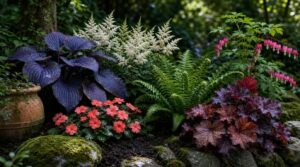
A shady corner doesn’t have to mean a dull one. The right plants can turn low-light spots into some of the most striking areas in your garden.
From fragrant options to leafy standouts, these best herbs to grow in shade prove that dim corners can actually be a gardener’s secret weapon.
Here are six reliable shade-lovers worth knowing.
Astilbe for Feathery Summer Plumes
Astilbe is one of the best summer flowering perennials for a shade garden—its feathery plumes rise 12 to 36 inches above fern-like foliage, adding real Foliage Contrast without extra effort.
Choose your Hybrid Selection carefully; chinensis types bloom later, extending seasonal color. Division Techniques every 3–4 years keep clumps vigorous. Its low-maintenance nature makes shade gardening easy.
Maintaining consistent soil moisture is essential for vibrant plumes.
Hostas for Bold Foliage Texture
Where astilbe adds height, hostas deliver the ground-level drama. Few shade-loving perennials match their foliage texture contrast — puckered leaf surfaces, vein pattern contrast, and variegated edge drama work together in shade garden design.
Keep yours thriving:
- Divide clumps every 3–4 years
- Mulch to prevent soil splash
- Control slugs to protect leaf surfaces
- Water consistently during dry spells
Hydrangeas for Large Partial-shade Blooms
If hostas give you the foliage, hydrangeas give you the bloom. In partial shade with 3–6 hours of morning sun, macrophylla types like Nikko Blue thrive in rich, moist soil—soil pH around 5.5 deepens those blue tones. Pair them with astilbe for layered garden design.
Watering schedule matters: deep soaks twice weekly beat light daily misting every time.
Ferns for Cool, Lush Greenery
Where ferns bring the calm, hydrangeas bring the drama. Few plants handle dappled shade as gracefully — and frond texture alone earns them a permanent spot in any shade garden. Try these reliable picks:
- Japanese painted fern for silvery contrast
- Royal fern near moist rich soil or water edges
- Lady fern for wispy, airy backdrops
- Cinnamon fern for bold understory plant selection
- Hart’s tongue for evergreen cool microclimates
Group ferns together — fern groupings create layered screens that feel like a woodland floor.
Bleeding Heart for Delicate Shade Flowers
Bleeding Heart (Lamprocapnos spectabilis) earns its place in any shade garden with heart-shaped blooms dangling from arching stems like tiny lanterns.
Plant it in partial shade with moist, rich soil — it’ll reward you every spring.
Expect seasonal die-back by midsummer, so pair it with hostas or ferns to fill gaps.
Divide clumps every few years for clump renewal.
Note that deer generally avoid it.
Coral Bells for Colorful Leaves
Coral Bells (Heuchera spp.) shift the color game in shade, with iridescent leaves that thrive in low light.
Their appeal lies in four key features:
- Bright new growth emerges vivid, then deepens seasonally
- Textured leaf forms range from quilted to scalloped
- Seasonal color shift carries interest across months
- Foliage accent combos shine alongside hostas or ferns
Plant in zones 4–9 for reliable, colorful foliage in shade.
Flowering Annuals for Summer Shade
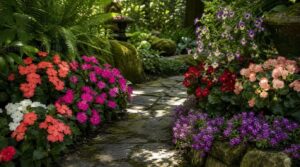
Annuals won’t stick around forever, but that’s actually what makes them so useful — you can try something new every season without committing. In shaded spots where perennials sometimes struggle to bloom, the right annuals bring steady color from early summer straight through frost.
Pairing shade-loving annuals with a nutrient-rich potting mix for container herbs gives even low-light spots the foundation to produce season-long color.
Here are five that consistently deliver in low-light gardens.
Begonias for Shaded Pots and Borders
Few plants earn their place in shade window boxes quite like begonias. They’re a go-to for container gardening in shade — low-maintenance plants that deliver real color without needing full sun.
Match your foliage varieties to your light: wax types handle partial shade well, while rex begonias need bright indirect light. Use a well-draining soil mix with perlite, and set a watering schedule based on the top inch of soil drying out.
| Begonia Type | Light Tolerances | Container Designs |
|---|---|---|
| Wax (fibrous) | Partial shade | Borders, mixed pots |
| Rex | Bright indirect | Shade window boxes |
| Cane | Filtered light | Sheltered borders |
Impatiens for Continuous Summer Color
Impatiens are the workhorses of low-maintenance shade gardens — blooming from late spring straight through frost with almost no fuss. Impatiens walleriana and SunPatiens hybrids handle partial to full shade well.
Space plants 6–12 inches apart for downy mildew control and good airflow. Double-flower varieties and bicolored impatiens add texture and depth, while Impatiens balsamina draws pollinators into your summer bloom rotation.
Torenia for Containers and Window Boxes
Torenia is one of the best container-friendly shade annuals you can grow. Its trailing habit makes it perfect for window boxes and hanging baskets — especially the Summer Wave and Catalina series.
Use pots with good pot drainage, keep soil evenly moist, and fertilize every two weeks.
Maintain temperatures between 65–75°F and monitor for mildew by ensuring good airflow between plants.
Coleus for Vivid Foliage Displays
Coleus might just be the hardest-working foliage plant in your shade toolkit. Choose variegated edge selections — burgundy-and-lime or purple-centered cultivars — to anchor your color palette planning for shade garden beds.
Pinch for bushiness mid-summer, rotate pots to prevent color fading, and mulch for soil warmth. This low-maintenance plant thrives where most annuals quit.
Caladiums for Deep-shade Leaf Color
Caladiums take deep shade color to another level entirely. Plant tubers 2–3 inches deep in rich, moist soil — Soil Moisture consistency is what drives Color Longevity and keeps that Vein Contrast sharp across the leaf surface.
Their ideal Temperature Range sits between 70–85°F.
For colorful foliage in shade or full shade garden beds, few shade-loving plants match their drama.
Groundcovers for Cool Shaded Beds
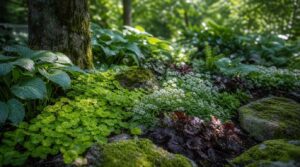
Groundcovers do the quiet work in a shade garden — filling gaps, suppressing weeds, and keeping the soil cool through summer heat. The right ones can turn a bare patch under a tree into something worth stopping to look at.
Here are a few that earn their place in shaded beds.
Lamium for Fast-spreading Silver Foliage
Few groundcovers pull double duty quite like Lamium — its silver leaf texture brightens dark corners, while rapid node-rooting creates dense mats that handle weed suppression naturally. Reaching just 6–8 inches tall, it’s a low-maintenance plant suited to zones 3–8.
Try ‘Beacon Silver’ or Lamium Chequers along shade container edging or under trees. It tolerates variable soil pH and pairs beautifully with hostas when designing shade gardens with seasonal color.
Lungwort for Spotted Leaves and Blooms
Lungwort (Pulmonaria spp.) brings something Lamium can’t — genuine Leaf Spot Persistence through multiple seasons. Its silver-mottled foliage brightens moist, shady beds year-round, offering enduring visual interest.
A notable Seasonal Color Shift from pink to blue blooms occurs in early spring, enhancing shade gardens with dynamic seasonal appeal. Its compact Mound Growth Habit (6–12 inches) ensures tidy integration into garden designs.
For Companion Plant Pairings, combine lungwort with hellebores or ferns to create textured, layered shade compositions.
Foamflower for Low Woodland-style Coverage
Foamflower (Tiarella spp.) keeps things soft and low — a natural fit for woodland landscaping. This groundcover for shade spreads through stolon spread, forming a dense carpet 6–12 inches tall. It tolerates dappled shade well, stabilizes gentle slopes through slope stabilization, and offers subtle seasonal color.
Maintain soil moisture consistently; use division propagation each spring or fall to manage spread.
Japanese Forest Grass for Soft Movement
Japanese Forest Grass (Hakonechloa macra) brings something most shade-loving plants can’t — soft movement focus without any fuss. Its silky texture contrast stands out among broader-leaved companions like hostas and ferns.
The cascading edge drapes over containers or path borders, adding gentle wind sway naturally.
Low-maintenance motion, contained clumps, partial shade, and moist soil — that’s all it needs.
Hellebores for Evergreen Shade Interest
Helleborus spp. pull double duty — evergreen foliage texture year-round, then nodding blooms from late winter into spring. Their dense, leathery leaves form low 12–18 inch mounds that suppress weeds and anchor shade garden design beautifully.
Deer resistance and solid drought tolerance make them ideal for low-maintenance shade gardens.
While their early flowers offer essential pollinator support before summer arrives.
Managing Aggressive Shade Groundcovers
Some shade groundcovers spread fast — doubling in size within a single growing season. That’s why barrier installation at planting time matters: metal edging or root barriers stop underground runners up to 18 inches deep.
Stick to a pruning schedule in late winter annually, practice consistent moisture management, and choose slow‑spread species for tight spots.
Regular spread monitoring catches new runners before they take over.
Growing Conditions for Shade Plants
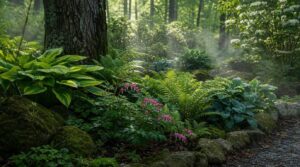
Getting the growing conditions right makes all the difference between shade plants that thrive and ones that just survive.
It’s not complicated, but a few key factors — light levels, soil quality, and climate — will shape every choice you make. Here’s what you need to know before you plant.
Full Shade Versus Partial Shade
Full shade means less than two hours of direct sun — think north-facing walls or dense canopy. Partial shade gives you three to six hours, usually morning light.
Light levels determine water requirements, growth speed, and bloom potential. Partial shade encourages richer foliage contrast and more flowers, while full shade favors texture.
Know your garden lighting conditions before you plant.
Dappled Shade Beneath Summer Trees
Dappled shade beneath summer trees is one of the most fluctuating conditions you’ll work with. Light patch dynamics shift throughout the day as sunlight filters through the canopy—hostas, ferns, and astilbe all handle this fluctuating mix well.
Microclimate benefits include cooler soil temperatures and stronger soil moisture retention. These conditions create an ideal environment for shade-loving plants to thrive despite the changing light patterns.
Use canopy pruning strategies to balance light levels—dappled versus deep shade—and keep your shade-loving plants thriving. This approach ensures a harmonious and sustainable garden ecosystem.
Moist, Well-drained Soil Requirements
Most shade perennials—hostas, astilbe, bleeding heart—need rich, moist soil that drains within 24 to 48 hours after rain. Soil texture selection matters here: loamy ground holds 40 to 50 percent moisture while keeping enough air for roots. Drainage enhancement techniques like slight mounding prevent soggy spots.
Target a pH balance between 6.0 and 7.0 for steady nutrient uptake.
Adding Compost and Organic Matter
Good drainage is essential — rich organic matter closes the gap. Work a 2- to 3-cm layer of finished compost into your top few inches of soil each spring.
A balanced C:N ratio around 25–30:1 drives steady microbial activity without burning roots.
Compost layering rapidly improves soil structure, boosting moisture retention exactly where shade-loving perennials need it most.
Mulching to Protect Shallow Roots
Mulch keeps that moisture where it belongs after compost is worked into the soil. Apply a 2- to 4-inch layer of shredded bark or composted leaves—organic materials that improve soil structure over time. This practice enhances moisture retention benefits and provides temperature buffering for shallow roots.
Maintain a gap of a few inches between mulch and stems to prevent rot. This simple step also delivers reliable weed suppression strategies without additional effort.
Choosing Plants by USDA Hardiness Zone
Zone mapping takes the guesswork out of plant selection. Before buying anything, confirm your USDA plant zones using the official hardiness zone map — your zip code gives you precise results. Microclimate impact matters too; a sheltered corner or south-facing wall can shift your effective zone slightly warmer.
Three hardiness zone selection tips worth keeping:
- Match hardiness ratings on plant tags to your zone or lower for reliable cold hardy shade plants
- Apply margin zone strategies for borderline picks — mulch heavily and site near structures
- Favor native zone selection; shade tolerant perennials native to your region establish faster and need less input
Designing a Summer Shade Garden
A well-designed shade garden isn’t just about picking the right plants — it’s about arranging them so they work together.
The good news is that shade actually gives you more to play with: layers, textures, and foliage colors that sunny beds can’t match.
Here’s what to keep in mind as you put it all together.
Layering Shrubs, Perennials, and Groundcovers
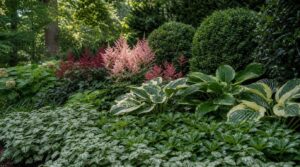
Groundcover options to brighten deep shade — like Lamium or Pachysandra — anchor the base, suppressing weeds while establishing Layered Soil Amendments beneath.
Shade-tolerant perennials such as Astilbe and Hosta fill the mid-tier, creating Seasonal Height Gradients.
Evergreen shrub options like boxwood or holly cap the top, adding year-round structure.
Use Mass Planting Rhythm and Vertical Connection Zones for a Unified Color Palette across all levels.
Combining Foliage Colors and Textures
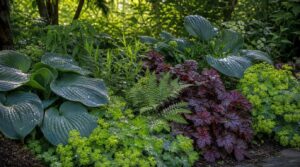
Pairing foliage well makes a shade bed come alive without a single bloom. Use these Texture Layering Strategies as your foundation:
- Color Gradient Pairing — move from deep green to chartreuse to lime
- Glossy Matte Contrast — pair shiny hosta leaves with matte fern fronds
- Leaf Shape Rhythm — alternate bold rounds with lance-shaped uprights
- Seasonal Hue Shifts — choose burgundy heuchera for year-round contrast
Weaving shade-loving plants together this way builds instant depth.
Planning Blooms From Spring Through Fall
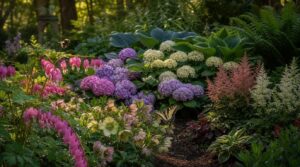
Staggered planting is your best tool for seasonal color flow that never stalls. Start with hellebores and bleeding heart in early spring, then let hydrangeas and astilbes carry mid-season. A simple bloom calendar keeps gaps from sneaking up on you.
Match pollinator timing to your flowering shade plants, and you’ll have season-long enjoyment from the first soil warmth through fall.
Using Evergreen Shrubs for Structure
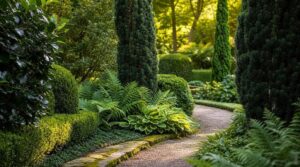
Evergreen shrubs give your shade garden its bones. Without them, seasonal plantings can feel scattered — beautiful for a few weeks, then forgettable.
- Define garden rooms with boxwood or holly
- Build vertical screens using yew or arborvitae
- Frame pathways with low-border evergreen groundcover
- Add windbreak privacy along exposed edges
- Create seasonal texture contrast against summer perennials
Incorporating evergreen shrubs in shade design works across most hardiness zones, anchoring partial shade beds year-round.
Brightening Deep Shade With Variegated Leaves
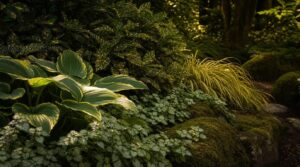
Variegated leaves are one of the best tools for deep shade. Edge variegation and light-reflective margins can increase perceived brightness by up to 20 percent — without adding a single light fixture.
Variegated leaves can brighten deep shade by up to 20 percent without a single light fixture
| Plant | Variegation Type | Shade Tolerance |
|---|---|---|
| Hosta ‘Frances Williams’ | Edge variegation | Deep shade |
| Lamium maculatum | Silver center | Dappled shade |
| Phlox procumbens Variegata | White margins | Part shade |
| Aucuba japonica | Gold flecks | Deep shade |
| Hakonechloa ‘Aureola’ | Striped gold | Part to deep shade |
Use contrast planting — variegated groundcover beside solid-green shade-loving perennials — to make dark corners feel alive. Keep soil evenly moist for variegation maintenance.
Creating Shaded Container Groupings
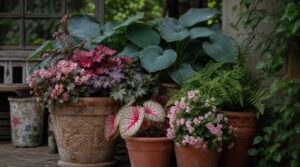
Think of your shaded porch corner as a living still life. Use layered height zones — tall hostas anchoring the back, mid-height heucheras filling in, and begonias spilling at the edge.
Contrastive foliage combos, like fern fronds beside caladium boldness, add instant depth. A container soil blend rich in compost ensures balanced drainage and a well-designed structure.
Rotate annuals for easy seasonal plant swaps.
Top 3 Summer Shade Garden Products
The right plants make all the difference, but so does starting with quality stock.
These three products are worth knowing if you’re building or renewing a shade garden this summer. Each one brings something specific to the table — here’s a closer look.
1. Perennial Farm Ligularia The Rocket Plant
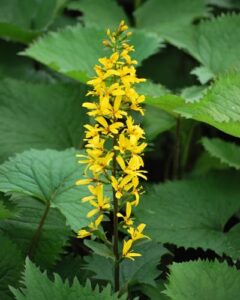
If you want a bold vertical accent in a shaded corner, Ligularia ‘The Rocket’ delivers. It grows to about 4 feet tall, sending up bright yellow flower spikes on deep purple-red stems in mid to late summer.
The large, jagged-edged leaves hold their presence long after blooms fade.
Hardy in zones 5–10, it needs consistently moist, humus-rich soil and protection from hot afternoon sun.
At $34.99 per plant, it arrives fully rooted and ready to go in the ground.
| Best For | Gardeners in zones 5–10 who want a dramatic, low-maintenance shade plant with late-season color near water features or woodland borders. |
|---|---|
| Price | $34.99 |
| Hardiness Zones | Zones 5–10 |
| Light Requirements | Partial to full shade |
| Deer Resistant | Yes |
| Bloom Season | Mid to late summer |
| Mature Height | ~4 feet |
| Additional Features |
|
- Stunning 4-foot yellow flower spikes add a bold vertical punch to shady spots
- Deer-resistant and low-maintenance — less babysitting, less fencing
- Ships fully rooted and ready to plant, so there’s no waiting around
- Can’t ship to 10 western states, which cuts out a big chunk of the country
- Winter shipments may arrive dormant and trimmed, needing time to bounce back
- Shipping costs can sting a bit relative to the $34.99 plant price
2. Pink Bleeding Hearts Perennial Root
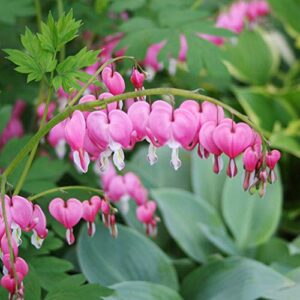
For something a little more delicate, the Pink Bleeding Hearts Perennial Root from Willard & May is worth the $19.19 price tag.
Lamprocapnos spectabilis thrives in zones 3–9, reaching 24–36 inches tall with arching stems of heart-shaped pink blooms each spring.
Plant the bare root with the crown just at soil level in rich, moist, well-drained ground — partial to full shade works well. It goes dormant in summer heat but returns reliably from the root year after year.
| Best For | Shade gardeners who want a low-maintenance perennial that brings soft, romantic color to spots where most flowering plants won’t grow. |
|---|---|
| Price | $19.19 |
| Hardiness Zones | Zones 3–9 |
| Light Requirements | Partial to full shade |
| Deer Resistant | Not specified |
| Bloom Season | Spring |
| Mature Height | 24–36 inches |
| Additional Features |
|
- Comes back every year, so you plant once and enjoy it for seasons to come
- Thrives in partial to full shade — perfect for those tricky dark corners of the yard
- Drought-tolerant once established, so it’s pretty forgiving after it settles in
- No planting instructions included, so you’ll need to do a little homework before you get started
- Germination can be slow or inconsistent — some gardeners waited a long time (or saw nothing at all)
- The bare root can look pretty rough out of the bag, which can be alarming if you’re newer to gardening
3. Outsidepride Perennial Spiderwort Seeds
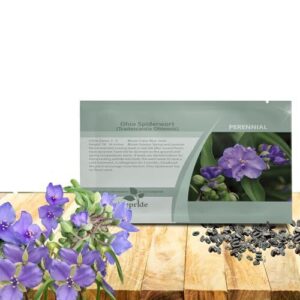
Outsidepride’s Perennial Spiderwort seeds are a smart pick for a plant that combines shade tolerance and pollinator appeal. Each $9.99 packet contains 2,000 seeds, offering ample coverage for borders and meadow edges.
Tradescantia thrives in zones 3–9, reaching heights of 18–36 inches with partial shade and well-drained soil. Sow seeds 1/4 inch deep at 65°F, and expect germination in 14–21 days.
Once established, this perennial is drought-tolerant, deer-resistant, and self-sows, ensuring low effort, long reward.
| Best For | Gardeners in zones 3–9 who want a low-maintenance, pollinator-friendly perennial that handles drought and deer without much fuss. |
|---|---|
| Price | $9.99 |
| Hardiness Zones | Zones 3–9 |
| Light Requirements | Full sun to partial shade |
| Deer Resistant | Yes |
| Bloom Season | Summer |
| Mature Height | ~36 inches |
| Additional Features |
|
- Great value — 2,000 seeds for $9.99 covers a solid stretch of border or meadow edge.
- Drought-tolerant and deer-resistant once established, so you’re not babysitting it all season.
- Self-sows year after year, meaning you plant once and it keeps coming back.
- Germination can be hit or miss — some gardeners report poor sprouting even after cold stratification.
- Timing matters; plant too late in the season and you’ll likely be disappointed.
- The self-sowing habit is a double-edged sword — it can spread beyond where you want it if you’re not keeping an eye on it.
Frequently Asked Questions (FAQs)
What summer plants do well in shade?
Hostas, ferns, and astilbe all handle shade well. Impatiens and begonias keep color going from late spring through frost. Bleeding heart and hellebores add structure when other plants go quiet.
What plants do well in hot shade?
Hot shade doesn’t have to mean struggling plants. Astilbe, hostas, ferns, coral bells, and bleeding heart all handle heat well — as long as the soil stays moist and roots stay cool.
What summer plants like shade?
Nearly 30% of home gardens include at least one shaded area. Hostas, astilbe, ferns, hydrangeas, impatiens, begonias, and bleeding heart all thrive in shade — delivering color, texture, and structure through summer.
What are the best low maintenance shade plants?
Hostas, ferns, and coral bells top the list. They don’t need much fussing — just moist, well-drained soil and some shade. Once established, they practically take care of themselves.
What garden plants are shade tolerant?
Shade-tolerant plants span a wide range—from bold hostas and feathery astilbe to ferns, coral bells, and hydrangeas. Many thrive in zones 3–9, handling partial to deep shade with ease.
What companion plants pair well with shade lovers?
Pair hostas with ferns for bold-meets-delicate contrast, or tuck astilbe behind bleeding heart for layered height. Coral bells and lamium work beautifully together — color contrast with built-in weed suppression.
How do I transition sun plants to shade?
Start slowly — like easing into cold water. Move sun plants to partial shade for one to two weeks, then add morning sun in 30-minute increments until they adjust comfortably.
Which shade plants attract pollinators in summer months?
Astilbe, hydrangeas, coral bells, and impatiens are your best bets. Their nectar-rich blooms draw bees, butterflies, and hoverflies reliably through summer — even in partial shade.
How often should I divide established shade perennials?
Most established shade perennials need dividing every 3 to 5 years. Astilbe and bleeding heart do well on a 3-to-4-year cycle; hostas can wait 4 to 6 years before they need splitting.
Can shade plants survive extended drought periods?
Most shade plants can handle short dry spells once established. Deep roots, waxy leaves, and organic mulch help them hold on.
Regular watering in that first season builds the resilience they’ll need later.
Conclusion
Shade doesn’t limit your garden—it focuses it. Once you match the right summer garden shade-loving plants to your light conditions, soil, and zone, those dim corners stop feeling like problems.
Astilbe, hostas, ferns, and hellebores don’t just survive without full sun; they define the space with texture, layered color, and structure that open beds rarely achieve.
Start with one shaded spot. The results will change how you see the rest of your yard.
- https://www.longfield-gardens.com/blogs/perennial-plants-all-about/all-about-astilbe?srsltid=AfmBOoqsoodyrxNZEpJvUhRbrfnxqkYxpYl64vYPvBoLNkqILc8rXInD
- https://naturehills.com/blogs/garden-blog/growing-and-caring-for-astilbe-plants?srsltid=AfmBOoqz-nHEIkHfbSReJbXICsoR_RCuoepUQGq2vtCUcJ5g97yxHQdi
- https://www.brecks.com/collections/garden_shade_perennial_plants?srsltid=AfmBOop0-Z6NmzWTNGTclMbBbW0MeQQabbpzumrAeyVvsVA5fbMoYh2_
- https://northerngardener.org/astilbe-and-ligularia/
- https://www.plantdelights.com/blogs/marketing/landscaping-with-ferns-hostas?srsltid=AfmBOopYuohqQIUqnep01GfFOnTvHgINOJ0-4qnYLFom2At74A_QglYs