
This site is supported by our readers. We may earn a commission, at no cost to you, if you purchase through links.
A dull blade at harvest time doesn’t just slow you down—it damages crops, invites disease, and turns a rewarding season into a frustrating one. Farmers and gardeners often underestimate how much their tools shape the quality of what they bring in. The wrong cut on a tomato stem or a bruised apple skin can mean spoilage before the produce even reaches your table.
Proper harvesting tools and equipment close that gap between effort and results. From precision herb snips to heavy-duty garden forks, the right tool for each crop makes every cut cleaner, every session shorter, and every harvest worth the work.
Table Of Contents
- Key Takeaways
- Top 10 Harvesting Tools and Equipment
- 1. Fiskars Herb Snips With Sheath
- 2. Fiskars Harvesting Knife with Sheath
- 3. Bahco Ergonomic Pocket Scraper
- 4. Felco F2 Swiss Pruning Shears
- 5. Fiskars PowerGear2 Pruning Shears
- 6. Fiskars Bypass Pruning Shears
- 7. VNIMTI 4 Tine Garden Fork
- 8. Zenport Grape Razor Fork
- 9. Zenport Stem Clipper for Citrus and Apple
- 10. Handy Safety Ring Knife
- Types of Harvesting Tools
- Choosing Tools by Crop Type
- Safety and Handling Essentials
- Maintenance and Storage Tips
- Frequently Asked Questions (FAQs)
- What are the main tools used for harvesting?
- Which vegetable is more profitable?
- What are the 16 tools and equipment in plant propagation?
- What PPE should be worn during harvest operations?
- How to store tools to prevent rust and damage?
- Are there ergonomic tips for prolonged harvesting work?
- What are signs a tool needs replacing?
- Can harvesting tools be shared across crop types?
- What harvest containers best protect delicate produce?
- How does GPS improve modern harvesting equipment accuracy?
- Conclusion
Key Takeaways
- Matching your tool to the crop — herb snips for delicate greens, bypass shears for fruiting vines, garden forks for root vegetables — prevents bruising, speeds up the job, and protects plant health after every cut.
- Powered harvesting systems process three to five times more per hectare than manual methods, but hand tools still win on fragile crops and uneven terrain where precision matters more than speed.
- Cleaning, oiling, and sharpening your tools after each session aren’t optional upkeep — it’s what separates a tool that lasts decades from one that fails mid-harvest.
- When repair costs creep past half the price of a replacement, the smart move is to buy new — worn blades, cracked grips, and stiff pivots aren’t just inconvenient, they’re a safety risk.
Top 10 Harvesting Tools and Equipment
The right harvesting tool can mean the difference between a clean, efficient harvest and unnecessary crop damage or hand fatigue. Not every tool works for every job, so knowing what’s out there helps you pick with confidence.
Understanding proper tool usage for harvesting produce helps you work smarter, protect your yield, and avoid the strain that comes from using the wrong tool for the job.
Here are ten tools worth keeping in your kit, no matter what you’re growing.
1. Fiskars Herb Snips With Sheath
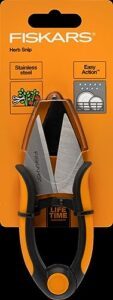
When you’re working through a dense herb patch, having the right snips makes all the difference. The Fiskars Herb Snips feature 5-inch hardened stainless-steel blades with pointed tips, letting you reach into tight spaces without disturbing neighboring plants.
The Easy-Action spring reopens the blades automatically after each cut, so your hand doesn’t fatigue during longer sessions. Softgrip grips give you solid control, and the included sheath keeps the blades protected between uses.
They’re dishwasher-safe too — sanitation couldn’t be simpler.
| Best For | Home cooks and gardeners who harvest herbs regularly and want a lightweight, easy-to-use snip that reduces hand fatigue during longer cutting sessions. |
|---|---|
| Blade Material | Hardened stainless steel |
| Handle Material | Black polymer |
| Weight | 0.01 oz (listed) |
| Warranty | Lifetime |
| Primary Use | Herb harvesting |
| Ergonomic Design | Softgrip handles |
| Additional Features |
|
- The Easy-Action spring does the reopening for you, so your hand stays fresh even after a lot of cuts
- Pointed 5-inch blades slip into tight spots without mangling nearby plants
- Dishwasher-safe and comes with a sheath, making cleanup and storage genuinely hassle-free
- Too small for anything beyond soft stems — thicker branches are out of the question
- No built-in sharpener, so you’ll need to stay on top of blade maintenance yourself
- The listed weight (0.01 oz) raises a few eyebrows about how sturdy it’ll feel under regular use
2. Fiskars Harvesting Knife with Sheath
If herb snips handle the delicate work, you’ll want something tougher when thick vegetable stalks push back.
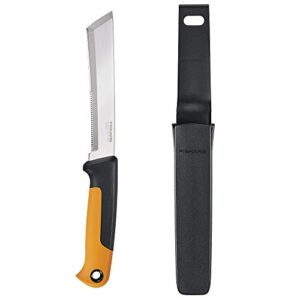
The Fiskars Harvesting Knife with Sheath earns its place in that gap. Its precision-ground stainless-steel blade combines a flat tip for quick push cuts with a serrated section that slices through fibrous stems cleanly.
The extended tang keeps it solid under pressure, and the ergonomic handle stays grippy even with wet hands.
The included sheath clips to your belt, so it’s always within reach.
| Best For | Home gardeners and hobby growers who need a reliable, all-purpose harvesting knife for cutting thick stalks, pruning, and general garden tasks. |
|---|---|
| Blade Material | Stainless steel |
| Handle Material | Injection-molded plastic |
| Weight | Not specified |
| Warranty | Lifetime |
| Primary Use | Vegetable harvesting |
| Ergonomic Design | Molded grip handle |
| Additional Features |
|
- Dual-blade design handles both push cuts and fibrous stems without switching tools
- Grippy handle stays comfortable and secure even with wet hands during long sessions
- Lifetime warranty at $16.68 makes it a low-risk, long-term buy
- May arrive less than razor-sharp and need a quick sharpening before first use
- The belt loop sheath is a bit bulky and can snag on clothing if you’re not careful
- Plastic handle may flex under heavy digging or stubborn root-prying tasks
3. Bahco Ergonomic Pocket Scraper
harvest job involves cutting stalks. Sometimes prepping surfaces — scraping dried sap, paint residue, or hardened grime off equipment and work surfaces before or after a harvest run.
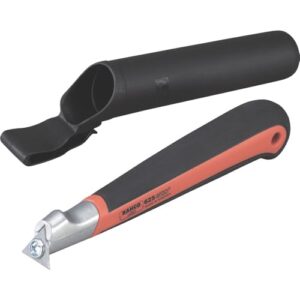
That’s where the Bahco Ergonomic Pocket Scraper earns its spot. At just 5.6 oz, it fits in your pocket, but punches above its weight. The tungsten carbide blade stays sharp through hours of tough scraping, and the two-component handle keeps your grip steady without wearing out your hand.
| Best For | Anyone doing hands-on harvest or maintenance work who needs a compact, heavy-duty scraper for cleaning equipment, removing dried sap, paint, or grime from a variety of surfaces. |
|---|---|
| Blade Material | Tungsten carbide |
| Handle Material | High-impact plastic |
| Weight | 5.6 oz |
| Warranty | Lifetime limited |
| Primary Use | Surface scraping |
| Ergonomic Design | Thumb-grip two-component handle |
| Additional Features |
|
- The tungsten carbide blade holds its edge for hours — less time swapping blades, more time working.
- At 5.6 oz with a pocket holster, it’s easy to carry and always within reach on the job.
- The two-component ergonomic handle gives you a solid, comfortable grip even during long scraping sessions.
- Replacement blades aren’t cheap, and each side only lasts around 16 hours of use.
- The small 1-inch blade can shift or rotate under pressure, which can gouge delicate surfaces if you’re not careful.
- Changing the blade requires a screwdriver, and over-tightening can strip the aluminum threads — easy to do by accident.
4. Felco F2 Swiss Pruning Shears
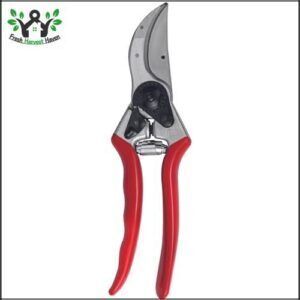
Scrapers handle the rough prep work, but when it’s time for clean, precise cuts on living plants, you need something built for the job.
The Felco F2 has been doing exactly that since 1948. Its hardened carbon-steel bypass blade slices through branches up to 1 inch thick without crushing stems — a small detail that makes a real difference in plant recovery.
At 8.8 oz, it won’t tire your hand, and every worn part is replaceable, so one purchase can last decades.
| Best For | Gardeners, landscapers, and anyone who prunes regularly — especially those with arthritis or hand fatigue who need a tool that works with them, not against them. |
|---|---|
| Blade Material | Hardened carbon steel |
| Handle Material | Forged aluminum alloy |
| Weight | 8.8 oz |
| Warranty | Lifetime |
| Primary Use | Branch pruning |
| Ergonomic Design | Angled head, rubber cushion |
| Additional Features |
|
- Built to last decades — blades, springs, and catches are all replaceable, so you’re not buying new shears every few years.
- The ergonomic angled head and shock absorber make long pruning sessions noticeably easier on your hands and wrists.
- Swiss-engineered bypass blade cuts clean without crushing stems, which helps your plants heal faster.
- At $71.52, it’s a real investment upfront compared to a basic pair of garden shears.
- Tops out at 1-inch branches — anything thicker and you’ll need loppers.
- Left-handed? This one isn’t for you — check out the Felco F-6 instead.
5. Fiskars PowerGear2 Pruning Shears
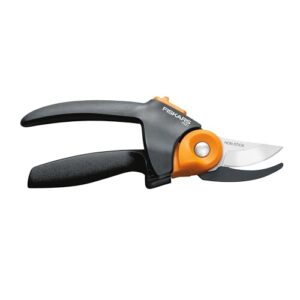
If your hands tire out before the job’s done, the Fiskars PowerGear2 is worth a close look. Its patented gear-and-cam system multiplies your leverage, so branches up to 3/4 inch thick feel noticeably easier to cut.
The rolling handle follows your hand’s natural motion, cutting down on strain during long sessions.
At just 0.55 lb, it won’t weigh you down. The hardened bypass blade stays sharp and resists rust — and a lifetime warranty backs the whole package.
| Best For | Gardeners with limited hand strength or anyone who spends long hours pruning shrubs, vines, and medium-thick stems. |
|---|---|
| Blade Material | Hardened steel |
| Handle Material | Carbon-based composite |
| Weight | 0.55 lb |
| Warranty | Lifetime |
| Primary Use | Branch pruning |
| Ergonomic Design | Rolling contoured handle |
| Additional Features |
|
- The PowerGear2 system seriously cuts down on the effort needed — branches up to 3/4 inch feel much easier than with a standard pruner.
- The rolling handle is a genuine comfort feature, not just a marketing claim — your hand stays relaxed even through long sessions.
- At half a pound with a lifetime warranty, it’s a lightweight, low-risk buy.
- Some users report the gear or locking mechanism jamming after a year or two of regular use.
- The 3/4 inch limit means it’s not the tool for thicker branches or serious tree work.
- Blade sharpening and upkeep are part of the deal if you want it to stay in top shape long-term.
6. Fiskars Bypass Pruning Shears
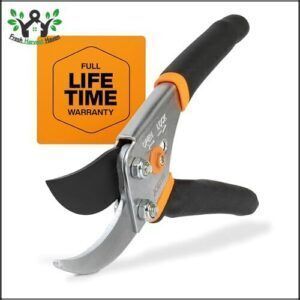
At $9.92, the Fiskars Bypass Pruning Shears punch well above its price. The bypass blade shears cleanly through stems up to 5/8 inch without crushing tissue — important when you’re working with roses, vines, or young shrubs where a ragged cut invites disease.
If the shears ever take a beating, knowing when to repair versus replace is easy with this Replacement Decision Guide for garden tools — especially handy for a tool this affordable.
The precision-ground, low-friction blade resists sap buildup and stays smooth between cleanings. At just 0.65 lb, it won’t fatigue your wrist during long sessions. A lifetime warranty rounds out a tool that earns its spot in any harvesting kit.
| Best For | Gardeners and plant lovers who need a reliable, everyday pruner for roses, vines, and small shrubs — especially those with limited hand strength or long pruning sessions. |
|---|---|
| Blade Material | Precision-ground steel |
| Handle Material | Ergonomic polymer |
| Weight | 0.65 lb |
| Warranty | Lifetime |
| Primary Use | Stem pruning |
| Ergonomic Design | Non-slip handle |
| Additional Features |
|
- Clean bypass cuts protect plant tissue and lower the risk of disease — big deal for delicate stems
- Super lightweight at 0.65 lb, with an ergonomic grip that keeps fatigue in check
- Lifetime warranty at under $10 is genuinely hard to beat
- Maxes out at 5/8 inch — anything thicker and you’ll need loppers or a saw
- Steel blades still need occasional cleaning, especially in humid conditions
- Manual only, so it’s not a replacement for powered tools on bigger jobs
7. VNIMTI 4 Tine Garden Fork
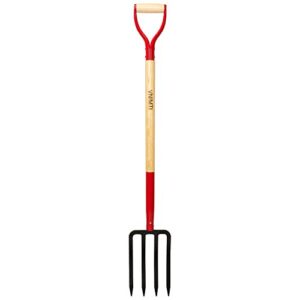
When you’re pulling carrots, potatoes, or bulbs from compacted ground, a flimsy fork bends and breaks trust fast. The VNIMTI 4 Tine Garden Fork manages that without drama.
At 45 inches long and just 4.5 lb, it’s light enough for extended sessions but tough enough for rocky soil.
The hardened steel tines won’t flex under pressure, and the hardwood Y-grip keeps your hands comfortable.
At $28.99, it’s a practical investment that earns its keep every harvest season.
| Best For | Gardeners of all skill levels—especially women, seniors, or anyone dealing with hard, rocky soil who needs a reliable fork without the bulk. |
|---|---|
| Blade Material | Hardened steel |
| Handle Material | Hardwood with metal grip |
| Weight | 4.5 lb |
| Warranty | Not specified |
| Primary Use | Soil cultivation |
| Ergonomic Design | Y-shaped metal grip |
| Additional Features |
|
- Hardened steel tines handle compacted and rocky soil without bending
- At 4.5 lb, it’s light enough for long sessions without wearing you out
- Great value at $28.99 for a tool that covers bulbs, compost, transplanting, and more
- The shorter handle cuts down on leverage in really deep or packed soil
- Steel tines will rust if you don’t dry them off after use
- The hardwood handle can crack or warp if you leave it in damp storage
8. Zenport Grape Razor Fork
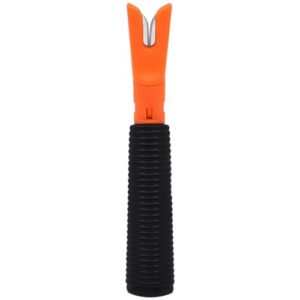
Grape clusters don’t forgive clumsy tools. Zenport Grape Razor Fork (Model H335) is built around that reality.
At just 3.2 oz, it won’t tire your hand during long vineyard rows. adjustable cutting-head angle lets you reach tight spots around trellis wires without contorting your wrist.
Its replaceable stainless-steel blade keeps cuts clean, and the ergonomic handle reduces repetitive strain.
One caveat: rotating head linkage can wear out under heavy use, so keep spare blades and inspect the locking pins regularly.
| Best For | Small-to-medium vineyard workers who spend long days harvesting and want to reduce hand fatigue and the risk of finger injuries. |
|---|---|
| Blade Material | Stainless steel |
| Handle Material | Plastic composite |
| Weight | 3.2 oz |
| Warranty | Not specified |
| Primary Use | Grape harvesting |
| Ergonomic Design | Grape-razor form factor |
| Additional Features |
|
- Super lightweight at 3.2 oz, so your hand won’t give out after a few rows
- Adjustable cutting-head angle makes it easy to get into tight spots around trellis wires
- Replaceable stainless-steel blade means you can keep it cutting clean without buying a whole new tool
- Replacement blades run about $14 each, which adds up fast for bigger operations
- The rotating head linkage is a weak spot — locking pins have been known to break and sideline the tool
- Customer support is hit or miss, and you might find the same tool cheaper from another supplier
9. Zenport Stem Clipper for Citrus and Apple
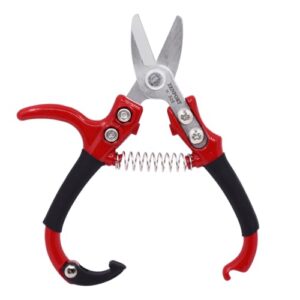
Citrus and apples bruise easily, so the tool you use matters more than you’d think. The Zenport Stem Clipper (Model H326) weighs just 2.89 oz and fits naturally in one hand, even deep inside crowded branches.
Its 1-inch forged stainless-steel blade uses a bypass cutting action that slices stems cleanly without crushing them. The hand guard protects your fingers during quick, repetitive picks. One limitation worth knowing: the short blade won’t handle woody or thick stems, so stick to small-fruit work.
| Best For | Home gardeners and orchard workers who need a lightweight, precise tool for harvesting small fruits like citrus and apples without damaging the produce. |
|---|---|
| Blade Material | Forged stainless steel |
| Handle Material | Ergonomic grip with leather strap |
| Weight | 2.89 oz |
| Warranty | Not specified |
| Primary Use | Fruit harvesting |
| Ergonomic Design | Leather strap grip |
| Additional Features |
|
- The forged stainless-steel blade makes clean cuts that won’t bruise or crush delicate fruit stems
- At under 3 oz, it’s easy to use for long picking sessions without wearing out your hand
- The built-in hand guard keeps your fingers safe during fast, repetitive harvesting
- The 1-inch blade can’t handle thicker or woody stems, so it’s pretty limited in scope
- The lightweight build may not hold up well under heavy daily professional use
- No storage bag or holder included — you’ll need to sort out your own solution for the harvested fruit
10. Handy Safety Ring Knife
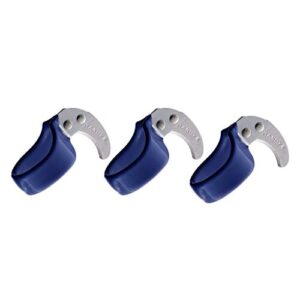
Sometimes the simplest tool is the one you’ll reach for most. The Handy Safety Ring Knife slips onto your finger like a ring and keeps both hands free for other tasks.
Its 1-inch heat-treated alloy-steel blade cuts twine, tape, and bale string cleanly without gripping a separate knife. The blunt tip and recessed curved edge reduce accidental cuts, making it a smart pick for quick field work.
At $14.99 for three, it’s practical and easy to keep extras on hand.
| Best For | Farmers, warehouse workers, and hobbyists who cut twine, tape, or strapping all day and want a quick, low-fatigue option they can keep on their finger. |
|---|---|
| Blade Material | Alloy steel |
| Handle Material | Aluminum ring |
| Weight | Not specified |
| Warranty | Not specified |
| Primary Use | Light cutting tasks |
| Ergonomic Design | Finger-mounted ring |
| Additional Features |
|
- Keeps both hands free while still giving you a sharp edge right where you need it
- The blunt tip makes it safer than a standard utility knife for fast, casual cutting
- Three in a pack for $14.99 is solid value — toss one in the workshop, one in the barn, one in the tackle box
- Ring size 11 only, so bigger fingers might find it uncomfortable or tough to control
- That 1-inch blade won’t touch thick rope, heavy cardboard, or anything that needs real cutting force
- Blade dulls with regular use and will need sharpening to stay effective
Types of Harvesting Tools
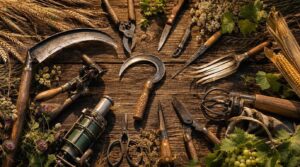
Not every crop plays by the same rules, and neither should your tools. From simple hand tools to heavy field machinery, the right choice depends on your scale, crop type, and how much labor you want to put in.
Here’s a look at the main categories worth knowing before you pick up anything sharp.
Hand Harvesting Tools for Home Gardens
For home gardens, hand tools are your most reliable daily companions. Sickles, harvest knives, garden shears, and pruning shears handle everything from leafy herbs to root vegetables with precision.
Tool longevity factors down to blade edge geometry and ergonomic handle materials — wood, fiberglass, or cushioned grips reduce fatigue quickly.
Easy-to-use sheath designs and compact carrying cases keep blades protected and always within reach.
Consider using biodegradable garden stakes to support seedlings sustainably.
Electric and Battery-powered Harvesting Tools
Hand tools get the job done, but electric harvesting technology takes that precision further.
Battery powered tools like cordless pruning shears use brushless motors for longer life and better efficiency.
Quick swap batteries keep you cutting without downtime, while charge time optimization means 80% power returns in under an hour. IP rating standards and solid battery management to protect your investment in any weather.
Mechanical Harvesting Equipment for Larger Plots
When your plot outgrows what battery tools can handle, mechanized harvesting steps in. Farm machinery with hydraulic control and variable cutting settings adjusts for uneven ground without missing a beat.
Headers spanning 6 to 12 meters cover wide row spacing in a single pass.
Yield sensors and GPS guidance tie it all together, making precision agriculture and large-scale farming genuinely manageable.
Heavy Machinery for Field-scale Harvesting
Field-scale harvesting calls for serious firepower. Combine harvesters with modular header designs that switch between soybeans, corn, and small grains without skipping a beat — covering up to 15 hectares daily.
- GPS guidance integration cuts crop loss by 4%
- Hydraulic suspension systems maintain contact on uneven terrain
- Robotic arm automation processes delicate produce without bruising
- Real-time moisture sensing guides post-harvest decisions instantly
- Forage harvesters chop and collect at adjustable reel speeds
Manual Versus Powered Harvesting Efficiency
When you weigh manual vs mechanical harvesting equipment, the numbers tell a clear story.
Manual methods average 0.5–1.0 tons per hectare per hour — solid for terrain adaptability and fragile crops where crop damage matters. Powered systems push 3–5 tons, slashing labor cost and boosting throughput rate.
Manual harvesting yields up to 1 ton per hectare hourly, while powered systems triple that throughput and slash labor costs
Your comparison of manual vs electric harvesting equipment should factor in ergonomic design, energy consumption, and long-term harvest efficiency gains.
Choosing Tools by Crop Type
Not every tool works for every crop — using the wrong one can bruise produce, slow you down, or even damage the plant. Matching your tool to what you’re harvesting makes the whole process cleaner and more efficient.
Here’s a breakdown of which tools work best for each crop type.
Herb Snips for Delicate Leafy Herbs
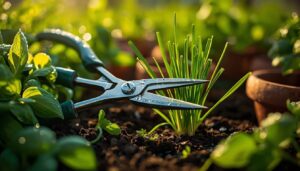
Delicate herbs like basil and chives don’t forgive a heavy hand — that’s where precision trimming scissors earn their place. Herb snips combine ergonomic design with fine-pointed blades for clean, crush-free cuts.
Look for these qualities:
- Blade Sharpness — stainless steel holds an edge longer
- Spring Tension — auto-open return reduces fatigue
- Grip Material — soft, non-slip coating for damp hands
- Sheath Design — protects blades between uses
- Corrosion Resistance — essential for moisture-rich garden conditions
Harvest Knives for Greens and Vegetables
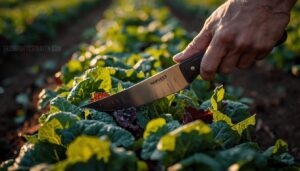
When you’re working through rows of greens, harvest knives are the tool you reach for. A serrated edge slices cleanly through thick stems, while blade curvature lets you angle into tight bundles without bruising leaves.
Stainless steel blades hold their edge longer and resist moisture. Ergonomic grips reduce strain during repetitive cuts.
Always sheath the blade between rows — it protects both you and the tool.
Pruning Shears for Fruiting Stems and Vines
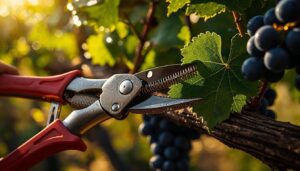
Pruning shears are built for precision where it matters most — fruiting stems and vines. Bypass blade geometry produces clean cuts without crushing wood, and a sap groove keeps sticky residue from binding the blade mid-row.
Classic Felco pruners and Fiskars PowerGear 2 Pruners both use spring-loaded mechanisms that reopen automatically after each cut.
Ergonomic grips with corrosion coatings and a reliable locking mechanism round out the package — the impact of ergonomic design on harvest efficiency shows up fast after a long pruning session.
Garden Forks for Root Vegetables
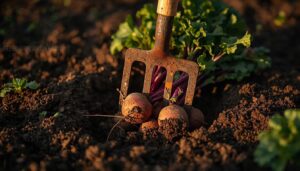
Garden forks are the backbone of root vegetable harvesting — and the right one makes the difference between a clean lift and a snapped carrot.
When choosing the right harvest tools for different crops, look for these features:
- Blunt Tine Design to avoid piercing potatoes or beets
- Tine Spacing of 1.5–2.5 cm to loosen soil without slicing roots
- Foot Guard Lever for controlled downward pressure
- Rust-Resistant Finish and adjustable handle length for long-term comfort
Stem Clippers for Citrus and Apples
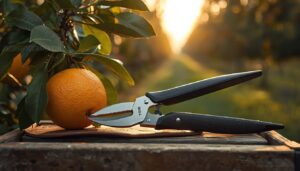
Citrus and apples demand precision — one rough cut can bruise the collar and shorten shelf life quickly.
That’s why stem clippers outperform standard pruning shears here. Their Blade Curvature follows the stem’s natural angle, while Spring Assisted opening reduces hand fatigue across hundreds of picks.
| Feature | Benefit |
|---|---|
| Rust Resistant steel | Manages humid orchard conditions |
| Textured Grip grips | Prevents slipping with gloves on |
| Protective Sheath | Safe transport between trees |
| Ergonomic grips | Reduces wrist strain during long sessions |
Among hand tools built for Tool Selection for Different Crop Types, these clippers are hard to beat.
Grape Razor Forks for Cluster Harvesting
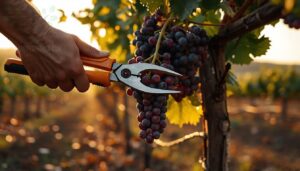
Grape clusters bruise fast — and that’s where standard harvest knives fall short. The Grape Razor Harvest Tool gives you One-Handed Operation, so your free hand guides the cluster without fumbling.
Here’s why it earns its place for Precision Cutting:
- Blade Angle Adjustability fits tight trellis rows
- Rapid Blade Swapping keeps harvest efficiency high
- Stem Damage Reduction protects berry quality
- High-Visibility grips are easy to spot in dense canopy
- Hardened steel resists dulling through heavy use
Safety Ring Knives for Quick Field Cutting
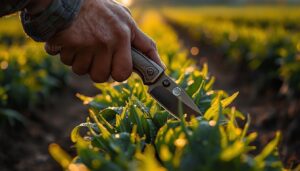
When precision matters in tight spaces, a safety ring knife worn on your finger keeps both hands freer than traditional harvesting knives.
The Corrosion-Resistant Coating tolerates humidity and plant sap without issue, while Finger Grip Texture prevents slippage on wet stems.
Blade Angle Adjustability suits varied cutting motions, and Rapid Blade Replacement means zero downtime mid-harvest — a straightforward win for field efficiency.
Safety and Handling Essentials

Good tools only go so far if you’re not using them safely. A slip with a harvest knife or a tangle near a powered machine can turn a productive day into a serious problem fast.
Here’s what every grower should have in place before the first cut.
Gloves, Eye Protection, and Sturdy Footwear
Before you pick up a single tool, your personal protective equipment needs to be sorted. Glove Material Selection matters more than most workers realize — nitrile manages chemical exposure, leather resists abrasion, and Cut‑Resistant Levels protect against thorns and stems.
- Durable gloves matched to task type
- Anti‑Fog Lens Coatings for humid conditions
- Slip‑Resistant Sole Design on wet terrain
- Thermal Insulated Footwear for cold storage areas
- Impact-rated safety glasses with side shields
These safety considerations aren’t optional — they’re your first line of defense.
Safe Knife and Blade Handling Practices
Once your gear’s on, it’s time to think about how you hold the blade. Grip Pressure Control starts with a firm pinch at the blade heel — too tight, and your hand cramps fast.
Keep your wrist straight, maintain a Clear Cutting Path away from your body, and always deploy Sheath Deployment before setting tools down.
Blade Angle Monitoring prevents dangerous deflection mid-cut.
Preventing Cuts, Punctures, and Hand Strain
Even small cuts add up fast when you’re working through a full harvest. Cut-resistant gloves at level 3 or higher are non-negotiable personal protective equipment.
Grip Strength Training to maintain light, controlled pressure — not a white-knuckle clamp. Anti-Slip Coatings on grips help on wet days.
Microbreak Scheduling to rest muscles before strain sets in. Blade Angle Adjustment to cut cleanly, reducing force and puncture risk.
Ergonomic Handles for Reduced Fatigue
Grip design benefits your hands more than most growers realize. Ergonomic grips with soft grip handle materials — rubber, silicone, contoured foam — quietly reduce worker fatigue across a full shift.
- Grip Texture Materials improve traction without extra squeezing force
- Weight Distribution Balance cuts wrist compensation by millimeters per stroke
- Vibration Reduction Techniques dampen blade recoil through elastomeric inserts
Size adaptability options and labor efficiency go hand in hand.
Proper Clothing Around Powered Equipment
When powered equipment is running, what you wear matters as much as how you operate it. Snug fit clothing with secure fasteners and no loose strings keeps rotating parts from grabbing fabric.
High visibility apparel helps coworkers spot you near heavy machinery. Reinforced toe caps protect feet from dropped tools.
These aren’t optional extras — they’re core worker safety and ergonomic solutions for farm workers.
Safe Storage for Sharp Harvesting Tools
Sharp tools stored carelessly are accidents waiting to happen.
Use lockable cabinets anchored to the wall, keeping blades out of reach and inventory accounted for. Tuck every blade into proper blade sheaths with color-coded guards so you grab the right tool instantly. Add moisture absorbers inside, set tools on ventilated racks, and you’ve stopped rust before it starts.
- Lock cabinets after every use — no exceptions
- Match each blade to its color-coded sheath
- Place desiccant packs inside to fight hidden moisture
- Store on ventilated racks to keep air moving around metal
Maintenance and Storage Tips
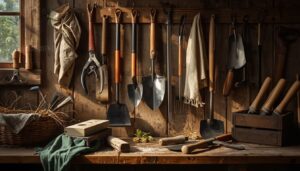
Good tools don’t last on their own — they need a little attention after every use. How you clean, sharpen, and store your equipment makes a bigger difference than most people realize.
Here’s what to stay on top of to keep every tool working like it should.
Cleaning Blades After Each Harvest
Dirty blades are a fast track to rust, dull edges, and contaminated crops. After each session, brush the groove crevices and joints with a small brush to clear trapped debris. Rinse detergent residue thoroughly, then dry with towels before storing.
| Step | Purpose |
|---|---|
| Rinse and scrub | Removes sap and soil |
| Dry with towels | Prevents rust formation |
Log cleaning process dates to stay consistent.
Sharpening Knives, Shears, and Snips
A dull blade is just a bruising stick. Start sharpening harvesting tools by matching Blade Angle Precision to the original bevel — generally 20–25 degrees for pruning shears and snips.
Use Whetstone Grit Selection wisely: coarse grit removes nicks, fine grit refines the edge.
Diamond File Usage works well on harder steels.
Run an Edge Consistency Test across scrap material before returning tools to work.
Oiling Metal Parts to Prevent Rust
Once edges are sharp, keep them that way by protecting the metal. Apply a thin oil film to blades, springs, and pivot points after every cleaning.
Your rust inhibitor choice matters — light machine oil works well on most hand tools. The application method is simple: wipe, don’t pool.
Reapply frequency should increase in humid conditions. Use plastic safe oils on coated grips to avoid staining.
Inspecting Handles, Springs, and Fasteners
Oil buys time, but a quick once-over saves tools entirely. Run through these checks after every few uses:
- Handle Grip Wear: Look for peeling, cracks, or wobble — signs ergonomic grips are breaking down
- Spring Tension Testing: Blades should snap open within half a second of release
- Fastener Torque Verification: Tighten pivot bolts; loose fasteners cause binding
- Corrosion Inspection and Pivot Alignment Check: Flag pitting or stiff pivots before they worsen
These maintenance practices for agricultural tools prevent small issues from sidelining equipment mid-harvest.
Sanitizing Tools Between Crops
Moving from inspecting fasteners to sanitation keeps your tools harvest-ready and your crops protected from cross-contamination.
| Step | Detail |
|---|---|
| Solution Concentration | 1,000 ppm bleach or 70% isopropyl |
| Contact Time | Soak blades at least 60 seconds |
| Material Compatibility | Test sanitizers on rubber grips first |
| Sanitization Log | Record date, tool ID, solution used |
Use the Two-Bucket Method — one dirty, one clean — and always air-dry before your next row.
Storing Tools in Dry, Secure Containers
Clean tools deserve a clean home. After sanitizing, seal everything in sturdy harvesting containers with secure locking clasps and passive Ventilation Management built in — Condensation is rust’s best friend.
Prioritize:
- Moisture Control with desiccant packs keeping humidity under 40%
- Color‑Coded Labeling so retrieval takes seconds, not minutes
- A Modular Tray System for proper cleaning and storage routines
- Elevated shelving preventing rust and damage from ground moisture
Knowing When to Repair or Replace Tools
When repair bills creep past 50 percent of replacement cost, the math favors buying new — that’s your Cost-Benefit Threshold in action.
Watch for Blade Wear Indicators like nicks, corrosion, or sluggish cuts signaling deeper damage.
Factor in Downtime Impact, check your Warranty Evaluation status, and consider tools with Sensor-Based Monitoring. Consistent maintenance practices for agricultural tools dramatically extend tool durability and protect crop quality.
Frequently Asked Questions (FAQs)
What are the main tools used for harvesting?
Your main harvesting tools span hand tools, powered devices, and heavy machinery.
Harvest Efficiency Studies confirm that matching Classification of hand power and heavy machinery tools to crop type directly shapes Tool Longevity Strategies and overall yield quality.
Which vegetable is more profitable?
Bell pepper tops ROI per acre at up to $800,000, but Seasonal Demand Peaks and Market Price Volatility mean crop diversification benefits your bottom line more than betting everything on one vegetable.
What are the 16 tools and equipment in plant propagation?
Plant propagation relies on grafting knives, pruning shears, and rooting hormone as core hand tools.
Add propagation domes, heat mats, and seed trays for soil preparation, plant trimming, and successful rooting from start to finish.
What PPE should be worn during harvest operations?
Staying safe out in the field sometimes means slowing down to gear up properly.
Wear cut-resistant crop handling gloves, ANSI Z1-rated safety glasses, steel-toe boots, high-visibility vests, sun protection gear, and respiratory protection matched to your dust or chemical exposure level.
How to store tools to prevent rust and damage?
Keep humidity below 50 percent and use corrosion inhibitor liners inside tool chests.
Practice airflow management, tool separation, and inspection scheduling regularly.
These rust prevention and maintenance tips make cleaning, sharpening, and storing harvesting implements straightforward.
Are there ergonomic tips for prolonged harvesting work?
Prolonged harvesting will absolutely wreck your body without the right habits.
Rotate posture often, schedule microbreaks every 20–30 minutes, watch your grip pressure, and choose tools with ergonomic grips and solid footwear stability.
What are signs a tool needs replacing?
Replace a tool when you notice blade dullness, joint play, grip cracking, corrosion spotting, or safety guard failure. These signs mean the tool can’t perform safely or cleanly anymore.
Can harvesting tools be shared across crop types?
Yes, many harvesting tools can share crops when built on modular attachment design systems. Cross crop sanitation between uses keeps quality high.
Always follow compatibility standards and wear pattern tracking to avoid crop damage.
What harvest containers best protect delicate produce?
Ventilated crates, cushioning liners, and moisture absorbing packs go hand in hand when protecting delicate produce.
Ergonomic stacking designs, insulated temperature control, and mesh produce bags all reduce postharvest loss substantially.
How does GPS improve modern harvesting equipment accuracy?
GPS guidance systems use RTK positioning to keep equipment within 2–3 centimeters of its intended path.
Field mapping integration, multi-constellation reliability, and variable rate control together sharpen every pass your harvester makes.
Conclusion
What separates a ruined harvest from a rewarding one often comes down to a single decision made before you ever step into the field. Choosing proper harvesting tools and equipment isn’t just about convenience—it’s about protecting everything you’ve grown.
A dull blade, a wrong cut, or a strained grip can quietly undo months of hard work.
Keep your tools clean, sharp, and matched to each crop, and the harvest will take care of itself.